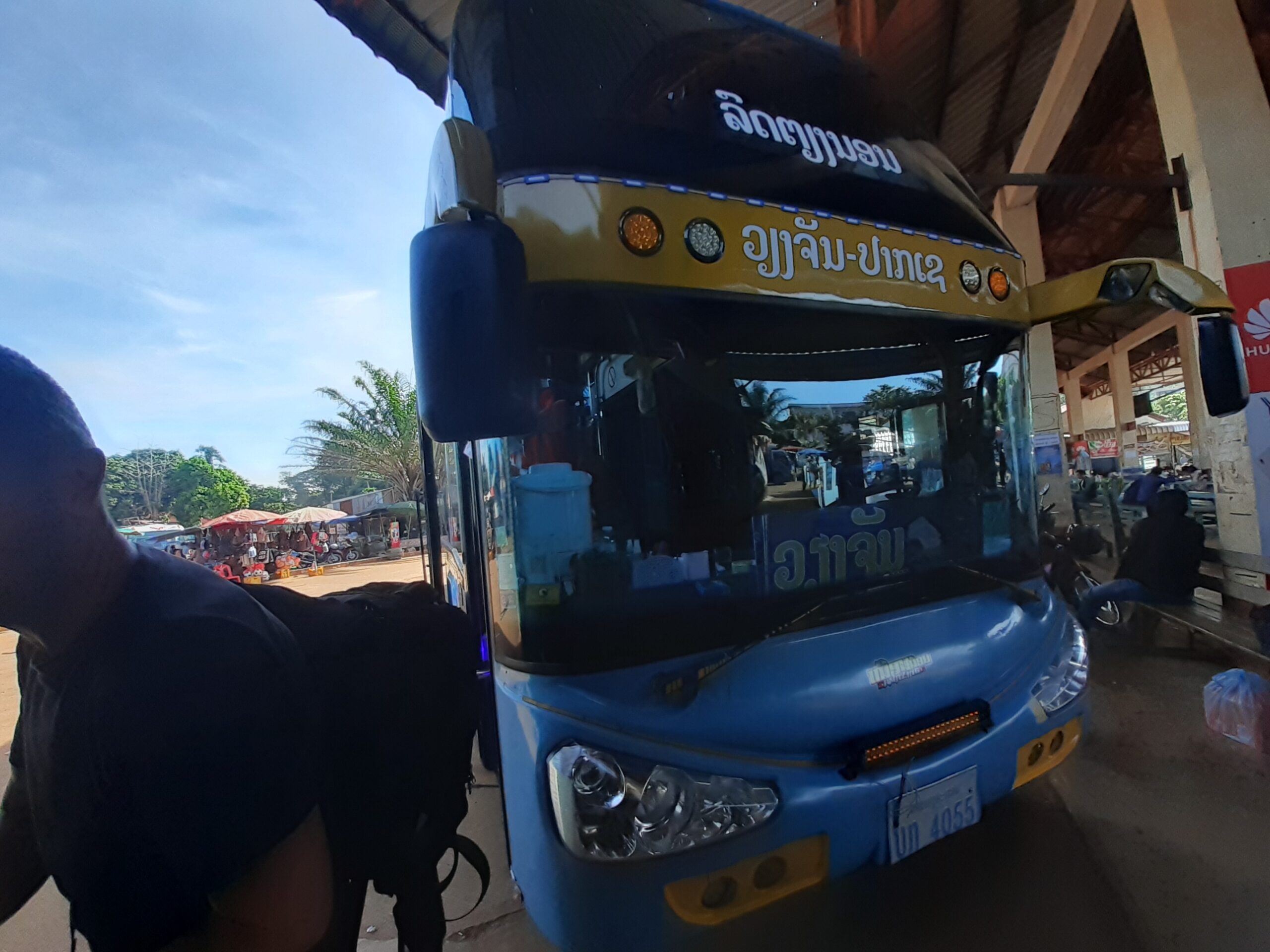
For independent travellers moving north from Pakse, the destination of Thakhek is a mandatory stopover—famed primarily as the launchpad for the legendary “Thakhek Loop” motorbike adventure. However, the overland transit between these two cities poses a notorious logistical headache. The standard tourist buses departing from central Pakse leave exclusively in the evening, dropping passengers on the side of the highway in Thakhek at a brutal 2:00 AM.
We were lucky because we had managed to get a minibus from 4,000 islands to Pakse’s eastern Southern Bus Terminal (commonly called the 8km Bus Terminal). There, we managed to hunt down an incredibly convenient logistical opportunity : a rare 9:50 AM morning departure via a Vientiane-bound VIP sleeping bus which had probably started somewhere else. Based on our real-time journey in December 2022, this comprehensive transport review covers the ticket booking strategy, a thorough review of the unique (and slightly awkward) two-person shared double beds, and how to safely negotiate a ride to the town centre upon arrival.
🇯🇵 この記事を日本語で読む: パクセーからターケークへの行き方!朝発の寝台バス(スリーピングバス)利用の裏ワザと車内レビュー
Quick Transit Summary
- The Travel Hack: Avoid the central Chitpasong terminal evening buses. Take a songthaew out to the 8km Southern Bus Terminal to look for daytime long haul sleeping buses heading north to Vientiane.
- The Bunk Setup: Lao sleeper buses utilize a shared double bed system. If you travel solo, you will be assigned to sleep shoulder to shoulder with a complete stranger of the same gender. Pair up with a travel partner if you can!
- The Reality of Time: Sold to us as a 9 hour journey arriving at 7:00 PM, the bus acts as a regional cargo freighter. Frequent stops to load massive boxes pushed our actual arrival at the Thakhek Inter Provincial terminal to 8:00 PM (a 10-hour total duration).
- Ticket Cost: 200,000 Kip per person flat for the sleeping berth.
1. Dodging the 2:00 AM Drop-off: Hunting the Morning Sleeper
If you buy a standard ticket from the travel agencies in downtown Pakse, you will almost certainly be placed on the 8:00 PM evening VIP bus. While sleeping on a moving bus sounds efficient, being dumped at a dark, deserted highway terminal in Thakhek at 2 or 3AM is a miserable experience. You’re left haggling with predatory night drivers and waking up guesthouse owners just to find a bed.
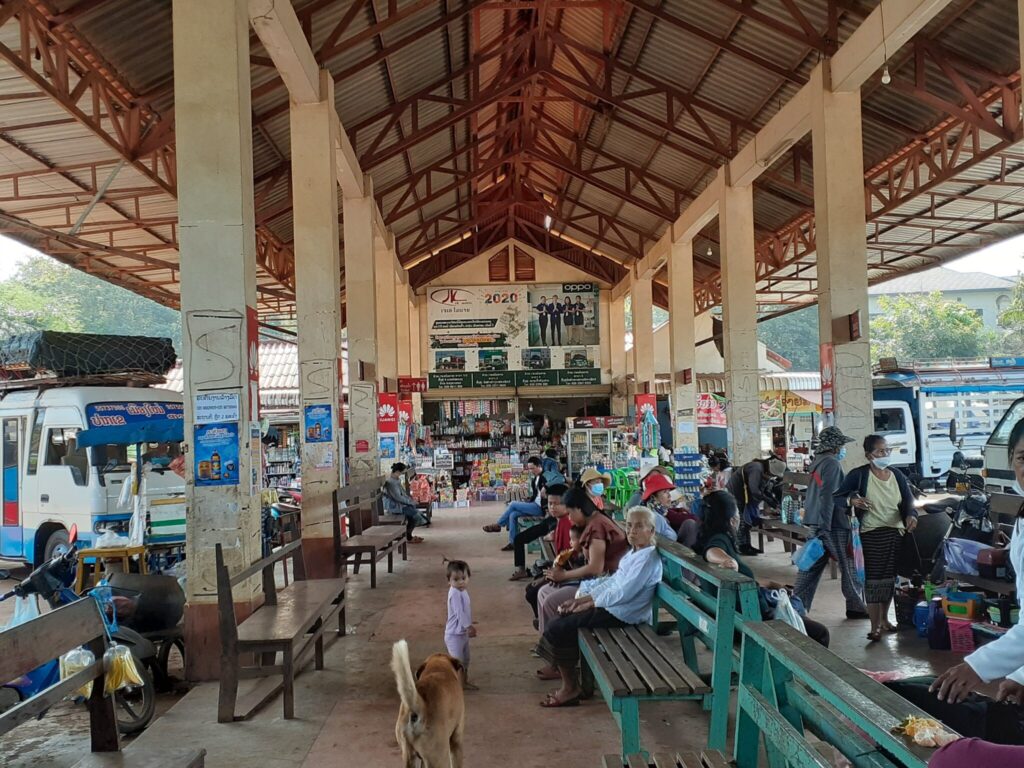
We wanted a daytime run. After catching an early morning minibus up from the 4,000 Islands, we landed at Pakse’s Southern Bus Terminal (8km Bus Terminal). Originally, our backup plan was to take a slow local bus to Savannakhet, sleep there for a night, and proceed to Thakhek the next morning.
The Backstory to Our Mad Dash: Curious about why we were in such a massive rush to flee the deep south and jump straight onto a northbound sleeper? Read our slightly chaotic escape story from the 4000 Islands here: ➡ Escaping Si Phan Don: A Quick Exit from Don Khong to Pakse by Minibus
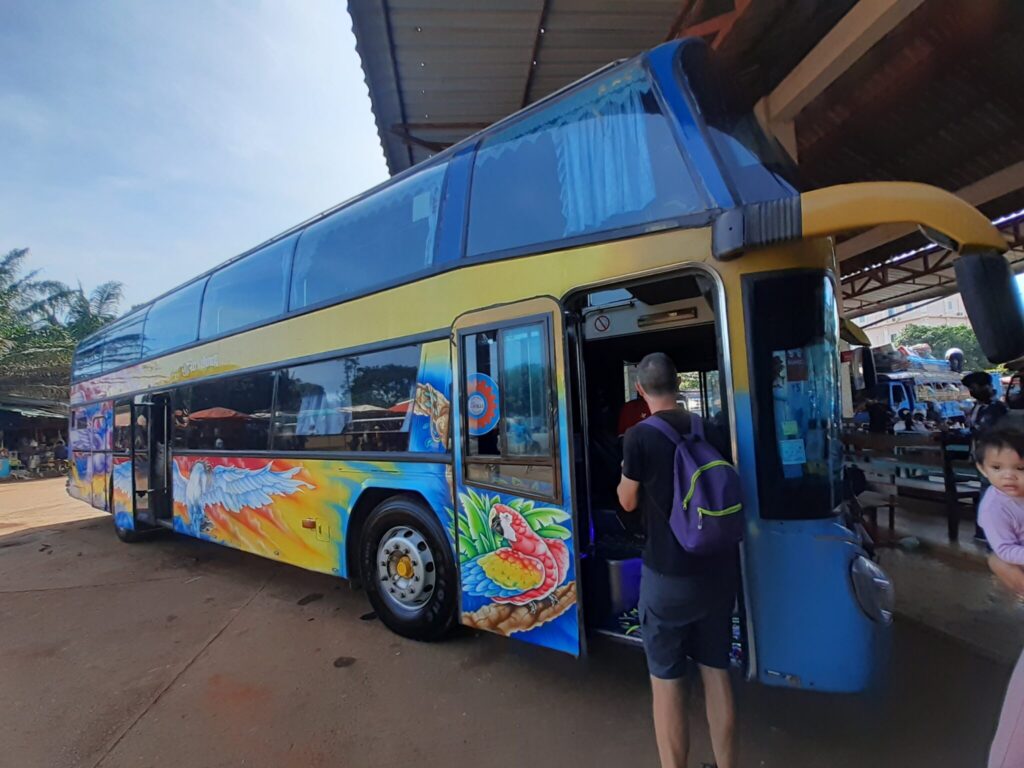
But as we surveyed the bus terminal dirt lot, we spotted a massive double decker VIP sleeping bus bound for Vientiane. I approached the ticket window, and the agent confirmed it was leaving at 9:50 AM and would pass directly through Thakhek around 7:00 PM. We purchased our tickets immediately for 200,000 Kip each, thrilled to have secured a civilised, daylight journey.
Useful Information for Your Laos Trip:
Visa Extension Guide: ➡ Laos Visa Extension Guide: Oudomxay vs Luang Namtha Costs, Rules, and 23-Hour Fast-Track Success
Border Crossing Guide:
➡ Hue to Savannakhet Border Guide via Lao Bao Border: Crossing from Vietnam to Laos
➡ Paksan to Bueng Kan Border Crossing (Laos – Thai) Mekong River by Boat
2. The Lao Bunk Setup: Getting Cozy in a Shared Double Bed
Stepping inside a Lao sleeper bus for the first time is a fascinating culture shock. Unlike Vietnamese sleeper buses—which feature individual, narrow plastic pods arranged in three rows—Lao VIP buses feature two rows of wide, horizontal two person double beds.
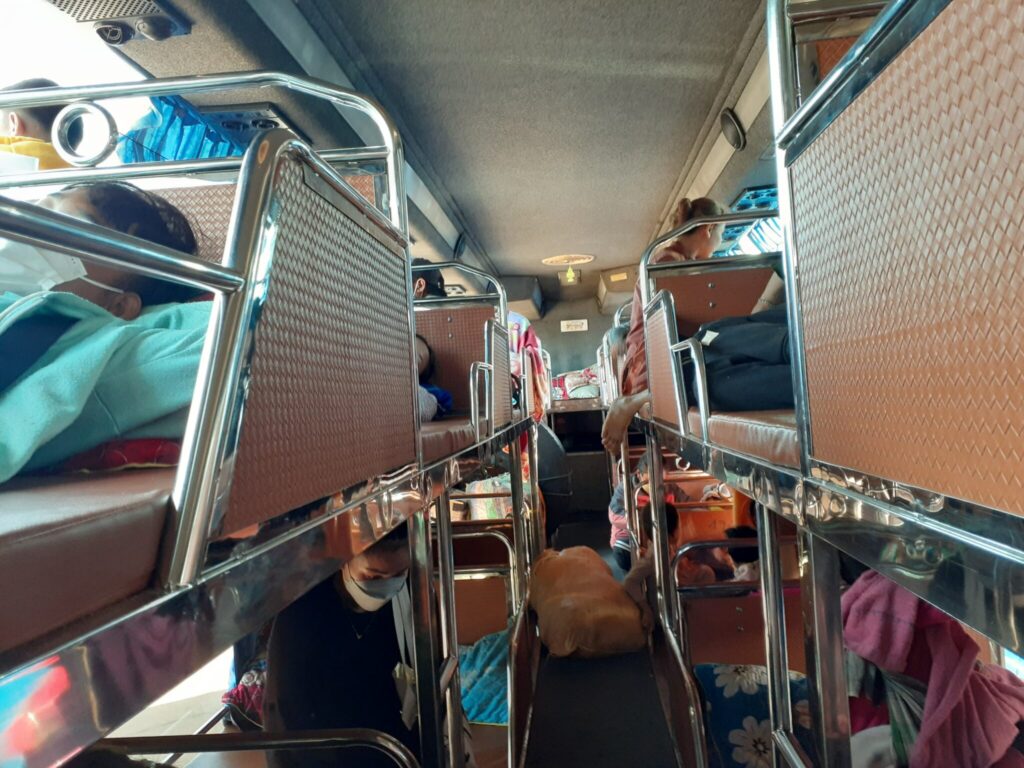
For couples or travel partners like Mai and me, this configuration is an absolute luxury. You essentially get a private mini-bed to curl up in and watch the Laotian countryside roll past the window.
However, there is a massive catch for solo backpackers:
The Stranger Danger Rule: If you purchase a single ticket, you are only buying half of that double bed. The bus crew will fill every single slot, meaning you will be assigned to sleep shoulder to shoulder with a complete stranger of the same sex for the next 10 hours. If the idea of rubbing shoulders with a random passenger makes you uncomfortable, you will either need to pay double to book the entire berth or opt for a standard seat bus instead.
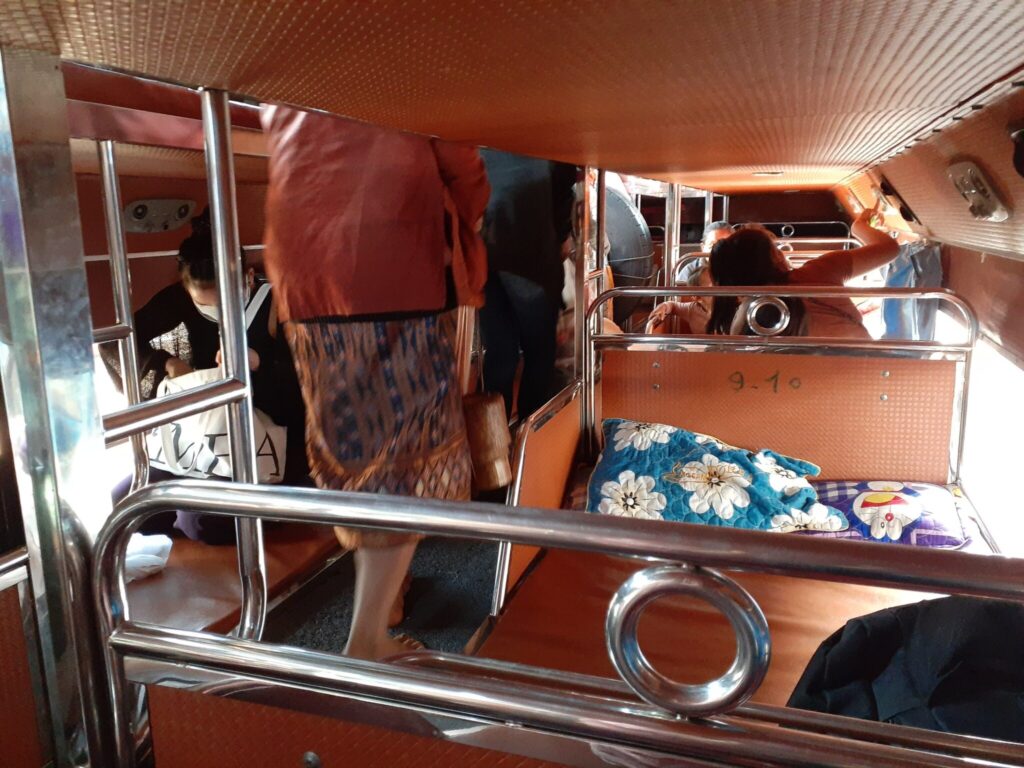
With our bags stowed in the lower cargo hold and about twenty minutes left before departure, we grabbed a couple of fresh Laotian baguettes (Khao Jee Pâté) from a terminal stall for 8,000 Kip each and settled into our upper-deck bunk.
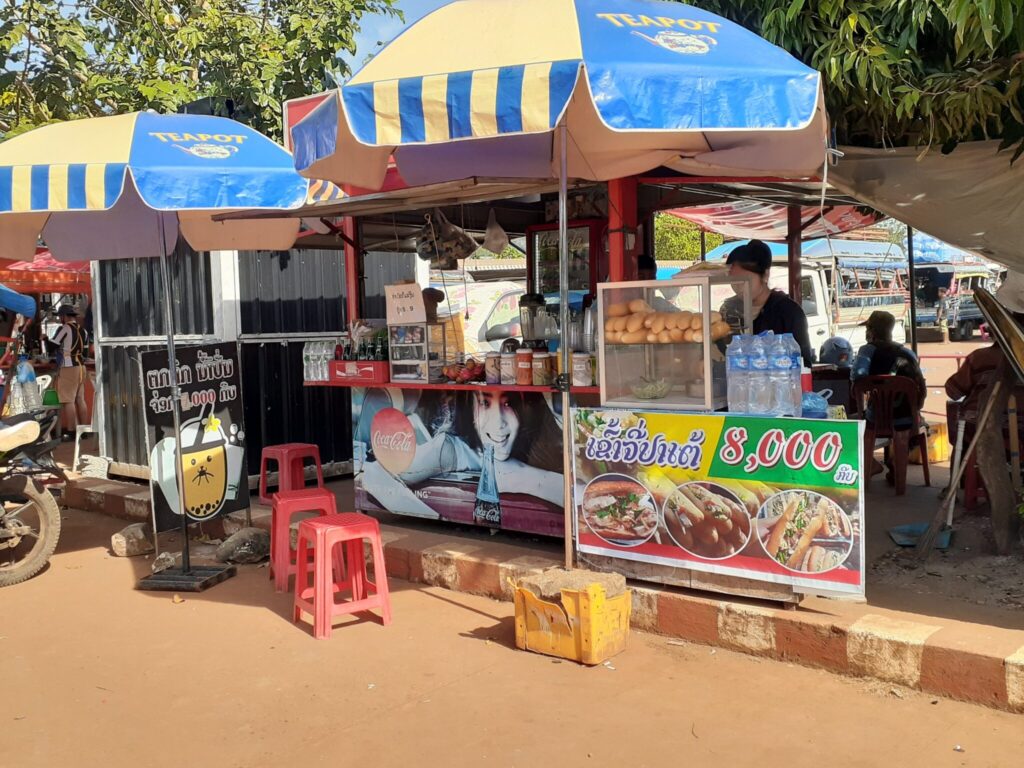
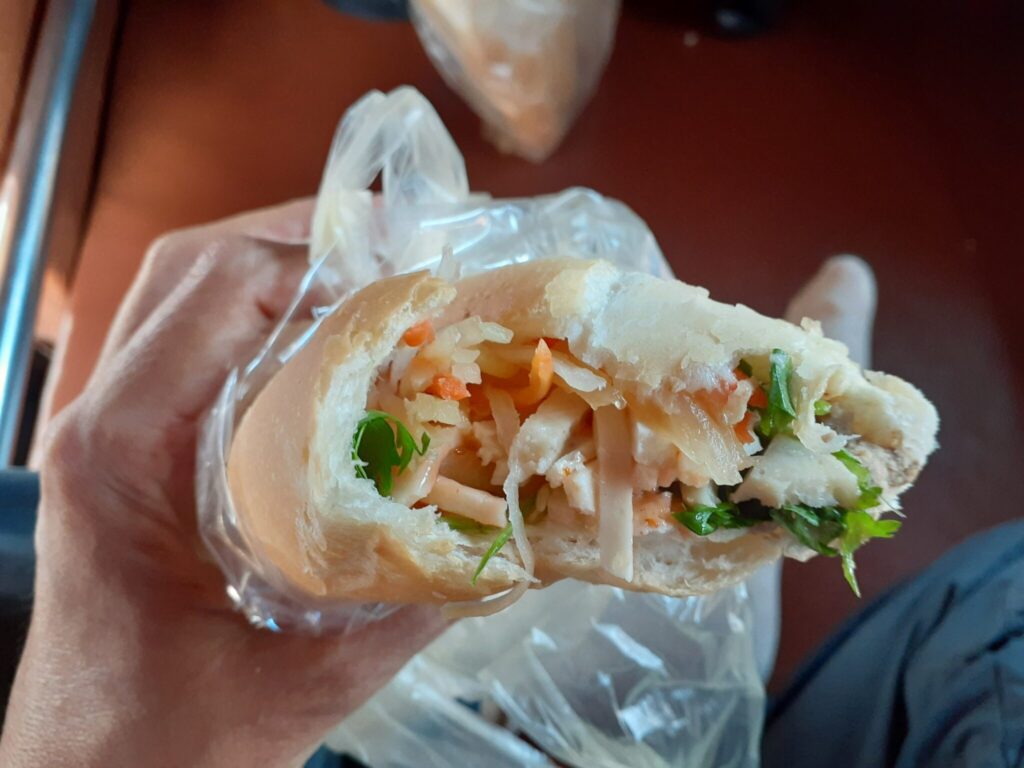
Laos’ French Colonial Flavors: Munching on crusty baguettes at local bus stations is a delicious reminder of the French colonial history left behind in Central Laos. If you love stunning colonial architecture and quiet riverside towns, make sure to add this stopover to your route: ➡ The Mellow Side of Laos: Savannakhet 2-Day Guide & Things to Do
3. The Overland Journey: Running a Mobile Freight Service
The bus engine roared to life right on time at 9:50 AM, swinging north onto Route 13. While our bunk was reasonably comfortable, we quickly learned why regional Lao transit takes so long.
This bus didn’t just carry backpackers and locals—it functioned as the main postal and cargo system for Southern Laos. Every few kilometres, the driver would pull over on the shoulder of the highway. The crew would jump out, open the cargo bays, and spend fifteen minutes hoisting massive cardboard boxes, sacks of grain, and agricultural equipment out to waiting locals on motorbikes.
Because the bus prioritized loading and unloading freight over maintaining a strict passenger schedule, our progress was incredibly slow. Combined with a few local restroom stops, our projected 7:00 PM arrival time quickly slipped away. By the time the bus finally arrived into the Thakhek terminal, it was 8:00 PM. It was a long 10 hour haul, but still a massive victory compared to a 2 or 3 AM arrival.
Our Handpicked Must-Visit Spots:
Based on our own journeys, here are the absolute best places in Laos that captured our hearts.
➡ Luang Prabang Travel Guide: 3-Day Temple Walking Route, Chompet Ferry & Local Night Markets
➡ Wat Phou Travel Guide – Day Trip from Pakse: A Complete Motorbike Guide
➡ The Plain of Jars Travel Guide from Phonsavan: A Complete Sightseeing & Motorbike Survival Tips
➡ Nong Khiaw Travel Guide: Hiking Pha Daeng Peak, Local Eats & Slow Travel Tips
➡ Muang Ngoy Travel Guide: Ultimate Travel Guide to Laos’ Hidden Riverside Village
4. Arriving in Thakhek: Surviving the Terminal Tuk-Tuk Gauntlet
The bus drops all northbound travelers off at the Thakhek Inter Provincial Bus Station.
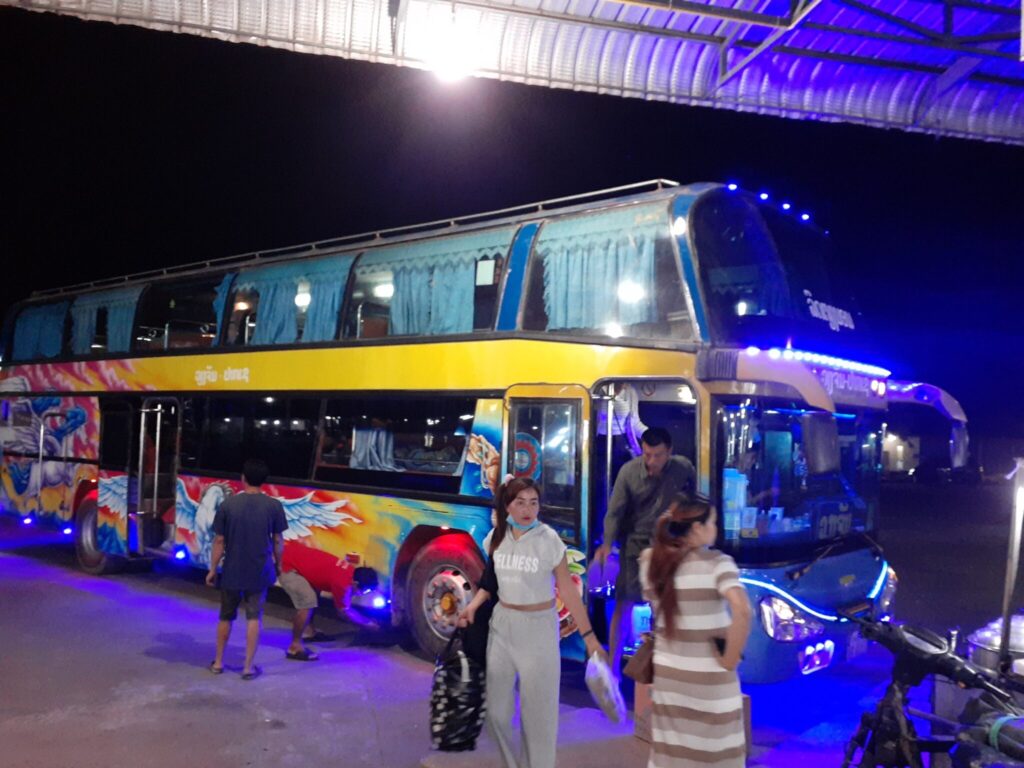
Like most transportation hubs in Laos, this station was built deliberately outside the city limits—sitting roughly 5 kilometers away from the central riverfront where all the main backpacker hostels and guesthouses are clustered. For most people, walking with heavy gear is out of the question, so you are forced to deal with the waiting armada of local Tuk-Tuk drivers.
- The Fair Price: The standard local rate for a shared Tuk-Tuk ride into central Thakhek is between 25,000 to 30,000 Kip per person.
- The Negotiation: The second you step off the bus steps, drivers will surround you quote hyper-inflated tourist rates—often demanding 50,000 Kip or more per head. Stay calm, shake your head, and repeat the 30,000 Kip figure. We walked down the line, firmly negotiated with a driver, and secured a fair group rate into the town center.
We checked into our guesthouse along the Mekong, grabbed a cold Beer Lao and chilled out. Tomorrow, it’s time to find a motorbike rental shop and plot our path out into the wild caves of the Thakhek Loop!
➡ Read Next: The Ultimate Guide to the Thakhek Motorbike Loop: Routes, Bike Rentals, and First-Time Survival Tips
Comment