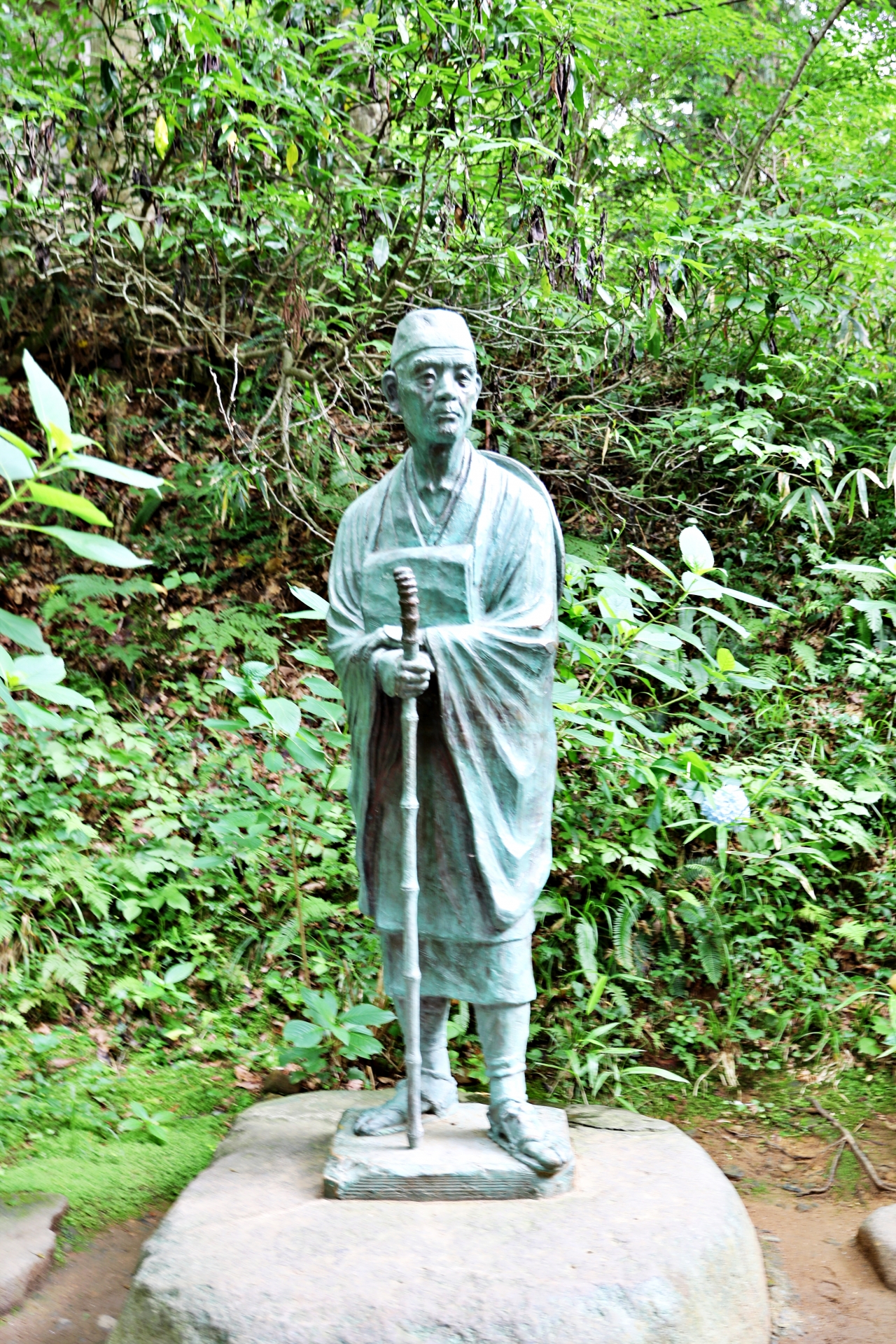
As we finalise the details of our upcoming 13-day journey through Tohoku, every item on our itinerary fills us with mounting excitement. Beyond exploring the dramatic history left behind by samurai lords like Date Masamune in Sendai and Minamoto no Yoshitsune in Hiraizumi, our trip is anchored by another profound layer of inspiration. We are following in the footsteps of our ultimate predecessor in travel: Matsuo Basho, the legendary haiku master who walked the roads of northern Japan more than 330 years ago. Blending breathtaking landscapes with deep historical resonance, this approach turns our standard holiday into a timeless, literary adventure.
🇯🇵 この記事を日本語で読む: 【東北旅行の前に読みたい】松尾芭蕉『奥の細道』の足跡をたどる、時空を超える文学ロード
- Who Was Matsuo Basho? The Master of Haiku and Wandering Traveller
- What is Oku no Hosomichi? The Greatest Literary Journey of Japan
- Starting the Northern Trail at the Shirakawa Barrier
- Shiogama and Matsushima: Landscapes That Left Basho Speechless
- Hiraizumi: The Echo of Fallen Heroes and “Summer Grass”
- Sakata and Kisakata: The Northernmost Waters and the Floating Isles
- The Mountain Temple of Yamadera: Silence Carved in Stone
- Following the Footsteps Across the Centuries
Who Was Matsuo Basho? The Master of Haiku and Wandering Traveller
Before tracing his journey across the map, it is worth introducing the man behind the legendary brush. Born in 1644 and passing away in 1694, Matsuo Basho is revered as the undisputed master of haiku, having elevated the traditional Japanese short verse form from playful wordplay into a deeply spiritual and artistic medium.
Turning his back on a conventional samurai-linked career, Basho chose a life of itinerant wandering. He travelled across Japan not as a leisurely tourist, but as a devoted seeker of beauty and truth. Through solitary walks, humble lodgings, and quiet contemplation of nature, he captured the mono no aware—the gentle, bittersweet melancholy of transient things—in just seventeen syllables. His timeless poetry and philosophy continue to captivate travellers and scholars across the globe, making him the ultimate patron saint of anyone who hits the road to discover more about the world and themselves.
What is Oku no Hosomichi? The Greatest Literary Journey of Japan
In the spring of 1689 (the second year of the Genroku era), as he approached his fiftieth year, Basho and his loyal disciple Kawai Sora set out from Edo (modern-day Tokyo) on an epic pilgrimage to the scenic and historic backwaters of northern and western Japan. Relying entirely on walking and river boats, they covered an astonishing 2,400 kilometres over roughly 150 days.
The resulting travel diary, Oku no Hosomichi (The Narrow Road to the Deep North), stands as an absolute masterpiece of Japanese literature. This was no ordinary sightseeing expedition. Set against a backdrop of newly established peace in the Edo period, Basho’s journey was an introspective quest. He sought out the ghosts of fallen heroes, ancient shrines, and pristine wilderness, distilling the profound emotions and transient beauty of the landscape into poetry that still resonates centuries later.
➡ 2-Week Tohoku Itinerary in September: A Slow-Paced Couple’s Backpacking Guide
Starting the Northern Trail at the Shirakawa Barrier
Our own journey through Tohoku kicks off in Shirakawa, Fukushima Prefecture, which historically served as a heavily guarded checkpoint marking the official gateway into the northern frontier known as Michinoku.
For Basho and Sora, crossing the Shirakawa Barrier was a deeply symbolic moment—the psychological threshold where they left the familiar comforts of Edo behind and plunged into the wilder, remote north. Filled with anticipation and traveller’s anxiety, Basho immortalised the checkpoint in his writings. Today, stepping off a local train into the fresh air of Shirakawa instantly places us on the very same historical starting line as our great predecessor.
➡ Shirakawa 1 Day Itinerary for History, Ramen & Sake in Fukushima
Shiogama and Matsushima: Landscapes That Left Basho Speechless
Moving onward to the Pacific coast of Miyagi Prefecture, Basho turned his gaze toward Shiogama and the famed islands of Matsushima—hailed for centuries as one of Japan’s most scenic views.
Though the famous verse often attributed to him—“Matsushima-ya, aa Matsushima-ya, Matsushima-ya”—is actually a later folk attribution, Basho’s true journal entry reveals a far more striking reaction: he was so completely overwhelmed by the breathtaking harmony of pine-clad islets and blue ocean that he was struck utterly speechless, unable to write a single line. The intricate coastal beauty that stopped a master poet in his tracks remains just as mesmerising for modern travellers today.
➡ Shiogama 1 Day Itinerary: Best Things to Do, Sake Tasting & Access from Sendai
➡ Matsushima Half-Day Itinerary: A Walking and Public Transit Guide Without a Car
Hiraizumi: The Echo of Fallen Heroes and “Summer Grass”
One of the ultimate emotional peaks of both our itinerary and Basho’s journey is Hiraizumi in Iwate Prefecture.
Centuries before Basho arrived, the powerful Ōshū Fujiwara clan carved a magnificent, independent golden utopia out of this northern valley—a peaceful sanctuary that later became the tragic final refuge of Minamoto no Yoshitsune. When Basho stood amidst the ruins of their former glory, surrounded by whispering winds and ancient earth, he was overcome by a profound sense of impermanence. Looking out over the overgrown fields where valiant samurai once fought and dreamed, he penned one of the most famous haiku in Japanese history:
“Summer grass—
all that remains
of warriors’ dreams.”
Standing before the tranquil golden glow of Chusonji’s Konjikidō and recalling Basho’s tears beneath the summer grass connects us directly to the poignant heart of human history.
Sakata and Kisakata: The Northernmost Waters and the Floating Isles
Crossing over toward the rugged Sea of Japan, Basho and his companion navigated down the powerful Mogami River and reached the bustling port town of Sakata, eventually pushing onward to Kisakata—the absolute northernmost destination of their entire overland journey in the north.
At the time, Kisakata was a marvel of nature: a coastal lagoon where intricate islets seemed to float upon the tide, creating an unearthly, mirror-like reflection of the sky and mountains. Caught in a soft, misty rain that veiled the landscape in melancholic beauty, Basho captured the ethereal atmosphere by comparing the delicate silk-tree blossoms to a tragic ancient Chinese beauty:
“At Kisakata—
in the rain, the silk-tree blossoms
like Lady Xishi in sorrow.”
This unique intersection of roaring waves and tranquil, poetic backwaters offers a glimpse into how deeply the wild coastal topography of the north stirred the master’s imagination.
➡ Sakata, Yamagata 1 Day Itinerary: Best Route for First-Time Visitors Around Sakata Station
The Mountain Temple of Yamadera: Silence Carved in Stone
Further along the loop in Yamagata Prefecture lies Yamadera (Risshaku-ji), a cliffside temple complex rooted in mountain asceticism that served as another vital stop on Basho’s route.
Climbing the steep stone steps through a deep canopy of ancient cedar trees, Basho stepped entirely away from the noise of the secular world into a profound mountain silence. In that still, sacred atmosphere, where only the chirping of cicadas broke the air, he captured the essence of absolute quietude in a legendary verse:
“So quiet—
the cicada’s voice sinking
into the rocks.”
The contrast between the arduous climb and the sudden, breathtaking stillness at the summit is an experience every modern traveller can still step into and feel firsthand.
➡ Yamagata 1 Day Itinerary: Best Route for First-Time Visitors Around Yamagata Staion
Following the Footsteps Across the Centuries
From the barrier gate of Shirakawa to the golden halls of Hiraizumi, the coastal mists of Kisakata, and the silent stone steps of Yamadera, Tohoku is a region deeply woven with the soul of Matsuo Basho.
While our modern journey benefits from local trains, comfortable buses, and modern conveniences that Basho could only dream of, the fundamental landscape has not changed. The rolling mountain ridges, the crisp northern air, and the quiet dignity of historic sites remain entirely intact. By mapping our travels onto the tracks of our great predecessor, we aren’t just sightseeing—we are joining an ancient lineage of travellers, letting poetry and history guide our steps through the wondrous depths of northern Japan.
➡ 2-Week Tohoku Itinerary in September: A Slow-Paced Couple’s Backpacking Guide
➡ Back to Tohoku Travel Guide
Comment