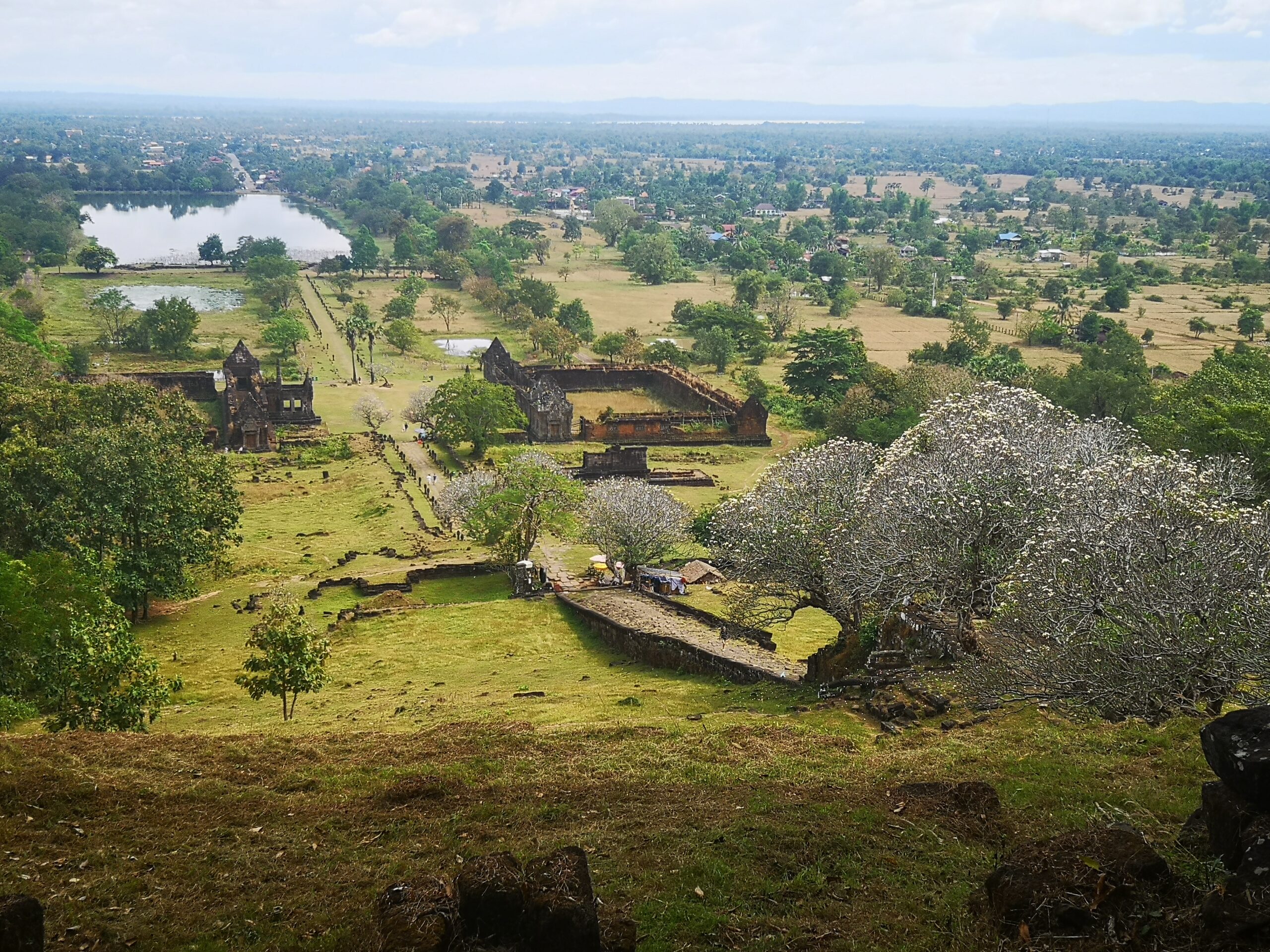
Tucked away at the base of Mount Phou Kao, roughly an hour south of Pakse, lies the ancient and deeply spiritual Khmer temple complex of Wat Phou (Vat Phou). While it may not match the colossal, sprawling scale of Cambodia’s Angkor Wat, this hidden UNESCO World Heritage site offers something its famous cousin rarely can: majestic pre-Angkorian stone ruins stripped of the suffocating tourist crowds, allowing you to wander through history in near-total tranquility.
Getting to this archaeological marvel used to involve a logistical headache of local ferries and bumpy roads. Today, thanks to newly paved bridges and smooth river highways, a DIY scooter trip from Pakse is the single best way to experience the rural heartbeat of Southern Laos at your own pace.
Whether you are looking to conquer the steep, frangipani-lined stone stairs for a breathtaking view of the Mekong Valley or figure out the local “passport vs. cash” deposit unwritten rules at rental shops, this complete, first-hand guide covers it all. Updated for 2026, here is everything you need to know to execute the perfect motorbike day trip to Wat Phou, including a couple of incredible, crowd-free detours on your way back to town.
🇯🇵 この記事を日本語で読む: ラオス世界遺産ワット・プーへの行き方完全ガイド!パクセーからレンタルバイクで日帰り観光する方法
Useful Information for Your Laos Trip:
Visa Extension Guide: ➡ Laos Visa Extension Guide: Oudomxay vs Luang Namtha Costs, Rules, and 23-Hour Fast-Track Success
Border Crossing Guide:
➡ Hue to Savannakhet Border Guide via Lao Bao Border: Crossing from Vietnam to Laos
➡ Paksan to Bueng Kan Border Crossing (Laos – Thai) Mekong River by Boat
Why Visit Wat Phou?
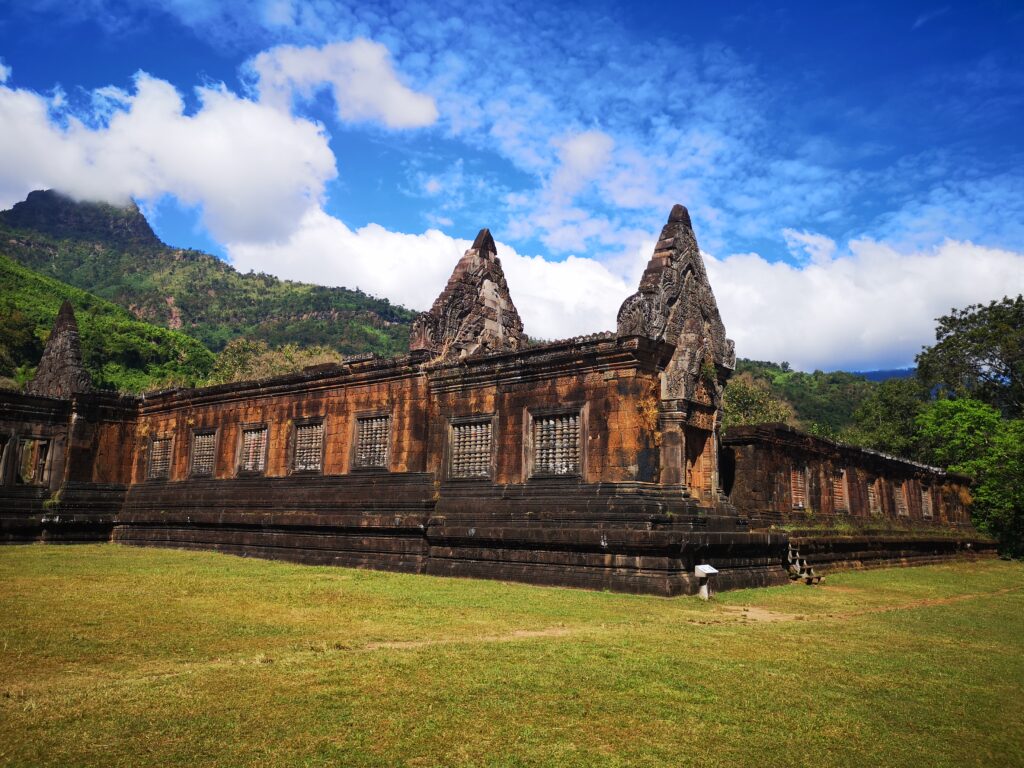
While many travelers flock to Luang Prabang or Vang Vieng, Wat Phou (Vat Phou) remains one of Laos’ most rewarding hidden gems. If you are wondering whether it’s worth the trip down to Southern Laos, here is why this UNESCO World Heritage site deserves a spot on your itinerary:
1. A Glimpse of the “Angkor” Empire Without the Crowds
Wat Phou is a pre-Angkorian Hindu temple complex built by the Khmer Empire. In fact, it served as the blueprint for the famous Angkor Wat in Cambodia. Unlike the bustling crowds in Siem Reap, you can often explore these majestic ruins in near-total serenity. Walking through the ancient stone pillars feels like stepping back in time.
2. Stunning Mountainside Architecture
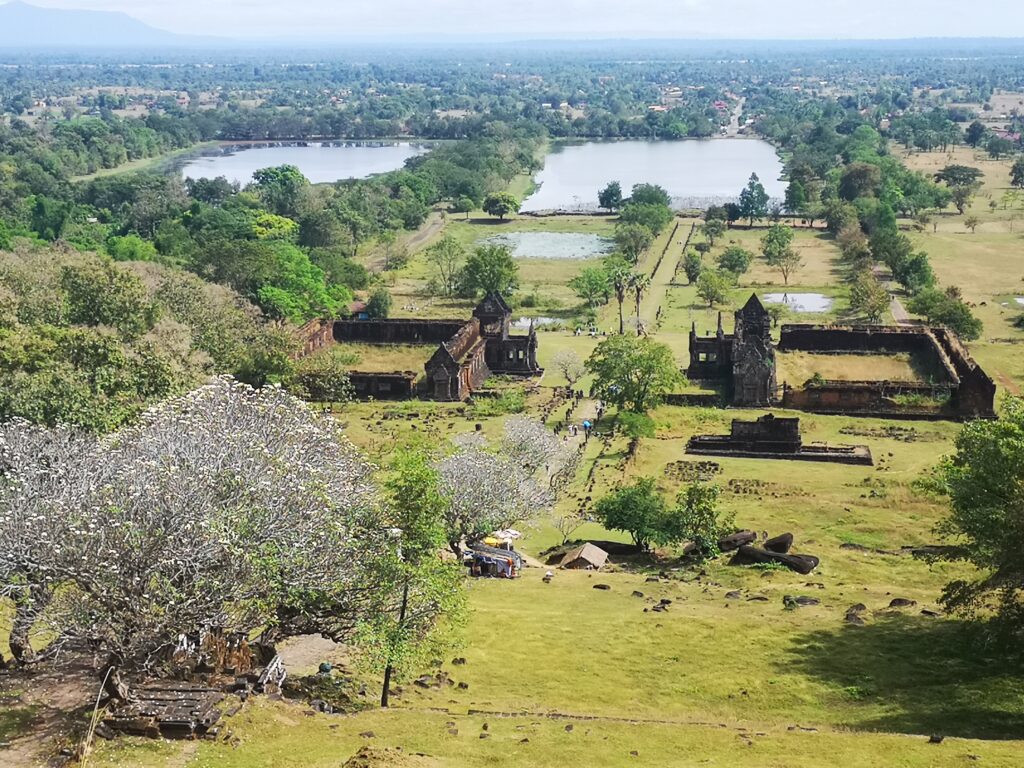
What makes Wat Phou unique is its layout. Instead of being built on a flat plain, the temple climbs up the base of Mount Phou Kao. The natural spring water flowing from the mountain was once considered sacred, feeding the temple’s rituals. As you ascend the steep, atmospheric stone stairs lined with frangipani trees, the view of the Mekong Valley opening up behind you is simply breathtaking.
3. A Deeply Spiritual Experience
Even after 1,000 years, Wat Phou remains a living place of worship. You’ll see local devotees offering flowers and incense to the Buddha statues that now occupy the ancient Hindu shrines. If you choose to stay in the nearby village of Champasak (where Mai stayed 11 years ago), you can witness an authentic morning alms-giving ceremony—a peaceful, traditional experience that feels much more intimate and “real” than the tourist-heavy versions in larger cities.
4. The Perfect Road Trip Destination
The journey is just as good as the destination. The ride from Pakse to Wat Phou takes you through charming villages, past local schools, and along the scenic Mekong River. With the newly paved roads and bridges, it’s now a smooth and enjoyable scooter trip that allows you to see the authentic rural life of Southern Laos at your own pace.
How to Get to Wat Phou from Pakse
Getting to Wat Phou is part of the adventure. While the temple is about 45km south of Pakse, the route has improved significantly in recent years. Here are the two best ways to make the journey:
Option 1: Renting a Motorbike (The Best for Day Trippers)
This is our highly recommended method if you want freedom and a direct return trip.
- The Route: Forget the old ferries! Thanks to the new bridge and paved roads (Route 13 and the river road), you can now drive all the way from Pakse to Wat Phou on two wheels. The road is mostly flat and follows the Mekong River, offering beautiful rural scenery.
- Travel Time: Approximately 1 to 1.5 hours each way.
- Cost: Around 150,000 Kip per day for a scooter (plus fuel).
- Why choose this? It allows you to explore at your own pace and return to Pakse the same day without being reliant on public transport and limited schedule.
Option 2: Taking a Songthaew (The “Slow Travel” Choice)
If you aren’t comfortable on a scooter, you can take a local Songthaew (shared pickup truck).
- Where to catch it: Go to the Dao Heuang Market in Pakse. Look for the trucks heading to Champasak village.
- Cost: Roughly 40,000 Kip per person.
- Important Note: Songthaews to Champasak usually only run in the morning. Because the return Songthaews back to Pakse also leave early in the morning, taking this option usually requires staying at least one night in Champasak.
Which one should you choose?
- Go by Motorbike if you want to see the ruins and be back in Pakse for dinner. It’s efficient, fun, and easy to navigate.
- Go by Songthaew if you have extra time and want to immerse yourself in the quiet village life of Champasak (and witness the authentic morning alms-giving).
Pro Tip: If you drive yourself, start early (around 8:00 AM) to beat the afternoon heat. The climb up the temple stairs can be exhausting under the midday sun!
Renting a Motorbike in Pakse: Tips & Prices
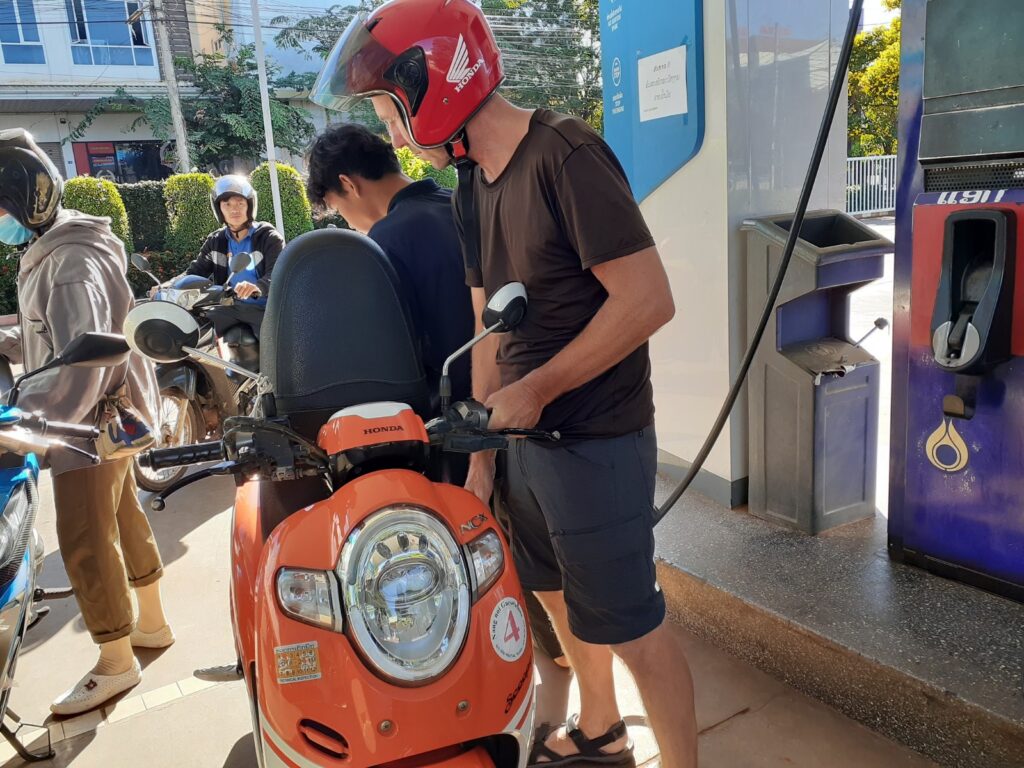
Exploring Southern Laos by scooter is a rite of passage for many travelers. While renting a bike in Pakse is generally straightforward, here is how we did it and what you should know.
Where We Rented: Nang Noy Guest House
While there are many dedicated rental shops in town, we decided to rent our bike through Nang Noy Guest House.
- Why we chose them: We had originally hoped to stay there because of their excellent reputation, but they were fully booked (a common occurrence, so book ahead!). Despite not being guests, they were incredibly helpful and had a bike available for us.
- The Process: We visited the guesthouse the day before to secure our rental. We paid the fee in advance (150,000 Kip per day) and left a passport as a deposit the next morning.
- The Verdict: The bike was in great condition, and the service was reliable. Renting from a reputable guesthouse like Nang Noy is a fantastic alternative if the popular shops like Miss Noy are sold out.
Typical Rental Prices (2026)
Prices can fluctuate due to inflation, but as of May 2026, here is what you can expect to pay for a 24-hour rental:
- Semi-Automatic (e.g., Honda Wave): 110,000 – 130,000 Kip
- Fully Automatic (e.g., Honda Click): 150,000 – 180,000 Kip
- Off-road/Manual Bikes: 250,000+ Kip
The “Passport vs. Cash” Deposit
This is the most important thing to know: Most shops in Pakse will ask to keep your original passport as a security deposit.
- Is it safe? It is a standard practice in Laos, but it naturally carries risks.
- Alternatives: Some shops may accept a cash deposit (usually around $200–$500 USD or the equivalent in Thai Baht/Kip) instead of your passport. If you are uncomfortable leaving your original document, ask: “Can I leave a cash deposit and a photocopy of my passport instead?”
Pro-Tips for a Smooth Ride
- Check the Fuel: Most rentals come with just enough fuel to reach the nearest gas station. Don’t forget to fill up before you hit the long road to Wat Phou!
- Reserve in Advance: During the high season, bikes can ‘sell out’ by 9:00 AM. Visit your chosen shop or guesthouse the evening before to “book” your bike.
- Document Everything: Take a quick video of the bike’s condition (scratches, tires, lights) before leaving.
Essential Tips for Visiting (Entrance Fee & Hours)
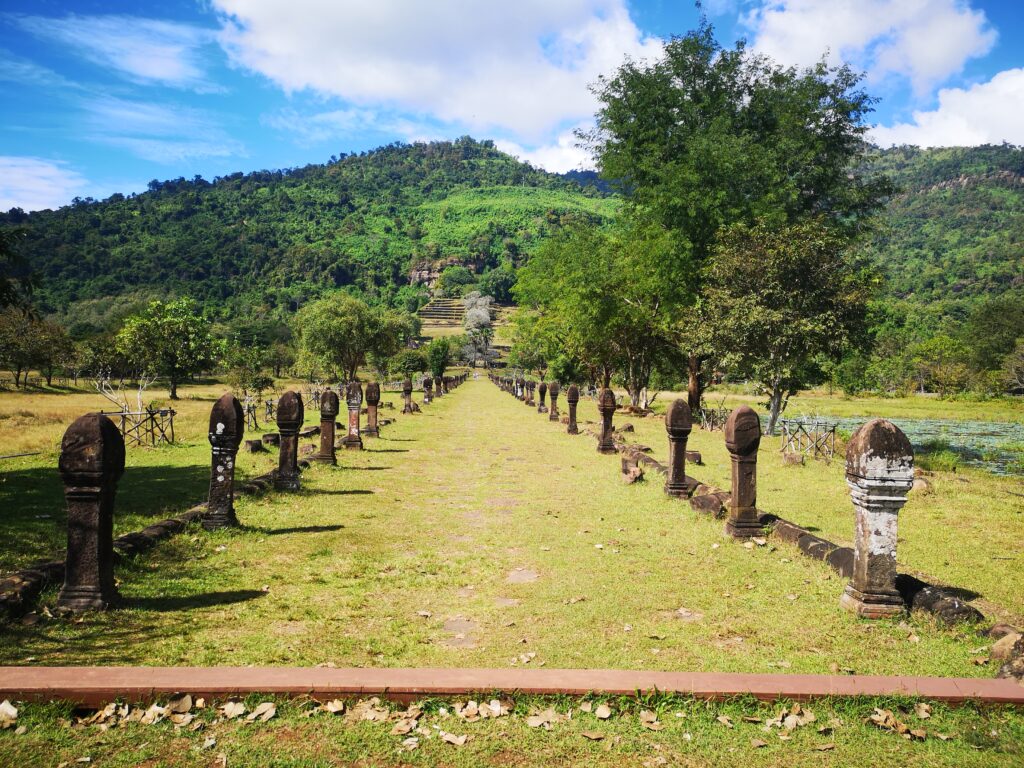
Planning a visit to Wat Phou is simple, but knowing the logistics ahead of time will help you avoid the midday heat and make the most of your ticket.
1. Entrance Fee (Updated 2026)
As of early 2026, the entrance fee for international tourists is 55,000 Kip per person.
What’s included in the price?
- The Site Access: Entry to the entire temple complex and the surrounding ruins.
- The Museum: Access to the on-site museum, which houses many of the original stone carvings and artifacts recovered from the ruins.
- Shuttle Service (Electric Cart): The ticket office is about 1 km away from the actual temple entrance. Your ticket includes a ride on an electric shuttle bus that will take you from the gate to the base of the ruins.
2. Opening Hours
- Temple Site: Daily from 8:00 AM to 6:00 PM.
- On-site Museum: Daily from 8:00 AM to 4:30 PM.
- Note: If you arrive late in the afternoon, visit the museum first, as it closes earlier than the main temple grounds.
3. Best Time to Visit
- Beat the Heat: Southern Laos can get incredibly hot. We recommend arriving right when it opens at 8:00 AM or waiting until after 3:30 PM.
- Golden Hour: The late afternoon light is magical for photography. The sun sets behind the mountain, casting long shadows across the ruins and the Mekong plain.
- Festival Season: If you visit in February (during the full moon of the 3rd lunar month), you might catch the Wat Phou Festival, where thousands of pilgrims gather for ceremonies, boat races, and night-time processions.
4. Dress Code & Etiquette
While the rules at Wat Phou are slightly more relaxed than at Angkor Wat, it is still a sacred Buddhist site.
- Cover Up: Ensure your shoulders and knees are covered as a sign of respect.
- Stay Hydrated: There is a lot of walking involved, especially the steep climb up to the sanctuary. Bring plenty of water, though there are small stalls near the entrance selling cold drinks.
- Footwear: Wear sturdy walking shoes or trainers. The ancient stone stairs are uneven and can be slippery after rain.
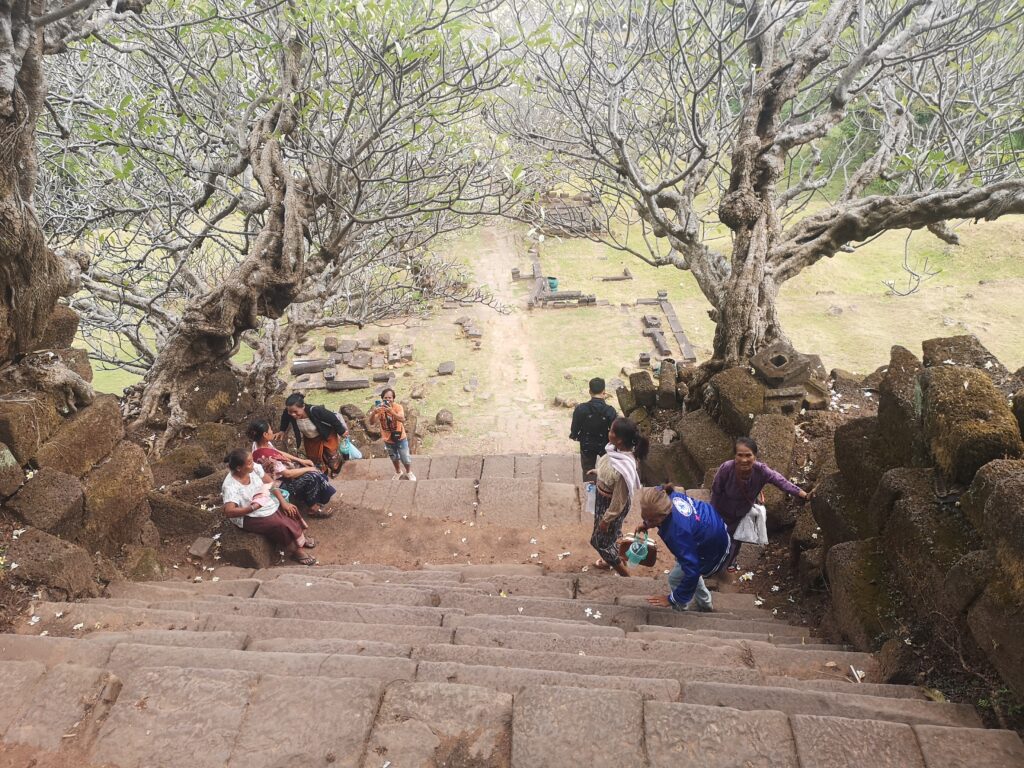
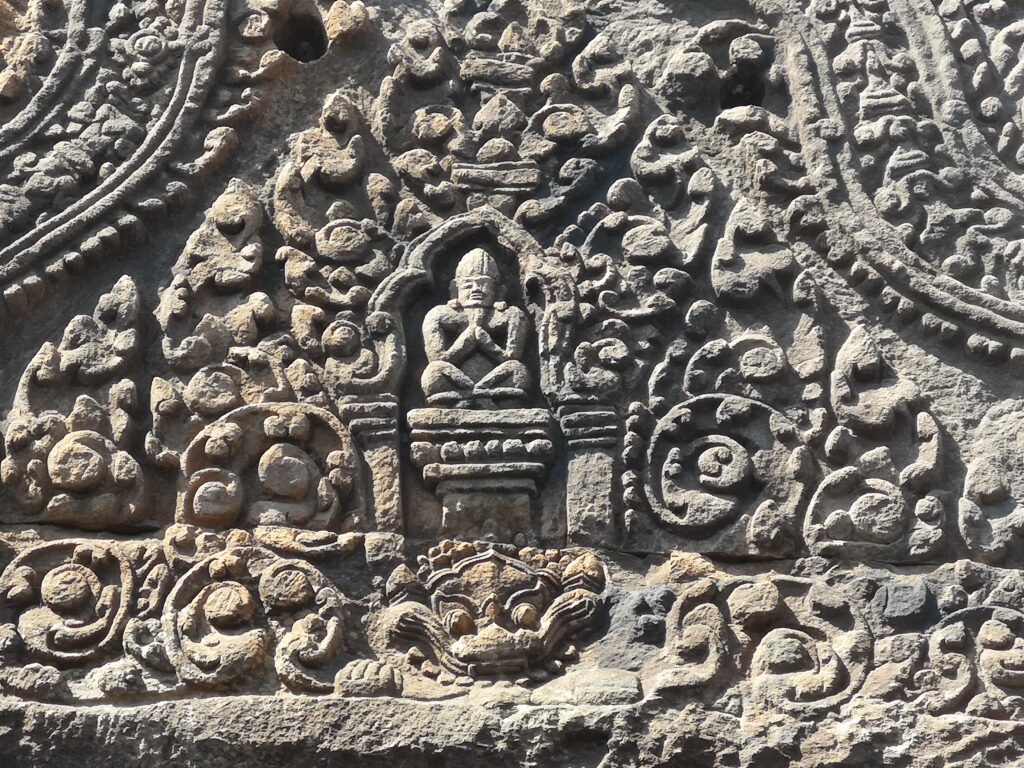
The Khmer ruins at Wat Phou are quit we spectacular and are a good way to spend 3-4 hours. I also would recommend taking a picnic and having a view like this.
Our Handpicked Must-Visit Spots:
Based on our own journeys, here are the absolute best places in Laos that captured our hearts.
➡ Luang Prabang Travel Guide: 3-Day Temple Walking Route, Chompet Ferry & Local Night Markets
➡ The Plain of Jars Travel Guide from Phonsavan: A Complete Sightseeing & Motorbike Survival Tips
➡ Nong Khiaw Travel Guide: Hiking Pha Daeng Peak, Local Eats & Slow Travel Tips
➡ Muang Ngoy Travel Guide: Ultimate Travel Guide to Laos’ Hidden Riverside Village
Worth a Detour on Your Way Back to Pakse
If you have extra time on your return journey, we highly recommend stopping at these two spots to complete your day trip.
Hong Nang Sida
We took a short detour to visit Hong Nang Cida on the way back down from the top of Wat Phou. It’s currently being restored, but is a nice little walk.
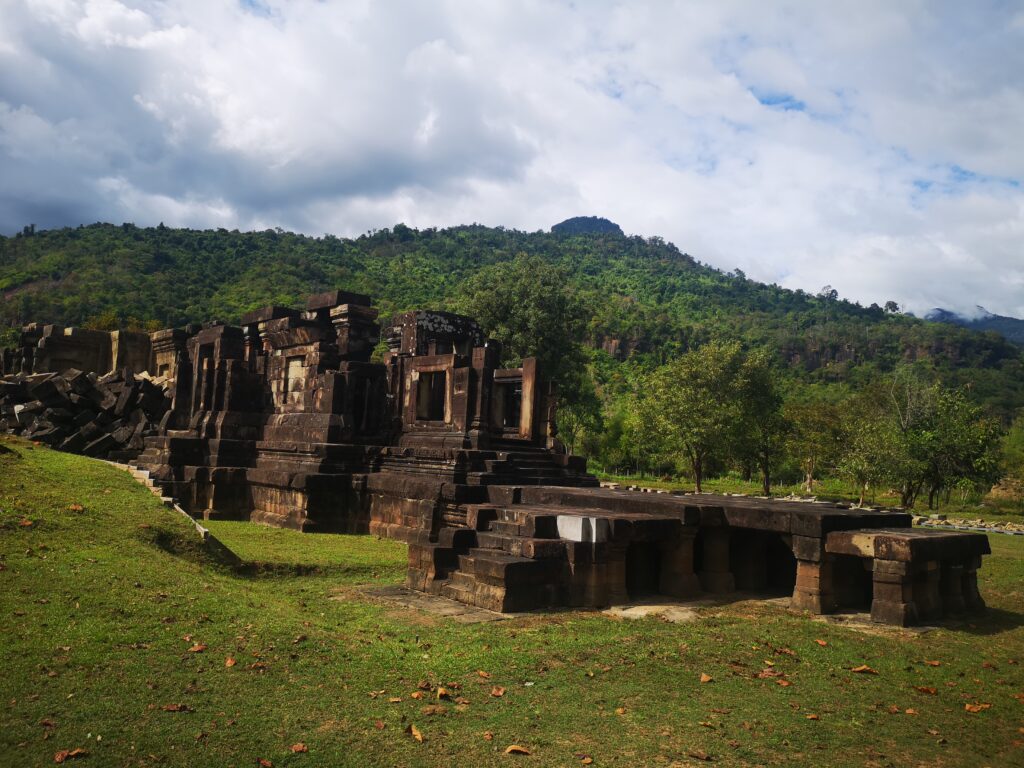
It’s much quieter than Wat Phou, often giving you the feeling of being a “temple explorer” all by yourself. You can observe the intricate restoration work being done to stabilize the ancient stones. It’s a quick but worthwhile stop for any history or archaeology enthusiast.
Giant Buddha (Wat Phou Salao)
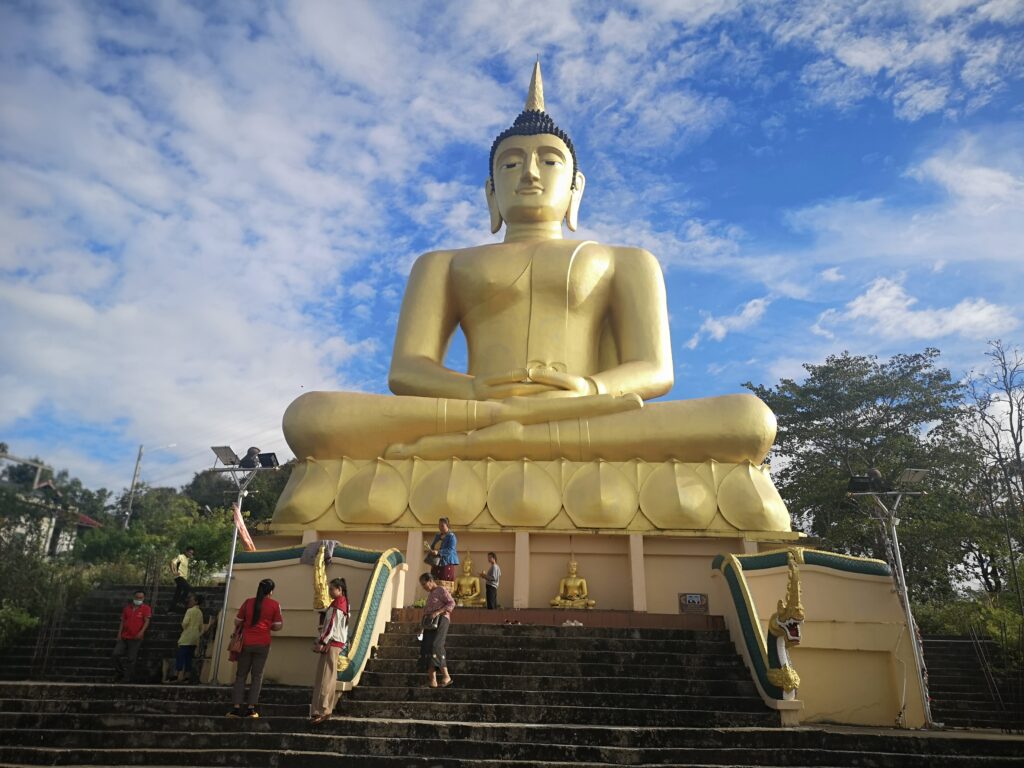
On the drive back to Pakse we stopped to have a look at the Giant Buddha (Wat Phou Salao) which overlooks the town.
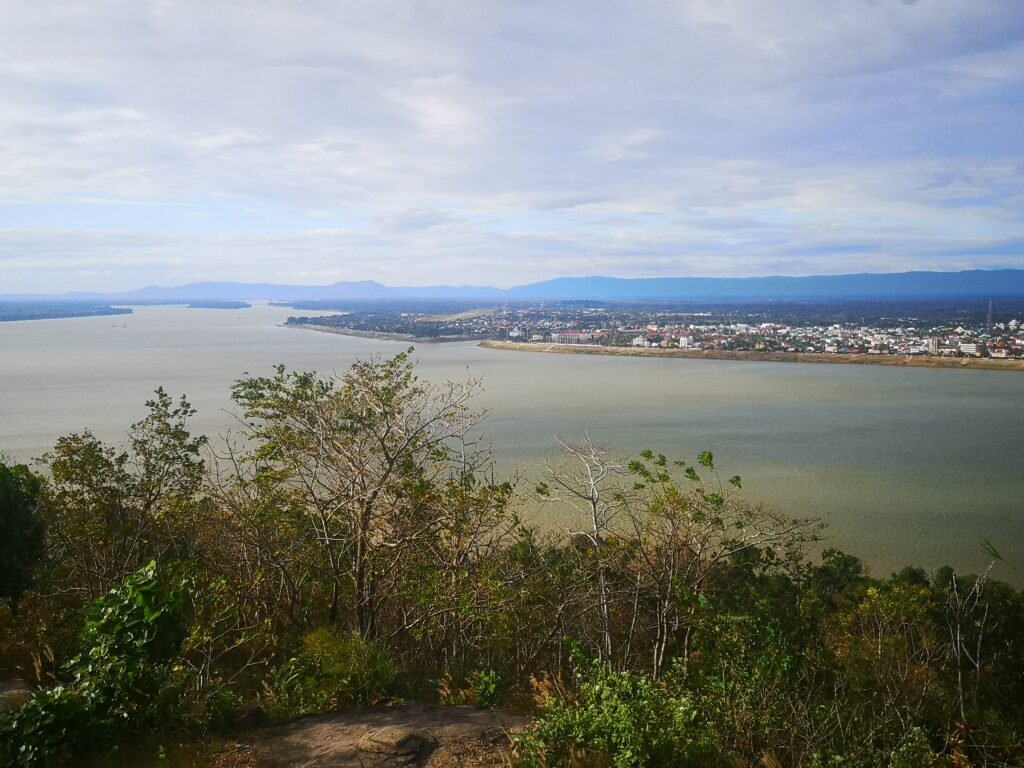
The Highlight: The view from the top is spectacular! You get a panoramic vista of the Mekong River, the Japanese-Lao Bridge, and the entire city of Pakse.
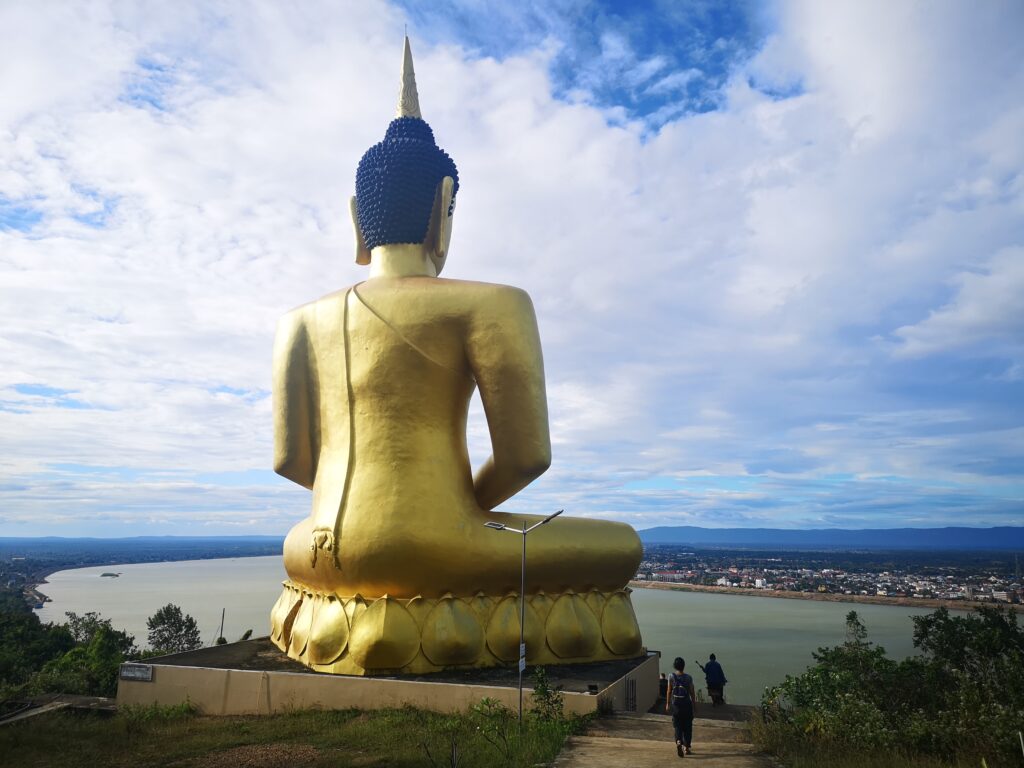
Try to time your visit for sunset. Watching the sky turn orange over the Mekong is the perfect way to end your adventure before driving back into the city for dinner.
Next Trip: Now that you have a nice bike, would you like to try a 2 day mortorbike trip from Pakse? Check out our experience!
➡ Bolaven Plateau Loop by Motorbike: A Complete 2-Day Itinerary

Comment