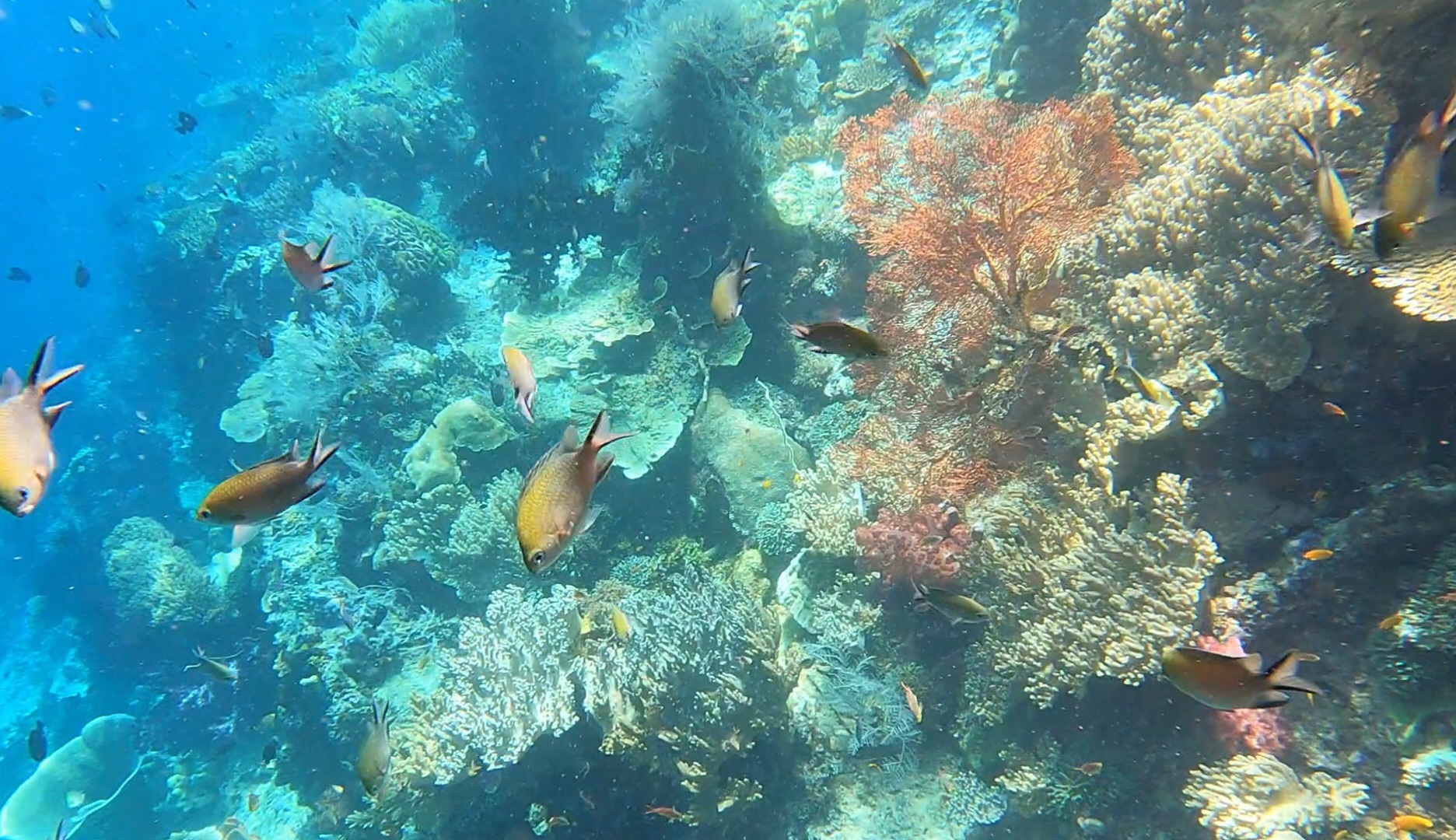
Raja Ampat is universally crowned as the ultimate underwater frontier, a dream archipelago that sits at the top of every scuba diver’s bucket list. But what if you don’t dive? Does that mean you should miss out on the world’s most biodiverse marine ecosystem?
Absolutely not. Let me make one thing crystal clear: you can experience Raja Ampat’s magic only with a mask and snorkel. In fact, while I don’t dive at all, we have travelled to Raja Ampat as independent snorkellers four separate times.
When it comes to planning a DIY trip to this remote corner of Indonesia, there is one base that is undeniably the most handy, cost-effective, and strategic in my opinion: Kri Island.
Chartering private boats as a lone snorkeller in Raja Ampat can easily bankrupt your travel budget. However, by choosing the right homestay with its own dive operation and smartly hitching a ride on their daily dive boats, you can access the region’s most legendary offshore spots safely and on a backpacker’s budget.
In this comprehensive guide, backed by our four separate stays on the island, I’ll break down our daily routine, how to choose and negotiate with your homestay, and give you an unfiltered review of 15 incredible snorkelling spots we’ve personally explored(on multiple occassiins). I will also share critical safety advice regarding Raja Ampat’s notorious currents and a life-saving Indonesian phrase you need to know before jumping off the boat.
🇯🇵 この記事を日本語で読む: 【ラジャアンパット】クリ島(Kri)から行くシュノーケリング完全攻略ガイド:格安ボート便乗術と全15スポット徹底レビュー
- Why Kri Island? 3 Reasons We Keep Coming Back
- The Ultimate Snorkeling Hack: Hitching a Ride on Daily Dive Boats
- When the Boat Doesn’t Go: Kri’s Mind-Blowing House Reef
- Unfiltered Review: 15 Raja Ampat Snorkeling Spots
- Critical Safety: Respecting Raja Ampat’s Currents
- Conclusion
Why Kri Island? 3 Reasons We Keep Coming Back
Raja Ampat is vast, with hundreds of islands and homestays scattered across the Dampier Strait. Yet, for all four of our expeditions, we have chosen Kri Island as our permanent base. Here is why I think Kri is best for independent travellers:
1. Unbeatable, Central Location
Kri Island sits dead-centre among Raja Ampat’s heaviest hitters. Legendary spots like Cape Kri and Yenbuba Jetty are practically on your doorstep, and even the more distant, world-class spots are easily reachable without wasting hours in transit.
2. A Competitive Market That Keeps Costs Down
On many isolated islands in Raja Ampat, you might find only one or two homestays, meaning prices for food, lodging, and transport remain high due to a lack of options. Kri Island, by contrast, has a healthy concentration of homestays and dive centres. This local competition works in your favour, making it much easier to find excellent value for accommodation and excursions.
3. Maximum Opportunities to Share Boat Costs and Tag Along
As a snorkeller, your biggest financial hurdle is the cost of boat transport. Because Kri Island attracts a steady stream of global independent travellers, arranging a “shared boat” or asking a host to tag along on a scheduled trip is incredibly straightforward. Whether you are rallying a few like-minded travellers at dinner to split a boat or negotiating a spot on an existing run, Kri makes island logistics exceptionally handy.
Our Snorkelling Reviews in Indonesia:
➡ Amed Snorkeling Guide: Best Beach-Entry Spots & Wrecks in Bali (Rainy Season Review)
➡ Snorkeling with Whale Sharks in Gorontalo
➡ Snorkelling in the Togean Islands: Honest Reviews
➡ Maratua Island Snorkeling Guide: Best Guesthouses, Tips, and Hidden Spots
➡ Biak Island: Snorkeling and Sightseeing
The Ultimate Snorkeling Hack: Hitching a Ride on Daily Dive Boats
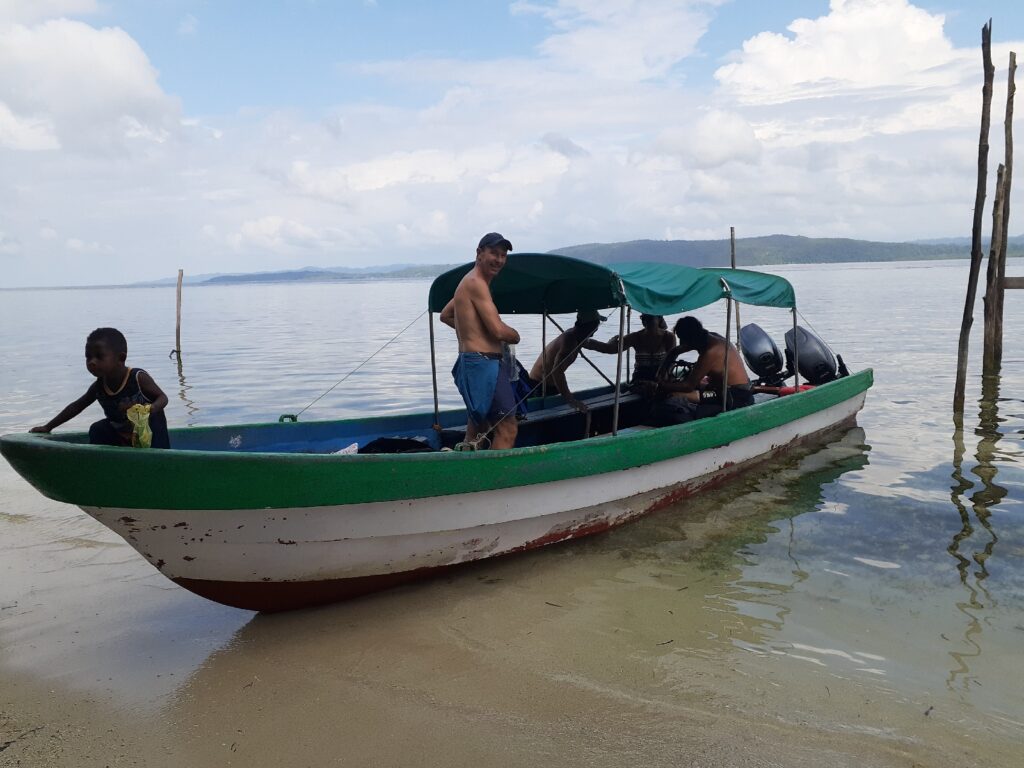
If you want to stretch your budget while still exploring elite reefs like Melissa’s Garden or Citrus Ridge, you need to use the best insider strategy we’ve developed over our four trips.
The secret is to book a homestay that runs its own active diving operation and ask to join their daily dive boat as a snorkeller.
Several excellent homestays on Kri Island have on-site divemasters who take scuba divers out every single morning. When you check in (or via email beforehand), you simply ask them a straightforward question:
“If today’s dive sites are shallow enough for snorkelling, can we hitch a ride on the boat?”
If the chosen dive site is a sheer deep-water wall with nothing to see near the surface, they will tell you honestly, “Not today.” But more often than not, the dive sites are stunningly beautiful at the surface. By syncing up with the divers’ schedule, you get a premium boat ride out to the best reefs in the region. Here is how the daily routine usually looks:
- 08:00: The boat departs the homestay jetty (timing adjusts slightly depending on the distance).
- Morning Sessions: You hit two world-class snorkeling spots back-to-back.
- Spot 1: You get about an hour of incredible snorkelling.
- Surface Interval: While the divers take their mandatory one-hour rest on the boat, you relax, enjoy the sun, and have a snack.
- Spot 2: You move to a second location for another full hour in the water.
- Around Noon: The boat returns to the homestay just in time for a fresh, communal lunch.
The beauty of this arrangement is safety and convenience. Because you are travelling on a dedicated dive boat, the vessel stays close by and monitors the water. If you get tired or want to get out early, you just signal the boatman and climb back on board.
Please Note: Boat availability depends heavily on the homestay owner’s current situation, including boat maintenance. It’s a good idea to directly message potential homestays to confirm if their dive boat is currently operational and accepting snorkellers before locking in your travel plans.
When the Boat Doesn’t Go: Kri’s Mind-Blowing House Reef
If there is a day when the dive boat isn’t heading to a snorkeling-friendly spot, don’t view it as a wasted day. The house reef along the coast of Kri Island is world class.
The north side of the island forms a sheltered inner bay, meaning the current primarily runs parallel to the shore (either left or right) rather than pulling you out to the open sea. This provides a fantastic layer of safety for casual swimming.
To explore it, you simply swim out to the drop-off where the shallow reef flats plunge into the deep blue. You can drift with the current to the left or right, and within a short swim, you will encounter the wooden jetties of neighbouring homestays. This layout allows you to plan your swim perfectly based on your energy levels: you can drift out along the drop-off and simply walk back to your homestay along the beautiful sandy beach.
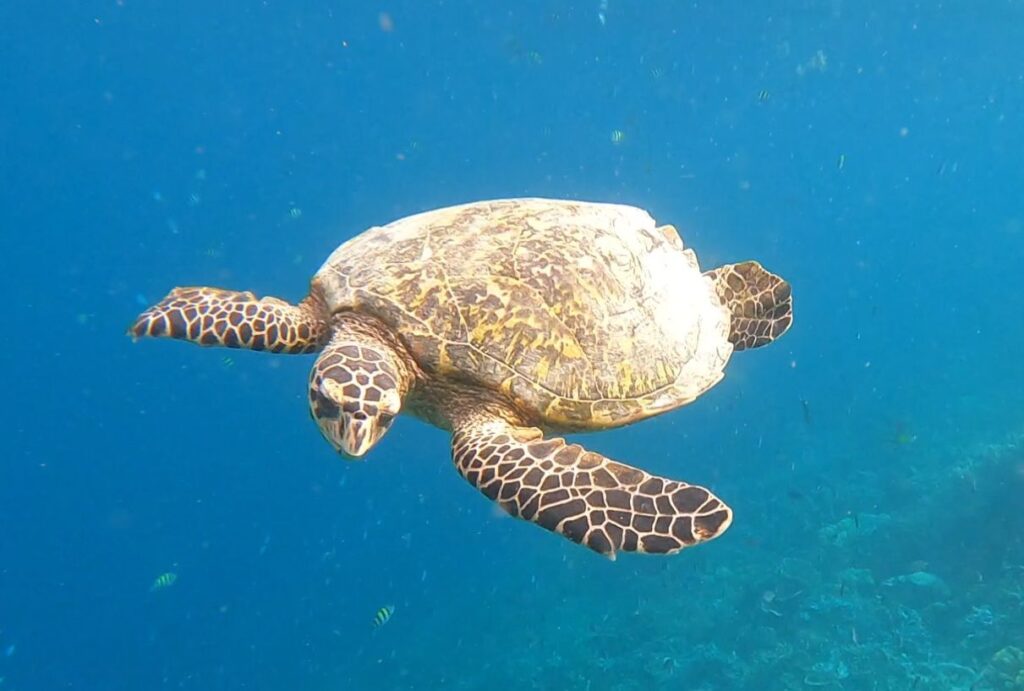
The marine life right off the beach is staggering. Everything here seems to grow on a grander scale; the fish, clams, and turtles are noticeably larger than those you will see in most parts of Indonesia. You are almost guaranteed to spot black-tip reef sharks, sea turtles, and massive lionfish on every single swim.
Best of all? We have personally spotted dugongs right next to our homestay jetty on two separate occasions. You don’t even need a boat to encounter some of the rarest marine life on earth.
Unfiltered Review: 15 Raja Ampat Snorkeling Spots
Over our four expeditions basing ourselves out of Kri Island, we have mapped out 15 distinct snorkelling locations. Here is our honest, firsthand assessment of what to expect at each spot.
Kri Island & Immediate Classics
1. Kri Island House Reef
As mentioned above, this is a top notch house reef. The current normally runs parallel to the shore, offering a safer environment for independent swimming. Expect dense schools of fish and unusually large marine life. Black-tip reef sharks and sea turtles are regular residents here.
2. Cape Kri
Apoarently this legendary point holds the world record for the highest number of fish species recorded in a single dive. The marine action here is frenetic. As a snorkeller, you will look down on black-tip reef sharks patrolling the reef slope, massive schools of barracuda, and occasionally manta rays. On a truly lucky day, oceanic mantas can cruise up from the deep. Warning: The current here can be ferocious; time your entry carefully.
Neighbouring Islands & Jetty Formations
3. Yenbuba Jetty (Mansuar Island)
Located just across the channel from Kri, this spot is incredibly reliable and relatively beginner-friendly. At low tide, you can actually walk across the shallows from Kri Island to reach it. The area directly beneath and around the wooden jetty pillars is a chaotic, beautiful traffic jam of fish. Look out for massive Napoleon wrasse, giant bumphead parrotfish, and enormous giant clams resting in the shallows.
4. Sawandarek (Mansuar Island)
This is a true sanctuary for giant green sea turtles. These creatures are massive and completely unbothered by snorkellers, often resting right by the village jetty. You will also find resident reef sharks cruising right up into the shallows, swirling tornadoes of bigeye trevally, and schools of barracuda. Keep in mind that the current strengthens significantly as you move towards the outer edges of the beach.
5. Arborek Jetty
Arborek is famous for the vibrant, neon-coloured soft corals encrusting its jetty posts. Because the water is shallow and exceptionally clear, it is an absolute paradise for snorkelling and underwater photography. We’ve spotted bizarre crocodilefish and highly camouflaged scorpionfish resting on the bottom here. A quick health tip: The water around the village jetty can sometimes carry higher bacteria levels. Make sure to thoroughly dry and clean your ears after swimming here to avoid external ear infections (swimmer’s ear).
Pristine Corals & Underwater Topography
6. Melissa’s Garden (Fam Islands)
Widely considered one of the most beautiful coral gardens on the planet. The sheer scale of pristine, untouched hard staghorn corals stretching as far as the eye can see is breathtaking. The clarity here is astounding, but be prepared for strong, sweeping currents across the shallow reef flat.
7. Mike’s Point
A dramatic, high-adrenaline site centered around a tiny rocky islet. The current here is notoriously powerful, and you snorkel in a loop around the island. The underwater topography features beautiful, cave-like passages and vertical rock walls completely smothered in colourful soft corals, sea fans, and sponges.
8. Citrus Ridge (or Citrus Wave)
Named after the stunning palette of fluorescent yellows, oranges, and lime greens that dominate the soft corals here. Snorkelling over this ridge feels like floating over a moving, neon carpet. The site sits within a protected, picturesque bay that features a few quiet, local homestays along the shore.
9. Mayhem
True to its name, this site offers absolute “mayhem” when it comes to fish numbers. The coral health here is spectacular. Because it isn’t always included on standard tourist routes, it feels like a pristine, hidden gem where you can experience the raw power of Raja Ampat in peace.
10. Roti
A newer, off-the-beaten-path spot located along the coastline as you head back towards Kri Island from Sawandarek. It features incredibly healthy, untouched coral formations. Because it receives very little boat traffic, you can usually enjoy this stunning reef completely to yourself.
11. Friwen Wall
A spectacular vertical drop-off that plunges straight down into the deep blue. The sheer wall is covered in an explosion of soft corals, looking precisely like a vibrant oil painting brought to life. The current is often brisk, carrying you past reef sharks and massive schools of giant bumphead parrotfish cruising along the drop.
12. Fam Wall
Another fantastic drift-snorkeling wall that lives up to its name. The underwater scenery is a brilliant mix of hard and soft corals, featuring a high concentration of large sea fans (gorgonians). Floating along this wall feels like being carried through a giant, liquid kaleidoscope.
13. Rufas Island (Outer Wall)
Rufas is an incredibly photogenic, ring-shaped limestone island enclosing a brilliant turquoise lagoon. While the interior lagoon is calm, the real snorkeling action is along the outer wall facing the open sea. If your timing is right, you can spot multigenerational families of bumphead parrotfish swimming together along the reef crest.
Pelagic & Big Fish Encounters
14. Manta Point & 15. Manta Sandy
These twin sites are Raja Ampat’s famous cleaning stations for reef manta rays. Because mantas feed on plankton right at the surface, snorkelling is arguably better than diving here. Scuba divers sit on the bottom breathing noisy bubbles, whereas snorkellers can quietly float on the surface, keeping perfectly level with the mantas as they glide and somersault past. You will almost always see multiple mantas here, though the truly massive individuals tend to hover closer to the seabed.
An honest warning: This is a high-stakes, gambling spot. If the mantas do not show up, the water is often murky with plankton and there is very little else to see on the sandy bottom. It can be a disappointing blank if you are unlucky—but when they show up, it is dramatic.
Critical Safety: Respecting Raja Ampat’s Currents
Raja Ampat’s legendary biodiversity exists solely because of the massive volumes of nutrient-rich water pushing through the deep channels of the Dampier Strait. In short: where there are fish, there is current.
If you are planning a DIY snorkeling trip here, you must take safety seriously. Please commit these rules to memory:
1. Never, Ever Snorkel Barefoot
Sometimes we see tourists jumping off boats or swimming out from homestays completely barefoot. This is incredibly dangerous. Human legs simply do not have the power to swim against Raja Ampat’s currents without assistance. If you get caught in a sudden current without fins, you will not be able to make headway, leading to exhaustion and panic. Do not rely on flimsy, short travel fins either—invest in a proper pair of full-length, high-propulsion fins and wear them every time you step into the water.
2. Learn to Embrace the Drift
Never try to fight a strong current. The local boatmen and guides are experts at reading the water; they will drop you upcurrent so you can safely float along the reef flat or drop-off. Keep your movements relaxed, enjoy the ride, and look out for the boat. Trying to swim against the tide will drain your energy within minutes.
3. Ask the Boatman Before You Jump
Before your fins touch the water, always confirm the exact direction of the current with your boatman or captain so you know which way you will be drifting. You can ask them directly in Indonesian:
“Arusnya dari mana ke mana?”
(Ah-roos-nya dah-ree mah-nah keh mah-nah?)
Meaning: “Where is the current flowing from, and where is it going?”
The boatman will smile and point out the direction of the water’s movement. Keep that trajectory in mind, jump in, and stay well within their line of sight. If you ever feel tired or notice the conditions changing, simply face the boat, wave your arms firmly above the water, and they will immediately cruise over to pick you up.
Have you packed for your trip to Raja Ampat? Check out our packing list here:
➡ Raja Ampat Packing List: Essential Travel Gear for Remote Island Homestays
Conclusion
You do not need a scuba license or a massive luxury cruise budget to experience the world’s richest marine life. By choosing a strategic base like Kri Island, finding a homestay with an active dive boat, and treating the ocean’s currents with the respect they deserve, Raja Ampat is entirely accessible to independent snorkellers. Pack your fins, practice your Indonesian phrases, and get ready for the trip of a lifetime!
How to get to Raja Ampat: See how we normally get there!
➡ Jakarta to Raja Ampat (Kri Island) via Sorong: Flights, Ferries, and Local Tips
Comment