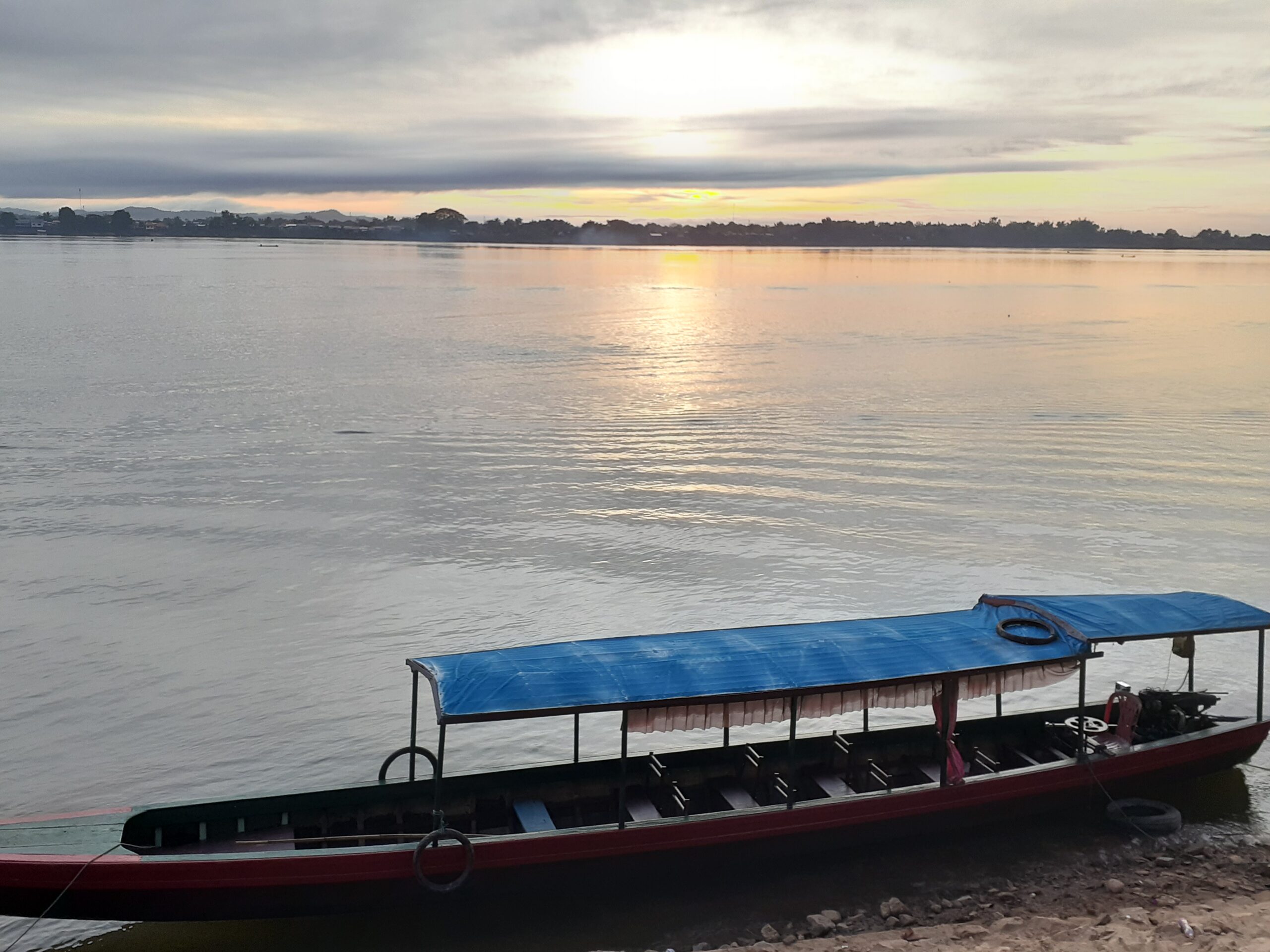
Si Phan Don—literally translating to “4,000 Islands” in the Lao language—is a massive maze of river islands scattered across the Mekong River right above the Cambodian border. I’m 1997, during my very first trip to Laos, I stayed on one of these laid back islands and fell in love with the slow pace. For this journey, Mai and I headed to Don Khong, the largest island in the archipelago, planning to spend a few days renting bicycles and lazily exploring the rural landscapes.
However, our travel plans are not written in stone. Between the lingering frustration from our arrival transport scam and a pair of catastrophically uncomfortable rental bikes, our romanticized cycling trip quickly turned into a painful mistake. After just one night, we threw in the towel and staged a quick morning escape back to the southern hub of Pakse. Based on our real time journey in December 2022, here is the honest story of our short lived island stay, a deserted early morning ferry bank, and how a stroke of pure luck saved us a 5.5 km walk.
🇯🇵 この記事を日本語で読む: シーパンドン(コーン島)からパクセーへの帰り方!1泊で強行脱出した理由と早朝ミニバスの幸運
Quick Trip Summary
- The Reality of Island Rentals: Don’t expect top tier gear. Check the seats, gears, and chains thoroughly before handing over your Kip, or you might end up cutting your itinerary short like we did.
- Leaving Don Khong Early: If you want to catch local transport back north to Pakse, the sweet spot for departures from the island area is early in the morning between 7:00 AM and 8:00 AM.
- The Budget Breakdown: The lucky local minibus we flagged down charged us 100,000 Kip per person flat for the direct run from Don Khong back into central Pakse.
1. Expectations vs. Reality: Cycling Around Don Khong
We arrived on Don Khong with grand visions of pedalling smoothly through sleepy villages, taking photos of the local everyday life, and watching the Mekong roll by. There are a few local guesthouses on the island that rent out basic bicycles to tourists for a small daily fee, so we tracked one down and picked out two bikes.
That was our first mistake.
The bikes were in incredibly poor condition. The frames were worn out, the chains clanked heavily, and the seats offered zero cushioning. We tried to make the best of it, but after just half a day of riding along the bumpy dirt paths, our backs and hips were in absolute agony.
Originally, our itinerary called for at least a two night stay with a full day and a half of dedicated cycling. But by the time the sun set on day one, we realized that riding these mechanical tortures for another minute was out of the question. With nothing else to really do on this massive, quiet island if you aren’t mobile, we made an executive decision: we were leaving first thing the next morning.
Useful Information for Your Laos Trip:
Visa Extension Guide: ➡ Laos Visa Extension Guide: Oudomxay vs Luang Namtha Costs, Rules, and 23-Hour Fast-Track Success
Border Crossing Guide:
➡ Hue to Savannakhet Border Guide via Lao Bao Border: Crossing from Vietnam to Laos
➡ Paksan to Bueng Kan Border Crossing (Laos – Thai) Mekong River by Boat
2. Stranded at Dawn: The Empty Morning Ferry Point
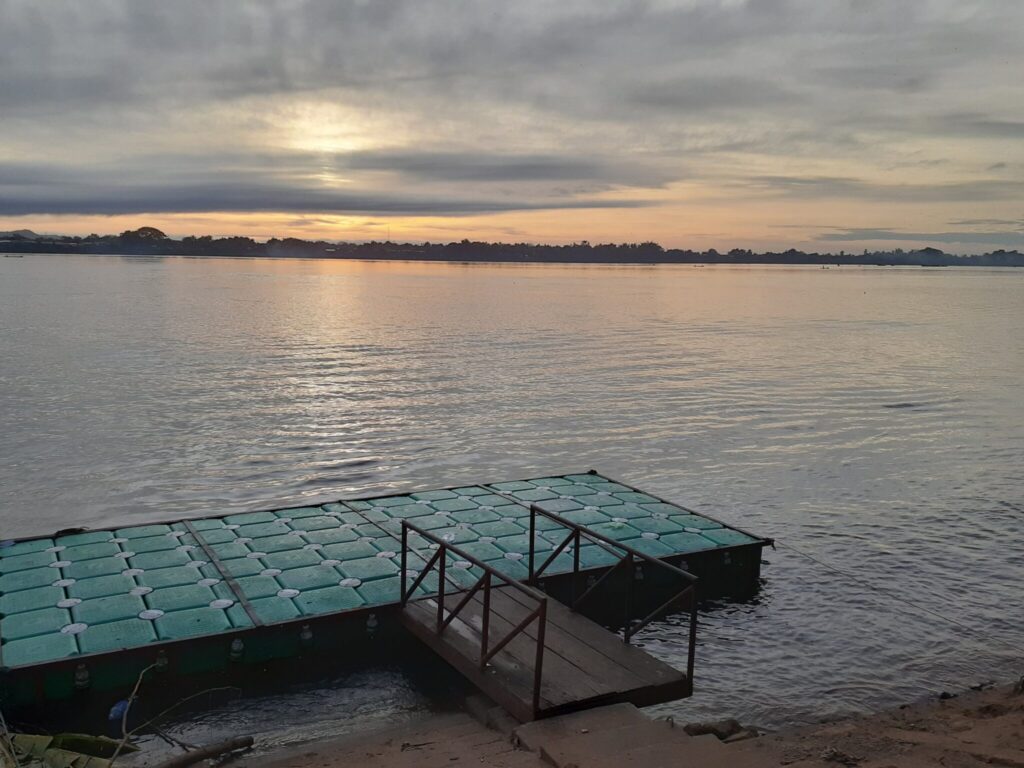
Hoping to catch an early connection back to Pakse, we packed our bags and headed down to the local wooden boat landing at 6:30 AM.
When we arrived, the riverbank was a ghost town. The sun was barely up, the air was cool, and there wasn’t a single boatman, local, or tourist in sight.
Seeing our confusion, the kind owner of a nearby guesthouse stepped out to give us some local insider advice. He told us that the main morning minivans and songthaews (shared passenger trucks) bound for Pakse usually operate between 7:00 AM and 8:00 AM. More importantly, he pointed out that if we wanted a guaranteed ride, we should head down to the southern tip of the island where the newly constructed concrete bridge connects Don Khong to the mainland—the highway traffic down there was far more frequent.
The only catch? The bridge foot was roughly 5.5 kilometers away. That meant a solid one-hour hike with our heavy backpacks. Undeterred and desperate to get off the island, we decided to start walking south, hoping to flag down something—anything—along the way.
3. A Stroke of Backpacker Luck: Catching the Morning Minibus
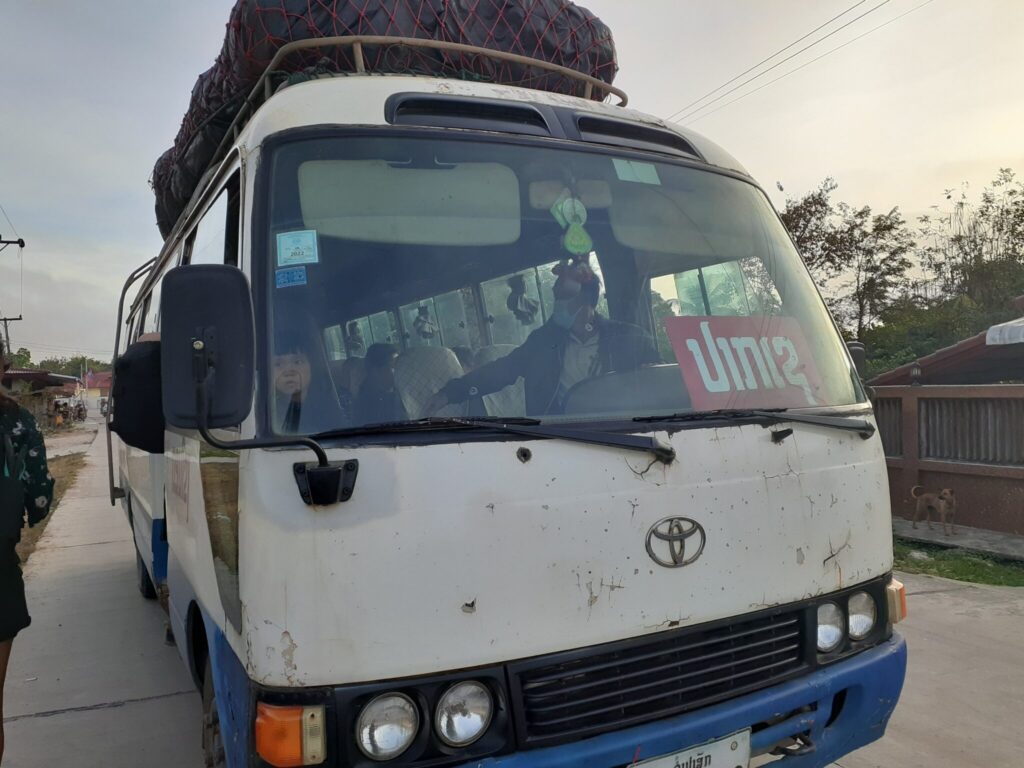
We braced ourselves for a long, grueling morning walk along the island road. But just 15 minutes into our trek, a beautiful sight appeared in the distance: a local minibus kicking up dust, heading our way.
I stuck my arm out, and to our absolute delight, the driver slammed on the brakes. As it turned out, it was an official local minibus already bound directly for Pakse!
- The Time: Exactly 7:00 AM.
- The Cost: 100,000 Kip per person.
We tossed our bags into the back, climbed into the air-conditioned cabin, and sighed with immense relief. The drive north on National Route 13 was smooth and quick. By 9:15 AM, we were pulling into central Pakse. Our entire emergency island evacuation had taken less than three hours!
Are you using Pakse as your launchpad for Southern Laos? Before we ever headed down to the 4000 Islands, we spent some incredible days exploring the region on two wheels. If you are planning to rent a motorbike in town, do not miss our comprehensive regional guides:
➡ How to Visit Wat Phou – Day Trip from Pakse: A Complete Motorbike Guide
➡ Bolaven Plateau Loop by Motorbike: A Complete 2-Day Itinerary
As it turned out, making it back to Pakse by 9:15 AM was an absolute stroke of travel genius that completely shifted the trajectory of our onward journey.
4. The Ultimate Pivot: Straight Onto the Thakhek Sleeping Bus!
When the minibus pulled into the 8Km Bus Terminal in Pakse, we expected to check back into a local guesthouse to regroup and rest our sore backs. Instead, we stepped out of the vehicle and ran straight into a classic piece of backpacker serendipity.
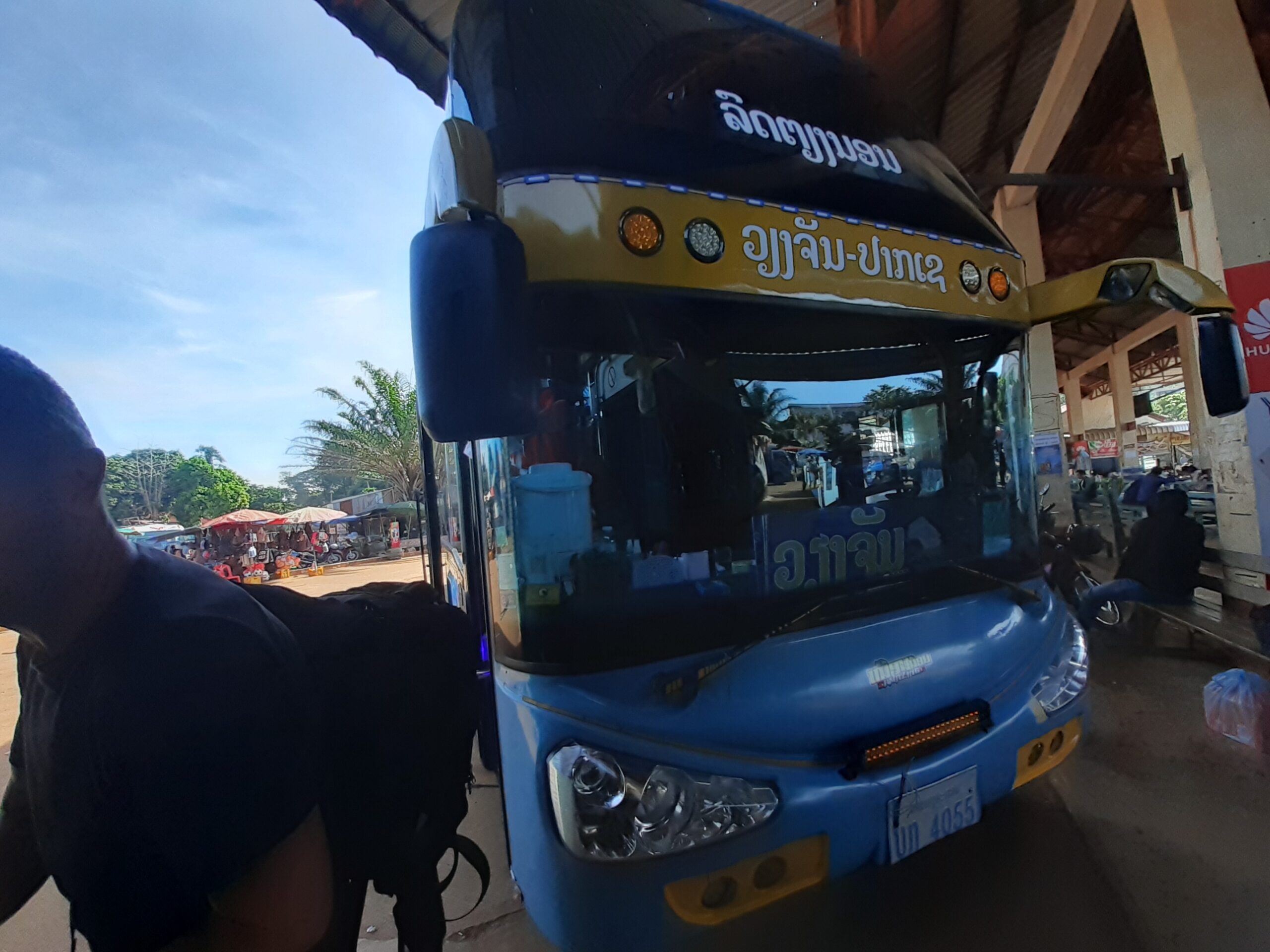
Parked right in front of us, engine idling, was a VIP Sleeping Bus bound for Thakhek.
Typically, long distance sleeping buses in Laos operate strictly as overnight routes. However, we had managed to land perfectly in the crosshairs of a rare morning departure (likely a long haul transit bus passing through from the south). Seeing as our lower backs and hips were completely wrecked from the broken island bicycles, the thought of being able to lie completely flat for the next several hours was an offer we couldn’t refuse.
We dashed to the ticket window, secured our bunks, and climbed aboard just before the doors slammed shut. Without spending a single extra Kip or hour waiting around Pakse, we were officially heading back up to Central Laos.
Curious about what a daytime Lao sleeping bus is actually like? (Spoiler: You might have to share a surprisingly narrow double bed with your partner!) Read our full breakdown of the costs, comfort levels, and our return to the loop country here: ➡ Pakse to Thakhek by Sleeping Bus: The Morning Departure Hack and Sharing a Double Bed
Our Handpicked Must-Visit Spots:
Based on our own journeys, here are the absolute best places in Laos that captured our hearts.
➡ Luang Prabang Travel Guide: 3-Day Temple Walking Route, Chompet Ferry & Local Night Markets
➡ Wat Phou Travel Guide – Day Trip from Pakse: A Complete Motorbike Guide
➡ The Plain of Jars Travel Guide from Phonsavan: A Complete Sightseeing & Motorbike Survival Tips
➡ Nong Khiaw Travel Guide: Hiking Pha Daeng Peak, Local Eats & Slow Travel Tips
➡ Muang Ngoy Travel Guide: Ultimate Travel Guide to Laos’ Hidden Riverside Village
Lessons Learned & Final Thoughts
Our time in Si Phan Don was short, bumpy, and didn’t go at all according to plan, but it led us straight into an incredibly smooth transit day. Shifting our timeline allowed us to link a lucky island minibus and a rare daytime sleeper bus into one seamless, ultra efficient run up the length of the country.
Sometimes, listening to your aching lower back is the best travel choice you can make. With our bodies finally resting in a semi comfortable bus bunk, our eyes were firmly set on our next major regional adventure: hitting the rugged caves of Thakhek.
➡ Return to the Beginning: How to Get from Pakse to Si Phan Don: A Guide to Avoiding the Common Boat Scam
Comment