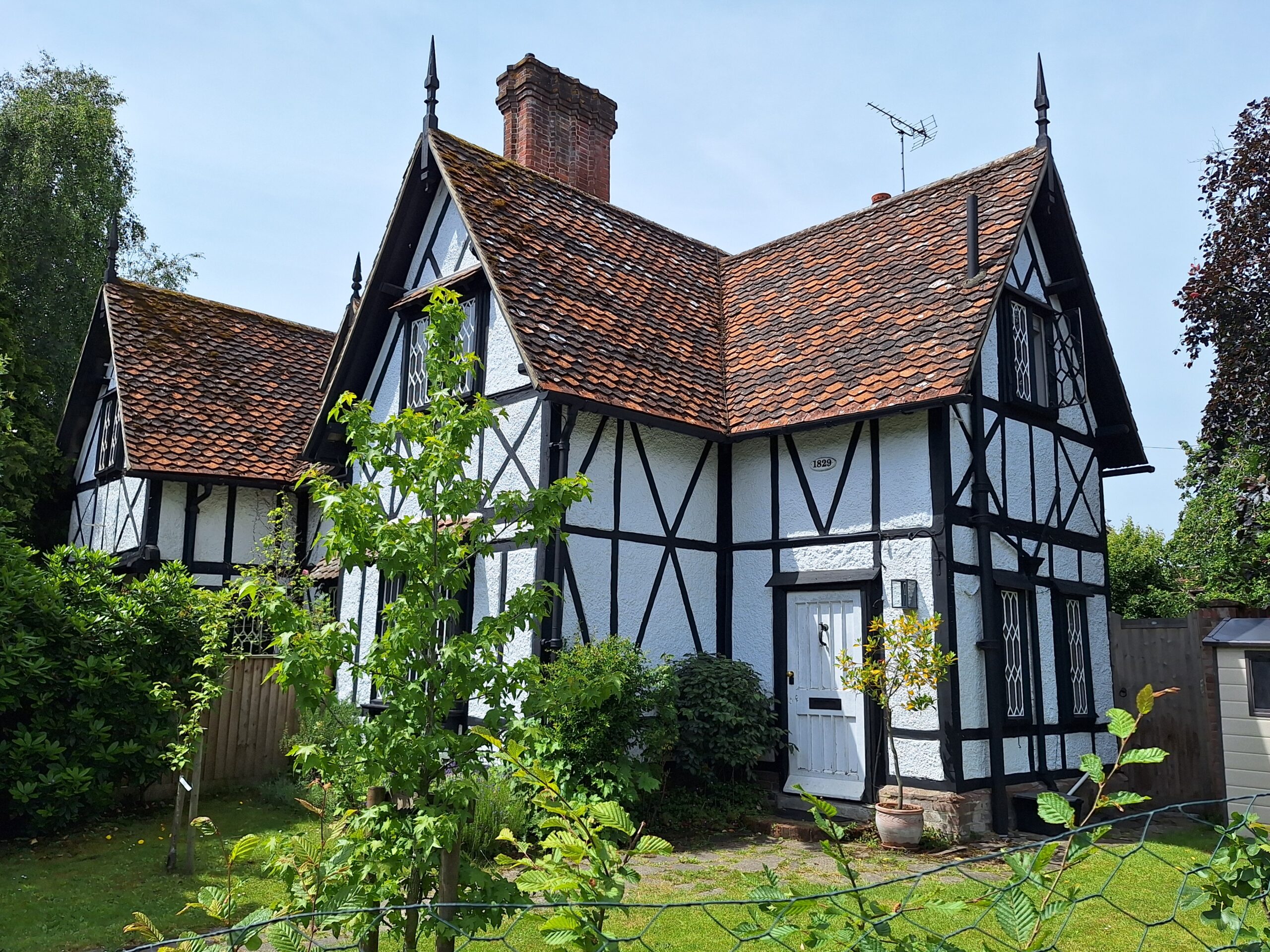
When you think of a British home, images of charming terraced houses and historic brickwork probably come to mind. While traditional UK properties are full of character, they also come with a unique set of quirks that can leave outsiders utterly confused. In fact, when my Japanese wife first experienced living in a British home, she faced a massive culture shock.
From the infamous separate hot and cold water taps to carpeted bathrooms and why century-old houses are so highly sought after, British housing is a world away from Japan. In this article, we share the most surprising features of UK homes through her eyes, blending our first-hand experiences as an international couple with a practical guide to understanding British living.
🇯🇵 この記事を日本語で読む:【イギリス住宅事情】カナダ在住の日本人妻が、夫の実家(英国)で本気で驚いたリアルな家ギャップ
- Introduction: A Canadian-Based Couple’s Annual Pilgrimage to a British Home
- 1. The Great British Garden: Conservatories and the Chaos of the Rotary Iron
- 2. The Window Warfare: No Fly Screens in the UK vs the “Fortress” Shutters of Japan
- 3. Bathroom Modernisation and the Mystery of British Plumbing
- 4. Kitchen Laundry and the British Obsession with Property TV
- Conclusion: Different Countries, Different “Norms”
Introduction: A Canadian-Based Couple’s Annual Pilgrimage to a British Home
While we love our life surrounded by Canadian nature, we make at least one trip back to the UK for a few weeks every year to stay with my mum at her family home.
When people think of a British house, they often picture romantic images of historic red-brick terraces, cosy fireplaces, and picturesque cottage gardens. While British properties are undeniably full of character, living in one is a completely different story. Every year we visit, Mai is hit by a fresh wave of culture shock over the unique quirks of UK housing—things that I always took for granted!
From the way we dry our laundry to the bizarre plumbing setups, here are the most surprising features of British homes through the eyes of my Japanese partner.
1. The Great British Garden: Conservatories and the Chaos of the Rotary Iron
The Magic of the Glass-Walled “Conservatory”
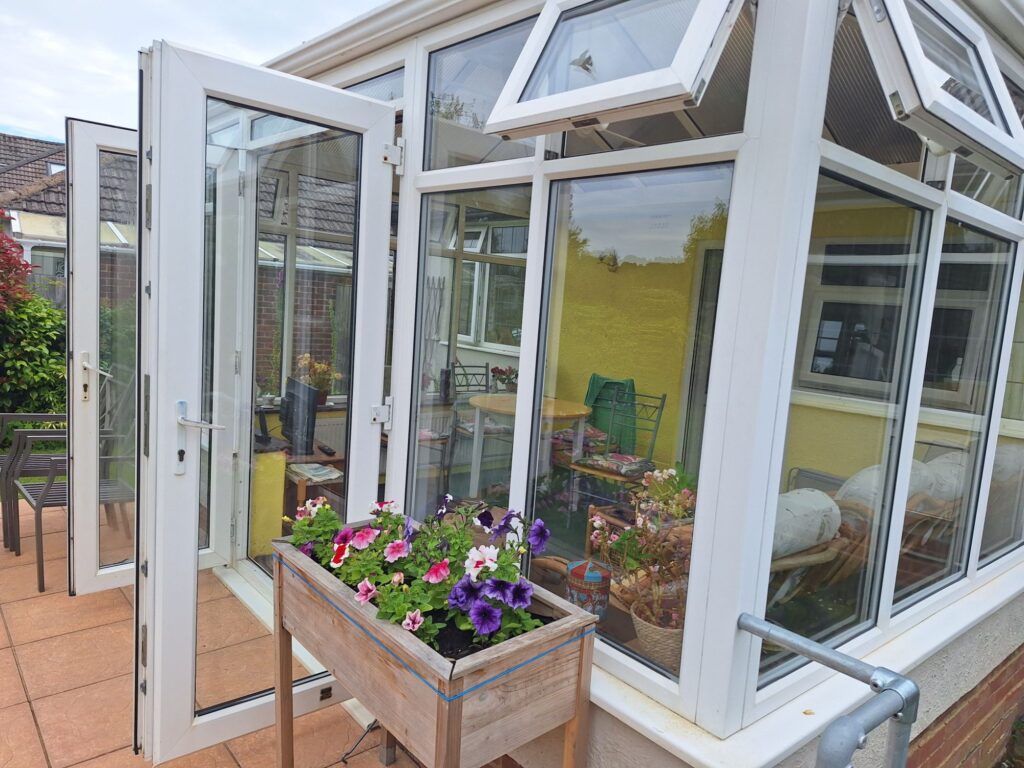
One of the first things that truly enchanted Mai about British homes was the conservatory.
For those unfamiliar with the term, a conservatory is a glass-walled, glass-roofed extension built onto the back of a house, facing the garden. Because the UK is famous for its overcast and rainy weather, these rooms were historically designed to capture every single drop of precious sunlight.
My mum has a beautiful conservatory, and it is easily our favourite spot. Mai loves sitting there surrounded by mum’s indoor plants, sipping a proper cup of British tea while looking out at the garden. It bridges the gap between indoors and outdoors perfectly, and it’s a feature we wish we could take back to Canada with us!
The Reality of Drying Laundry: The Whirling Danger of the washing line
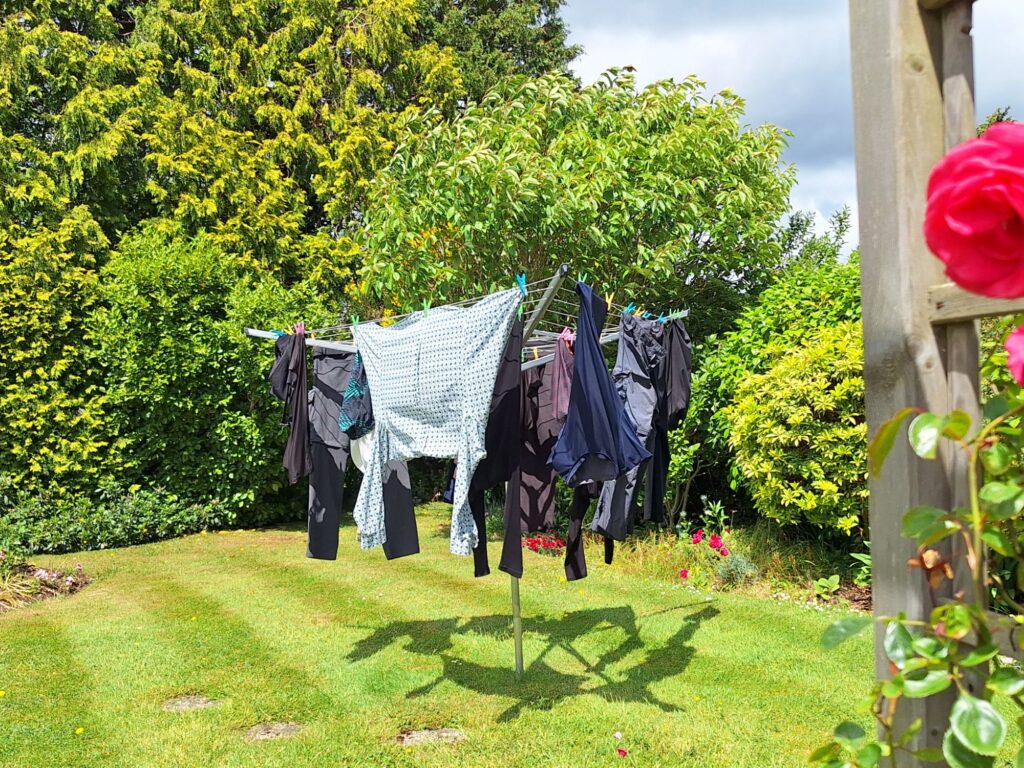
You might have read online that British people never dry their laundry outside because of strict neighbourhood aesthetics. Well, that is a bit of a myth. My mum absolutely dries her washing outside on every single sunny day!
However, unlike in Japan where people use balconies, or Canada where tumble dryers dominate, British outdoor drying has its own unique style. Most UK homes don’t have balconies, so everything goes into the back garden. And instead of a linear clothesline, we use a umbrella-like, central-pole washing line that spins in the wind.
While it is brilliant for drying clothes efficiently, it does come with a hazard. Because it spins freely in the breeze, the metal arms are constantly changing position. During one of our stays, Mai bent down to grab a shirt from the laundry basket on the grass. As she stood up, the wind caught the line, and she hit her head flat against one of the metal bars! Ever since that painful lesson, she treats the rotary iron with absolute caution.
2. The Window Warfare: No Fly Screens in the UK vs the “Fortress” Shutters of Japan
No Fly Screens?! Dealing with Flies without a “Mosquito Net”
The window setup in the UK is another constant source of anxiety for my Japanese wife. Simply put: British houses do not have fly screens (insect screens) on their windows.
Where we live in the Canadian forest, mosquitoes and blackflies are a brutal reality of summer. Our Canadian home has heavy-duty screens on every window, and we even have a fully enclosed “gazebo” (a screened-in porch) in the garden just to survive the bugs. So, to Mai, opening a window completely bare to the elements feels like an open invitation to disaster.
To make matters worse, my mum always wants a bug free home. Whenever a massive bumblebee or a loud housefly wanders through the open windows in the summer, she gets annoyed and spends ages chasing it out with a tea towel. Mai always asks, “If you hate bugs so much, why not just install screens?”
But in the UK, the concept of window screens barely exists. Because British summers are relatively dry and lack the aggressive humidity—and massive mosquito populations—of Japan or the Canadian woods, Brits prefer to fight the occasional fly rather than block their view with a mesh screen. And since air conditioning is virtually non-existent in British standard homes, wide-open windows are our only summer survival strategy!
The Japanese “Amado” (Storm Shutters): A British Husband’s Culture Shock
While Mai struggles with the lack of screens in the UK, I experienced my own window-related culture shock when we visited Japan. I am well-acquainted with fly screens from our Canadian life, and I think Japan’s smooth, high-quality window screens are brilliant (they would certainly save my mum a lot of annoyance!).
However, what blew my mind in Japan was the Amado (雨戸)—the heavy, solid storm shutters that slide across the windows.
The first time I saw them being closed at night, I asked Mai, “Is a hurricane or a typhoon hitting us tonight?” To me, locking down the house with solid metal or wooden shutters felt like preparing for a military siege or transforming the house into a literal fortress. Since the UK doesn’t experience typhoons, the idea of daily, heavy-duty window reinforcement was a completely alien—but fascinating—concept to me.
3. Bathroom Modernisation and the Mystery of British Plumbing
The One-Tap Triumph and the Hot Water Valve Trap
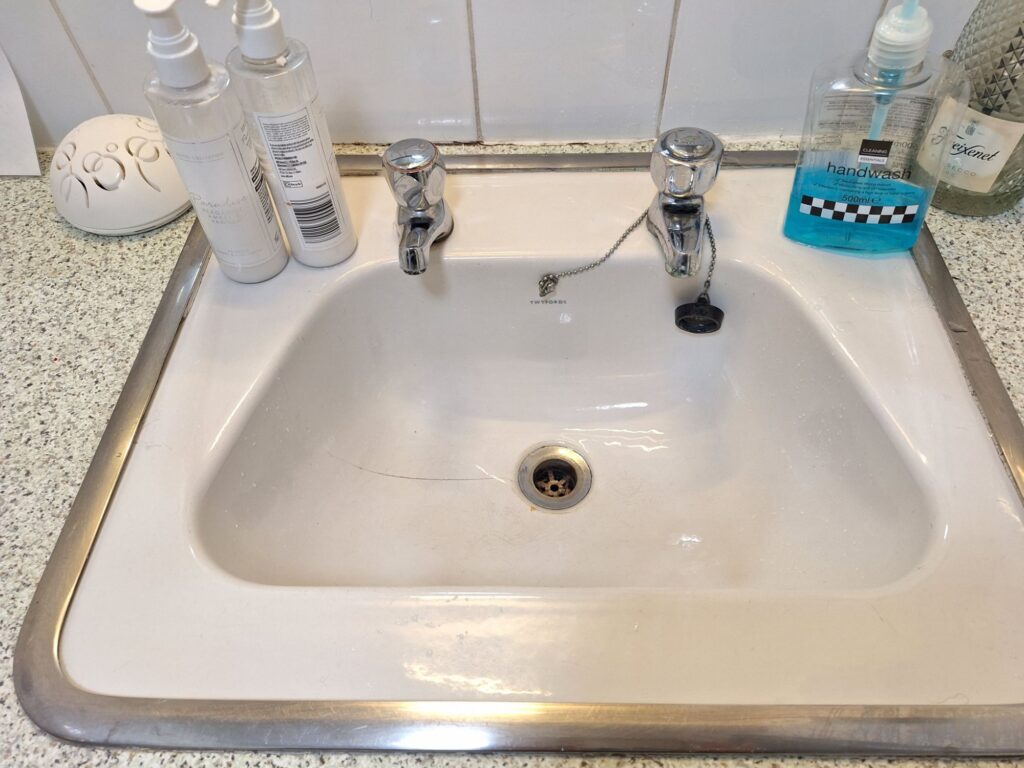
If you visit an older British property, you will likely encounter our most infamous plumbing quirk: two completely separate taps on the bathroom sink—one blasting boiling hot water, and the other pouring ice-cold water, with no way to mix them.
Fortunately for us, my mum’s bathroom has been modernised, and she has a single mixer tap. Mai was incredibly relieved, thinking she could wash her hands normally. But British plumbing always has a backup trick.
We quickly discovered that to get any hot water in the bathroom at all, we have to walk all the way to the kitchen and manually switch on the water heater valve first. If you forget, you’re stuck with freezing water. The daily routine of walking to the kitchen to activate the hot water before taking a shower, and walking back to turn it off afterwards, is a uniquely British chore that Mai still finds hilarious. (On the bright side, mum’s bathroom floor is tiled, sparing Mai from the horror of the traditional UK carpeted bathroom!).
Ripping Out the Tub: The Walk-in Shower Trend
When people think of a traditional British bathroom, they often imagine a classic, deep clawfoot bathtub. However, the modern reality in the UK is shifting in a very different direction.
My mum’s house actually doesn’t have a bathtub anymore. While staying there, we noticed a massive advertising trend on television and in the post: companies urging homeowners to rip out their old bathtubs and replace them with sleek, modern walk-in shower rooms.
Because soaking in a bath isn’t a daily cultural ritual in the UK the way it is in Japan, many British homeowner see large bathtubs as an impractical hazard. Converting the bathroom into a barrier-free, stylish wet room or walk-in shower is the ultimate modern home improvement trend in Britain right now.
4. Kitchen Laundry and the British Obsession with Property TV
Why is the Washing Machine in the Kitchen?
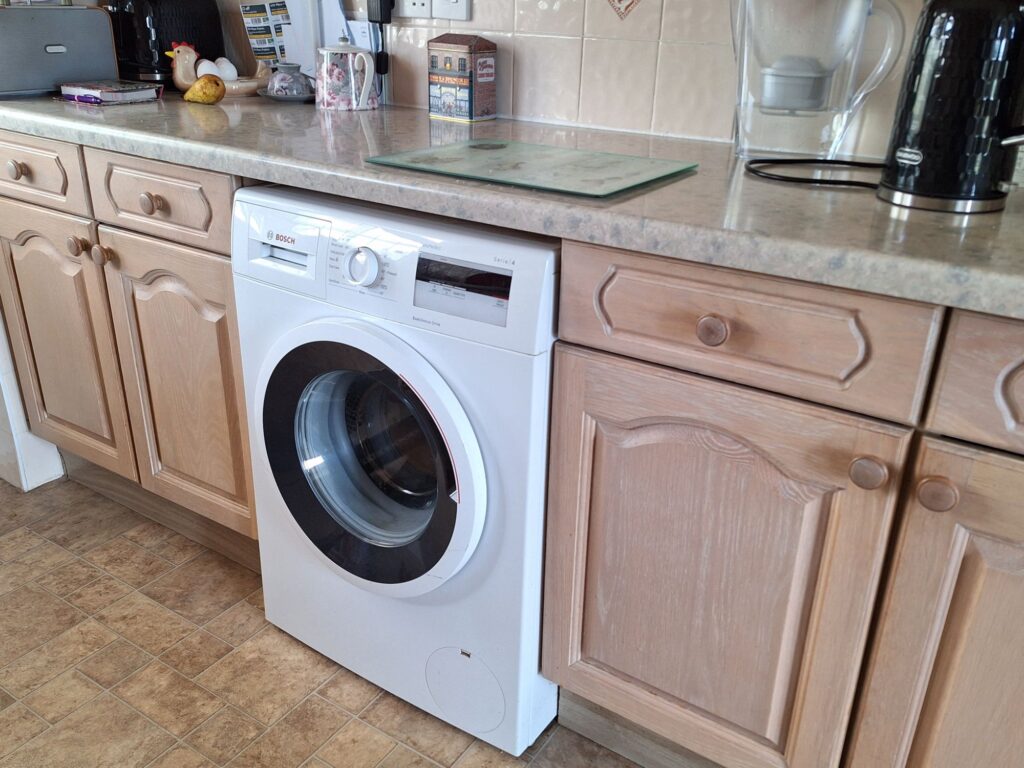
In Japan and Canada, the washing machine has a dedicated home—usually in a laundry room or a separate section of the bathroom next to the sink.
In a standard British home, however, you will find the washing machine built right into the kitchen counter, sitting snugly next to the dishwasher or the food prep area.
For Mai, seeing dirty socks and muddy trousers spinning around right beneath the kitchen counter where we make dinner was a massive shock to the system. But watching my mum multitask seamlessly, it actually makes a lot of sense. In the UK, the kitchen is the absolute hub of domestic chores, bringing cooking, cleaning, and laundry into one efficient space.
A Nation Obsessed: The Ultimate British Entertainment
In Canada and Japan, there is a strong market preference for brand-new builds or recently renovated properties. In the UK, historic character is deeply loved, though modern challenges like high maintenance costs and skyrocketing property prices mean that younger Brits are increasingly open to newer homes. Yet, regardless of the age of the property, the British obsession with housing and interior design is unmatched.
You can see this clearly just by turning on a British television. The UK airwaves are absolutely dominated by massive, long-running TV programmes centered entirely around houses.
Programs like Grand Designs, where everyday people spend years (and fortunes) trying to build architectural masterpieces by hand, or Location, Location, Location, where property experts help desperate buyers hunt for the perfect home, are national institutions. Watching Brits get genuinely emotional and heavily invested in other people’s floor plans and brick choices made Mai realise that for British people, housing isn’t just shelter—it is the ultimate national pastime.
Conclusion: Different Countries, Different “Norms”
Japan, Canada, and the UK each have entirely different philosophies when it comes to the spaces we live in. What is completely standard in one country can look like madness to someone from another.
Every year we spend a few weeks at my mum’s house, the little culture shocks remind both Mai and me that our version of “normal” isn’t the world’s version of normal.
Even if Mai occasionally bumps her head on the washing line, or we have to hike to the kitchen just to get hot shower water, sitting in the conservatory with a fresh mug of tea, looking out at the British garden makes all the quirks completely worth it.
Next time you watch a British film or visit the UK, keep an eye out for the kitchen washing machines and the lack of window screens—you’ll be seeing the real Britain!

Comment