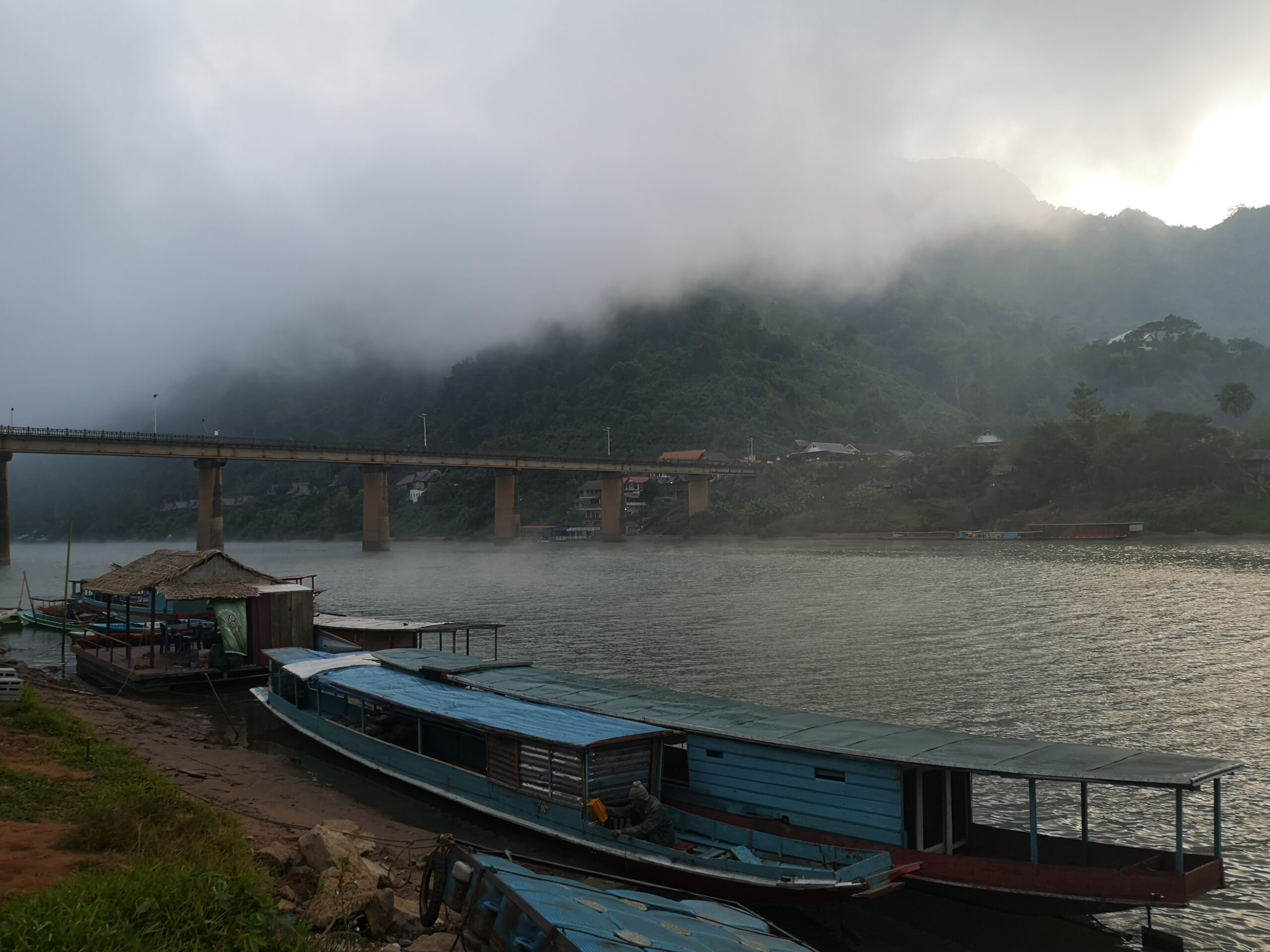
Under standard conditions, the journey from Nong Khiaw to the car-free hidden village of Muang Ngoy is a scenic, 1-hour river cruise on a traditional wooden longtail boat. You simply buy a ticket, sit back, and watch colossal limestone karsts pass by.
However, during the peak of the dry season, we were hit with a double dose of travel reality: a complete breakdown in local timetable communication, followed by an official declaration that the river had dropped too low for public boats to operate.
With the waterway closed, our dreams of a peaceful cruise evaporated. Instead, we were packed into a local Songthaew (an open-air pickup truck) for a bone-rattling, two-hour mountain drive.
Below is the quick survival guide to navigating the overland route to Muang Ngoy, including current costs, the boat office traps, and the exact seating strategy you need to protect your lungs from the red dust.
🇯🇵 この記事を日本語で読む: ノーンキャウからムアンゴイへボート移動の予定が乾季の水位不足でソンテウ激揺れローカル旅になった全記録
Nong Khiaw to Muang Ngoy Quick Transit Overview
- The Route: Nong Khiaw Boat Terminal ➡ (Alternative Songthaew Overland Run) ➡ Central Muang Ngoy
- Actual Duration: Exactly 2 hours (11:00 AM Departure ➡ 13:00 PM Arrival)
- Ticket Price: 50,000 Kip per person (Priced identically to the boat fare)
- Day-Trip Option: If you aren’t staying overnight, numerous guesthouses and travel agencies along Nong Khiaw’s main restaurant street offer organized Muang Ngoy day-trip excursions.
Misinformation and Whiteboards: The Nong Khiaw Boat Office Schedule
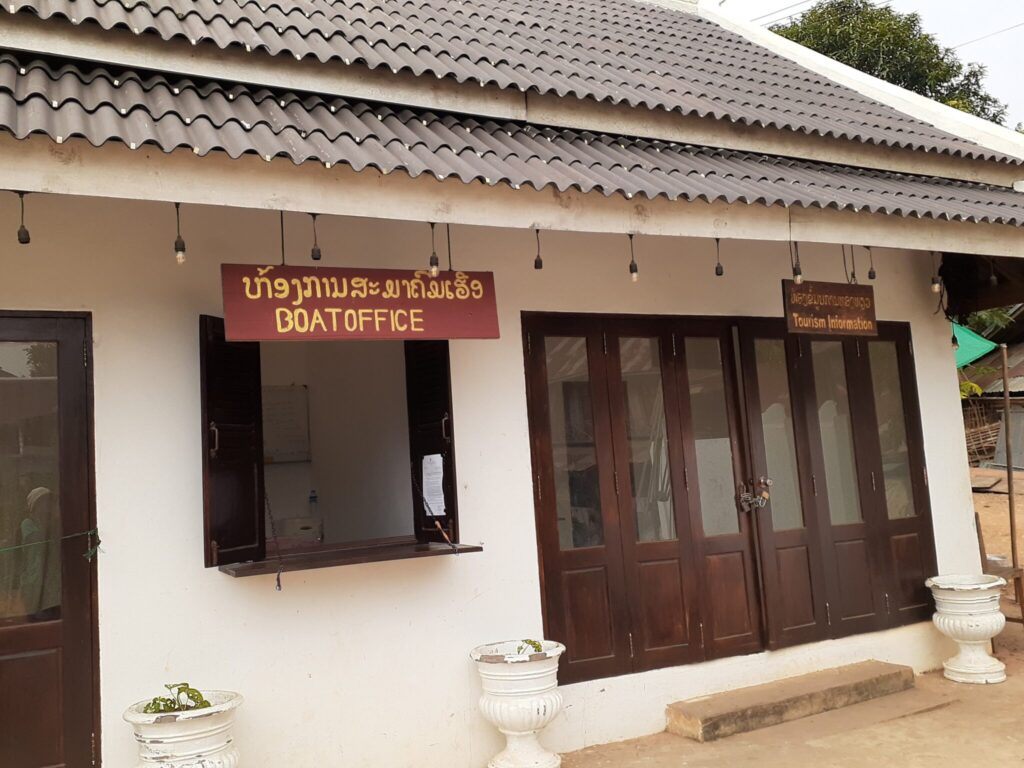
The public longtail boats bound for Muang Ngoy normally launch from the small river terminal positioned on the western side of the prominent Nong Khiaw Bridge, tucked immediately beside Le Muang Ngoy Restaurant. Look for the small wooden shelter marked Nong Khiaw Boat Office right above the steps.
The Word-of-Mouth vs. Reality Trap
The day before our departure, we did some on-the-ground research with local residents who confidently assured us: “The public boats to Muang Ngoy leave every morning at 09:00 AM and 11:00 AM for 50,000 Kip.” Trusting this word-of-mouth timeline, we checked out of our room and walked down to the docks at 08:45 AM.
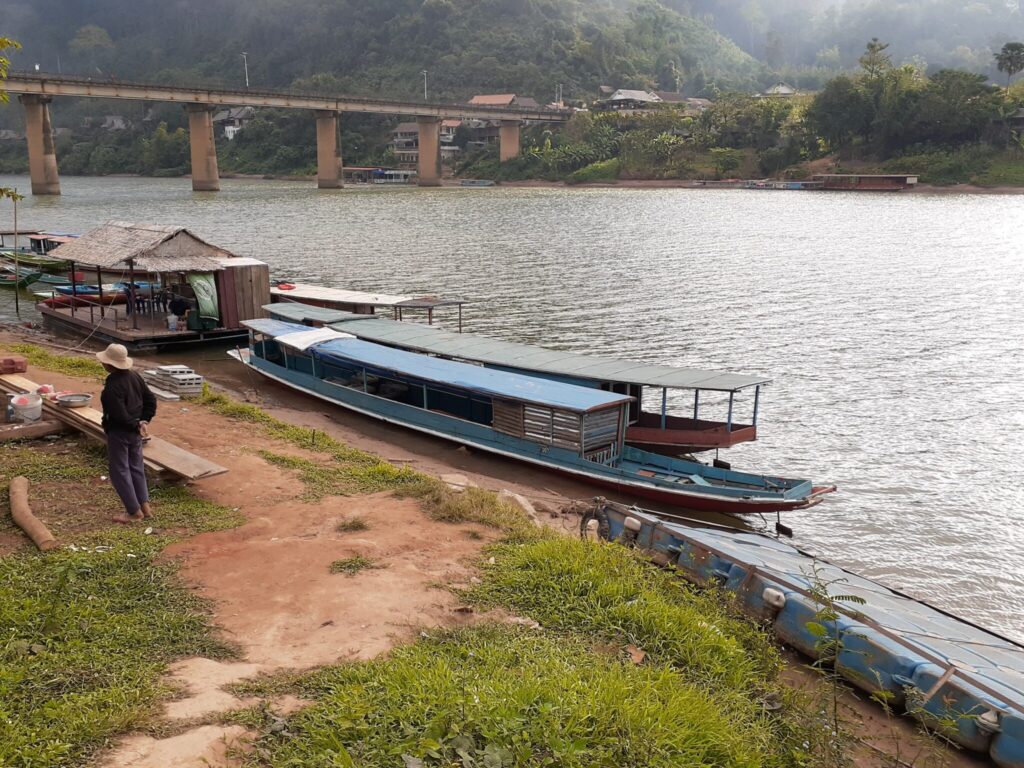
There wasn’t a single soul at the pier.
The office windows were shuttered. We walked over to check the handwritten whiteboard hanging on the wall, and to our dismay, it listed the daily departure times as 11:30 AM and 14:30 PM. Because public boats operate strictly on a “fill-up-and-go” basis, it’s highly likely the elusive early morning boat had filled up with local market traders and left long before 08:45 AM. So we retreated back to our guesthouse lobby to wait out the morning.
Our Handpicked Must-Visit Spots:
Based on our own journeys, here are the absolute best places in Laos that captured our hearts.
➡ Luang Prabang Travel Guide: 3-Day Temple Walking Route, Chompet Ferry & Local Night Markets
➡ Wat Phou Travel Guide – Day Trip from Pakse: A Complete Motorbike Guide
➡ The Plain of Jars Travel Guide from Phonsavan: A Complete Sightseeing & Motorbike Survival Tips
➡ Nong Khiaw Travel Guide: Hiking Pha Daeng Peak, Local Eats & Slow Travel Tips
➡ Muang Ngoy Travel Guide: Ultimate Travel Guide to Laos’ Hidden Riverside Village
Grounded by Nature: The Switch to the Alternative Songthaew Route
We marched back down to the waterfront at 10:20 AM for round two. This time, a handful of Western backpackers—including a couple from the Netherlands—were already huddled around the window arguing with the ticket agent.
The dry season had officially won: “The river is too dry today. The water is too low, and the longtail boat hulls smash against the rocks. No public boats are going upriver. You must take that Songthaew truck up on the road.”
While our dreams of a peaceful river cruise evaporated on the spot, we were just relieved there was an alternative route into the hills. The price was matched exactly to the boat tariff: 50,000 Kip per person. The clerk scribbled a manual paper receipt, promised a 2-hour travel time, and told us the truck would roll at 11:00 AM.
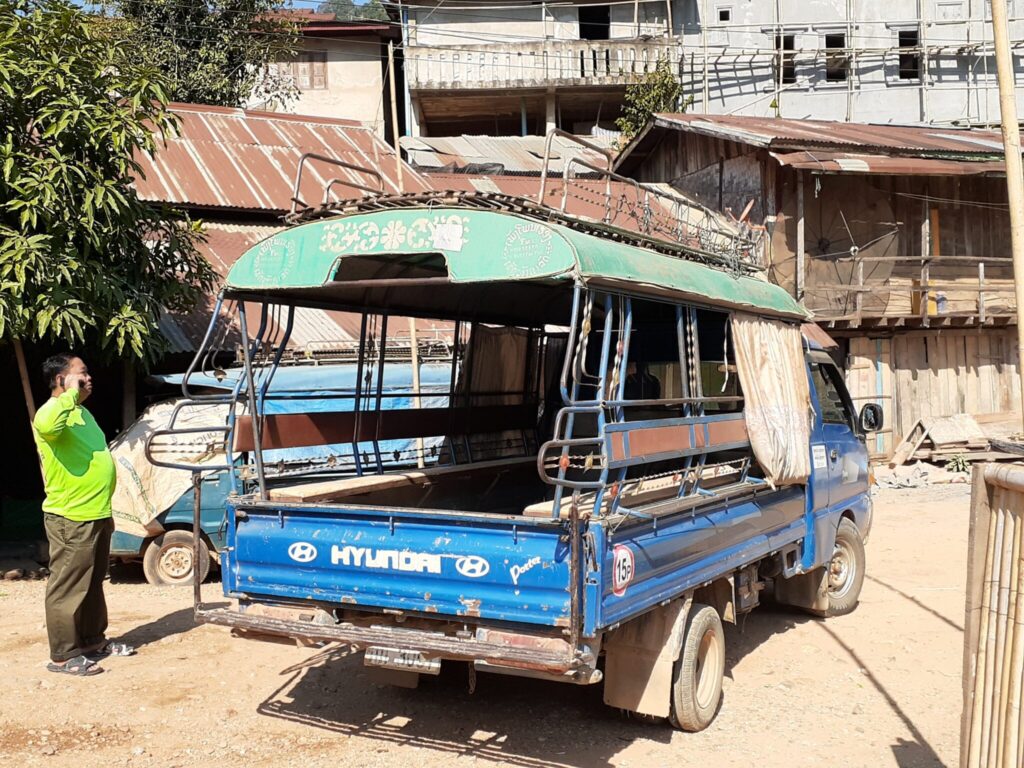
The Off-Road Journey: Potholes, Red Dust, and Active River Crossings
As word spread that the river ferry was grounded, a continuous stream of independent travellers filed down to the docks. Despite the collective disappointment, everyone grabbed their gear and climbed into the back of the pickup truck.
The demand to reach Muang Ngoy was massive. Within minutes, our 15-passenger Songthaew was entirely packed with bodies and oversized backpacks. Looking behind us, we noticed the station managers preparing two additional backup trucks to handle the overflow crowd.
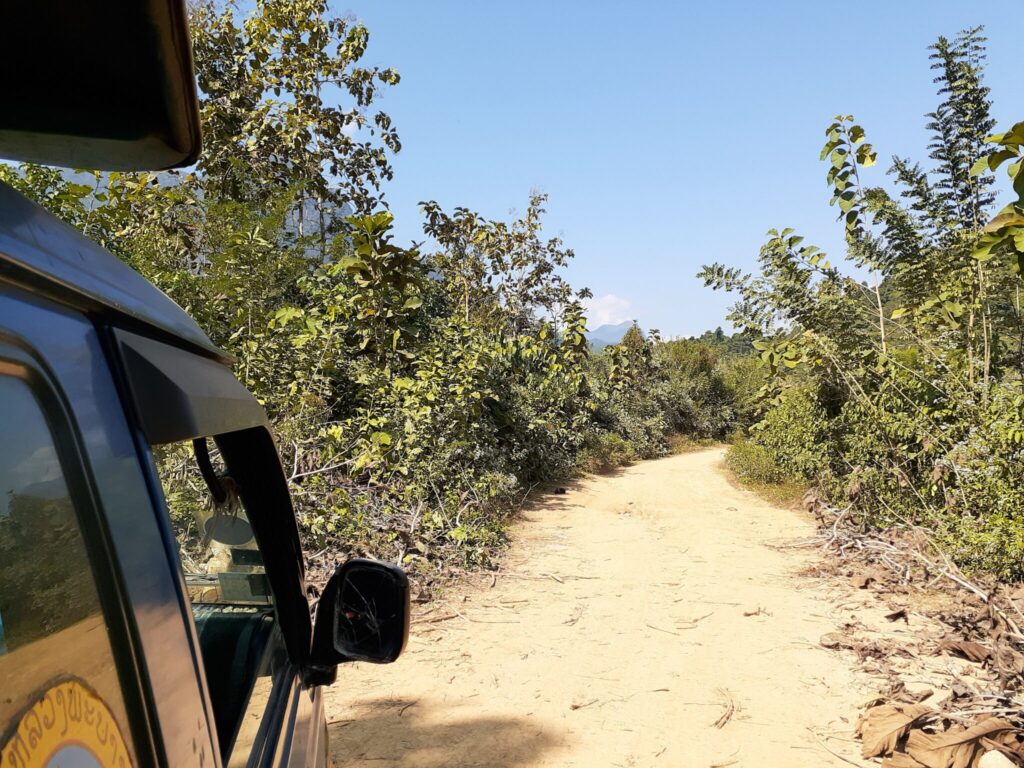
Survival Strategy: How to Pick the Best Songthaew Seats
The Songthaew pulled away from the river banks at exactly 11:00 AM sharp, crossed the main bridge, and turned directly onto an unpaved logging track heading north.
The route is a brutal, unmaintained dirt road, meaning a massive cloud of fine, orange red dust is continuously kicked up by the tires and sucked straight into the open-air truck bed. Fortunately, we had anticipated the terrain and secured seats at the very front of the flatbed, directly against the driver’s cabin wall. This is the ultimate pro-tip! The wind deflected most of the heavy dust over our heads, while the poor travellers sitting on the rear edge near the tailgate were completely blanketed in orange powder within twenty minutes. If you take this route, grab a front seat, wear sunglasses, and bring a face mask.
Driving Straight Through Rivers
While the road was incredibly bumpy—frequently bouncing our hips clean off the wooden benches—the absolute highlight occurred halfway through the trek. The dirt trail suddenly terminated at a flowing stream with no bridge in sight. Without breaking a sweat, our driver gunned the engine and drove the entire loaded pickup truck straight through the rushing water, throwing massive walls of spray past our faces!
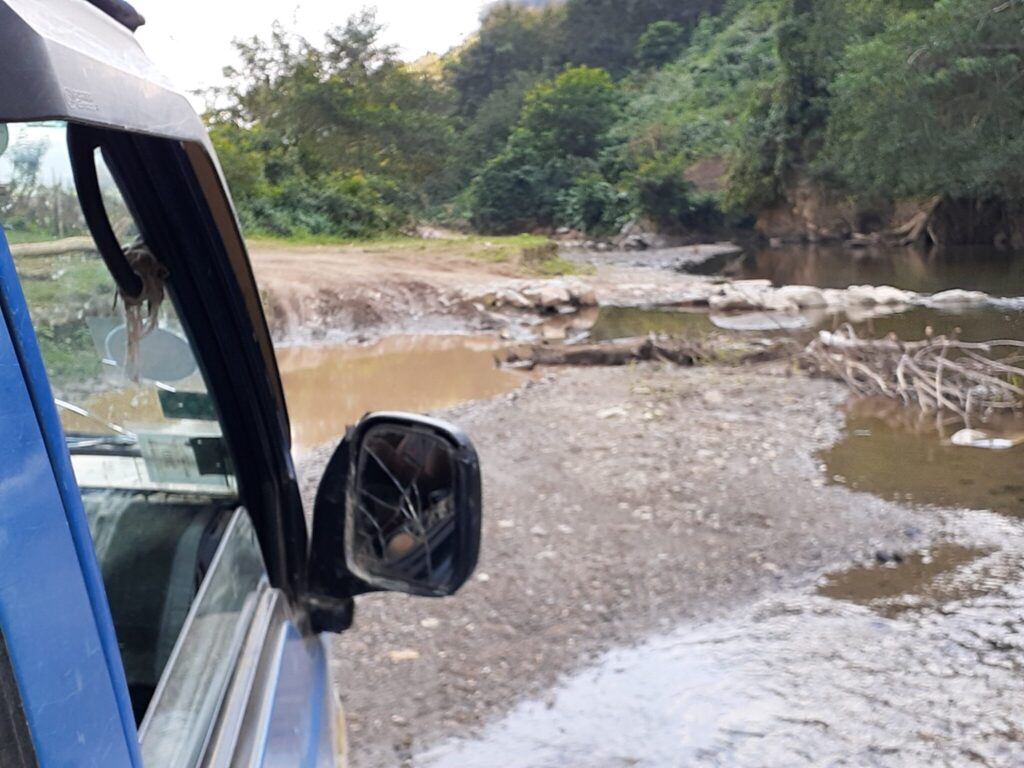
The entire truck of backpackers erupted into cheers. Because we were all packed tightly together enduring the bumps and river crossings, the cabin quickly transformed into a social hub where everyone shared travel stories. Experiencing this rugged journey forged an instant bond among the group; over the next three days, we would continuously run into these same familiar faces along Muang Ngoy’s single main street, greeting each other like old friends.
Useful Information for Your Laos Trip:
Visa Extension Guide: ➡ Laos Visa Extension Guide: Oudomxay vs Luang Namtha Costs, Rules, and 23-Hour Fast-Track Success
Border Crossing Guide:
➡ Hue to Savannakhet Border Guide via Lao Bao Border: Crossing from Vietnam to Laos
➡ Paksan to Bueng Kan Border Crossing (Laos – Thai) Mekong River by Boat
Arriving in Muang Ngoy: A Peaceful Hidden Village in the Hills
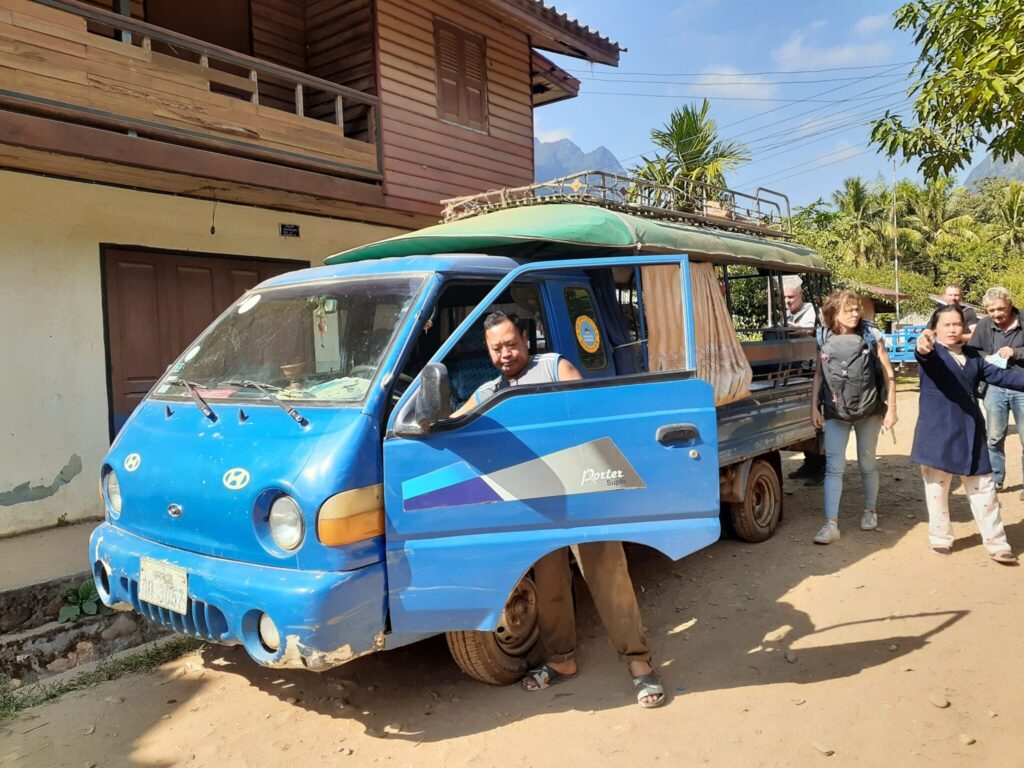
After exactly 2 hours of navigating massive muddy ruts, deep potholes, and riverbeds, the Songthaew finally climbed a steep incline and came to a halt at a clearing on the edge of the village at 13:00 PM. The driver’s time estimate had been absolutely spot-on.
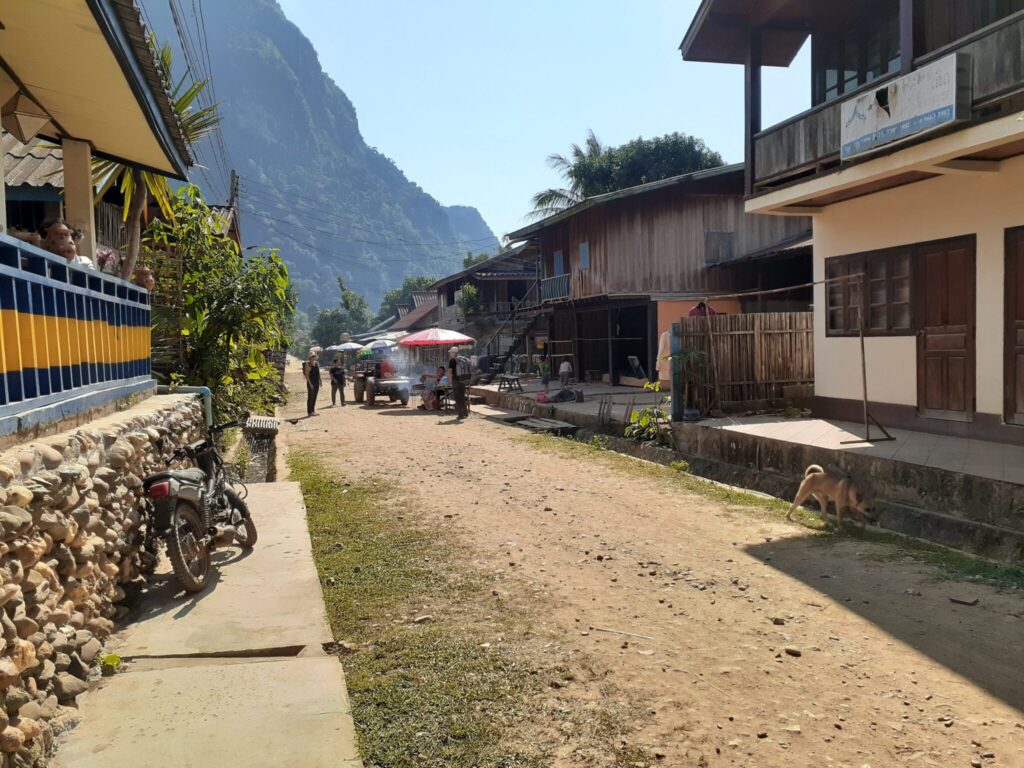
Stepping out of the truck and shaking the dust off our packs, we found ourselves in central Muang Ngoy. With no cars, a single dirt main road, limited electricity, and a handful of rustic bamboo bungalows overlooking the river, the village felt like stepping back in time. The physical toll of the bumpy truck ride vanished instantly, and we set off down the road to hunt down our home for the next three nights.
Missing out on the outbound boat felt like a setback, but looking back, that wild off-road river-crossing truck ride became one of the most authentically adventurous highlights of our entire journey through Laos!
The boat service has reopened for the return journey!
After three glorious days in the hills, the water levels stabilized and we finally scored our scenic river cruise back to Nong Khiaw. Read the full story:
➡ Muang Ngoy to Oudomxay (Muang Xai) via Nong Khiaw: Same-Day Boat and Minibus Guide
What to Do in Munag Ngoy?
➡ Top Things to Do in Muang Ngoy: Ultimate Travel Guide to Laos’ Hidden Riverside Village
➡ Walking to Tad Mook Waterfall from Muang Ngoy: Ultimate 23km DIY Hiking Guide (Caves, Villages, and River Crossings)
Comment