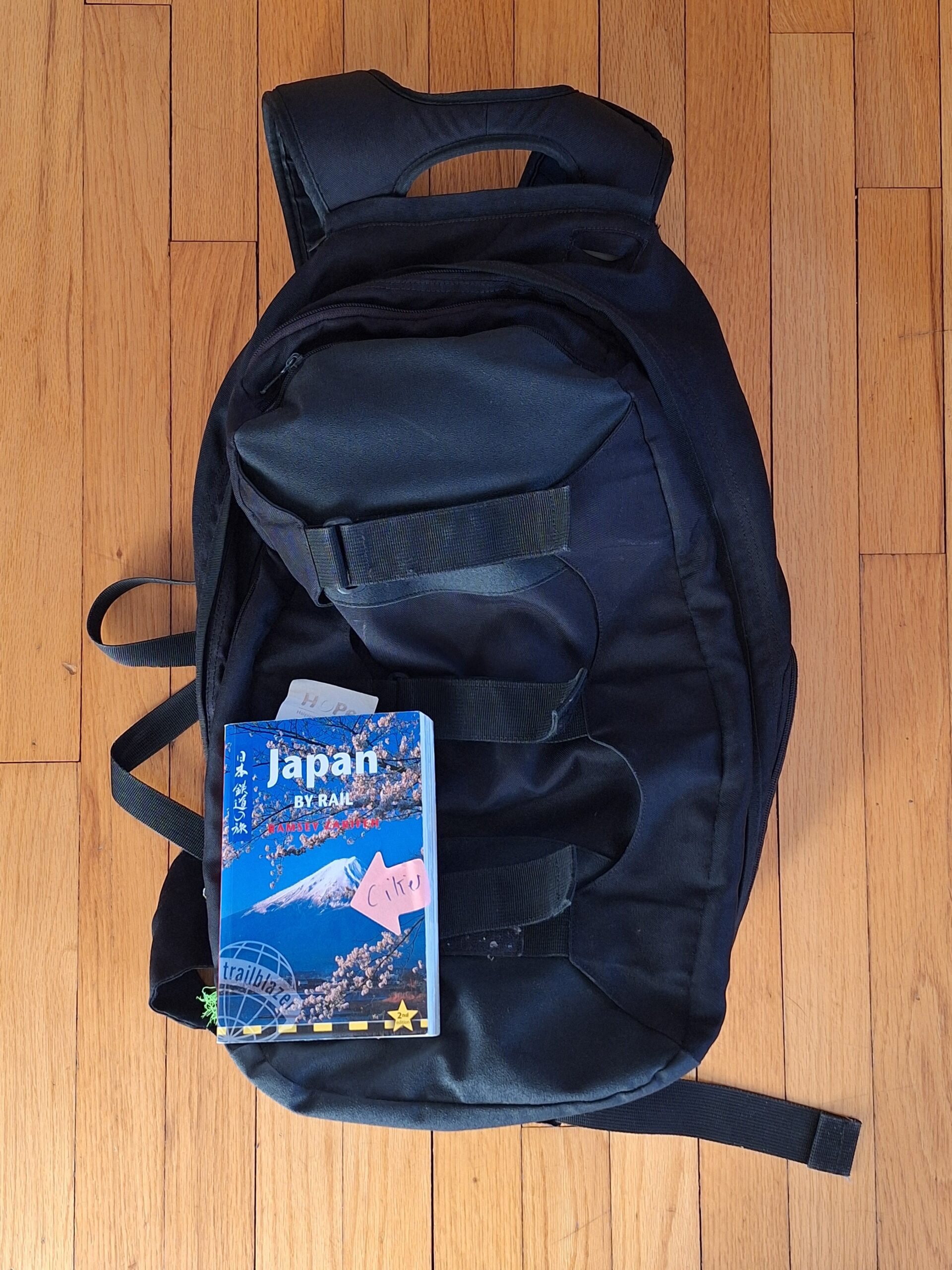
Can you survive a three-week trip to the UK with just a carry-on? As we board our Air Canada direct flight from Montreal to London Heathrow, I’m putting that challenge to the ultimate test. This journey is a special one: a long-awaited stay with my 93-year-old mother in New Milton, followed by a trip to Norwich to reunite with old friends.
Instead of dragging a heavy suitcase across trains and cobblestones, I’ve decided to travel light—very light. By leveraging Air Canada’s generous carry-on policy and the hidden gems of British High Street charity shops, I’m turning my travel wardrobe into a sustainable, rotating collection.
In this post, I’ll show you my minimalist packing list, my “sink wash” routines, and how leaving the checked bags behind allowed me to focus on what truly matters: making every moment count with family and friends.
🇯🇵 日本語で読む:カナダからイギリスへ、機内持ち込みバッグ一つで3週間。チャリティーショップをワードローブにする旅
What exactry do we have in our backpacks? Check it out here:
➡ 3-Week UK Packing List: Minimalist Travel Strategy with a Single Carry-on Backpack
- Why I Chose Carry-on Only for a 21-Day International Trip
- The “Liquid Wall” vs. Maple Syrup: Navigating Security Restrictions
- My Minimalist Packing List: The “Essential Three” Days
- Thrifting in the UK: Turning Charity Shops into a Temporary Closet
- Master the “Sink Wash”: Laundry Routines for the Light Traveler
- The Full Circle: Donating Back Before Flying Home
- Conclusion: Embracing the Freedom of Less
Why I Chose Carry-on Only for a 21-Day International Trip
Three weeks in the UK sounds like a “large suitcase” kind of trip. However, as we prepared to leave Montreal, I realized that the heavy baggage was exactly what I wanted to leave behind. Here is why going “Carry-on Only” was the most strategic decision for this journey.
Beating the Post-Pandemic Lost Luggage Crisis
If you’ve traveled through major hubs like London Heathrow (LHR) recently, you know the “lost luggage anxiety” is real. There is nothing that ruins the start of a sentimental trip—especially when visiting family—like standing at an empty baggage carousel for an hour, only to find your suitcase is still sitting back in Montreal. By keeping everything in a carry-on, I have 100% peace of mind. My essentials are always within arm’s reach, ensuring that our first day in New Milton is spent with my mother, not on the phone with an airline’s lost property department.
Mobility Across the UK: Trains, Cobblestones, and Stairs
Our itinerary isn’t a static one. From the moment we land, we are on the move: taking the train from London down to the South Coast for New Milton, and later heading across to East Anglia to visit friends in Norwich. British infrastructure is charming but can be notoriously difficult for heavy luggage.
Think narrow train aisles, steep station stairs with no lifts, and those beautiful but brutal historic cobblestone streets. With a single backpack, I can hop on and off a South Western Railway carriage or navigate the hilly lanes of Norwich with ease. Being mobile means being spontaneous, and that is the true luxury of travel.
Leveraging Air Canada’s Generous Carry-on Weight Policy
One of the biggest hurdles of one-bag travel is the dreaded weight limit. Many European carriers restrict you to a measly 7kg or 10kg. However, Air Canada offers a significant advantage for travelers like us: while they have strict size dimensions, they currently have no maximum weight limit for carry-on baggage (as long as you can store it in the overhead bin unassisted).
This is a game-changer. It allows me to pack my Samsung tablet for blogging, my camera gear, and a few heavier layers without constantly checking a luggage scale. Knowing I won’t be hit with a surprise “oversized” fee at the gate makes the “Carry-on Only” lifestyle much more attainable.
The “Liquid Wall” vs. Maple Syrup: Navigating Security Restrictions

The biggest challenge of the “Carry-on Only” lifestyle isn’t fitting your clothes into a small space—it’s facing the strict 100ml liquid rule at airport security. For a Canadian traveling to the UK, this rule comes with a specific, heartfelt cost.
Why My Signature Canadian Souvenirs Didn’t Make the Cut
Every time we visit my 93-year-old mother in New Milton or our friends in Norwich, the request is always the same: “Can you bring some real Canadian maple syrup?” Technically, I could buy small, 100ml tourist-sized bottles at the airport gift shops, but as any local Quebecer knows, those are overpriced and don’t feel “authentic.” We pride ourselves on gifting the classic 540ml tin cans—the ones we actually use in our own kitchens in Canada. Unfortunately, those iconic tins are a no-go for carry-on. Since I refuse to pay the “tourist tax” for tiny bottles, the syrup had to stay in the pantry this time. It’s a bit heartbreaking, but traveling light means making tough choices about what truly constitutes a “gift.”
➡ Canada to UK Gift Guide: Best Carry-On Souvenirs for 2026 (No Liquids!)
Strategic Packing: Small Bottles and High Street Survival
To stay within the strict liquid limits, I’ve had to rethink my daily essentials. Instead of overcomplicating things, I’ve adopted a two-step approach:
- Decanting into 100ml Bottles: For my must-have toiletries, I’ve decanted them into small, travel-sized bottles. This ensures I have everything I need for the flight and the first couple of days in the UK without taking up unnecessary space or weight.
- The “Boots” Strategy: One of the perks of staying in a town like New Milton is having a Boots or Superdrug right on the High Street. Rather than lugging a three-week supply of heavy shampoos or shower gels across the Atlantic, I’ll be heading to the local chemist to buy what I need once we arrive.
This strategy allows me to breeze through security at Montreal with a minimal liquid bag, knowing that anything I run out of is just a short walk away in a British chemists (drug store). It’s about being practical and using the local resources to keep our travel footprint as light as possible.
My Minimalist Packing List: The “Essential Three” Days
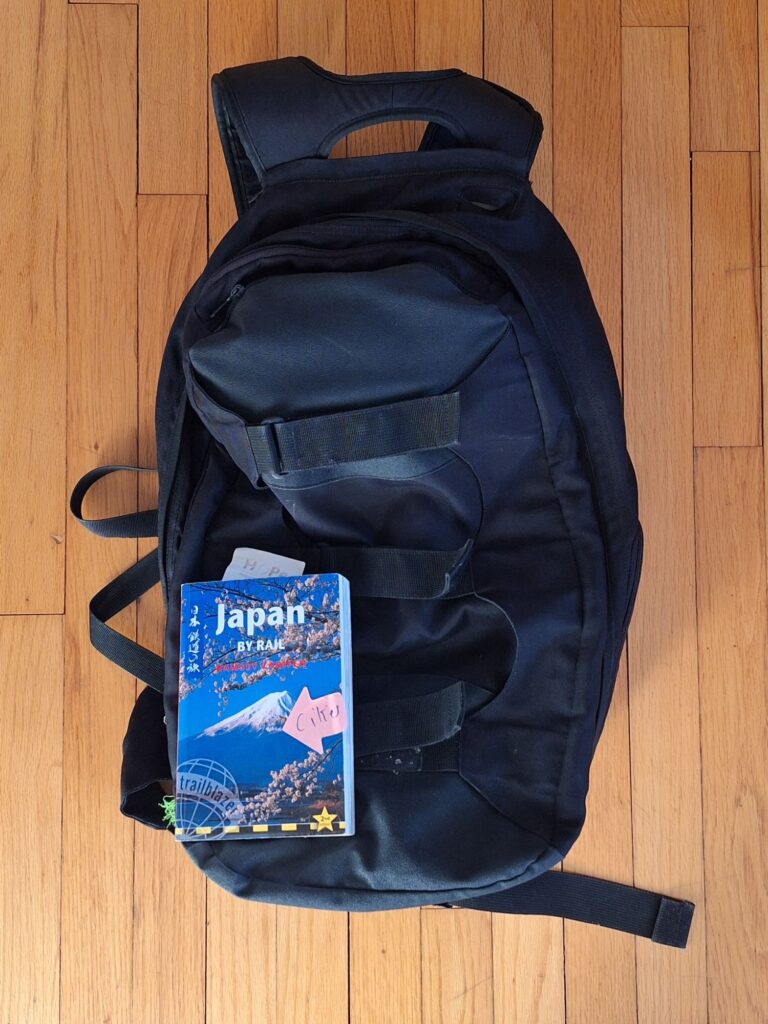
When packing for a 21-day trip, the secret isn’t to pack for three weeks—it’s to pack for three days and repeat. My goal was to create a “starting kit” that covers me from our departure in Montreal to our first few nights in New Milton. Here is the breakdown of my essential wardrobe and gear.
The Art of Layering for the Unpredictable British Summer
British weather is famous for having “four seasons in one day.” To stay comfortable from a sunny afternoon in Norwich to a chilly morning on the South Coast, I rely heavily on my Uniqlo essentials.
- The Base Layers: I’ve packed Airism tees for moisture-wicking on warmer days and Heattech thermals to layer underneath if the British dampness sets in. These items are incredibly lightweight and take up almost zero space in my bag, making them the ultimate tools for a minimalist traveler.
- Tops & Bottoms: A few versatile pieces that can be dressed up for dinner with friends or kept casual for a stroll with Mum.
- Outerwear: A lightweight, packable rain jacket. This is a non-negotiable item for the UK!
Wear Your Heaviest Gear: The Ultimate Space-Saving Hack
The oldest trick in the carry-on handbook is still the most effective: if it’s heavy or bulky, wear it on the plane.
- Footwear: Instead of packing multiple pairs of shoes, I am wearing my most supportive walking shoes for the journey. They are perfect for the cobblestones of Norwich and long walks in New Milton.
- The “Travel Uniform”: I’ll be boarding the Air Canada flight wearing my fleece. This keeps me warm getting on and off the plane and saves a good amount of volume in my backpack.
Tech and Gadgets: Blogging Setup for Digital Nomads
Because Air Canada doesn’t have a strict weight limit for carry-ons, I can bring my essential tools without stress. However, I’ve still opted for a very slim tech setup.
- Samsung Tablet: Instead of a bulky laptop, I’m using my Samsung tablet for this trip. It’s perfect for photo editing, keeping the blog updated, and staying in touch with the world while sitting in a comfy British pub or cafe.
- The UK Essentials: A reliable multi-type power adapter for British sockets and a high-capacity power bank to keep our gadgets running during those long train rides between New Milton and Norwich.
As the trip comes to an end, the biggest question for any one-bag traveler is: How do I fit my souvenirs into a bag that is already full? This is where the final stage of the “rotating wardrobe” strategy comes in.
Our Gadgets Reviews:
➡ The Ultimate Laptop Replacement? Galaxy Tab S10+ First Impressions for Travel Bloggers (and Football Fans!)
➡ Stop Hand Pain! Logitech Pebble Mouse 2 M350s Review for Tablet Blogging and Travel
➡ Why We Ditched Cloud Storage for Physical SD Cards: A Traveler’s Guide to Data Management
➡ Nalgene vs. Platypus: Lessons from My Travel Mishaps and the Ultimate Winner
Thrifting in the UK: Turning Charity Shops into a Temporary Closet
The magic of traveling light to the UK is that you don’t have to pack for every occasion. Instead, I treat the local High Street as my personal, rotating wardrobe. This is where the British “Charity Shop” culture becomes a traveler’s best friend.
Why New Milton High Street is a Goldmine for Quality Knits
New Milton is a fantastic place for thifting. Because the town has a large population of stylish retirees, the local charity shops—like Cancer Research UK, Oxfam, or The British Heart Foundation—are often stocked with high-quality, well-maintained items. You’ll find rows of warm sweaters and shirts that are perfect for those breezy evenings on the South Coast. It’s far more exciting to spend £5-10 on a “new” pre-loved sweater that fits the local vibe than to cram a bulky one from home into my backpack.
➡ 【The Ultimate Guide to UK Charity Shops】How to Hunt for Vintage Treasures and Brand-Name Bargains
Finding High-End British Brands for the Price of a Sandwich
One of the best parts of thrifting in the UK is the chance to find premium British brands at a fraction of their original cost. On a quick stroll down the High Street charity shops, it’s not uncommon to find top quality labels tucked away on the racks. For the price of a pub lunch, I can pick up a versatile shirt or jumper for our trip to Norwich or a warm layer for a coastal walk. It’s a treasure hunt that serves a practical purpose.
Sustainable Fashion: Reducing My Carbon Footprint While Traveling
Beyond the convenience, this strategy is rooted in a minimalist and eco-friendly philosophy. By choosing pre-loved clothing, I’m avoiding the “fast fashion” trap of buying cheap, new clothes that I might only wear once.
It’s a circular way of traveling: I arrive with a light bag, support a local charity by purchasing a few items to keep me comfortable during my stay, and—as you’ll see later—I ensure these items continue their journey after I leave. It’s a win-win for my mobility and for the planet.
Master the “Sink Wash”: Laundry Routines for the Light Traveler
Many people believe a three-week trip requires three weeks’ worth of clothes. For us, the secret to staying fresh isn’t a massive suitcase—it’s a consistent laundry routine. This “Sink Wash” method is a habit we’ve perfected over years of travel, but we’ve had to adapt it slightly for the unique English weather.
My 5-Minute Daily Laundry Habit in the Bathroom Sink
We don’t treat laundry as a “chore”; we treat it like brushing our teeth—a quick daily habit. Every evening, I spend just five minutes in the bathroom sink washing the essentials: socks, underwear, and my Uniqlo Airism layers. By tackling it daily, I never have a “mountain” of laundry, and I never have to spend precious vacation hours hunting for a laundromat. Five minutes of hand-washing is the small price I pay for the ultimate freedom of a light backpack.
The Towel-Roll Drying Method: Adapting to the UK Climate
When we travel through Southeast Asia or Southern Europe, drying clothes is a breeze. Usually, we can just hang things up and let the intense sun do the work while we are out sightseeing, or rely on the dry air of an air-conditioned room to finish the job overnight.
However, the UK is a different story. The air is often damp, and without that tropical sun or constant AC, clothes can stay stubbornly humid. This is where the “Towel-Roll Method” becomes essential. After rinsing, I lay the garment on a bath towel, roll it up tightly, and literally stand on it. By using my body weight to force every possible drop of moisture into the towel, I give the fabric a head start that it desperately needs in the British climate.
The Final Resort: Hairdryers and Irons
If the morning arrives and a hem or a waistband is still feeling a little damp, I move to my “emergency” tactics. A quick blast with a hairdryer can do wonders for finishing off small areas. If an iron is available at the house or hotel, running it over the damp garment for a minute not only dries it instantly but also gives it a fresh, pressed look. These are the small hacks that ensure you never have to put on cold, damp clothes in the morning.
Utilizing the “Airing Cupboard”: A Traditional British Home Feature
To combat the lack of drying sun, I’ve been relying on a uniquely British household treasure: the Airing Cupboard. This is a small closet built around the home’s hot water tank, which radiates a gentle, constant heat. It’s a staple of traditional English homes like my mother’s in New Milton. Placing my “towel-pressed” clothes on those warm wooden slats ensures they come out crisp and bone-dry by morning—a perfect local solution to a very local weather problem.
How much cash do you need to bring to the UK?
➡ Do I Need Cash in the UK? (2026 Guide) | Using Wise and Staying Cashless
The Full Circle: Donating Back Before Flying Home
As the trip comes to an end, the biggest question for any one-bag traveler is: How do I fit my souvenirs into a bag that is already full? This is where the final stage of the “rotating wardrobe” strategy comes in.
Clearing Space for Memories and Sentimental Souvenirs
By the time we finish our three weeks in the UK, the cozy wool sweaters and extra layers I picked up at the charity shops in New Milton have served their purpose. Instead of trying to cram these bulky items back into my carry-on for the flight home, I highly recommend a “full circle” approach: donating them back. By dropping these items off at a local charity shop before heading to Heathrow, you instantly clear out a massive amount of volume in your bag. This creates the perfect “gift-shaped” space for sentimental souvenirs or treats for friends back in Canada.
The Ultimate Hack for Multi-Climate Travel
This method is especially powerful if your journey doesn’t end in Montreal. Imagine you are heading from a chilly spring in the UK straight to a tropical destination in Southeast Asia. Carrying heavy British knitwear through the humidity of Bali or Thailand is a burden no traveler wants. Donating your “UK-only” wardrobe allows you to transition between climates effortlessly and keeps your bag at a manageable weight, regardless of where the next flight takes you.
Leaving a Positive Impact on the Local Community
Beyond the practical benefits, there is a wonderful “zero-waste” element to this approach. Instead of clothes sitting forgotten in a closet in Canada, they stay in the local circular economy. You supported a charity when you bought them, and you are supporting them again by giving the item a second life for the next person. It’s a sustainable, eco-friendly way to travel that leaves a positive footprint on the community you just visited.
Conclusion: Embracing the Freedom of Less
Traveling for three weeks with just a carry-on might seem like a sacrifice, but it’s actually an upgrade. By letting go of the “what if” items and relying on the local resources of the British High Street, I’ve gained something far more valuable than a large wardrobe.
Focus on What Matters: Quality Time with My 93-Year-Old Mum
Without the stress of heavy bags, lost luggage, or the physical toll of dragging suitcases on and off trains to Norwich, I’ve been able to focus entirely on the people I’m here to see. Every ounce of weight I saved in my bag was an ounce of energy I could spend on a long walk or a meaningful conversation with my mother in New Milton.
In the end, travel isn’t about the things you carry with you; it’s about the stories you bring home. By traveling light, I’ve made sure there is plenty of room for those memories.
What exactry do we have in our backpacks? Check it out here:
➡ 3-Week UK Packing List: Minimalist Travel Strategy with a Single Carry-on Backpack
For airport transfers, train booking apps, and navigating local rail networks, check out our
➡ UK Public Transport & Transit Guide
For entry requirements (ETA), internet setups (eSIM), and managing travel money, head over to our
➡ UK Trip Preparation & Essentials Guide
For minimalist travel packing list and tips
➡ UK Travel Paking List and Tips

Comment