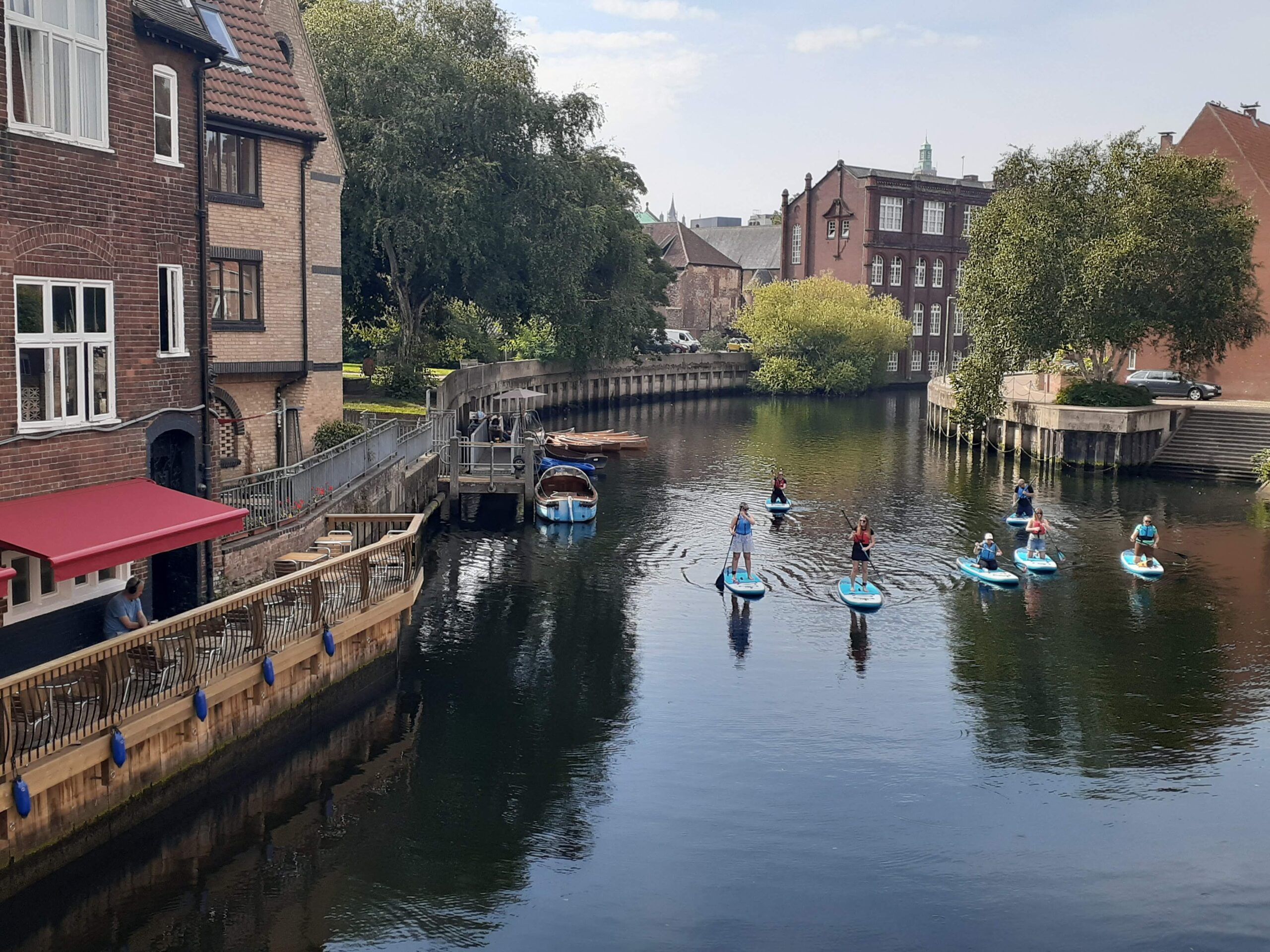
Nestled in the east of England, Norwich is a stunning historic city that beautifully preserves its medieval charm. This place holds a very special spot in my heart—it’s the city where I used to live, and many of my dear friends still call it home. Because of this personal connection, my wife and I return to Norwich almost every time we travel to the UK, making it a destination we’ve explored inside and out over countless visits.
During our latest trip, we spent a wonderful day wandering through both familiar corners and new spots.
In this guide, I’m sharing the perfect one-day walking route born from years of local knowledge and repeat visits. From iconic landmarks like Norwich Cathedral and the vibrant Norwich Market to the picture-perfect townhouses of Upper St Giles and hidden gardens that most guidebooks miss, here is your ultimate, time-efficient itinerary. I’ve also included essential travel tips on how to get here from London to help you plan your perfect day trip!
🇯🇵 この記事を日本語で読む: イギリス・ノリッジ観光スポット:何度も通う私の街歩き半日モデルコース&穴場
- About Norwich: A Historic City with a Unique Charm
- How to Get to Norwich: Travel Tips & Our Usual Route
- The Ultimate Norwich Itinerary: Historic Highlights & Hidden Gems in Half a Day
- 1. The Plantation Garden (The “Secret Garden”): A Beautiful Hidden Gem in Norwich
- 2. St John the Baptist Cathedrall: Stunning Architecture & History
- 3. Upper St Giles Street: Elegant Georgian Architecture & Indie Boutiques
- 4. The Assembly House & Norwich Market: One of the Best Things to Do in Norwich
- 5. The Norwich Lanes: Exploring the Heart of Indie Culture
- 6. Elm Hill: Famous Medieval Street & Filming Location
- 7. The Riverside Walk & Cow Tower: Medieval History & Peaceful Nature
- 8. Norwich Cathedral (The Grand Finale): Must-Visit Historic Landmark & Cloisters
- Final Thoughts: Why Norwich Deserves a Spot on Your UK Itinerary
About Norwich: A Historic City with a Unique Charm
Norwich is the historic county town of Norfolk, located in the East of England. If you look at a map of Great Britain, the island looks a bit like a rabbit—and Norwich sits right on its fluffy tail! It’s a wonderfully compact city with a deeply rooted history.
For centuries, Norwich flourished as a bustling commercial hub thanks to the River Wensum. In fact, from the 16th century until the Industrial Revolution, it was the second-largest city in England, surpassed only by London. Because it was somewhat geographically isolated from the rest of the UK, locals used to joke that it was quicker to sail to Amsterdam than to travel to London!
During the Middle Ages, wealth from a booming wool trade funded the construction of countless stone churches. Today, these beautiful, timeless buildings are scattered all across the city, giving Norwich its uniquely historic and fiercely independent character.
Norwich Travel Guide:
➡ A Local’s Walking Route from Norwich: Through Trowse Woods, Lakeside Views
➡ A Local’s Walking Route from Norwich: Through Trowse Woods, Lakeside Views, and a Perfect Pint and Pizza at Redwell
➡ A Local’s Guide to Norwich Pubs: 4 Top Spots from My Days Living in the City 【UK Craft Beer】
How to Get to Norwich: Travel Tips & Our Usual Route
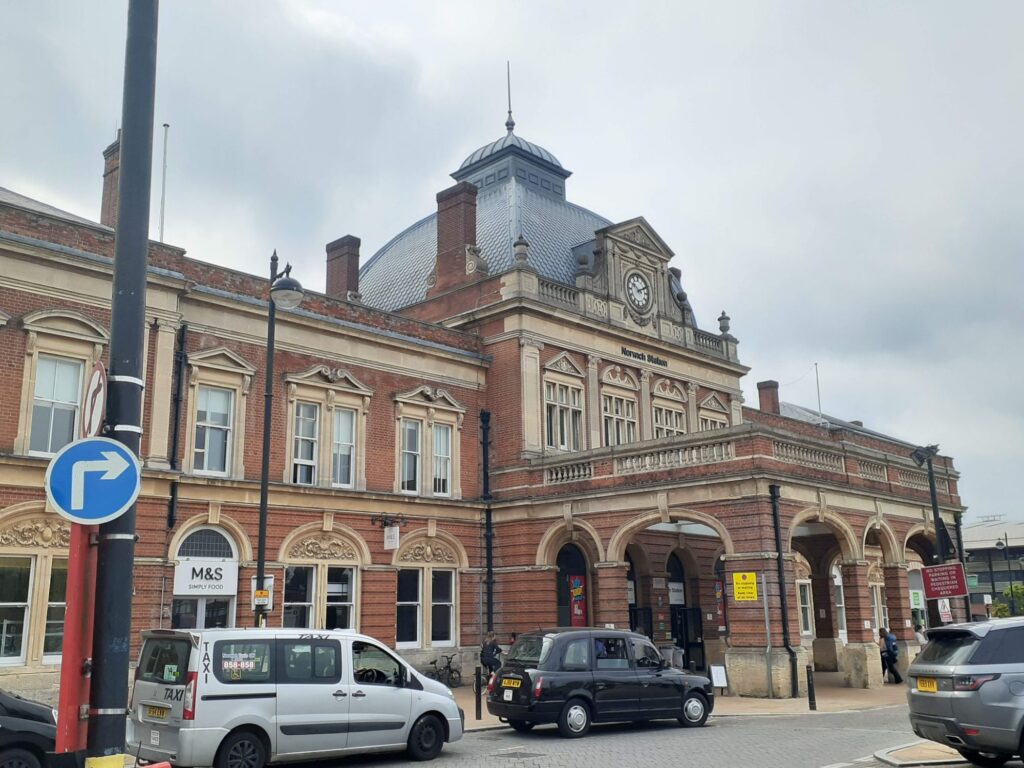
Norwich is very well-connected, making it accessible whether you are coming straight from London or travelling from further afield. Because we frequently stay with my mother in New Milton (on the south coast in Hampshire) when we visit the UK, we have mastered the art of journeying across the country to Norwich.
Here is everything you need to know to plan your journey, including our tried-and-tested routes.
1. Our Regular Route: From New Milton via London
If you happen to be exploring the beautiful South Coast or the New Forest before heading to Norfolk, here is how we usually do it:
- The Journey: We catch the South Western Railway train from New Milton Station directly to London Waterloo (about 1 hour 40 minutes).
- Crossing London: From Waterloo, we jump on the London Underground (the Tube) and take either the Waterloo & City Line to Bank, or the Northern Line, changing to the Central Line to reach London Liverpool Street Station.
- The Final Leg: From Liverpool Street, we catch the Greater Anglia direct train straight to Norwich Station (approx. 1 hour 40 minutes to 2 hours). It’s a bit of a cross-London trek, but a wonderful way to see the landscape change from the south coast to the east of England!
2. Travelling Directly from London (The Standard Route)
For most international visitors, your starting point will be central London.
- Trains: Depart frequently from London Liverpool Street Station and arrive directly at Norwich Station.
- Coaches (Long-Distance Bus): National Express runs services from Victoria Coach Station. It takes around 3 to 4 hours but is highly budget-friendly.
3. Coming Straight from the Airport?
If you are flying into the UK and want to head straight to Norfolk, it is entirely possible:
- From London Stansted (STN): There is a brilliant direct train to Norwich that takes just under 2 hours.
- From London Heathrow (LHR): We have actually done the journey straight from Heathrow to Norwich ourselves! Instead of tackling the cramped older Tube lines or coaches, we took the modern Elizabeth line directly from Heathrow to London Liverpool Street. It’s incredibly spacious and convenient for handling heavy luggage. From Liverpool Street, we simply hopped onto the direct train straight to Norwich.
Heading here straight from the plane? Check out my dedicated guide on How to Travel from Heathrow Airport to Norwich for a complete breakdown of that specific Elizabeth line and rail route, based on our exact experience.
Chris’s Local Rail Tips:
- Book in Advance: Train tickets in the UK can be notoriously expensive if you buy them on the day. Use apps like Trainline to book “Advance tickets” a few weeks ahead to secure the best rates.
- Get a Two Together Railcard: My wife and I always use a Two Together Railcard. It costs £30 for a year but gives you a 1/3 discount on almost all rail fares across Britain when travelling together. It easily pays for itself on a single round trip like New Milton or London to Norwich!
UK Train Travel Tips:
➡ Train Journey from London Heathrow to Norwich Using the Two Together Railcard
➡ How to Get 33% Off UK Train Tickets: A Guide for the Two Together Railcard, Trip.com Booking, and Easy Renewals
➡ Master the Rails: My Ultimate Routine for Finding the Cheapest UK Train Tickets
The Ultimate Norwich Itinerary: Historic Highlights & Hidden Gems in Half a Day
This fast-paced yet relaxed walking route is designed to show you the absolute best of Norwich in about 4 to 5 hours.
- 1. The Plantation Garden It is a wonderfully peaceful, hidden fairy-tale world to kick off your morning.
- Next stop: A 0-minute walk—it’s literally right next door!
- 2. St John the Baptist Cathedral Rising majestically beside the garden, this is one of the largest Catholic cathedrals in the UK. A masterpiece of Victorian Gothic Revival architecture, it boasts soaring vaulted ceilings and stunning stained glass without the crowds.
- Next stop: Exit the cathedral and head east towards the city centre (a 3-minute walk).
- 3. Upper St Giles Street A spectacular, sophisticated hidden gem lined with elegant 18th-century Georgian townhouses.
- Next stop: Walk straight to the end of the street into the heart of the city (5-minute walk).
- 4. The Assembly House & Norwich Market Admire the grand Georgian courtyard of The Assembly House (famed for Afternoon Tea), then dive into the iconic, brightly striped rows of the historic open-air Norwich Market for a brilliant local lunch.
- Next stop: The next area begins right behind the market square.
- 5. The Norwich Lanes The creative, beating heart of Norwich’s independent culture.
- Next stop: Head north-east out of the Lanes towards the river (8-minute walk).
- 6. Elm Hill A flawless medieval time capsule and famous filming location. Walk down the gently sloping cobblestones and browse second-hand bookshops and traditional tea rooms.
- Next stop: Head straight down towards the River Wensum to join the waterside path (2-minute walk).
- 7. The Riverside Walk & Cow Tower A tranquil, weeping willow-lined path along the River Wensum.
- Next stop: Continue along the river path and enter the cathedral grounds via Bishopgate (5-minute walk).
- 8. Norwich Cathedral (The Grand Finale) Take your time exploring the spectacular cloisters and grounds before heading home.
Heading Home & Heading into the Details
Once you have finished exploring the cathedral grounds, you are perfectly positioned for your journey back. Norwich Railway Station is just a flat, scenic 10-minute walk further down the river path—simply cross the bridge and you’re there, with plenty of time to catch your direct train back to London or beyond!
Now, let’s dive into the details of each location on our route. These are the places that make Norwich so unique, blending centuries of history with vibrant, modern local life.
1. The Plantation Garden (The “Secret Garden”): A Beautiful Hidden Gem in Norwich
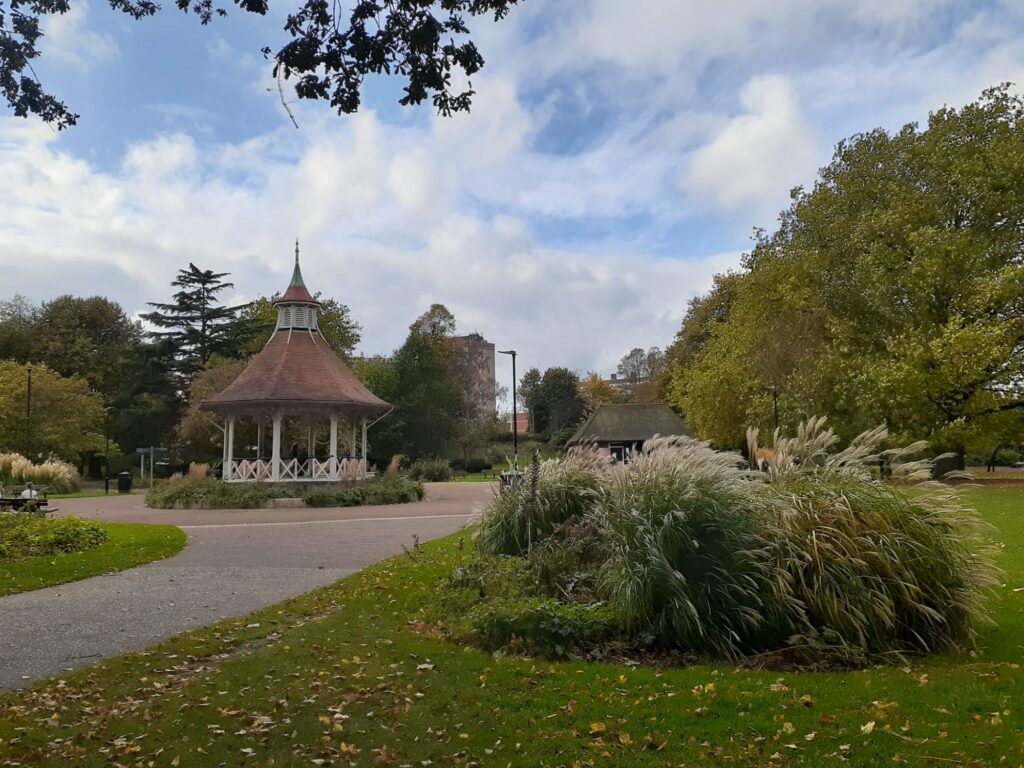
Tucked away beside a busy main road, The Plantation Garden is a magical, sunken haven that many tourists walk straight past without noticing. This three-acre oasis was created over 140 years ago by a wealthy local businessman named Henry Trevor, who transformed an abandoned chalk quarry into a spectacular Victorian Gothic preview.
- Opening Hours: 9:00 AM – 6:00 PM (or dusk in winter)
- Admission: £2 (Honesty box at the entrance—please bring coins, or you can pay by phone/QR code)
2. St John the Baptist Cathedrall: Stunning Architecture & History
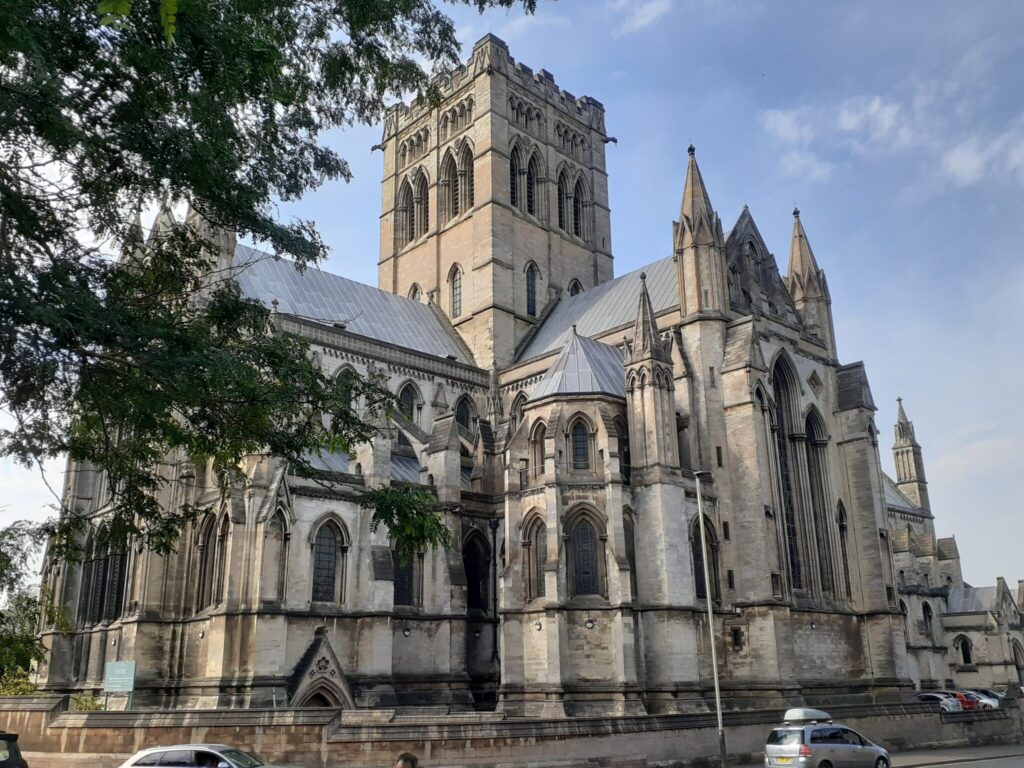
Right next door to the garden stands the imposing St John the Baptist Cathedral. Many international visitors get confused, thinking this is the main Norwich Cathedral, but this is actually the city’s Roman Catholic cathedral.
Built between 1882 and 1910, it is a masterpiece of the Victorian Gothic Revival style. Because it was funded by the Duke of Norfolk, no expense was spared. The exterior is grand, but the interior is truly jaw-dropping. The stone carving is exceptionally detailed, and the massive stained-glass windows create a beautiful, ethereal glow on the stone floors. It is incredibly peaceful here, often with only a handful of people inside, making it a wonderful place for quiet reflection and architecture photography.
- Opening Hours: 7:30 AM – 6:30 PM
- Admission: Free (Donations welcome)
3. Upper St Giles Street: Elegant Georgian Architecture & Indie Boutiques
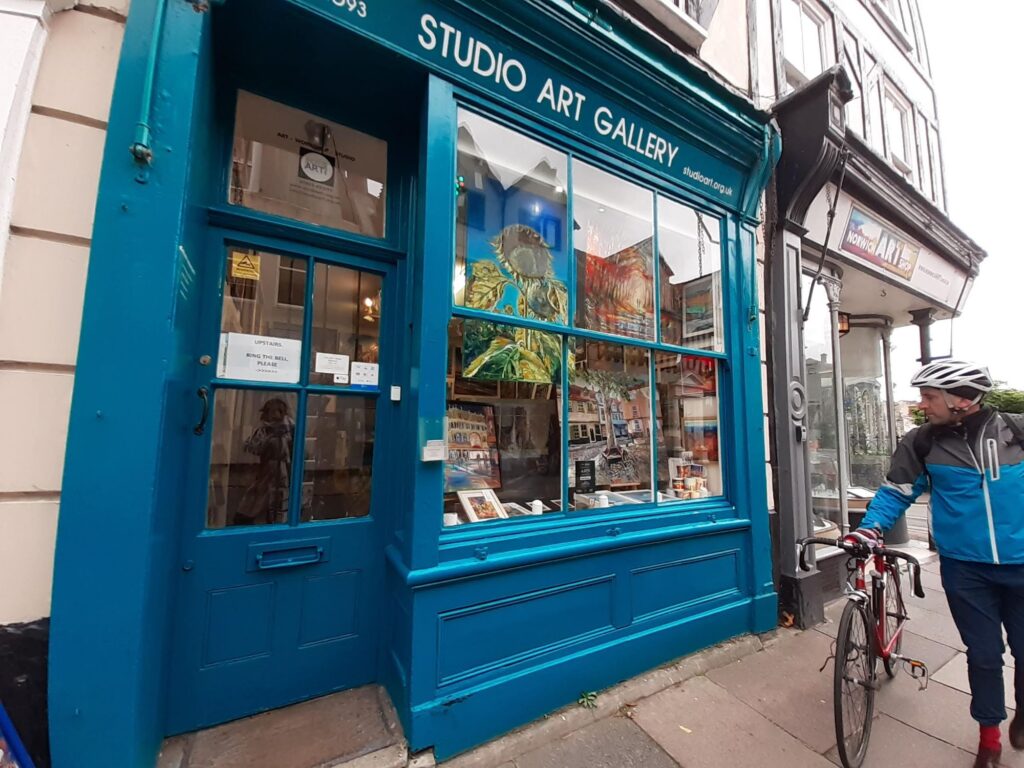
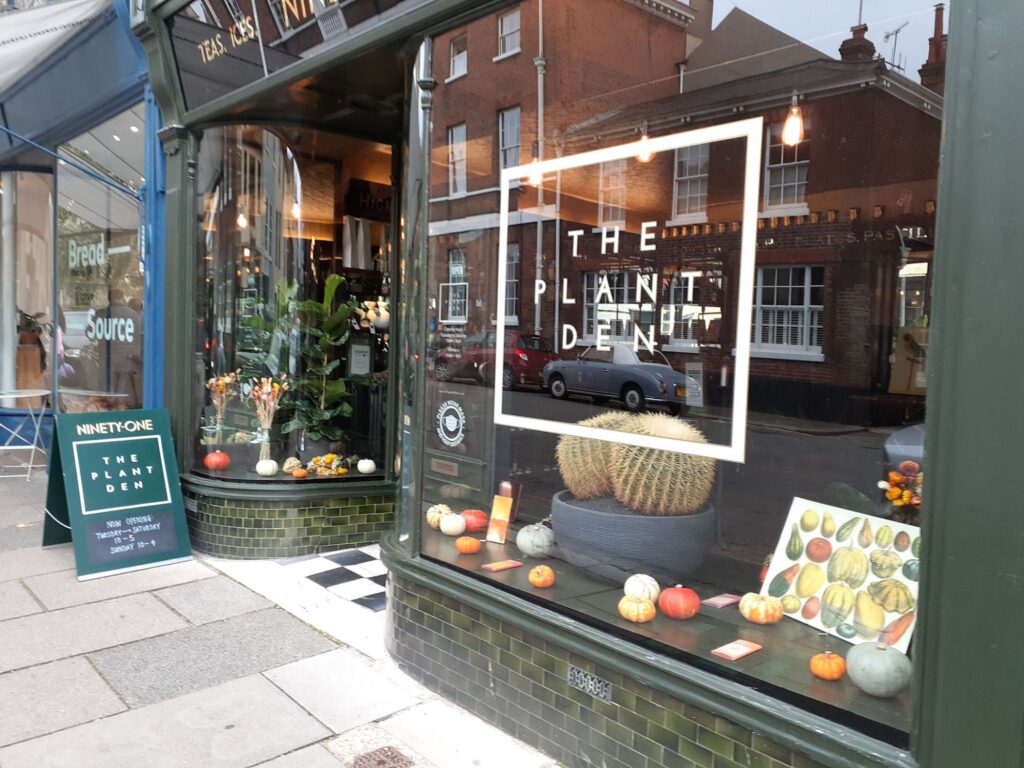
Leaving the cathedral behind, a short stroll brings you onto Upper St Giles Street. This is exactly the kind of hidden gem my wife and I love to look for when we travel—a street completely unbothered by global chain stores, preserved in its elegant past.
During the 18th century (the Georgian era), Norwich was incredibly wealthy, and this street became the fashionable place for the city’s upper-middle class to build their grand townhouses. As you walk down the gentle hill, take a moment to admire the architectural symmetry, the soft pastel facades, and the brilliant array of front doors. Every homeowner seems to have chosen a unique color, from deep crimson to sage green, accented by polished brass knockers. Today, these historic buildings house lovely independent businesses, including artisan bakeries and vintage shops.
- Best for: Architecture, independent shopping, and a morning coffee.
4. The Assembly House & Norwich Market: One of the Best Things to Do in Norwich
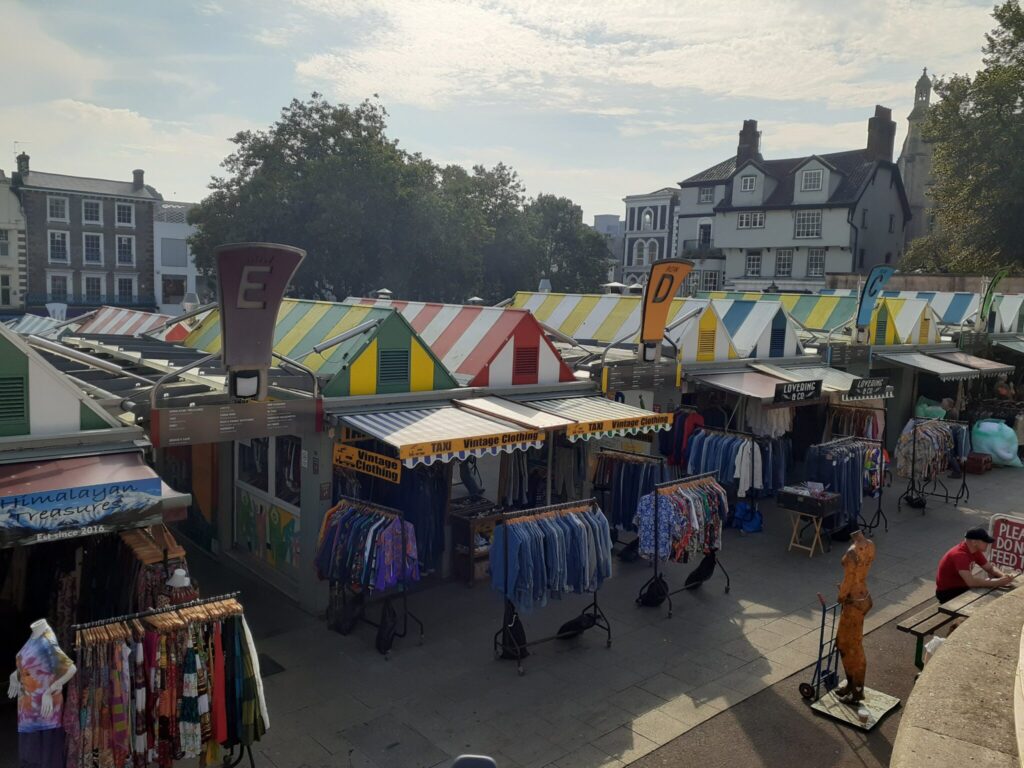
As you reach the bottom of Upper St Giles, you enter the bustling heart of the city, where two completely different sides of Norwich sit side-by-side: historical elegance and vibrant community life.
First, you will encounter The Assembly House. This gorgeous Georgian building was the grand palace of entertainment for high society in the 1700s. Walking into its open courtyard feels like stepping straight into a Jane Austen novel. It is still the ultimate destination in town for a luxurious, traditional Afternoon Tea.
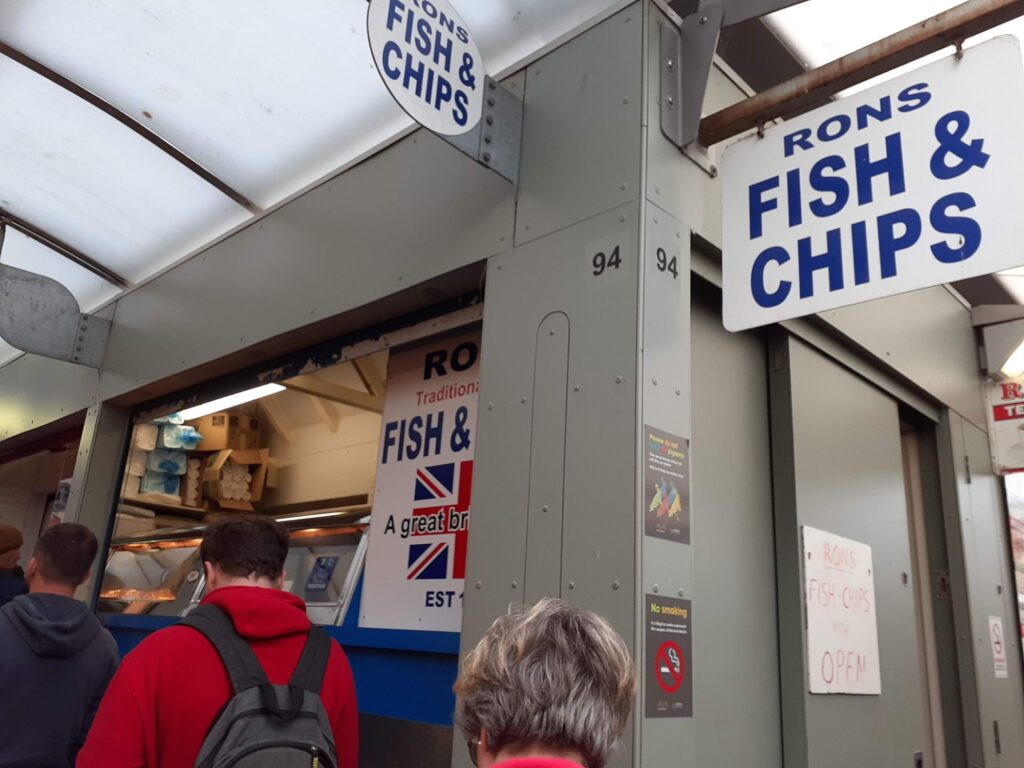
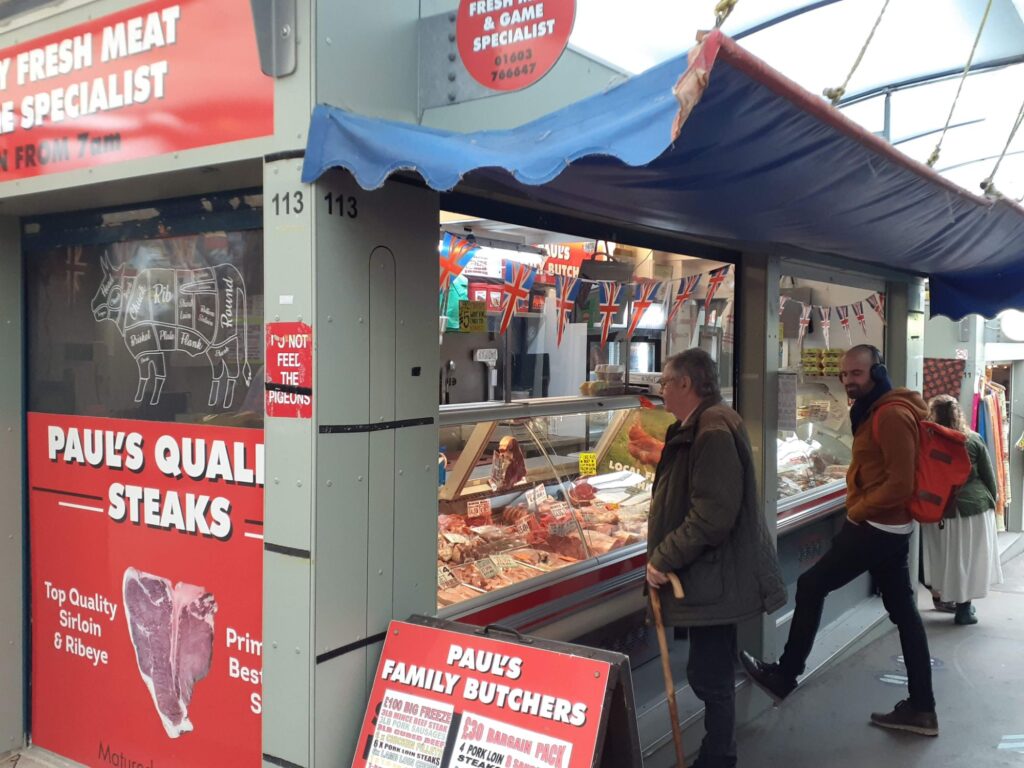
Just a two-minute walk from there is the legendary Norwich Market. Established by the Normans over 900 years ago, it features around 190 stalls covered by iconic, brightly striped canvas roofs. It is an absolute sensory overload in the best way possible. You can find everything here: local Norfolk cheeses, vintage clothes, second-hand books, and an incredible array of global street food.
- Norwich Market Opening Hours: Generally Monday – Saturday, 9:00 AM – 5:00 PM (Individual food stalls vary)
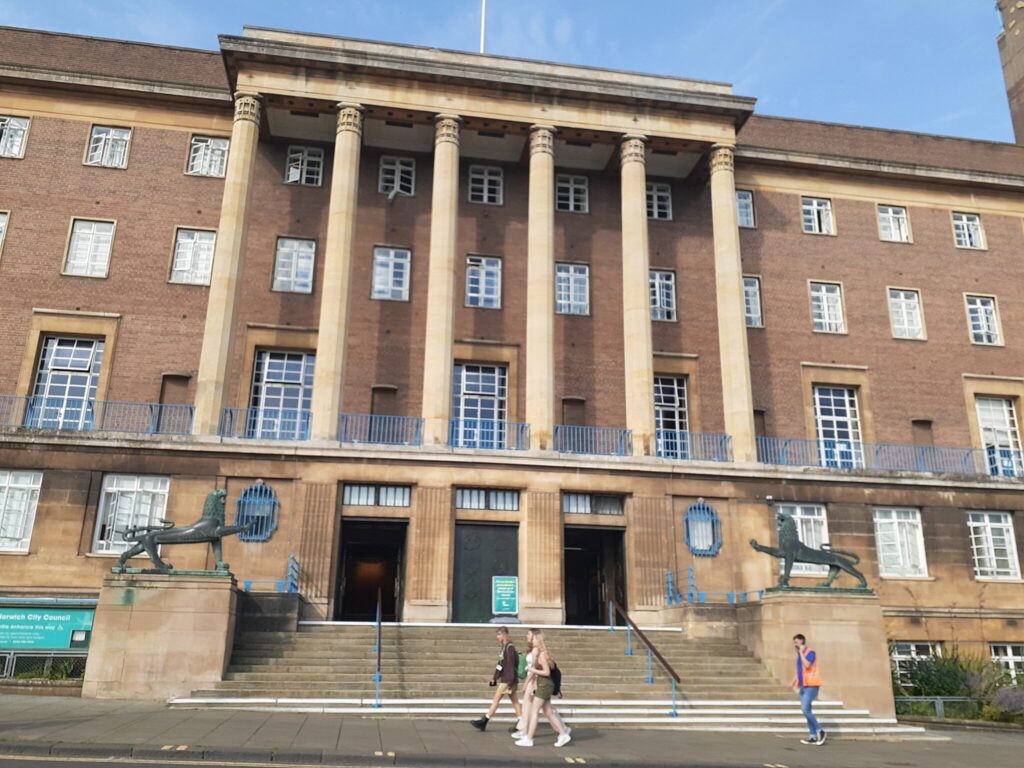
Insider Tip: Norwich Market is the absolute best place in the city for an affordable, world-class lunch. Whether you want traditional British fish and chips, authentic Asian street food, or a vegan feast, the quality here is outstanding. Grab your food and head up to the steps of the City Hall overlooking the market for a great people-watching spot while you eat!
5. The Norwich Lanes: Exploring the Heart of Indie Culture
Once you’ve finished lunch, it’s time to dive into The Norwich Lanes. This area is a beautiful labyrinth of narrow medieval alleys, hidden courtyards, and pedestrianised streets that collectively form the beating heart of Norwich’s independent culture.
What makes the Lanes so special is the complete absence of generic high-street chains. Instead, the historic timber-framed buildings are packed with quirky indie boutiques, vintage clothing stores, local jewelers, and brilliant contemporary galleries. It has a wonderfully community-focused, creative atmosphere. My wife and I can easily spend hours here just wandering from one alley to the next, discovering tucked-away courtyards and unique local craft shops.
- Best for: Vintage shopping, independent boutiques, and coffee stops.
6. Elm Hill: Famous Medieval Street & Filming Location
Widely celebrated as the most beautiful street in Norwich, Elm Hill is a complete medieval time capsule. Most of the timber-framed Tudor structures you see today date back to the 16th century.
The moment you step onto this gently sloping, cobbled lane, the modern world instantly vanishes. Lined with beautifully preserved black timber beams and pastel plasterwork, its flawless historic look is so striking that it has frequently been used as a filming location for major movies. Today, these ancient buildings house atmospheric second-hand bookshops, traditional tea rooms, and local galleries.
- Best Time to Visit: Late afternoon when the lower sun casts beautiful shadows across the cobblestones.
7. The Riverside Walk & Cow Tower: Medieval History & Peaceful Nature
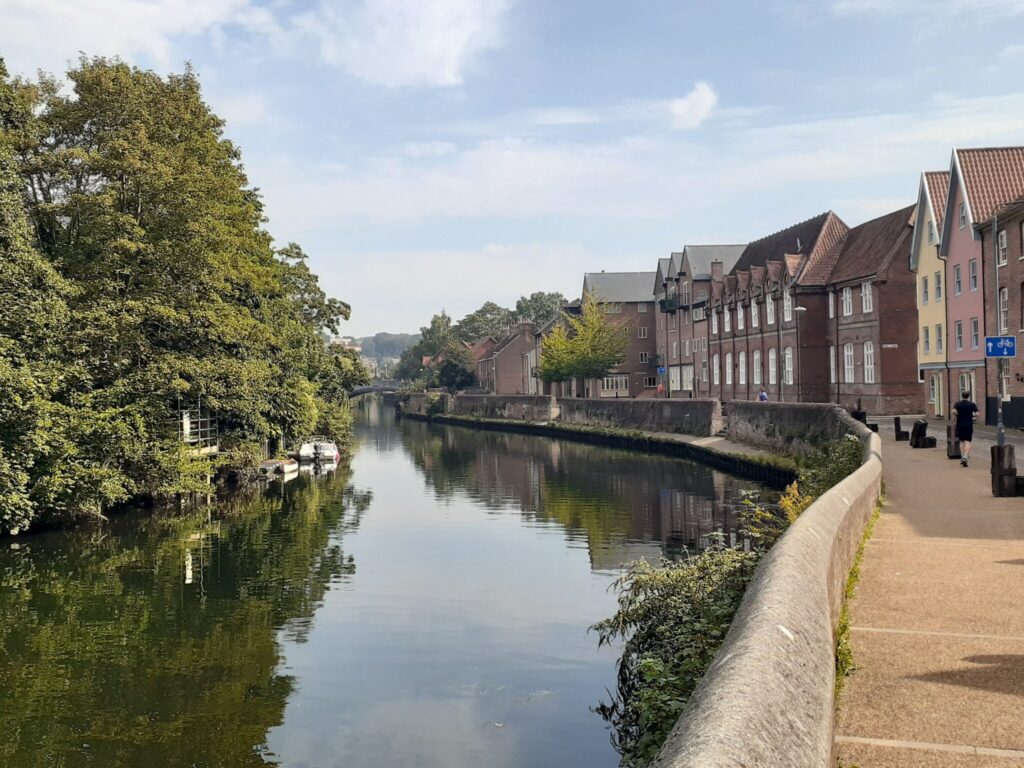
After soaking in the Tudor magic of Elm Hill, a short two-minute stroll brings you to one of my personal favourite spaces in the city: The Riverside Walk. Norwich excels at blending its rich urban heritage with tranquil nature, and this weeping willow lined path following the winding River Wensum feels miles away from the city centre.
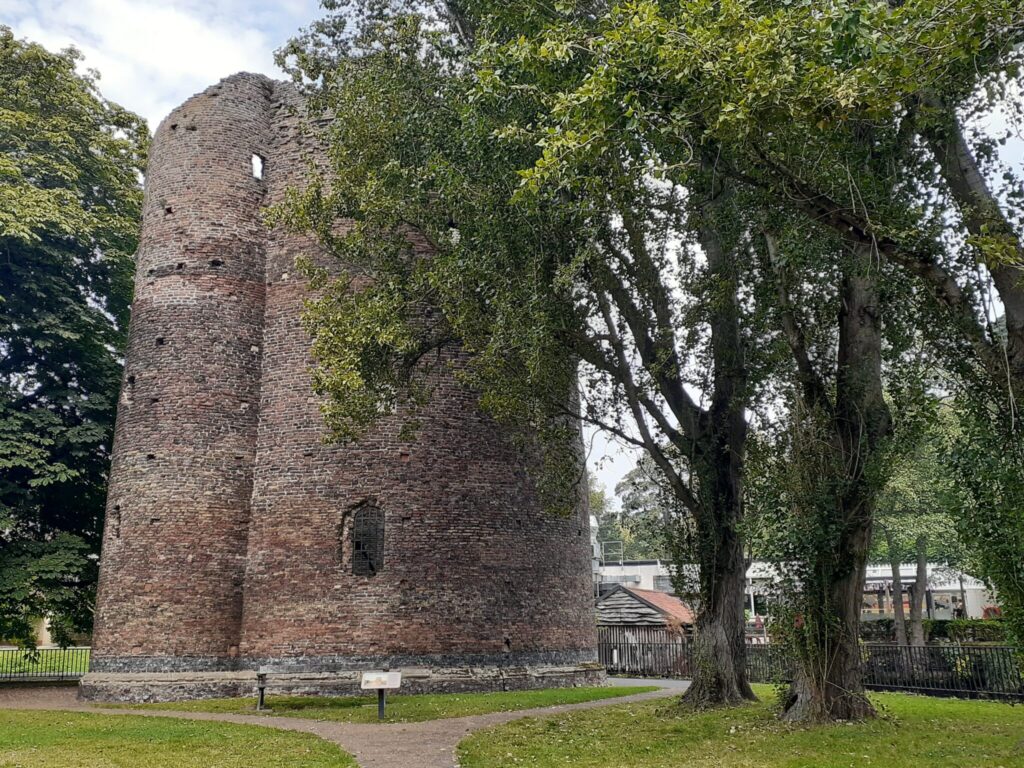
As you walk along the peaceful riverbank watching the swans glide past, you will come across Cow Tower. Standing solitary on a sharp bend in the river, this massive brick structure was built in the late 14th century to defend the city. It is actually one of the earliest purpose-built artillery towers for gunpowder defence in England—a quintessential landmark that many standard day-trippers completely miss.
- Admission: Free (You can view the impressive exterior from the riverside path)
8. Norwich Cathedral (The Grand Finale): Must-Visit Historic Landmark & Cloisters
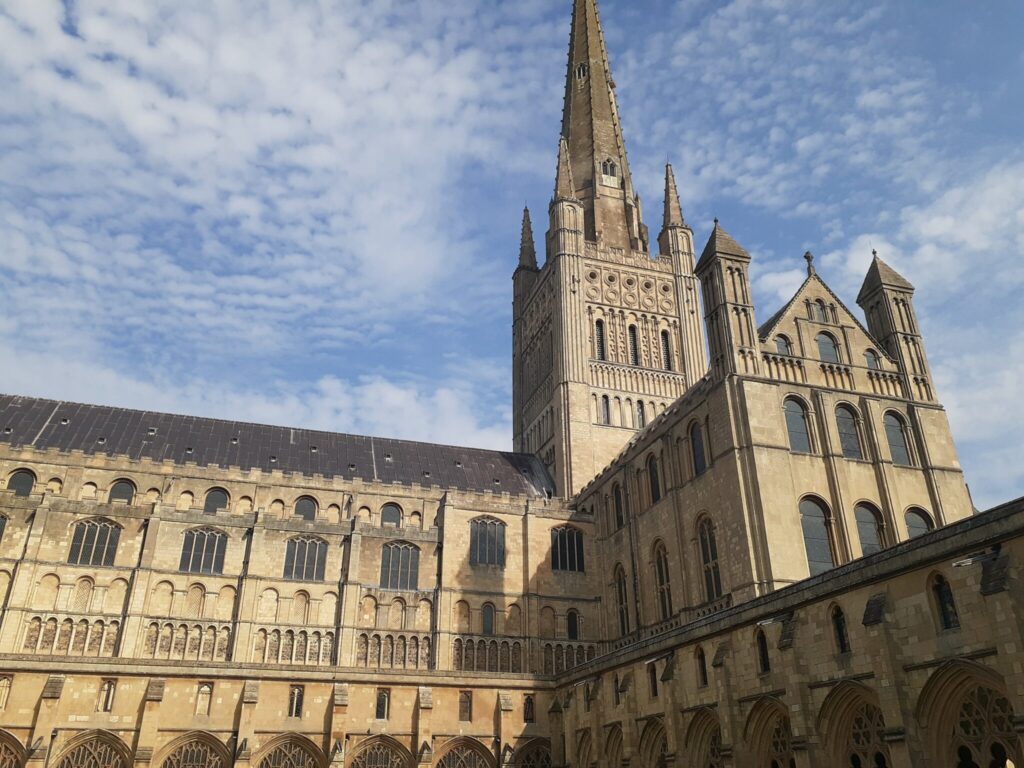
We conclude our walking tour at the city’s crown jewel: Norwich Cathedral. Founded in 1096, it is one of Europe’s finest examples of Romanesque architecture, boasting the second-tallest spire in England.
Inside, the sheer scale of the stone arches is breathtaking, but the absolute highlight is the Cloisters—the largest monastic cloisters in the country. Walking through these ancient, vaulted archways is deeply atmospheric. We love to sit on the grass in the central courtyard, look up at the towering spire cutting into the sky, and just absorb centuries of living history.
- Opening Hours: 7:30 AM – 6:30 PM
- Admission: Free (Donations are highly encouraged to help preserve this magnificent building)
UK Train Travel Tips:
➡ Train Journey from London Heathrow to Norwich Using the Two Together Railcard
➡ How to Get 33% Off UK Train Tickets: A Guide for the Two Together Railcard, Trip.com Booking, and Easy Renewals
➡ Master the Rails: My Ultimate Routine for Finding the Cheapest UK Train Tickets
Final Thoughts: Why Norwich Deserves a Spot on Your UK Itinerary
Norwich is a city that captures a unique magic. It is rare to find a place that holds over a thousand years of living history so completely, yet feels so wonderfully creative, independent, and alive today.
If you follow this walking itinerary, you won’t just see the famous landmarks; you will experience the hidden corners that make this city so incredibly special to my wife and me. So, pack your walking shoes, book your train tickets well in advance, and get ready to fall in love with Norwich.
Happy travelling!
Norwich Travel Guide:
➡ A Local’s Walking Route from Norwich: Through Trowse Woods, Lakeside Views
➡ A Local’s Walking Route from Norwich: Through Trowse Woods, Lakeside Views, and a Perfect Pint and Pizza at Redwell
➡ A Local’s Guide to Norwich Pubs: 4 Top Spots from My Days Living in the City 【UK Craft Beer】
For travel logs and sights around Norwich & Norfolk in Eastern England, click here
➡ Norwich & Norfolk Area Travel Guide

Comment