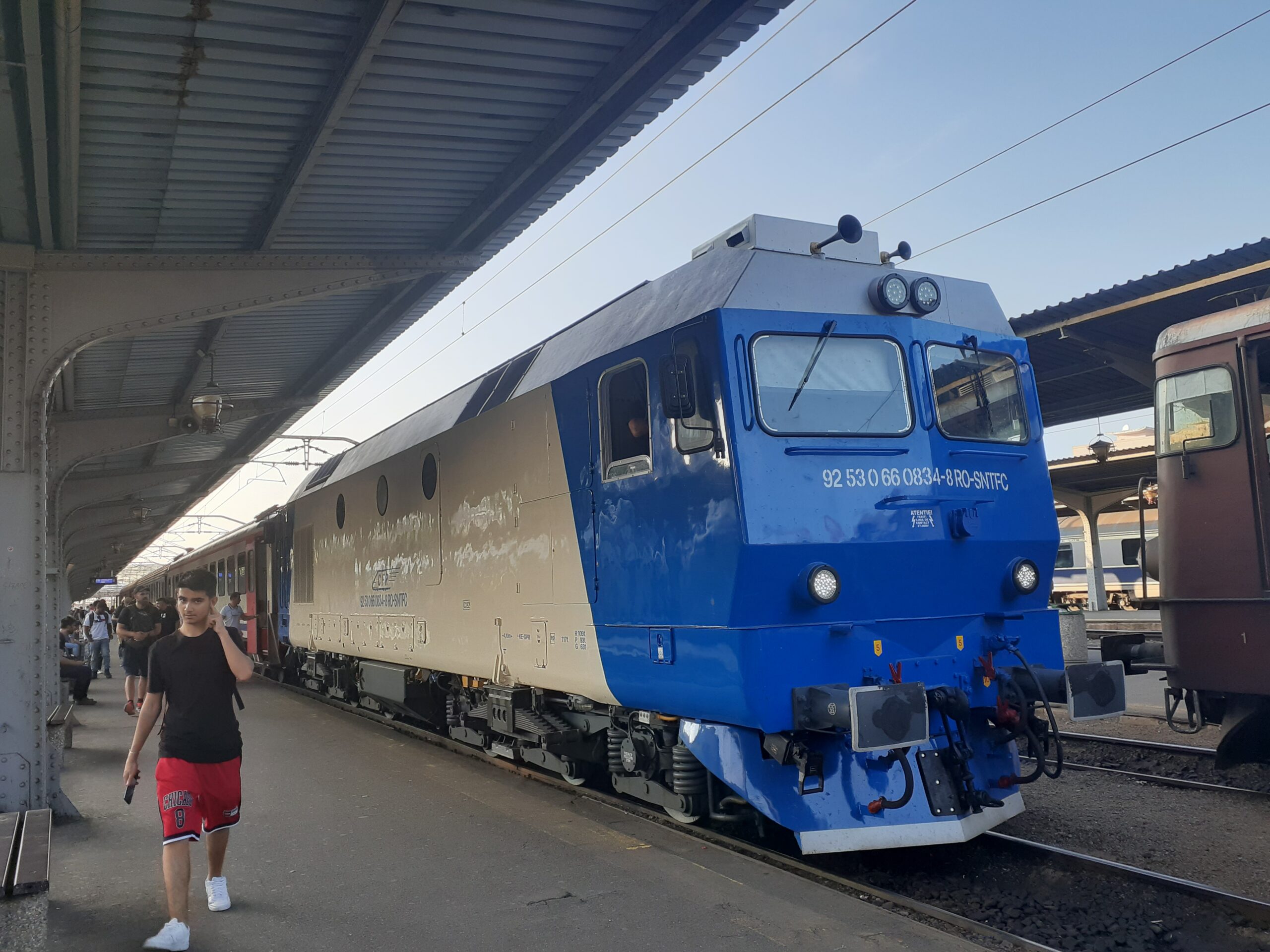
After two wonderful nights exploring the medieval hills of Veliko Tarnovo, it was time to cross the border into Romania, with our final destination being the capital city of Bucharest. While many travellers opt for long-distance buses, we decided to experience this international journey by rail.
Crossing from Bulgaria to Romania by train is an incredibly scenic, nostalgic, and budget-friendly option, but it requires a bit of logistical puzzle-solving. Because international trains do not pass directly through Veliko Tarnovo’s central station, you must first make a short transfer to the nearby railway hub of Gorna Oryahovica. In this step-by-step DIY guide, we break down current train ticket prices, bus transfer logistics, what to expect during border passport controls on the train, and how we survived a major technical delay.
🇯🇵 この記事を日本語で読む: ヴェリコ・タルノヴォからブカレストへ国際列車で国境越え!ゴルナ・オリャホヴィサ経由の行き方・切符購入・国境の最新ガイド
Quick Route Summary: Veliko Tarnovo to Bucharest (International Rail)
- Total Journey Time: Approx. 6 to 7.5 hours (subject to railway delays).
- Total Transport Cost: Approx. 30.50 BGN (~$17.00 USD) per person (including the local transfer bus).
- The 2-Leg Rail Route:
- Leg 1: Local Bus #10 from Veliko Tarnovo Central to Gorna Oryahovica Station (3 BGN / ~25 mins).
- Leg 2: International Train from Gorna Oryahovica to Bucharest Inter-North via Ruse (27.50 BGN / ~6 hours).
- Essential Border Tips: Passport checks are done entirely from your train seat on both the Bulgarian (Ruse) and Romanian (Giurgiu Nord) sides. No food or drinks are sold on board, so packing a picnic lunch is mandatory!
- Border crossing from Veliko Tarnovo to Bucharest
- Step 1: Buying International Train Tickets in Veliko Tarnovo
- Step 2: Taking Local Bus #10 to Gorna Oryahovica Station
- Step 3: Navigating the Platforms & Surviving the 70-Minute Delay
- Step 4: Leaving Bulgaria at the Ruse Border Station
- Step 5: Crossing the Danube & Romanian Immigration at Giurgiu Nord
- Arrival at Bucharest Northern Railway Station (Gara de Nord)
Border crossing from Veliko Tarnovo to Bucharest
When crossing the border from Veliko Tarnovo to Romania, there is a possible way to get to the border point on your own. The nearest town to the border with Romania is Ruse, but as far as we found out, there is no public transport from the town of Ruse just to the other side and you would have to charter a taxi.
There are also international trains from Bulgaria to Romania, which can be taken from Gorna Orjahovica station, if you want to take it near Veliko Tarnovo. The journey to Bucharest takes about six hours. We chose to take this train.
Step 1: Buying International Train Tickets in Veliko Tarnovo
Skip the Main Station—Head to the Secret Old Town Ticket Office
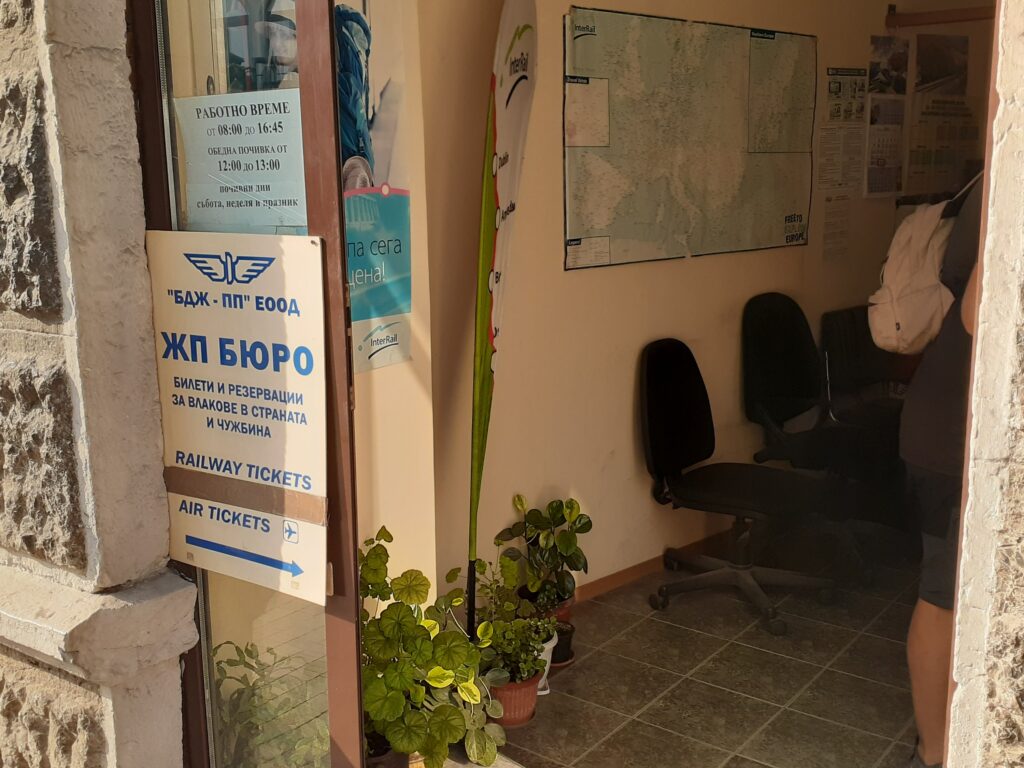
While you can purchase your tickets directly at the Veliko Tarnovo train station, the terminal is located quite far outside the main tourist center. Luckily, there is a small, highly convenient railway ticket office (Бюро за международни пътнически билети) hidden right in the historic area of town.
The office sits along the main street of Veliko Tarnovo, diagonally opposite the Tequila Bar Funky Monkey and right next to a local adult shop. Buying your tickets here the day before departure saves you a stressful trip to the station on travel morning.
Ticket Pricing and Cash-Only Policy
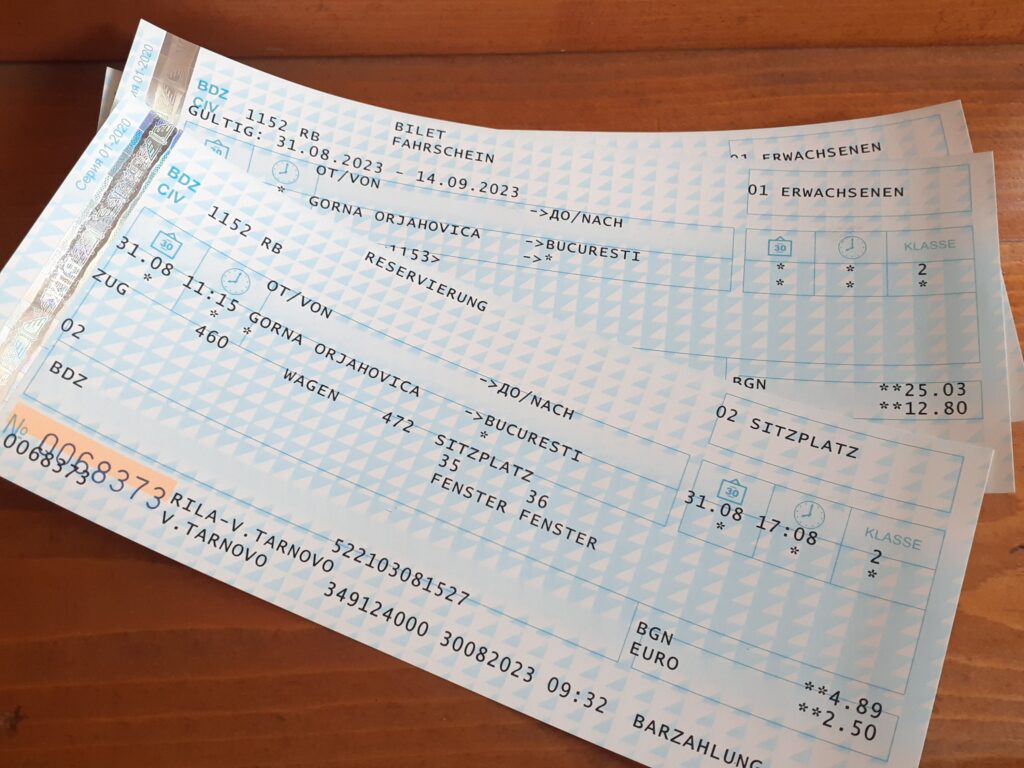
We purchased two tickets for the next day’s 11:15 AM departure to Bucharest. The total cost came to 54.95 BGN for two people (approx. 27.50 BGN / $15.20 USD per person), which included mandatory seat selections.
Crucial Tip: The international ticket office operates on a cash-only basis. Credit and debit cards are not accepted, so make sure you withdraw enough Bulgarian Lev (BGN) before stepping inside!
Step 2: Taking Local Bus #10 to Gorna Oryahovica Station
The journey to Bucharest takes approximately 6 hours and no food is provided or sold. Therefore, we left the city of Veliko Tarnovo with food from a supermarket.
Why Bus #10 is Better Than the Local Train
As mentioned, the daily international train coming from Sofia to Bucharest does not stop at Veliko Tarnovo station. While you could technically take a slow local train to connect to Gorna Oryahovica, taking the local city bus is significantly easier because it departs directly from the downtown core.
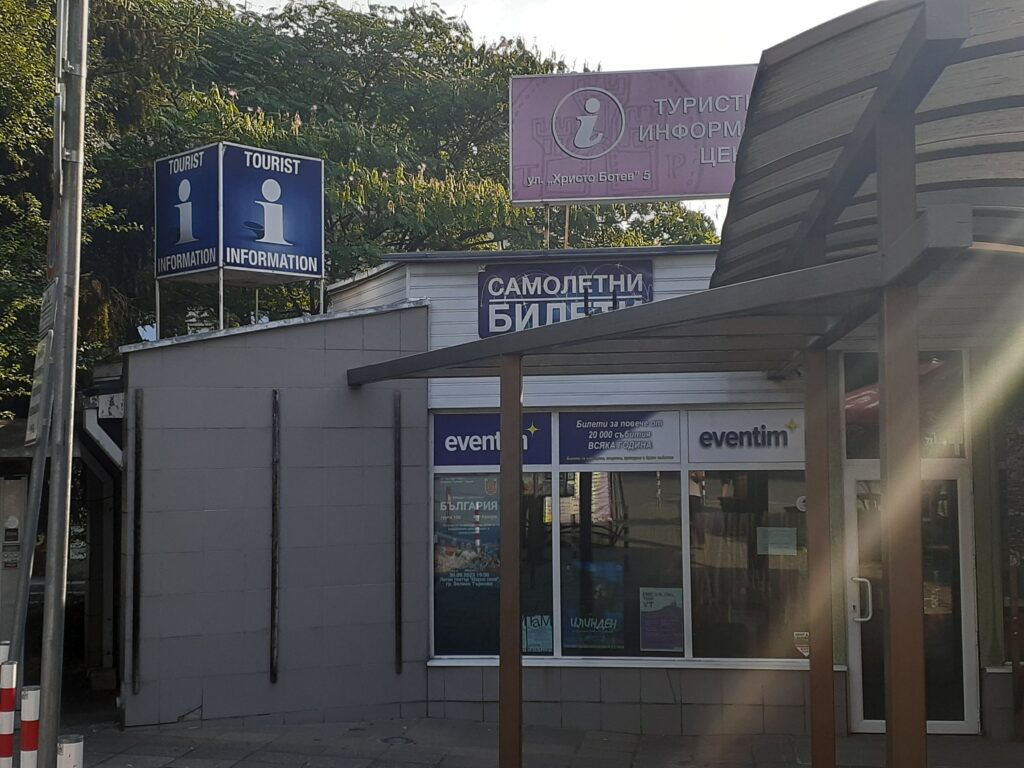
We stopped by the Tourist Information Center in the town center to confirm the schedule. Local Bus #10 runs directly from the front of the Veliko Tarnovo Municipality (City Hall) bus stop, heading east along the main boulevard. The bus runs frequently throughout the morning, departing every 20 minutes (8:30, 8:50, 9:10, 9:30, 9:50, 10:10, etc.). The buses leave from the bus stop on the side of the road going east on the main street of the city.
Bus Departure and Arrival Logistics
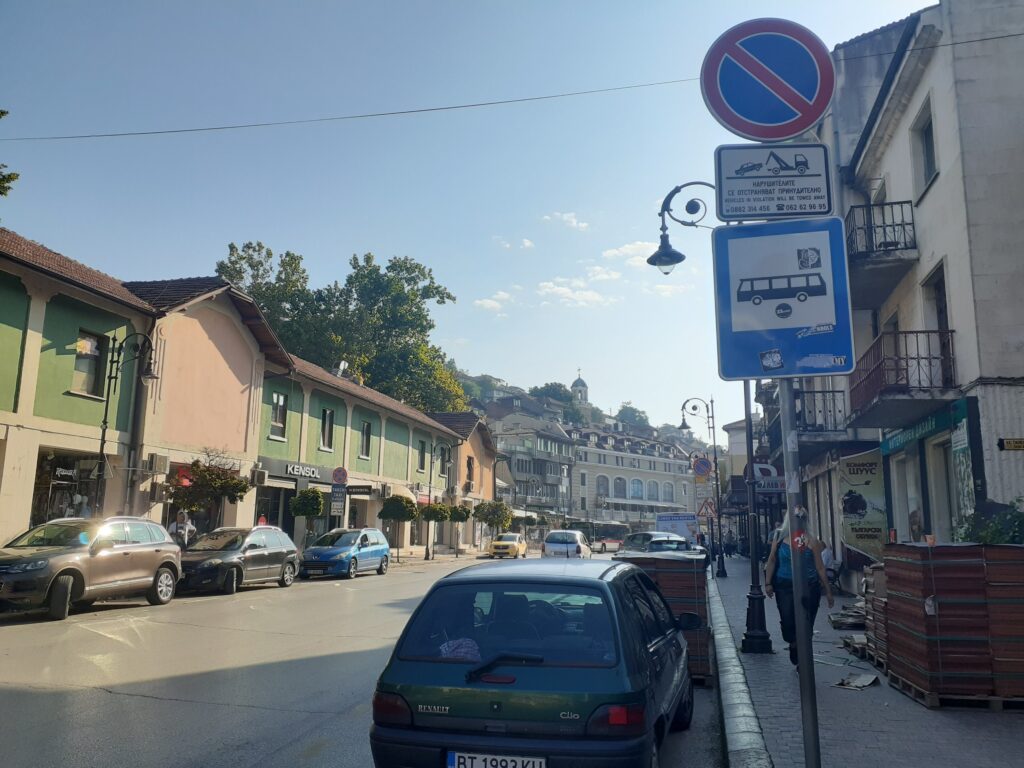
We caught Bus #10 at 9:22 AM from the convenient bus stop right next to the famous Shtastliveca Restaurant, which was just a short walk from our guesthouse.
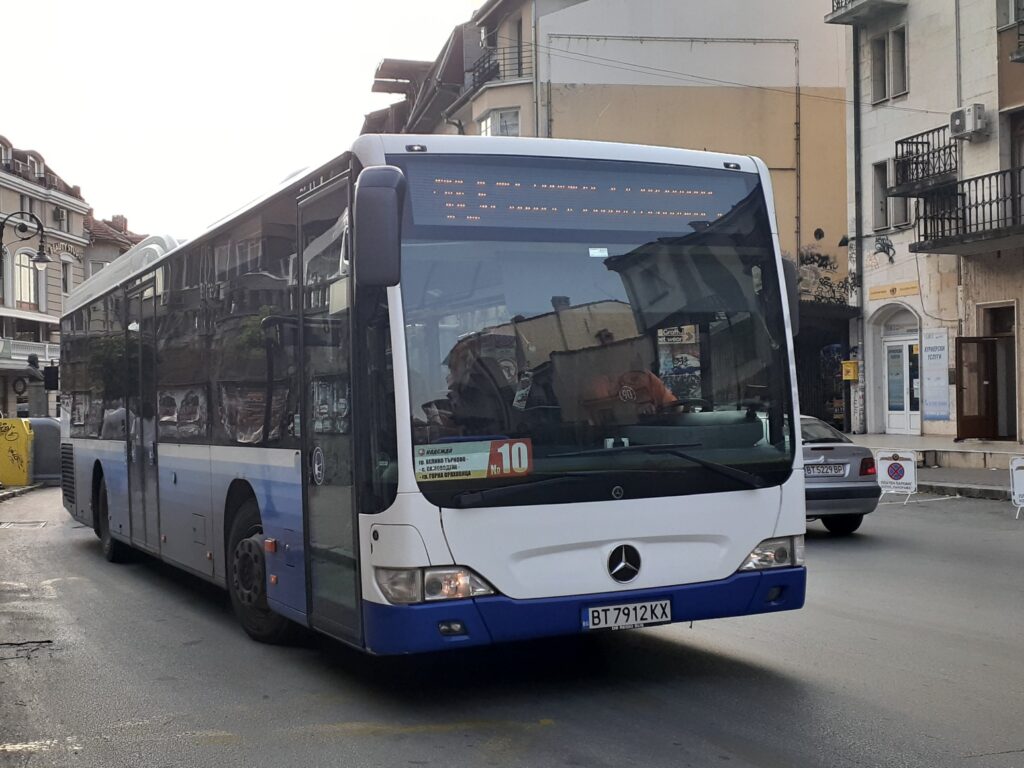
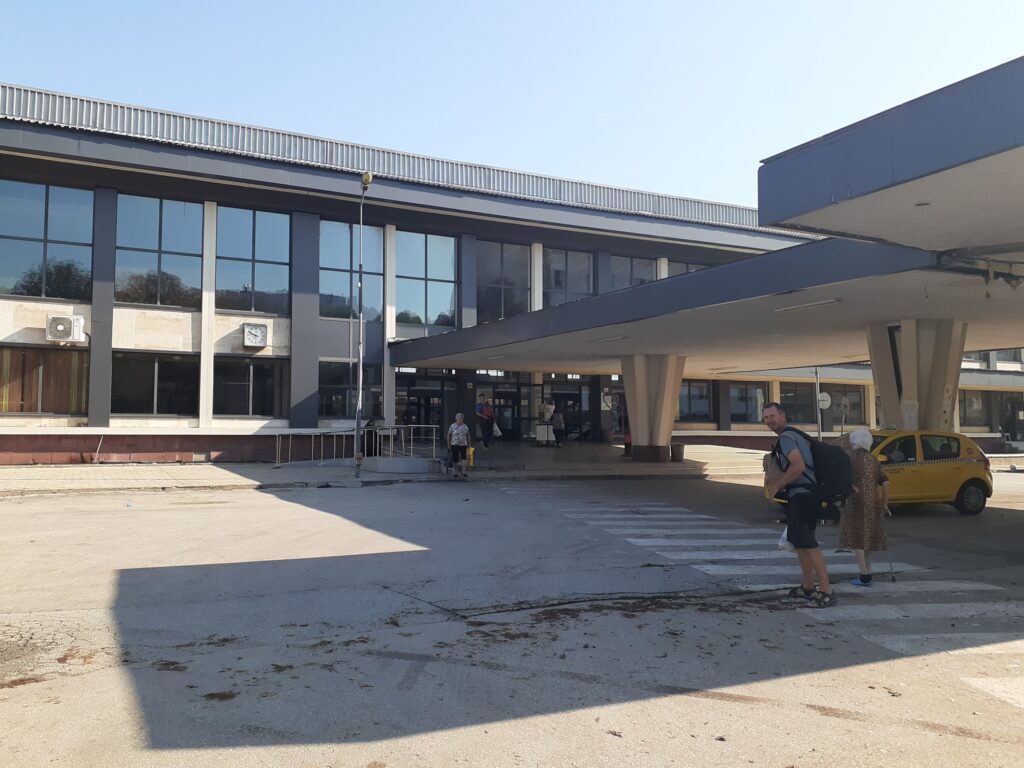
The ride was smooth, costing 3 BGN per person paid directly to the conductor on board. We arrived at the grand, communist-era facade of Gorna Oryahovica Station at 9:45 AM, giving us plenty of buffer time before our scheduled 11:15 AM departure.
Step 3: Navigating the Platforms & Surviving the 70-Minute Delay
Deciphering the Confusion of Platform “5-3”
There was a board at Gorna Orjahovica station where you can find the information of your train. The original departure time of our train was 11:15 am, but on the board, it said the train was 70 minutes late. The train should have departed Sofia at 7am, and a 70-minute delay already is not very understandable…
We later discovered that this specific carriage wasn’t just coming from Sofia; it was actually a long-distance international car originating all the way from Istanbul, Turkey!
It said our train would depart from platform 5-3, but there are only three platforms at this station. Where is the platform 5-3?
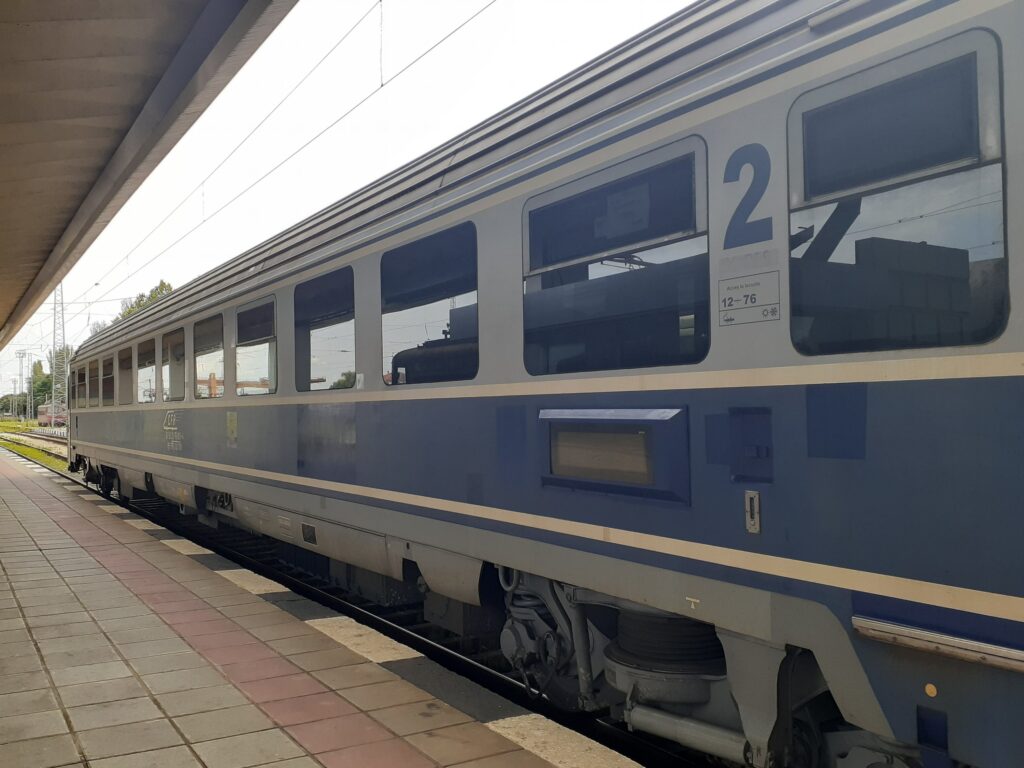
Anyway, the train was delayed for 70 minutes so we had time. We sat on platform 1 and watched, and just before 11am, a Romanian train car came in on the platform at the back. We thought this was probably the international train we were on, so we went to platform 3 and showed our ticket to the staff there, who also pointed to the Romanian car. It would connect with the train coming from Sofia to Bucharest.
The Romanian Car vs. The Bulgarian Car
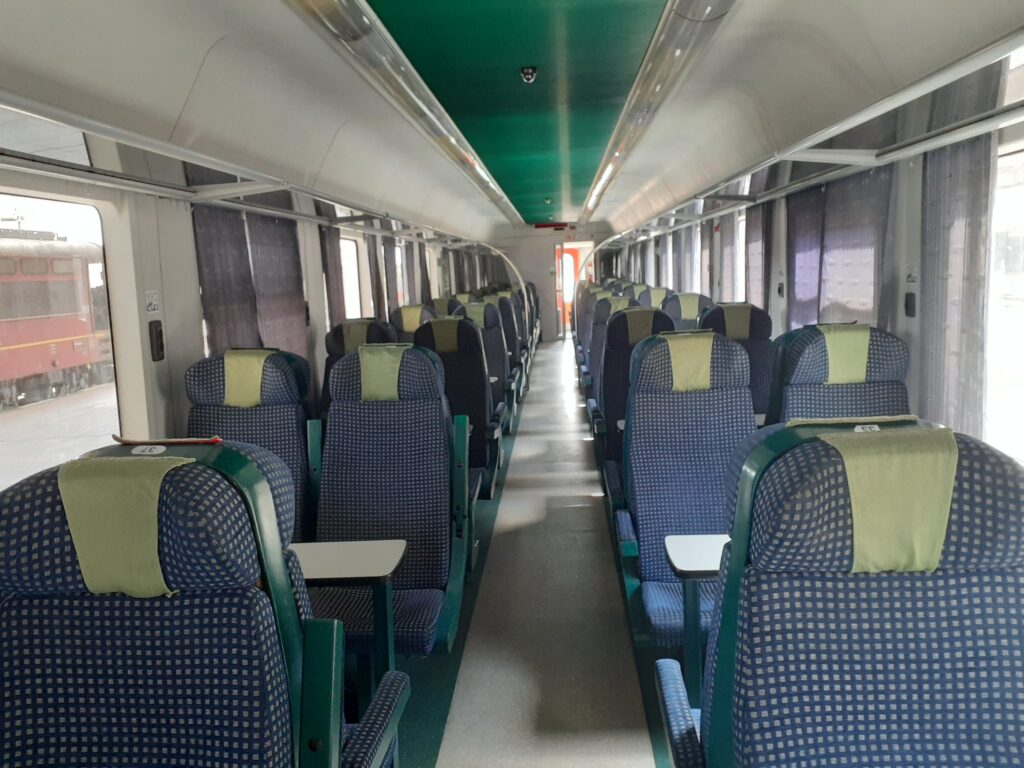
With time to spare, we sat on Platform 1 and watched the tracks closely. Just before 11:00 AM, a distinct, modern Romanian (CFR) railway car rolled onto a far-back track behind platform 3. We walked over and showed our tickets to a platform guard, who confirmed this was indeed our carriage.
Interestingly, the train was split into two sections:
- The Bulgarian Car: A carriage covered in graffiti with zero air-conditioning. Local passengers boarded this car.
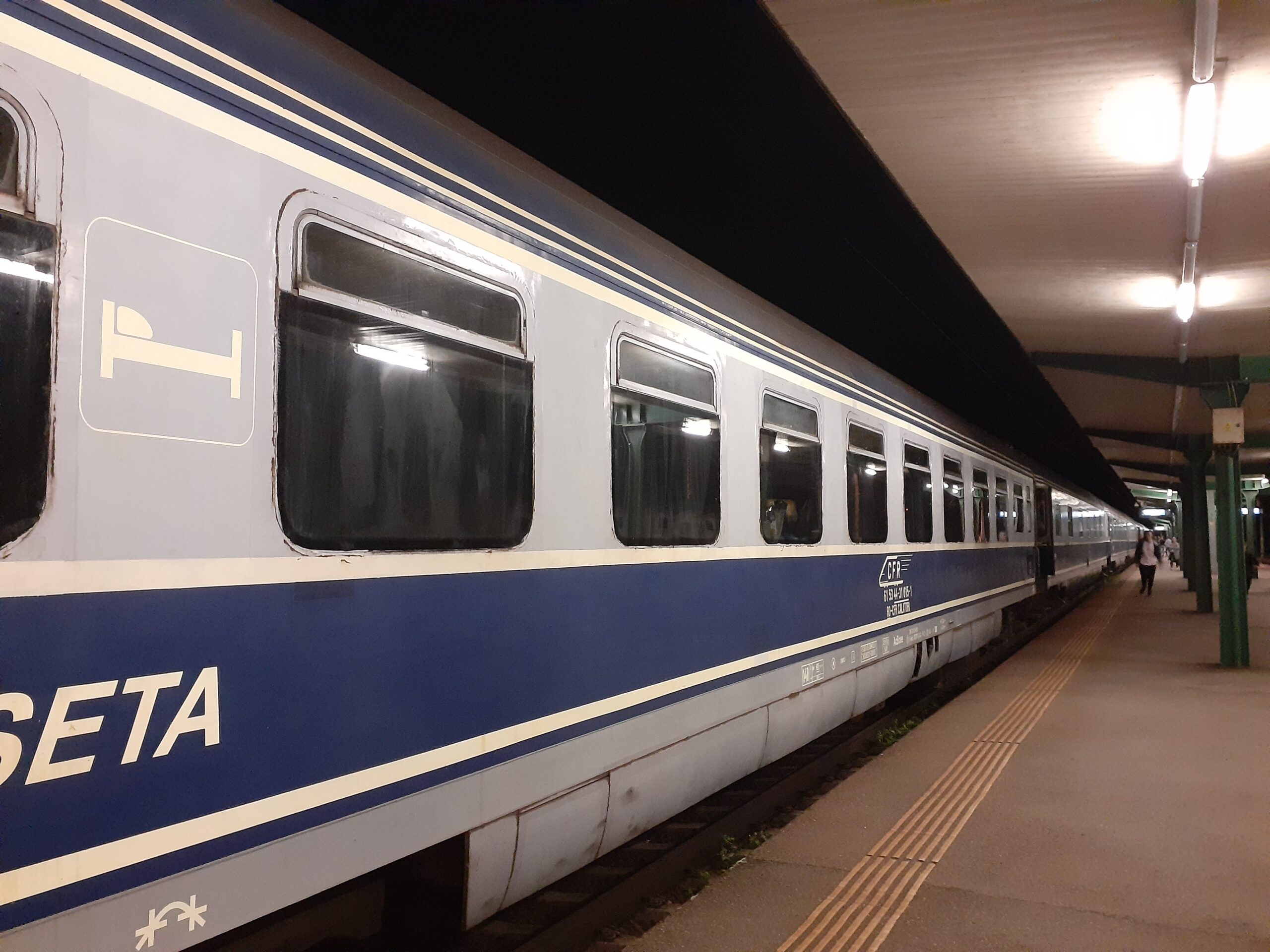
- The Romanian Car: A clean, fully air-conditioned carriage with comfortable cloth seats and active power sockets for charging electronics.
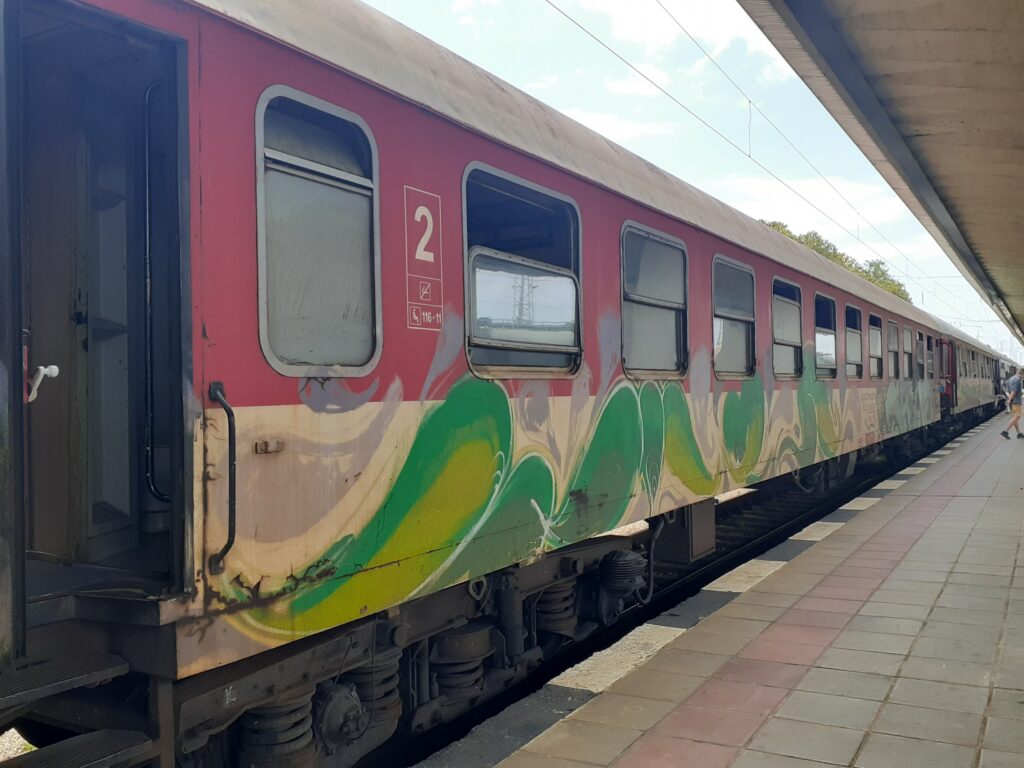
Our reserved seats were in the Romanian car. Around 12:30 PM, the main train coming from Sofia finally arrived and coupled with our carriage. At 12:40 PM, our train officially pulled out of the station—with us being the absolute only passengers inside our entire air-conditioned compartment!
Step 4: Leaving Bulgaria at the Ruse Border Station
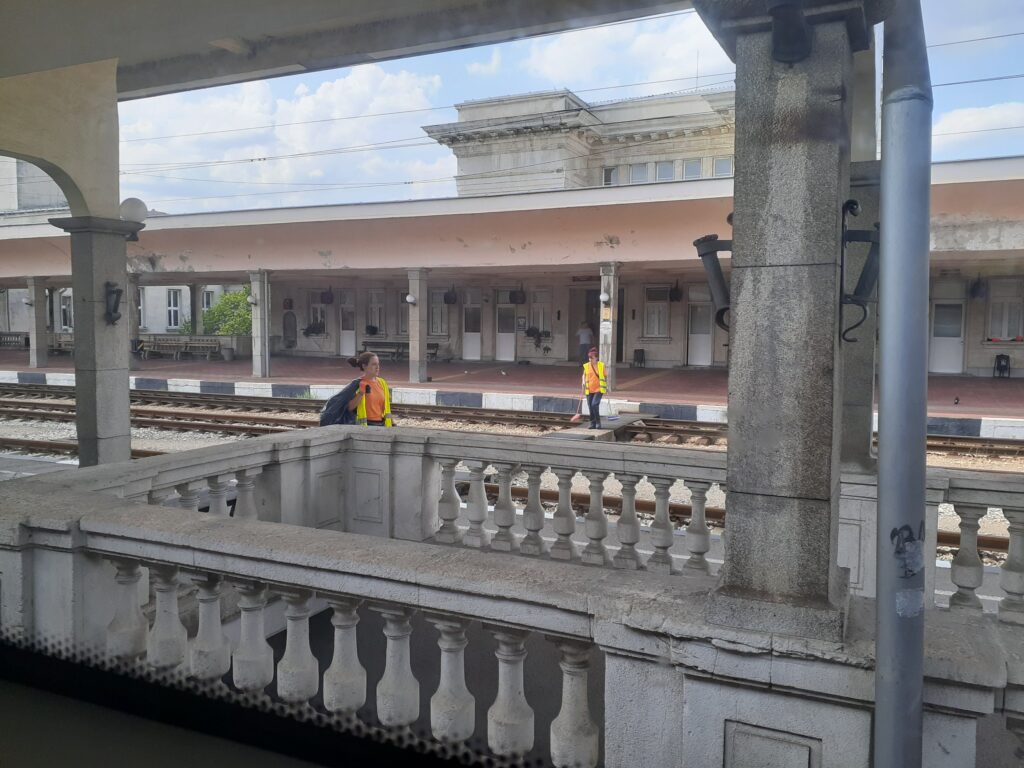
The train rumbled north through the Bulgarian countryside, arriving at Ruse, the final border town on the Bulgarian side, around 3:00 PM. According to the official timetable, the train schedules a lengthy one-hour stop here to handle border logistics and take on new passengers. A few travelers boarded our quiet Romanian carriage here, though it remained mostly empty.
The passport control process here is completely stress-free. You do not need to disembark or carry your luggage. You simply stay in your seat, and a Bulgarian border official walks through the corridor to collect passports. After about 20 minutes, the officer returned, handed back our passports freshly stamped with a Bulgarian exit mark, and the train departed at 3:30 PM.
Step 5: Crossing the Danube & Romanian Immigration at Giurgiu Nord
Rolling Across the Friendship Bridge
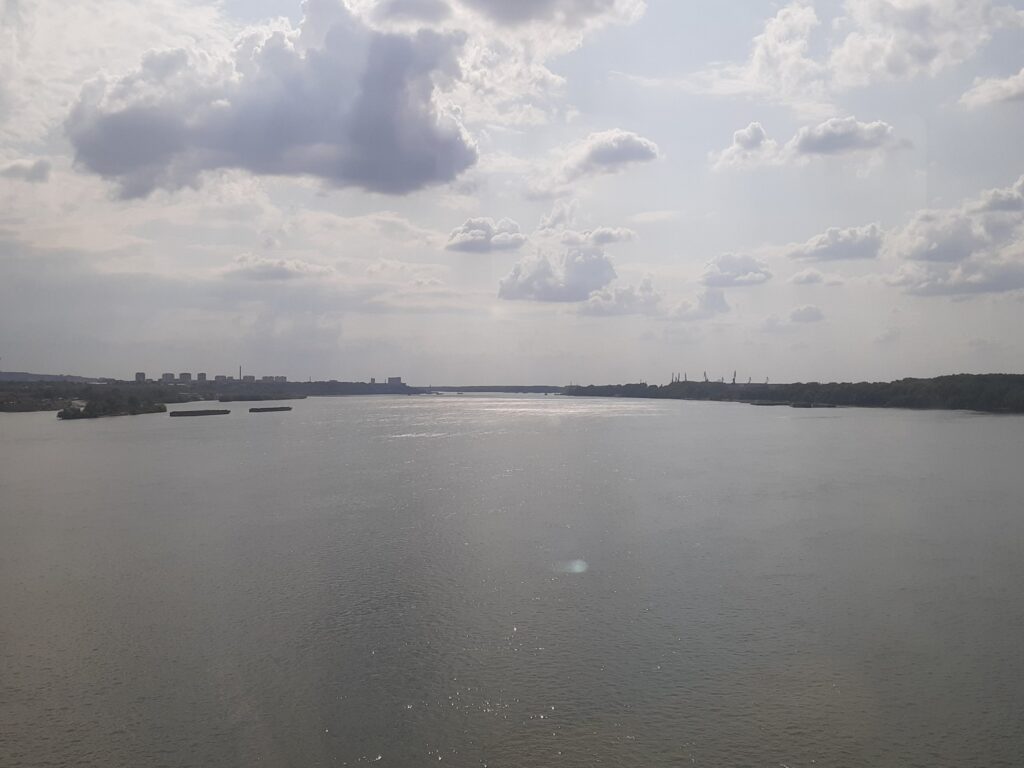
Immediately after leaving Ruse, the train slows down to cross the historic Danube River Bridge (Friendship Bridge), which spans the natural watery border between Bulgaria and Romania. Looking out the window at the massive Danube river flowing beneath is a true highlight of the trip. The moment you clear the bridge, you are officially in Romania.
Romanian Passport Control & EU SIM Card Data Fix
At 3:50 PM, the train pulled into Giurgiu Nord, the first Romanian border station. Just like in Ruse, a Romanian immigration officer boarded the train to collect our passports. They were returned processed and stamped within a few minutes, and the train quickly set off again toward the capital.
Technical Quick-Fix for EU Data Roaming: We had previously bought a Bulgarian SIM card that promised free EU data roaming. However, the moment we crossed into Romania, our phones completely lost network signal, displaying a stressful “No Service” icon despite roaming being enabled.
The Fix: If this happens to you, don’t panic! Simply restart your smartphone once the train moves away from the border. After a reboot, our phones successfully latched onto the Romanian 4G network signal, restoring our internet access.
Arrival at Bucharest Northern Railway Station (Gara de Nord)
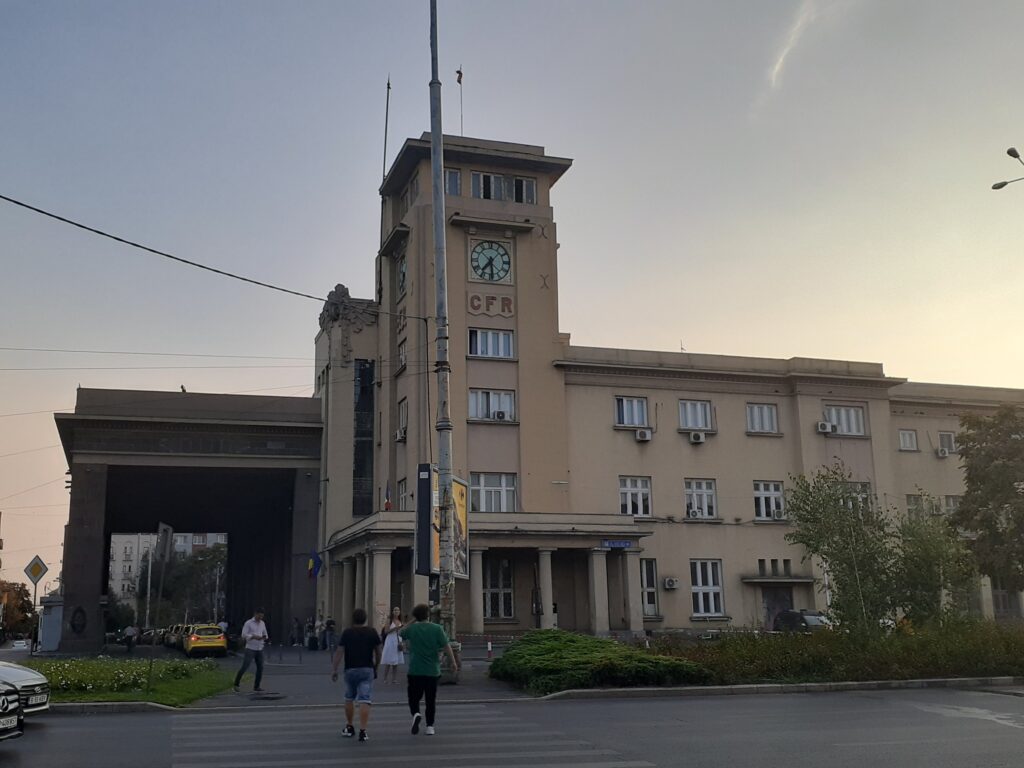
After a smooth two-hour journey through the flat Romanian plains from the border, we finally pulled into the bustling tracks of Bucharest Northern Railway Station (Gara de Nord) at 6:50 PM, roughly an hour and a half behind the original schedule.
While many travellers choose to end their journey here to explore Bucharest’s old town, we decided to push even further north into the Carpathian Mountains on the same night. We caught a connecting train straight to the fairytale mountain town of Sinaia—a wild journey we break down entirely in our next post!
➡ Next Post: How to Take the Train from Bucharest to Sinaia
Comment