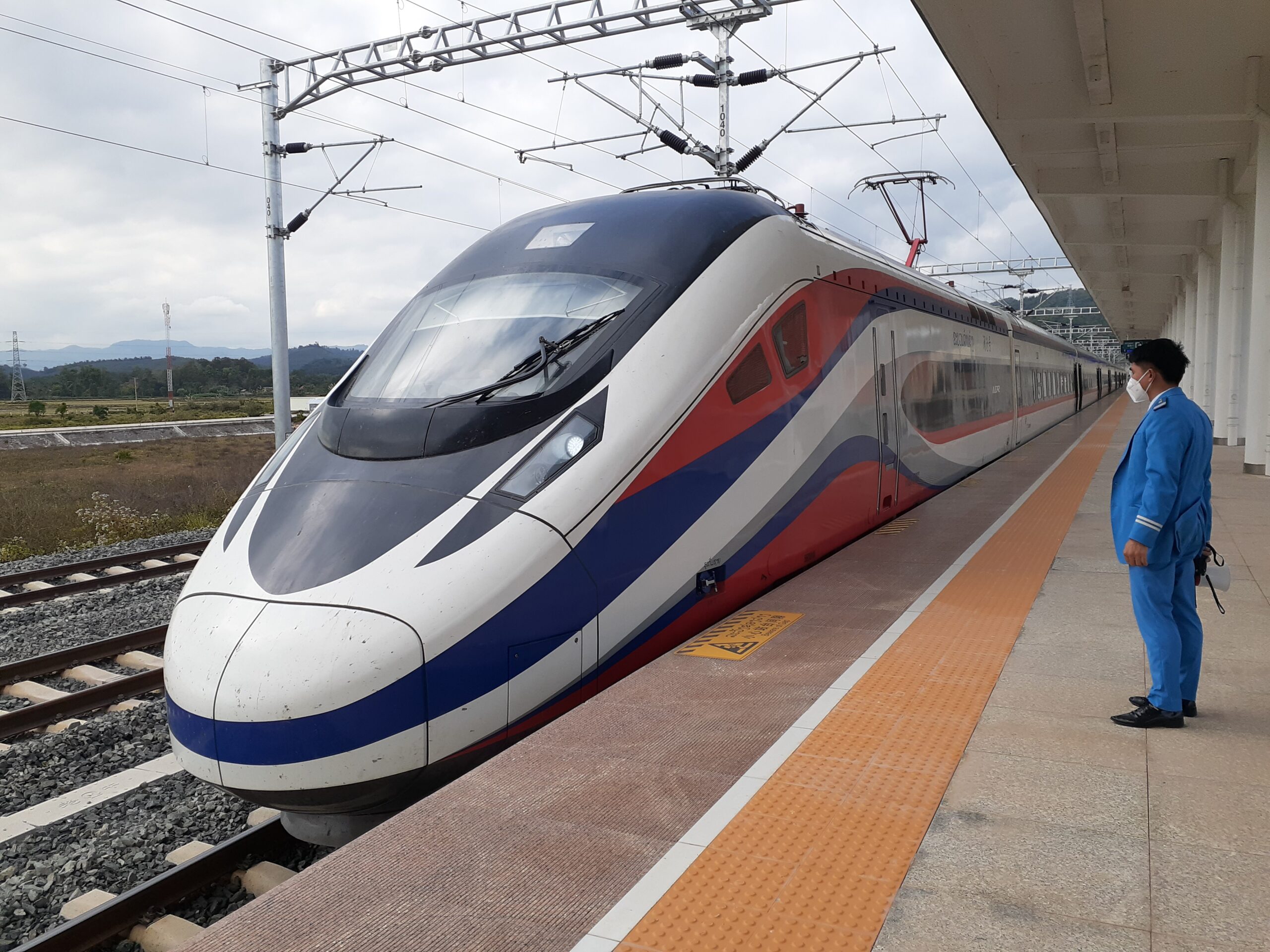
In late 2021, the infrastructure landscape of northern Laos was fundamentally changed forever with the grand opening of the Lao-China Railway (LCR). Connecting the capital city of Vientiane directly to the Chinese border outpost of Boten, this hyper-modern electric rail network chopped legendary, bone-shattering overland bus commutes through the mountains down to mere fractions.
For this leg of our tour, Mai and I traded the unpaved mountain roads for a high-speed train set to take us from the northern transit hub of Oudomxay (officially named Muang Xai) straight south into the adventure capital of Vang Vieng. The New Year’s Eve journey was a fascinating mix of ultra-modern Chinese engineering and strict bureaucratic station logistics. In this independent guide, we cover the raw reality of securing same-day physical tickets at the counter, navigating airport-grade terminal screenings, and securing a local transfer into the town centre upon arrival.
🇯🇵 この記事を日本語で読む: ラオス中国鉄道の高速列車(LCR)乗車記!ウドムサイからバンビエンへのチケット購入方法と駅の厳重セキュリティ攻略
This transport review documents our personal journey recorded on New Year’s Eve. While the LCR has since updated its booking ecosystem (with the LCR Ticket mobile app now widely used), the foundational station protocols—such as mandatory passport verification, security sweeps, and arrival transfer dynamics—remain identical. Keep in mind that local ticket fares in LAK (Kip) are highly prone to inflation; please treat our figures as a guide and verify current rates locally.
Quick Rail Transit Summary of Lao-China Railway High Speed Train from Oudomxay to Vang Vieng
- The Route: Muang Xai Station (Oudomxay) ➡ Vang Vieng Station
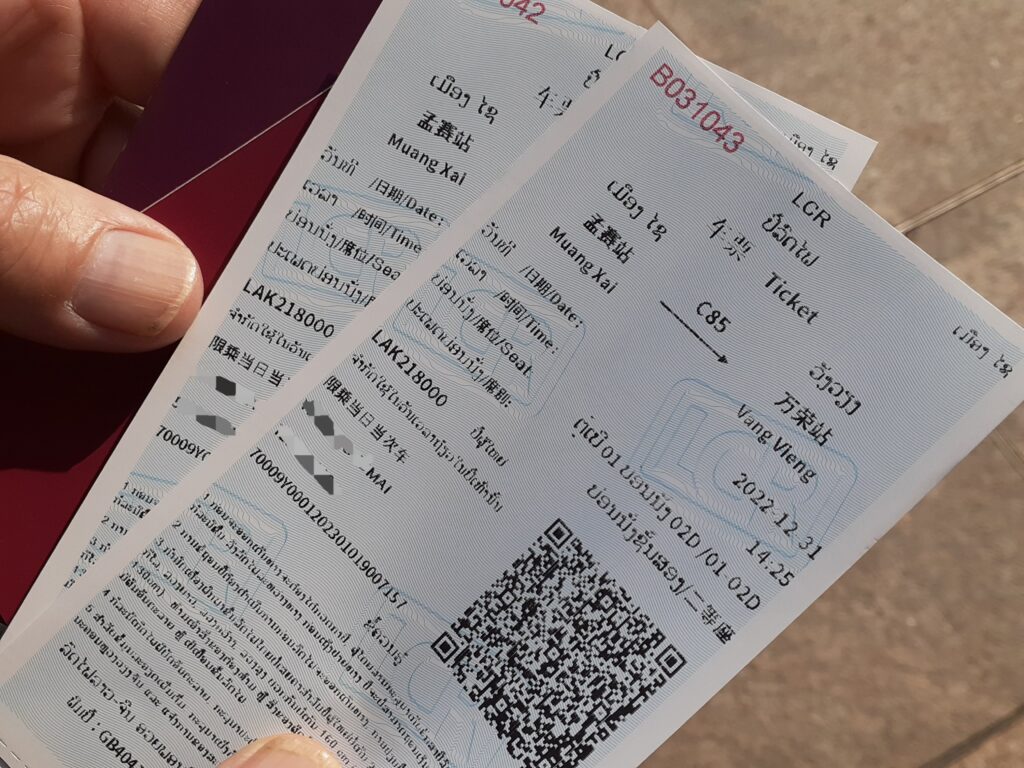
- Train & Duration: Train C85 (Second Class). Departure at 14:25, arrival at 16:39. Total travel time was a remarkably punctual 2 hours and 14 minutes.
- The Ticket Mandate: You must present a valid physical passport for every individual passenger at the time of purchase. Your legal name and passport number will be printed directly onto your travel pass.
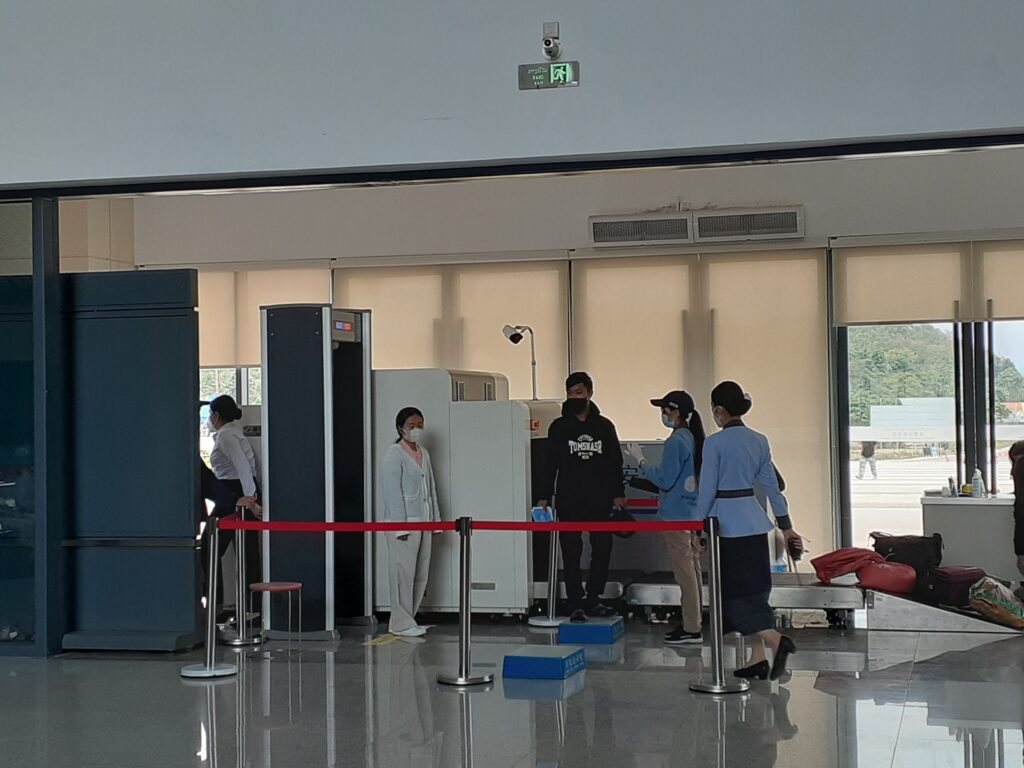
- Station Security: Access to the waiting terminal is strictly gated. You must pass your bags through X-ray conveyor belts and undergo individual body scans before entry is granted.
Lao-China Railway: High-Speed Train from Oudomxay to Vang Vieng (Vlog)
Want to see the massive scale of the Muang Xai terminal and what the interior of a Chinese-built bullet train actually looks like deep in rural Laos? We recorded our entire train trip from Oudomxay to Vang Vieng, capturing the ticket counter rush, boarding layout, and stunning scenery. Watch the full travel vlog below:
In 2021, a railway line was opened connecting Vientiane, Laos, to the Chinese border town of Bo Ten. This railway will quickly reduce overland traffic in northern Laos and also save a significant amount of journey time.
The town of Oudomxai (Muang Xai), is served by the railway, and from here the Lao-China Railway can be used to reach Bo Ten in the north and Vientiane in the south.
We decided to go to Vang Vieng for our next destination from Oudomxai (Muangxai).
Muang Xai Station Layout and the Ticket Counter Queue Strategy
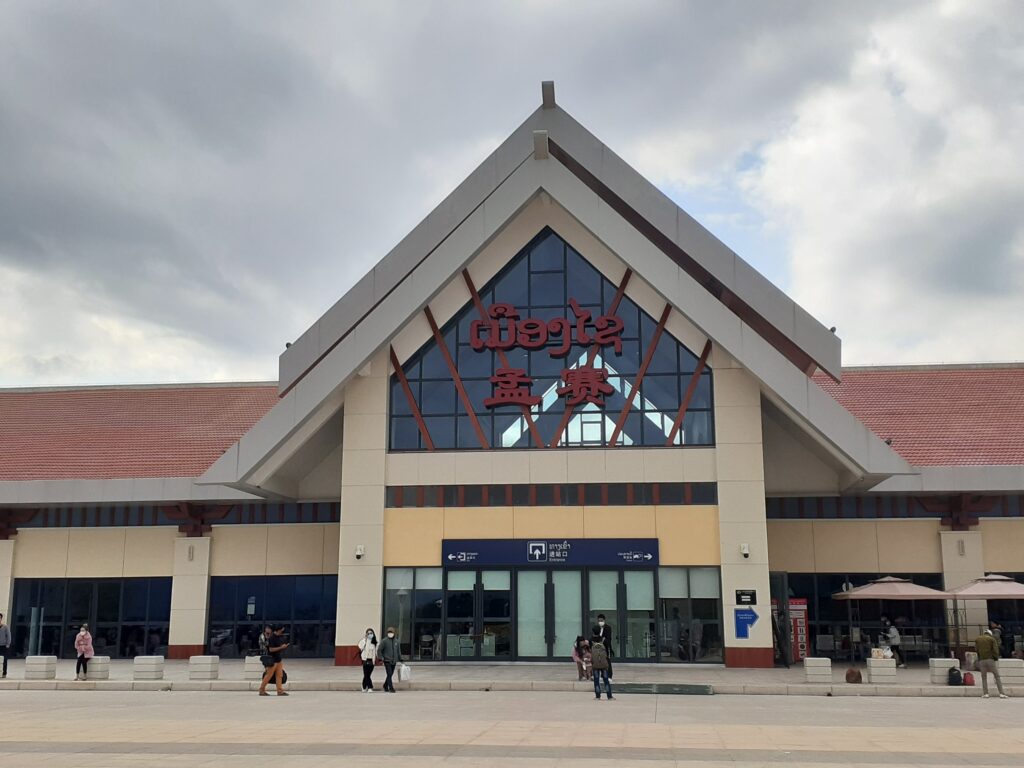
To serve as a reliable log for you and our future return to northern Laos, we want share the core administrative attributes of the Oudomxay rail hub.
- Daily Departures (December Timetable): The schedule displayed three south-bound runs heading toward Vientiane per day: two high-speed C-trains and one significantly slower, non-bullet local train.
- Station Identity & Location: While global travel blogs alternate between “Oudomxay” and “Udomxay,” the central terminal is officially signposted as Muang Xai Railway Station. It is a massive, monolithic concrete terminal drop positioned entirely separate from the old town centre.
We have previously purchased a Lao-China Railway ticket in Vientiane. We bought the tickets at a ticket office in Vientiane proper, so it is a little different from buying tickets at a railway station. For more information, see this article:
➡ Vientiane to Luang Prabang by Train: Timetable, Ticket Booking & Station Tips
The Ticket Office Rush
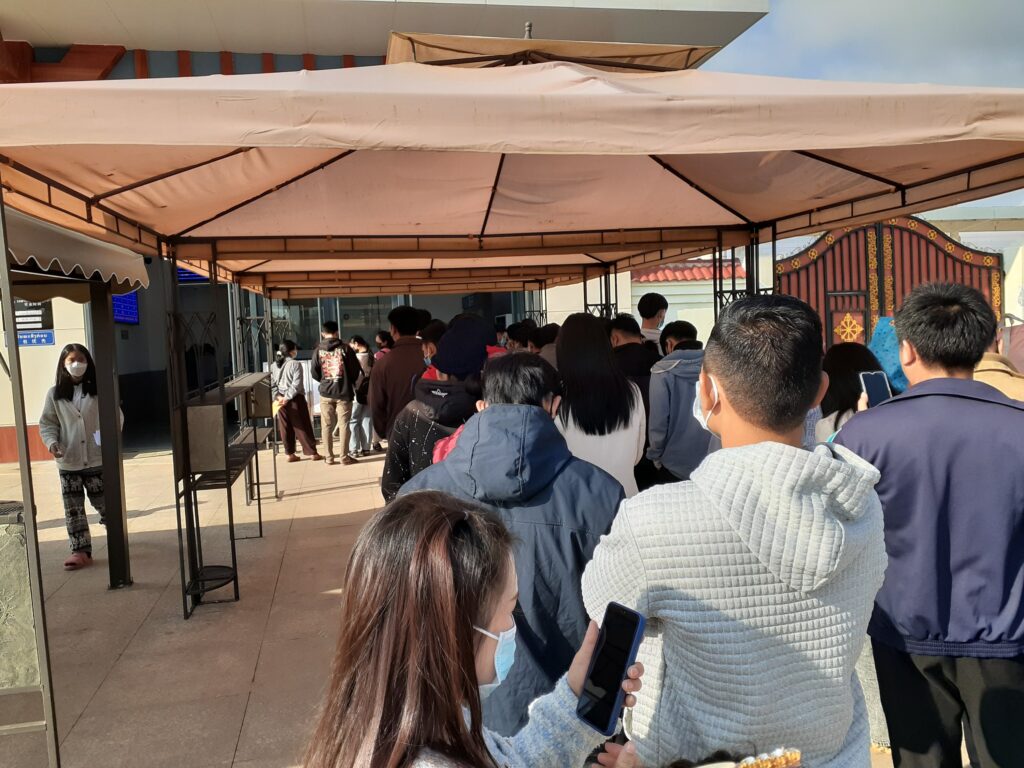
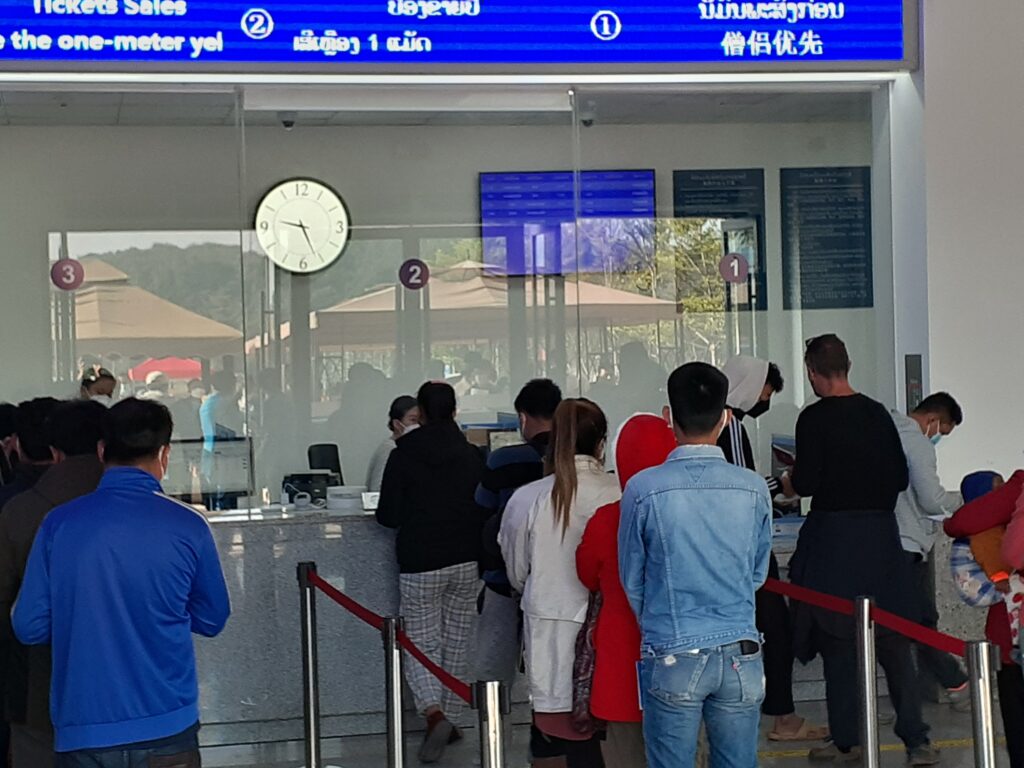
Because the digital booking platforms were entirely offline during our stay, we walked to the station at 9:15 AM to secure same-day tickets. Although official hours were slated for 9:30 AM to 3:00 PM, the metal shutters were already up and a considerable crowd was already pooling into lines.
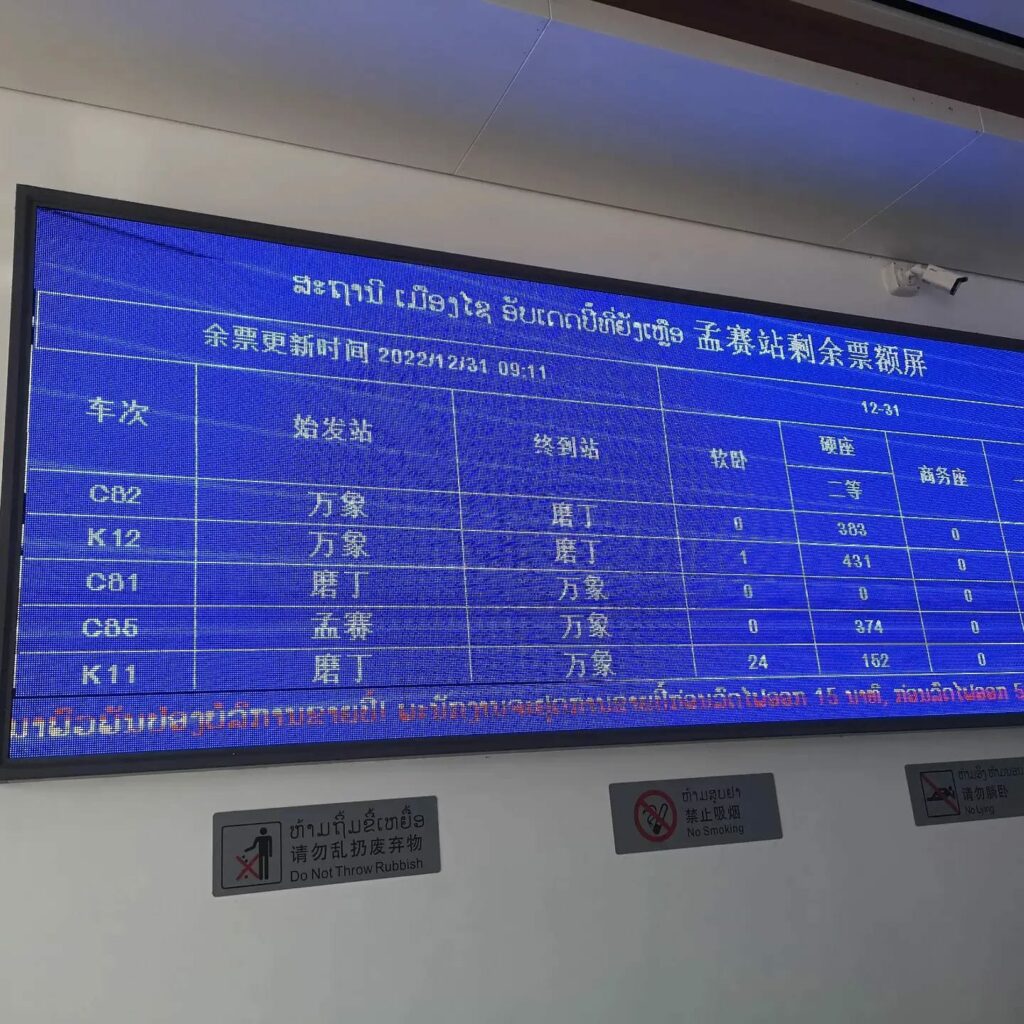
The wall behind the glass counters featured a clear, real-time digital seating availability board. Our strategic plan was to secure a spot to Vang Vieng, but we kept Luang Prabang open as a secondary fallback if the primary run was fully booked. Fortunately, we locked down two second-class seats on the 14:25 C85 train.
A Moment of Local Kindness and Bureaucracy
Upon entering the booking zone, we discovered that face masks were strictly mandatory to clear the doors—and neither Mai nor I had one packed. Seeing our tricky spot, a wonderful young Laotian man in line immediately handed us brand-new spare masks from his personal stash. Moments later, thanks to the coordination of the light-blue-uniformed station guides who spoke broken English, we were ushered to the front of the queue, making the booking process incredibly fast.
Our Handpicked Must-Visit Spots:
Based on our own journeys, here are the absolute best places in Laos that captured our hearts.
➡ Luang Prabang Travel Guide: 3-Day Temple Walking Route, Chompet Ferry & Local Night Markets
➡ Wat Phou Travel Guide – Day Trip from Pakse: A Complete Motorbike Guide
➡ The Plain of Jars Travel Guide from Phonsavan: A Complete Sightseeing & Motorbike Survival Tips
➡ Nong Khiaw Travel Guide: Hiking Pha Daeng Peak, Local Eats & Slow Travel Tips
➡ Muang Ngoy Travel Guide: Ultimate Travel Guide to Laos’ Hidden Riverside Village
Airport-Grade Gate Sweeps and the Grand Waiting Hall
Entering an LCR train station in Laos feels less like walking onto a standard rail platform and much more like entering an international flight terminal.
We headed back to Muang Xai station at 1:05 PM, roughly an hour and twenty minutes before our scheduled departure. The massive main entrance doors were locked tight; all passengers were routed through a single, heavily guarded side door on the right. Here, military-style guards cross-referenced our physical passports against our printed paper tickets.
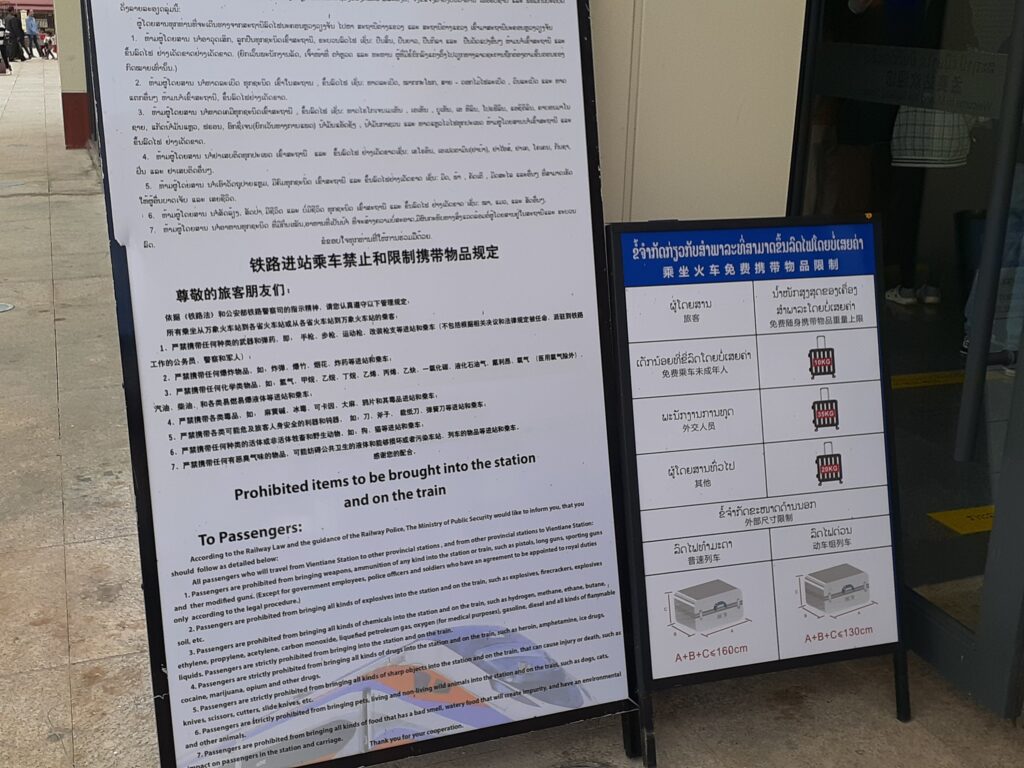
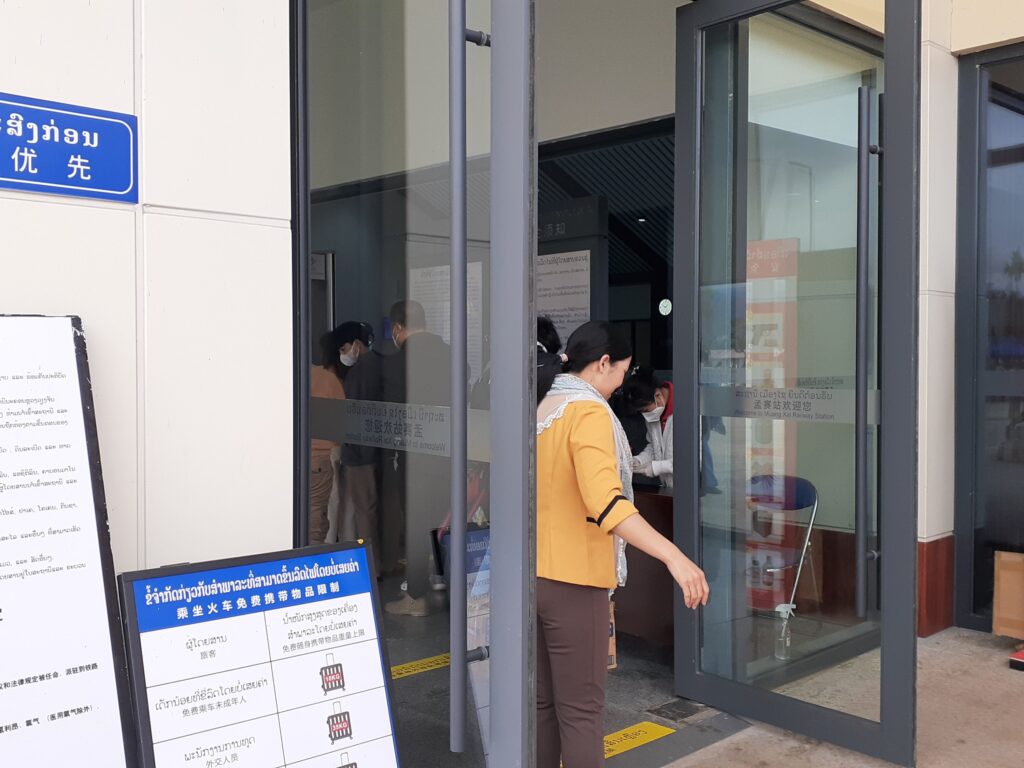
Once past the document check, your luggage is sent through an X-ray scanner, and a female security agent performs a physical body sweep. Note that items like aerosol cans, pocket knives, and large scissors are systematically confiscated here.
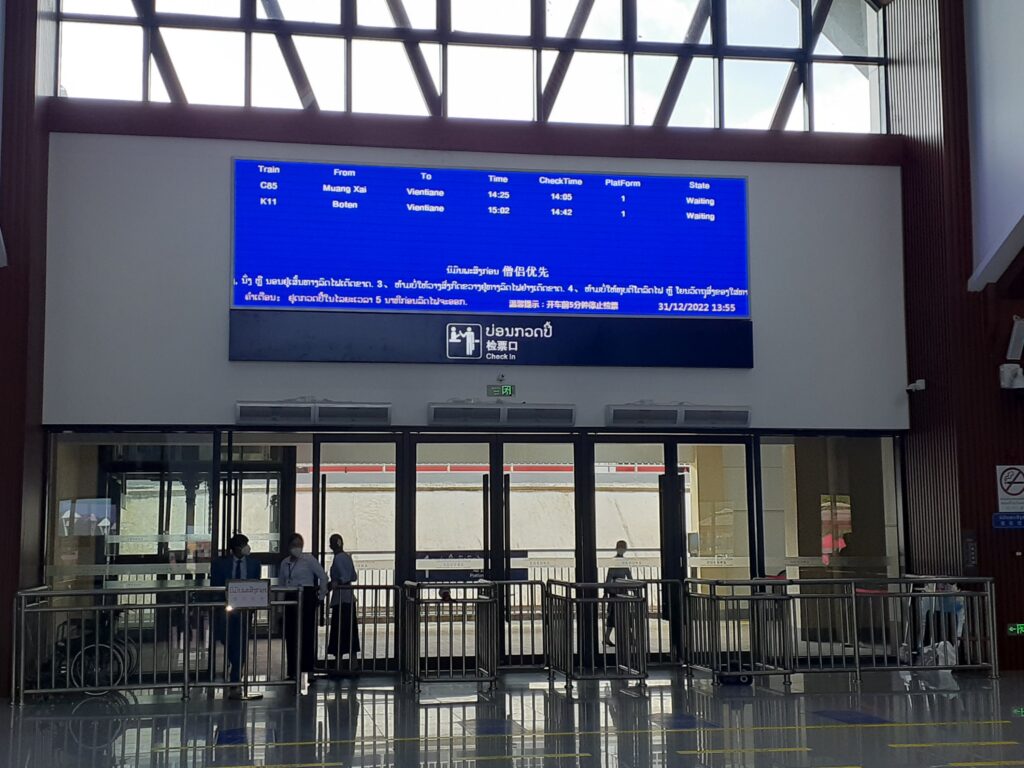
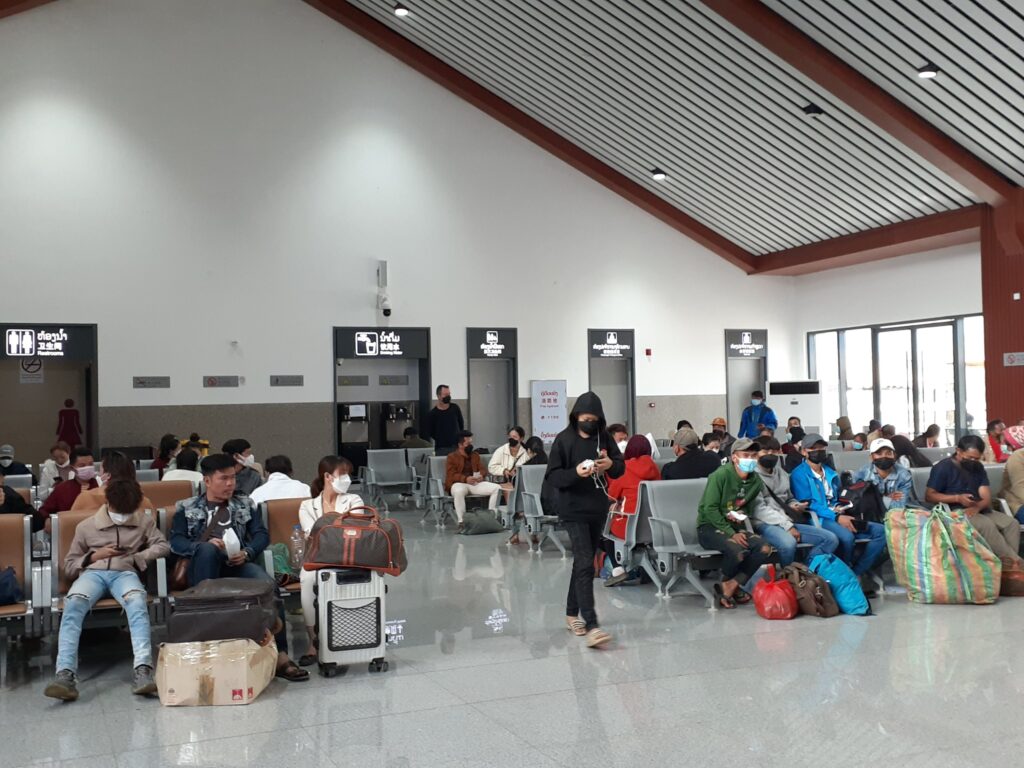
After clearing security, you are released into a cavernous, high-ceilinged waiting hall. A massive blue digital noticeboard tracks the day’s arrivals and departures. Passengers are required to wait on the terminal benches until the gate explicitly opens for boarding.
Boarding Train C85: Second-Class Cabin Quality
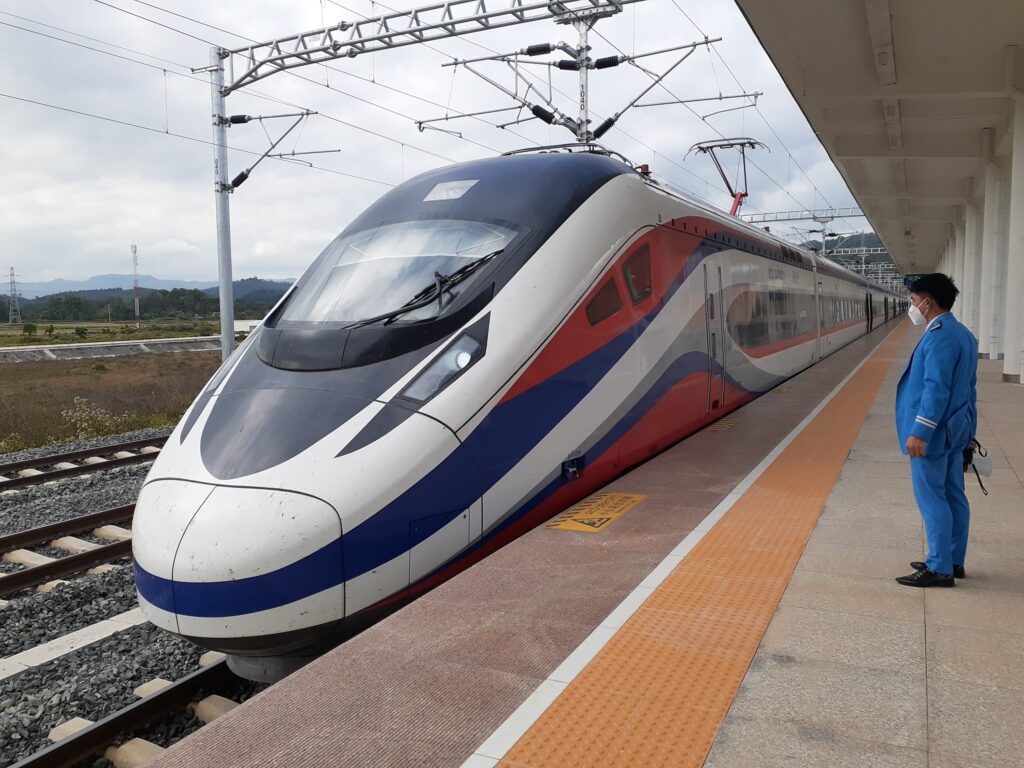
At exactly 14:05, the automated boarding gates flashed green for our C85 train. Because Muang Xai was the originating station for this specific run, our sleek, green-and-white bullet train was already sitting patiently on Platform 1.
Uniformed platform marshals stood at every door, checking our physical passes and pointing us directly toward our assigned carriage and seat numbers.
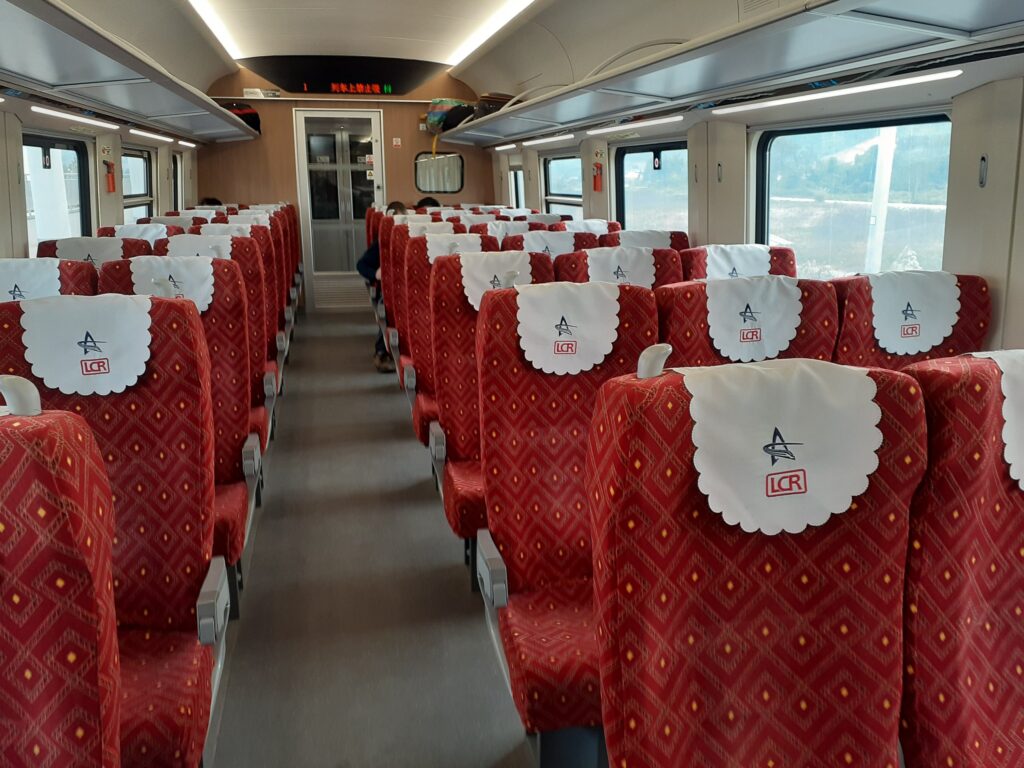
The Peculiarities of a New Year’s Cabin
Stepping inside the second-class car, the environment was indistinguishable from a pristine Japanese Shinkansen or European rail car—spotlessly clean, air-conditioned, and remarkably spacious. Surprisingly, despite travelling on New Year’s Eve, our specific carriage was completely empty and blissfully quiet.
When the train pulled into Luang Prabang a short while later, we saw massive, frantic crowds waiting on the platform. We braced for a mad rush, but curiously, almost the entire crowd was directed into the adjacent carriages, leaving our space completely uncrowded. It seems the LCR ticketing software structurally segregates passengers by destination—a slightly baffling but highly comfortable quirk for us!
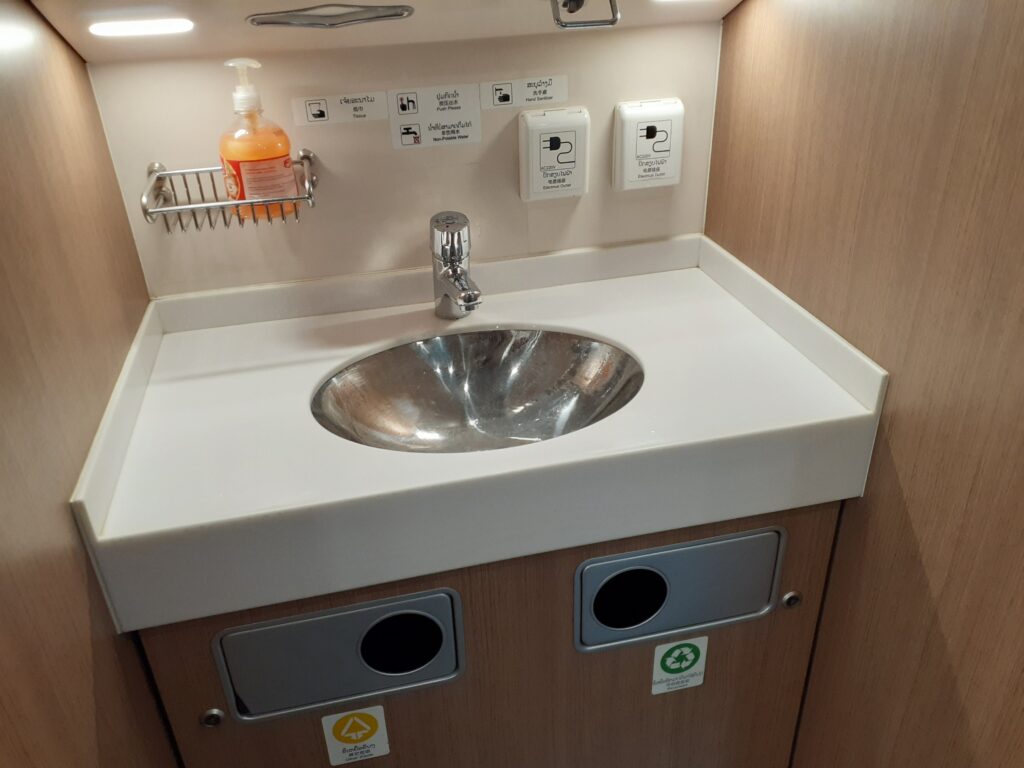
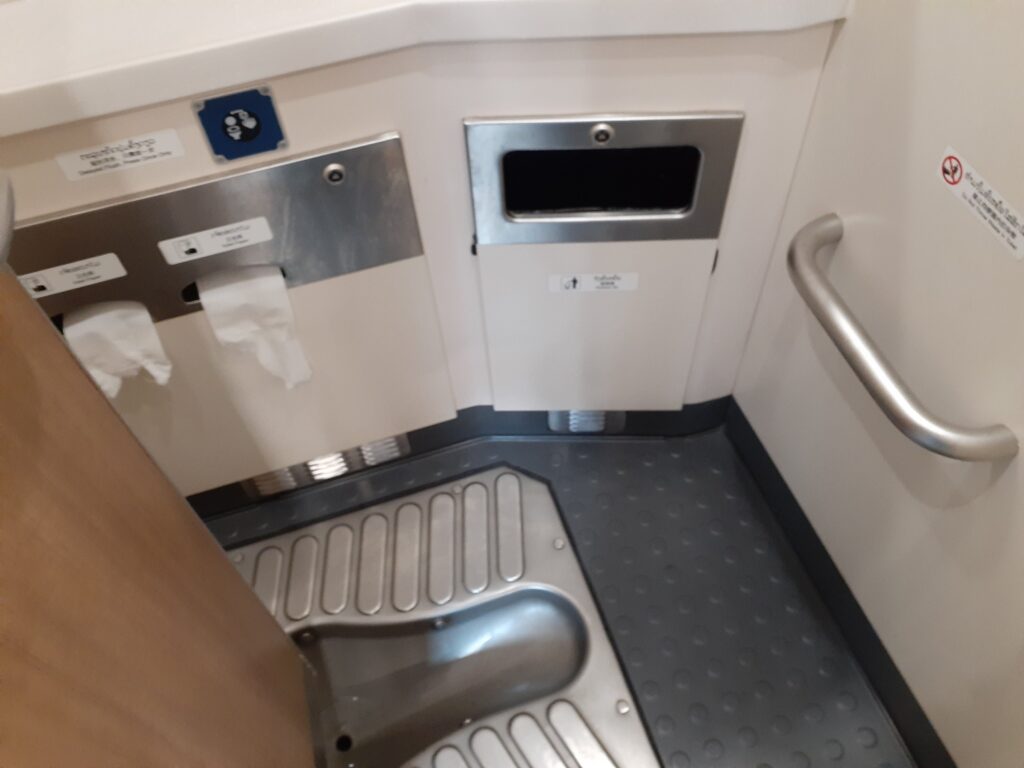
The train features western-style washing basins and clean bathrooms. While the topography means you spend a massive amount of time inside darkness due to endless mountain tunnels, the brief flashes of sunlight reveal gorgeous, deep-green limestone peaks rolling past your window.
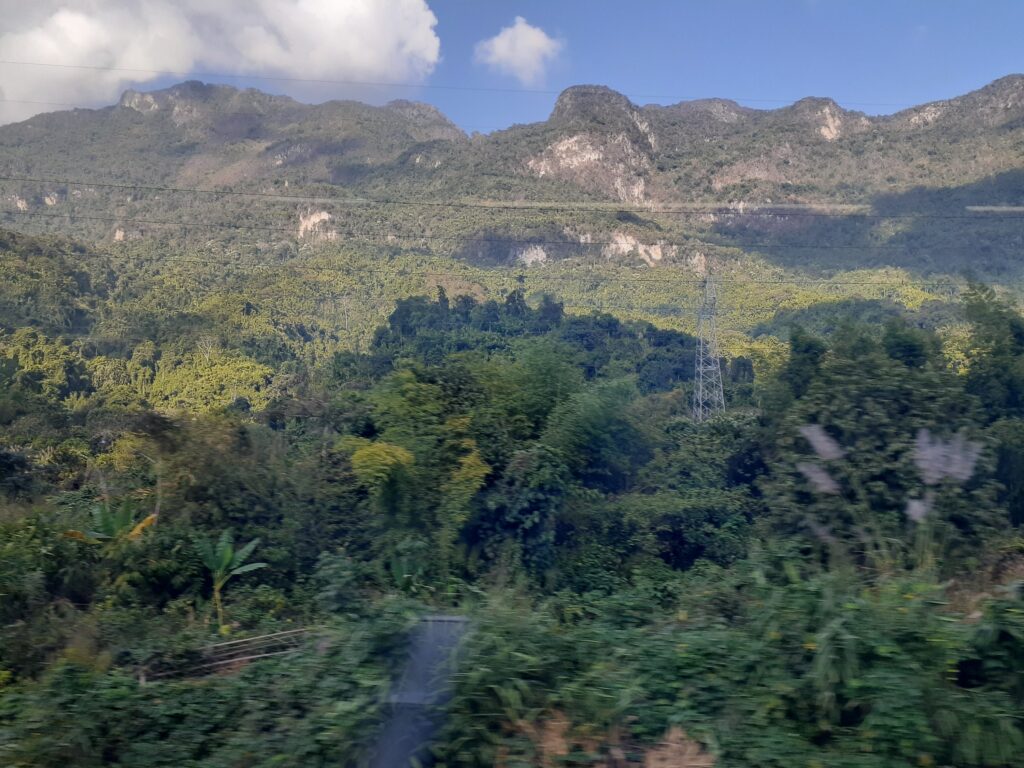
Useful Information for Your Laos Trip:
Visa Extension Guide: ➡ Laos Visa Extension Guide: Oudomxay vs Luang Namtha Costs, Rules, and 23-Hour Fast-Track Success
Border Crossing Guide:
➡ Hue to Savannakhet Border Guide via Lao Bao Border: Crossing from Vietnam to Laos
➡ Paksan to Bueng Kan Border Crossing (Laos – Thai) Mekong River by Boat
Arriving at Vang Vieng: Songtaew Transfers into Town
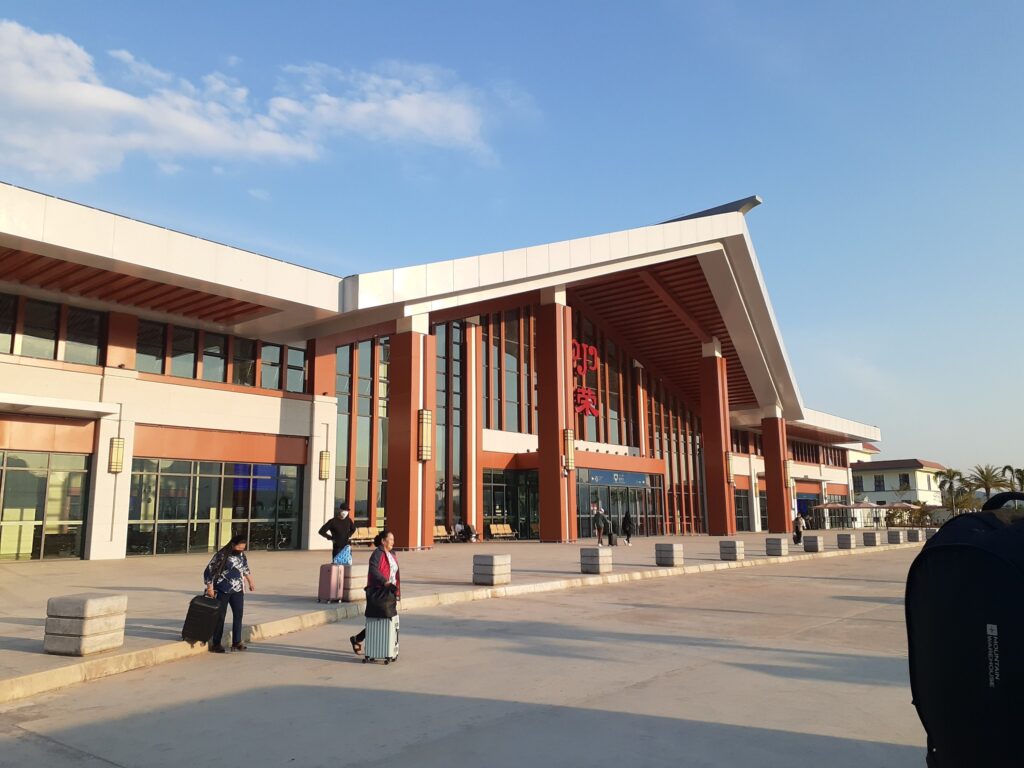
Right on the dot at 16:39, the train applied its brakes and glided perfectly into Vang Vieng Railway Station. Crossing northern Laos in just over two hours felt like pure time travel compared to the old mountain roads.
- The Final Mile Logistics: True to modern railway planning in Laos, Vang Vieng Station is roughly 4 km north of the central town grid. Since we were targeting a guesthouse on the absolute southern outskirts of town (Maylin GH) and feeling a bit lazy we looked to take public transport instead of walking.
Stepping outside the station exit, you are greeted by rows of large tour buses and traditional open-air Songtaews (converted pickup trucks with bench seating). Both options operated on a flat-rate fare of 30,000 Kip per person.
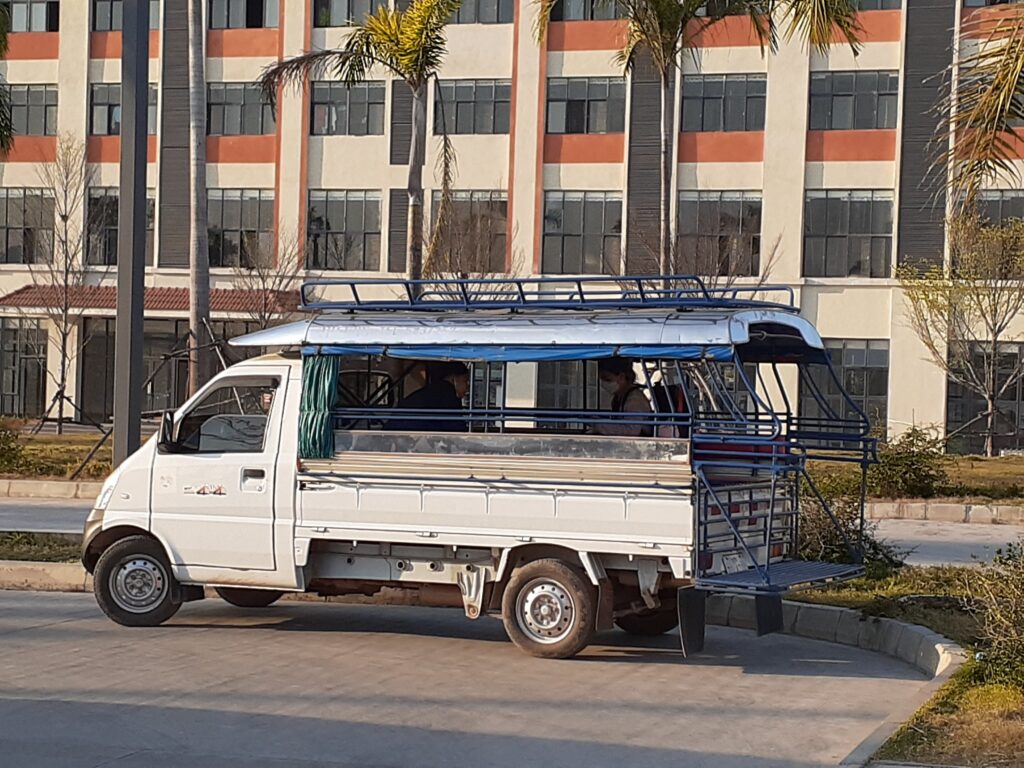
Station marshals tried desperately to funnel all Western tourists onto the massive buses, but seeing that the bus cabins were already packed to the roof, Mai and I opted for an open-air Songtaew instead. You simply tell the driver the name or cross-streets of your central guesthouse, climb into the back, and enjoy a breezy, panoramic introduction to Vang Vieng’s legendary mountain backdrops as you are driven straight to your door.
Now That You’ve Arrived in Vang Vieng:
Read our complete guide to surviving the dusty, unpaved Lagoon Loop and finding the best independent restaurants in town here:
➡ What to Do in Vang Vieng: A Backpacker’s Guide to the Lagoon Loop and Quiet Riverside Stays
Comment