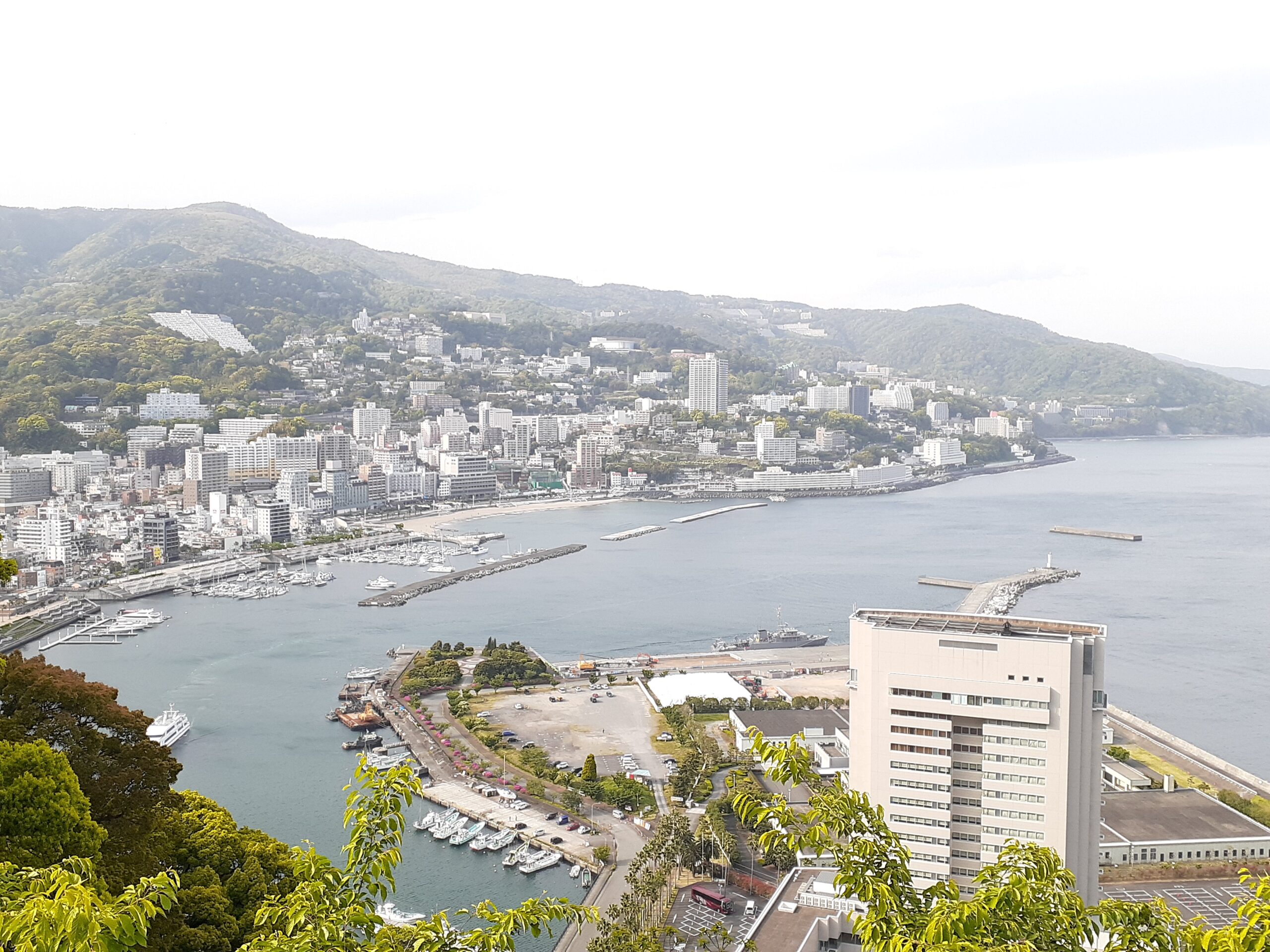
Are you planning a quick coastal getaway from the neon-lit rush of Tokyo? Located on the edge of Shizuoka Prefecture at the gateway to the scenic Izu Peninsula, Atami (熱海) is a historic seaside city world-renowned for its steaming geothermal hot springs (onsen). However, there is much more to this terraced hillside town than just its resort baths. For independent, minimalist travellers, Atami serves as a fantastic, budget-friendly destination for a refreshing coastal hike filled with retro shopping alleys, pristine beaches, and ancient spiritual wonders.
In this Half-Day Atami Walking Tour Guide, we share our firsthand experience exploring the town entirely on foot—without stepping foot in a single hot spring! We map out a seamless walking itinerary starting right from the bustling Nakamise shopping street at JR Atami Station down to the modern waterfront promenades of Sun Beach and the Moon Terrace. We also take you inland to the spectacular Kinomiya Shrine to witness the largest, most majestic 2,000-year-old camphor tree in Honshu, and share our honest tips on skipping the indoor crowds at the eccentric Atami Castle in favour of enjoying the best panoramic viewpoints of the city completely for free.
- Atami Itinerary at a Glance: A Minimalist Coastal Walk
- Strolling the Waterfront: From Nakamise Street to Atami Sun Beach
- Kinomiya Shrine: Home to Honshu’s Largest 2,000-Year-Old Camphor Tree
- Oyu and Yumae Shrine: Touching Atami’s Historic Onsen Roots
- Atami Castle: The Hilltop Viewpoint That History Forgot
- Access to Atami
Atami Itinerary at a Glance: A Minimalist Coastal Walk
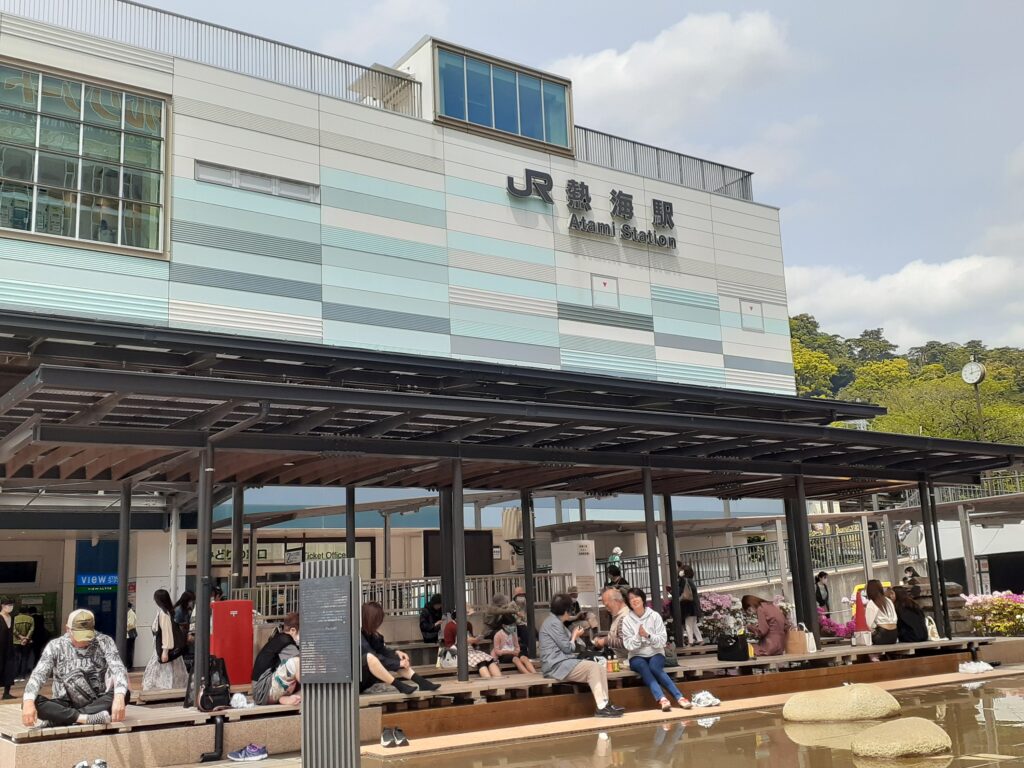
Atami is a city in the eastern part of Shizuoka Prefecture, bordering Kanagawa Prefecture. The population is approximately 33,000 (2023).
It is famous for its hot springs. The city is located at the eastern part of the base of the Izu Peninsula and can be visited as one of the steps in a sightseeing tour of Izu.
Nakamise shopping street
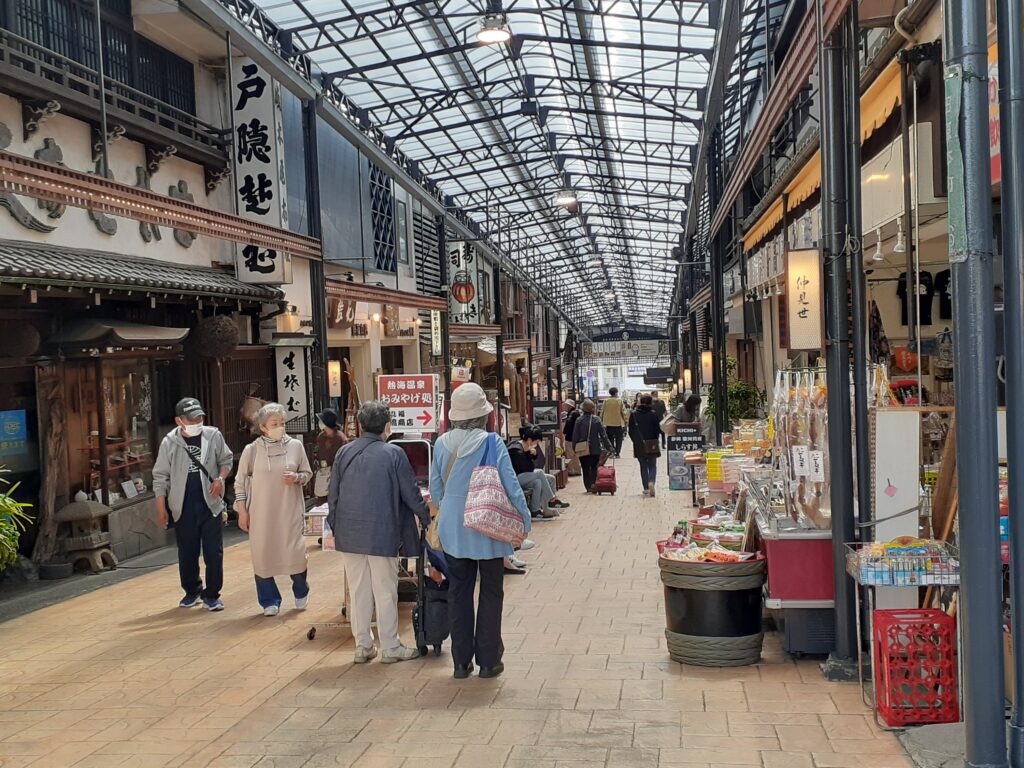
This shopping street stretches from JR Atami Station. Heiwa Dori is next to it and is lined with a variety of shops.
Strolling the Waterfront: From Nakamise Street to Atami Sun Beach
Sun Beach
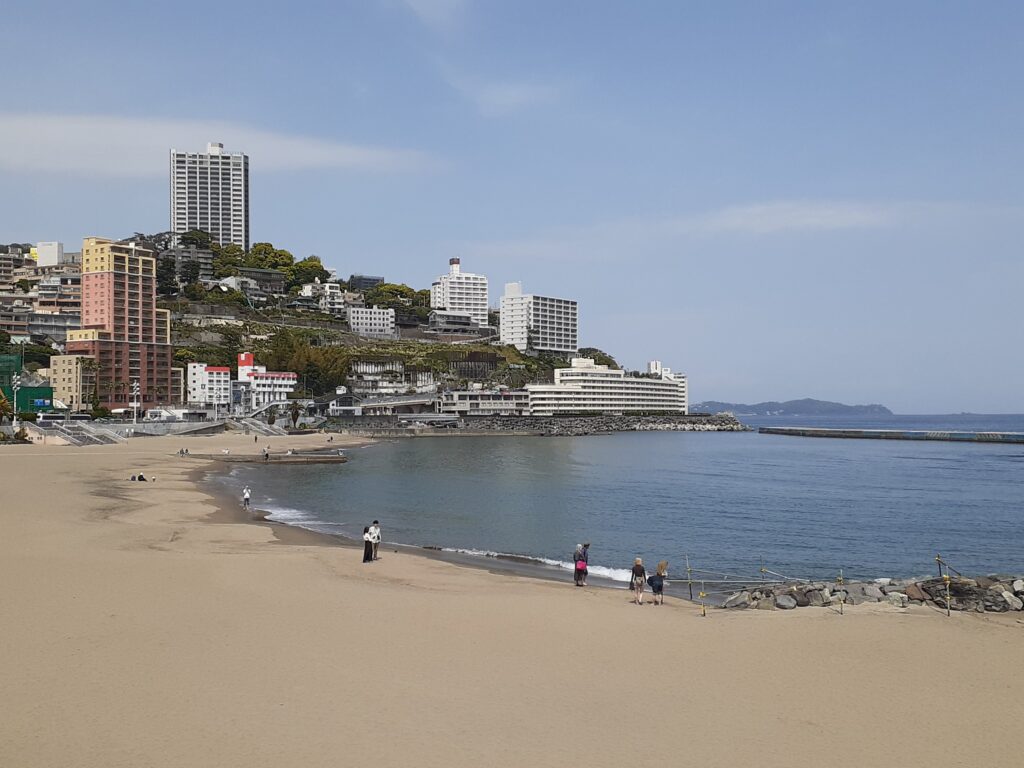
A beach just a few minutes’ walk from the station. No swimmers now because it’s off-season, but it’s probably packed with bathers during the summer holidays.
The water is quite clean. There are also spots for snorkelling and diving on the Izu Peninsula. Unfortunately it’s still too cold for snorkelling now, so we won’t go in the sea this time.
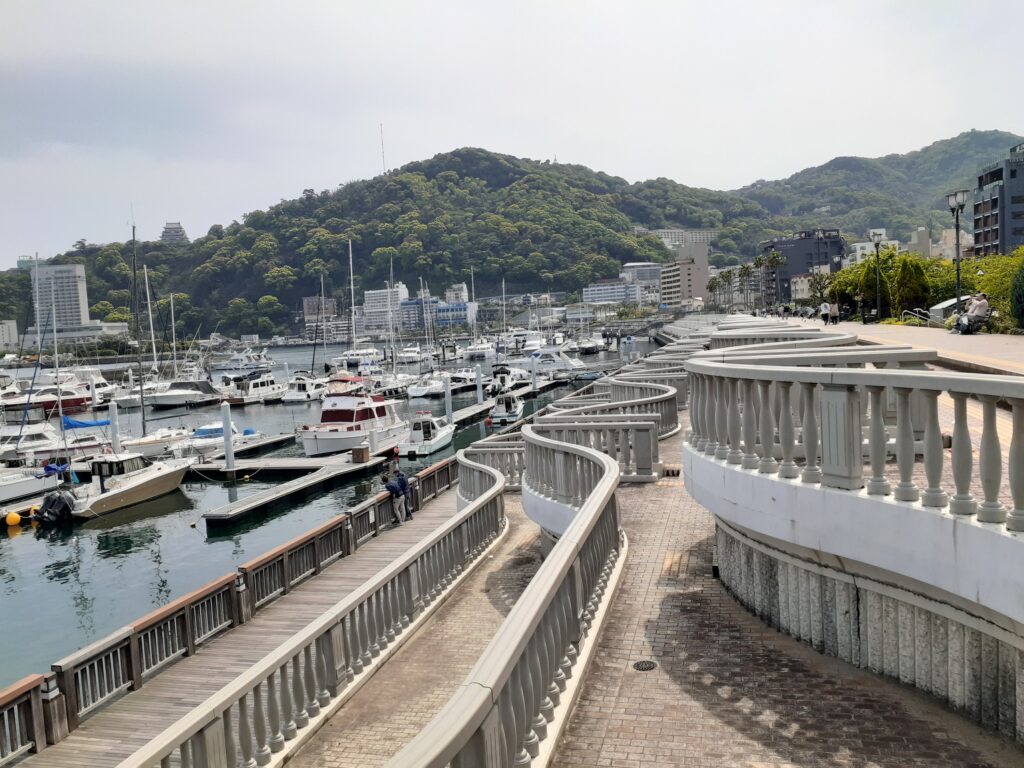
A terraced promenade has been set up in the area where luxury boats are moored. It is nice to take a leisurely stroll around this area.
Moon terrace
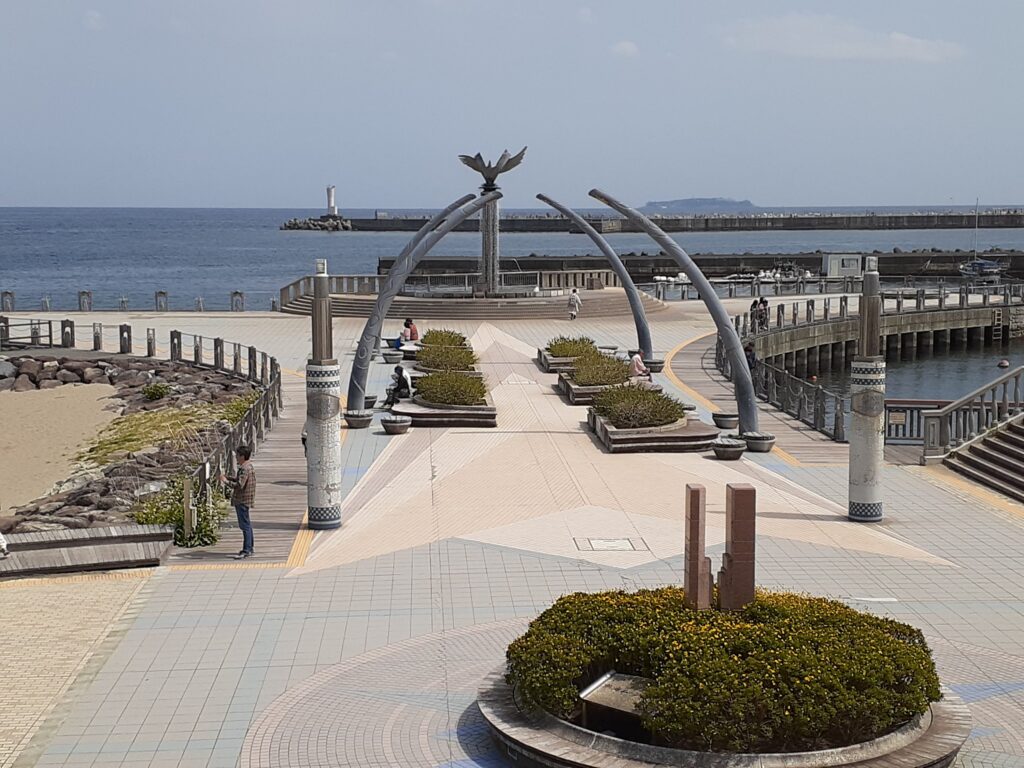
The Moon Terrace is set out from the beach. There is a water feature at the tip of the seaward side. If you wander around, you can see the city of Atami, which is terraced on a hill, from the sea side.
Kinomiya Shrine: Home to Honshu’s Largest 2,000-Year-Old Camphor Tree
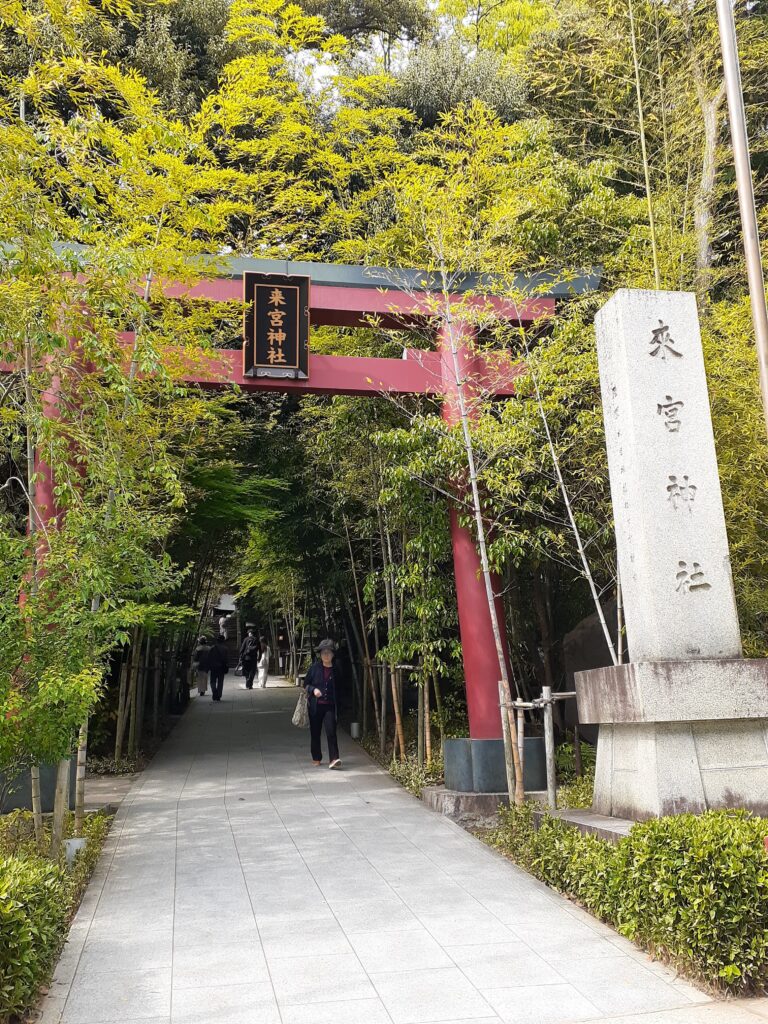
The shrine is a short walk from Kinomiya Station, next to Atami Station. It can also be reached on foot from Atami City. The area in front of the torii gate is an Instagram spot and worshippers were taking photos.
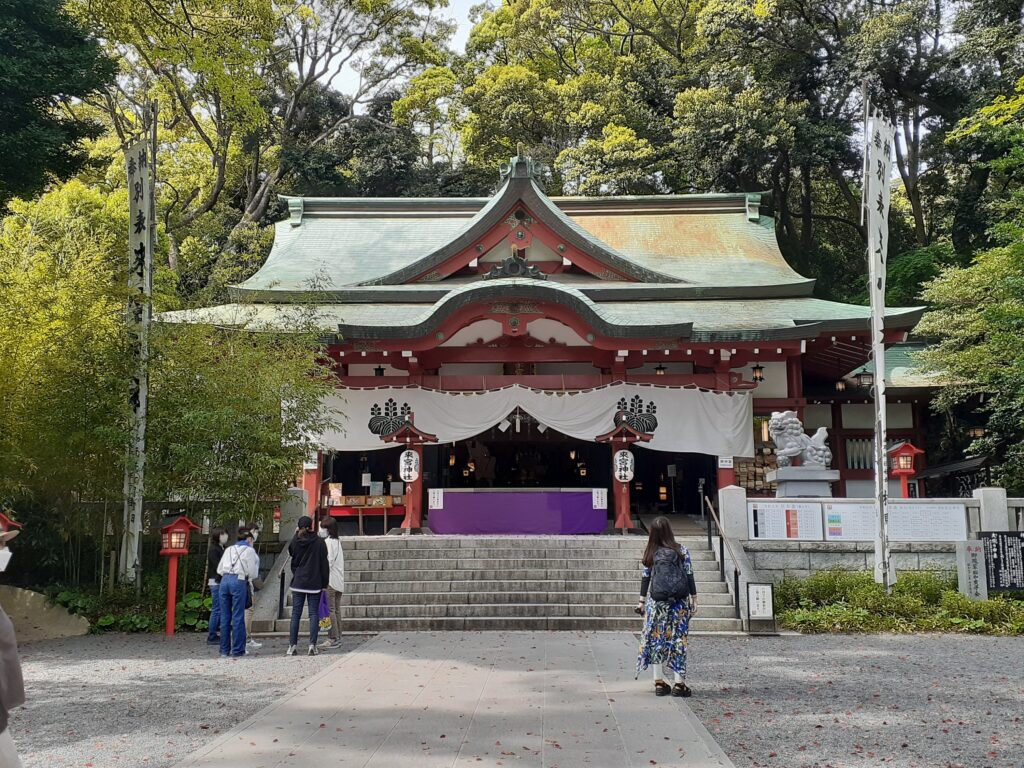
As soon as you pass through the torii gate, there is an information leaflet about this shrine. There was an English version as well as Japanese.
The Sacred Kusunoki: Walking Around an Ancient Giant
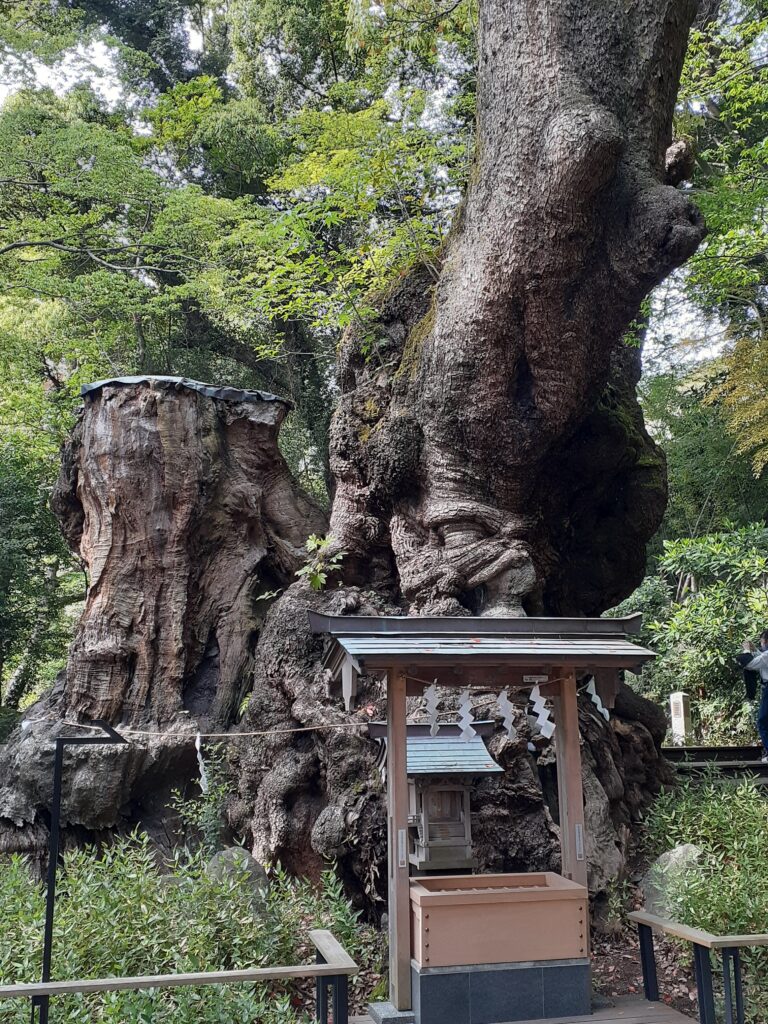
This shrine is home to the largest kusunoki (camphor tree) in Honshu. It is more than 2000 years old, has a circumference of about 24 metres and a height of about 26 metres.
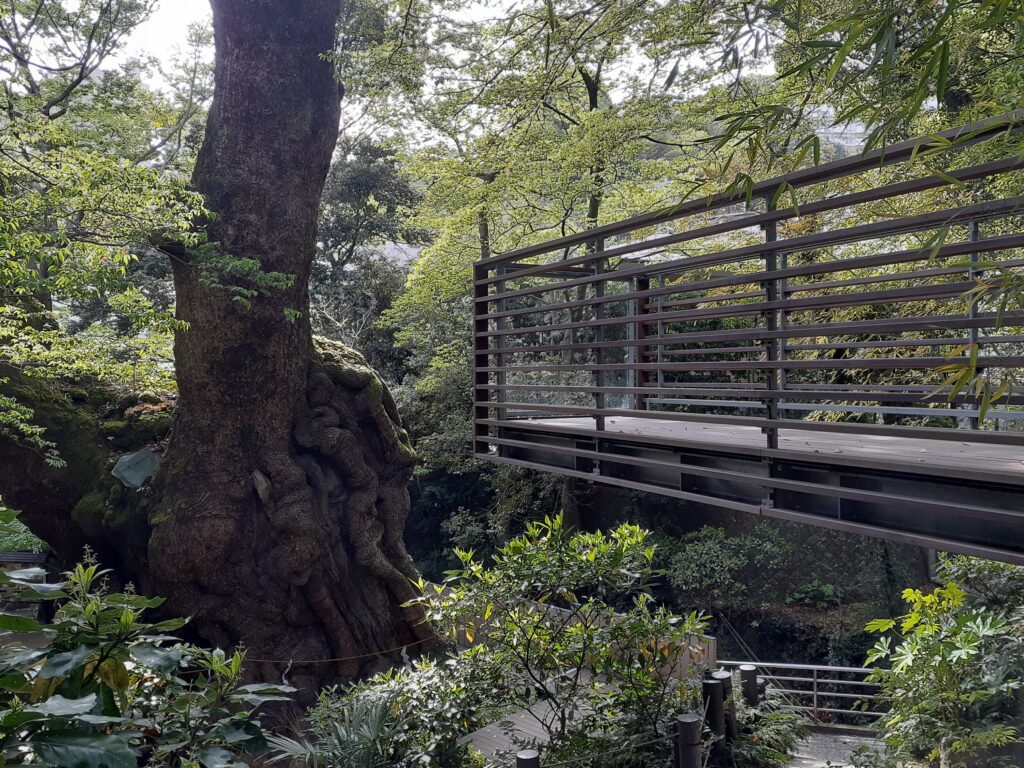
You can walk around the kusunoki, but there is also a viewing terrace right next to it. Visitors can observe the kusunoki from a slightly higher vantage point.
There is also an Inari shrine in the precincts, with a small red torii gate that looks good against the fresh green background.
Tables and chairs are placed throughout the Raikyu Shrine to allow visitors to relax and enjoy nature.
There is also a second kusunoki tree, which you should not forget to visit. A small shrine has been built at the foot of the tree, giving it a different atmosphere.
Oyu and Yumae Shrine: Touching Atami’s Historic Onsen Roots
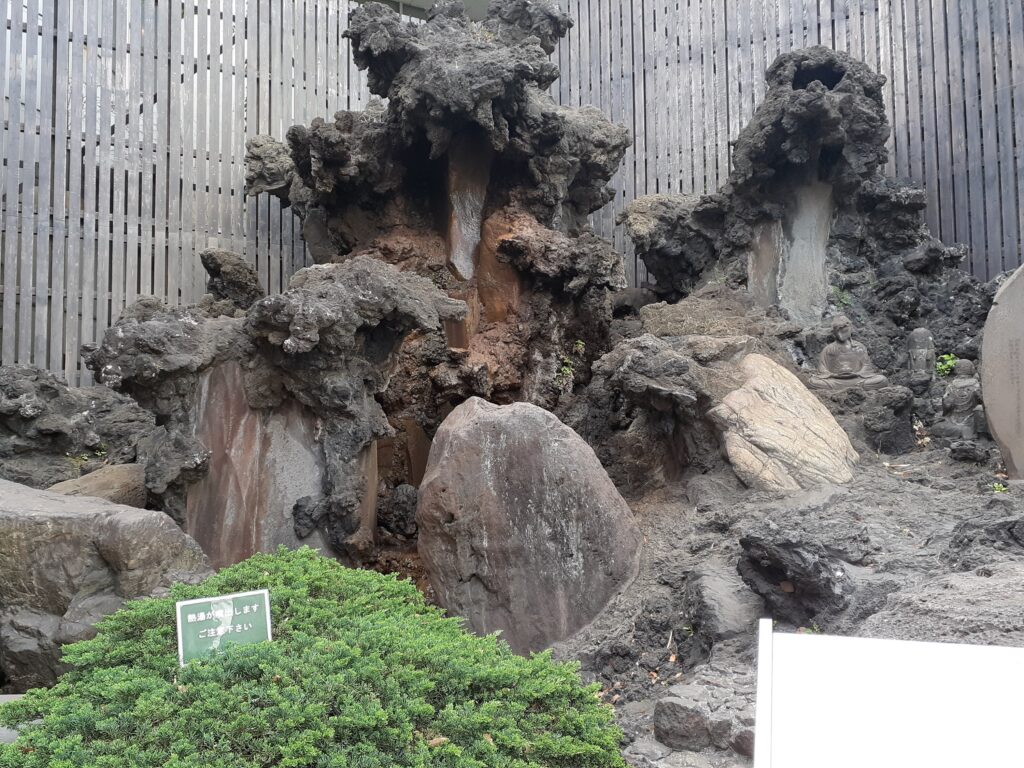
There are several hot spring spots in Atami, and this is one of them.
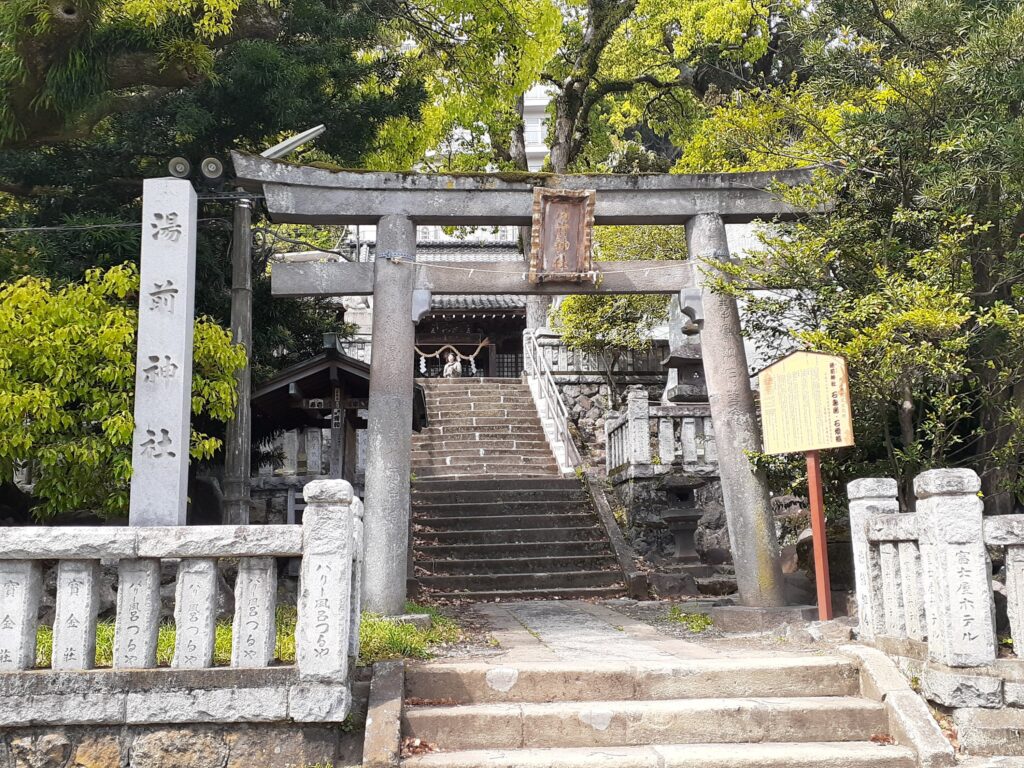
There is a nearby shrine called Yumae Shrine, which also has a magnificent Japanese brass tree.
Atami Castle: The Hilltop Viewpoint That History Forgot
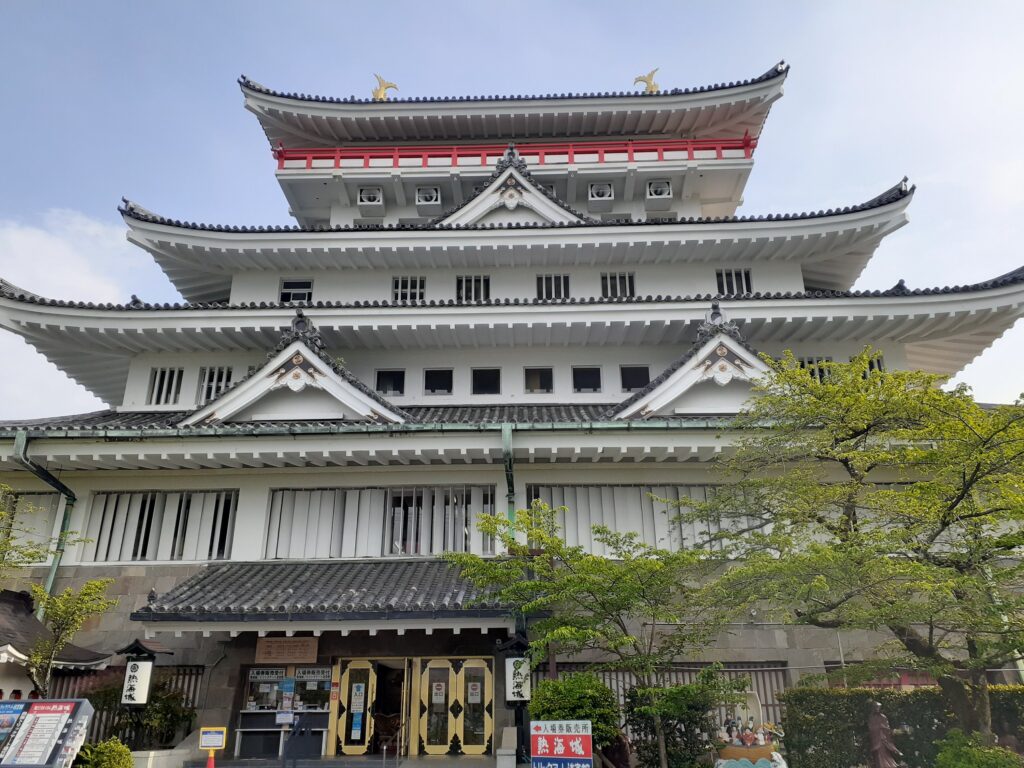
Atami Castle can be seen from Sun Beach and Moon Terrace, but it did not historically exist as a castle. It was built as an attraction for travellers.
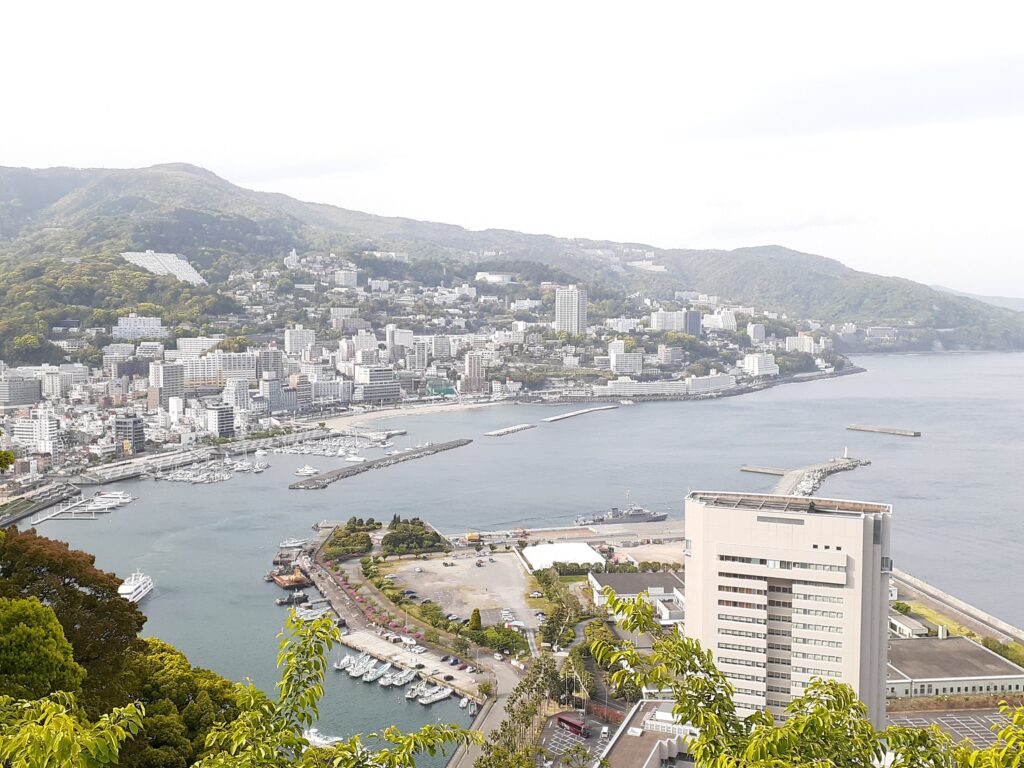
The museum appears to contain a trick art museum that uses optical illusions, but we just enjoyed the view of Atami City from the grounds.
Pedestrian Tip: How to Skip the Heavy Tunnel Traffic
If you are walking from the city centre, you will pass through a tunnel, but there is heavy traffic on the main road. Before the tunnel, there is a side road on the left at the top of a gentle slope, which is less busy and easier to walk on.
If you love exploring coastal towns on foot and want to experience the dramatic, raw natural beauty of the Izu Peninsula, your next stop should definitely be further south along the coast. Don’t miss our full guide to a spectacular cliffside trek, featuring a thrilling suspension bridge over crashing volcanic waves.
➡ Next Stop on our Izu Adventure: Jogasaki Coast Walking Tour: A Spectacular Cliffside Hike in Izu
Access to Atami
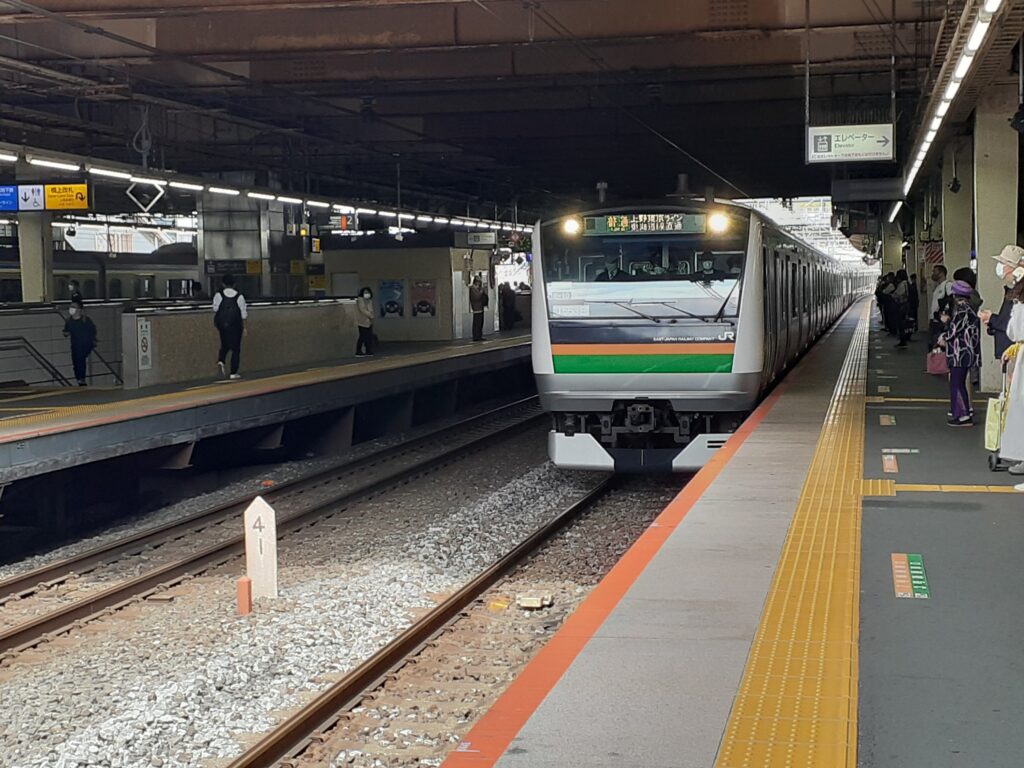
We took the JR Sobu Line from Tokyo to Totsuka, from where we changed trains to Atami. The limited express “Odoriko” also leaves from Tokyo Station.
➡ Back to Chubu & Izu Peninsula Guide
Comment