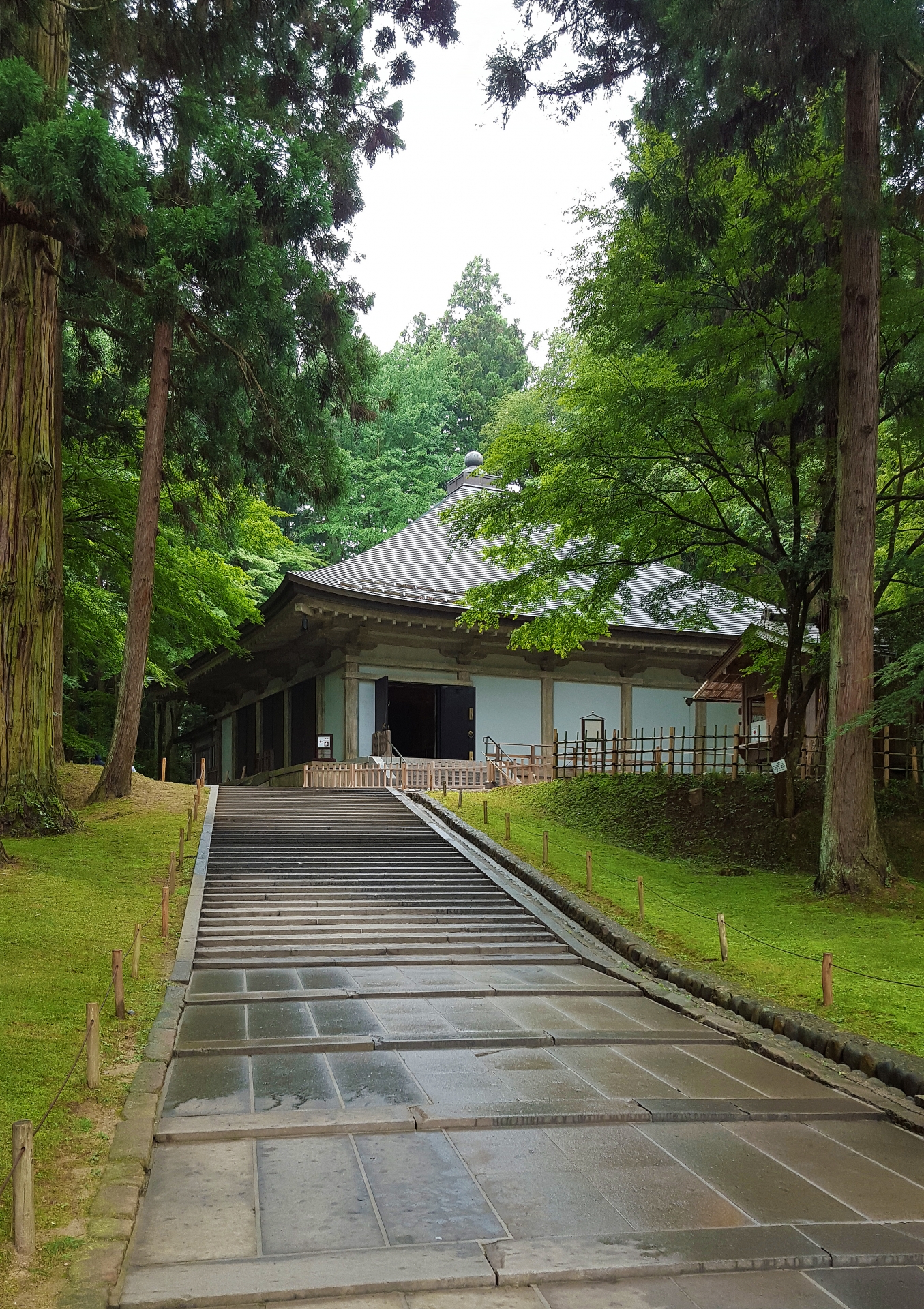
Planning a trip to explore the historic town of Hiraizumi using only public transport and walking is a good way to experience a quieter, important cultural side of Japan. Located in Iwate Prefecture, this remarkable UNESCO World Heritage destination allows travellers to step back in time and explore sacred Buddhist landscapes entirely at their own pace, without needing to rent a car.
In this travel blueprint, my wife and I share our planned route for visiting Hiraizumi as part of our extended 13-day journey across Tohoku. We will cover the must-see historic sites—including the legendary Chuson-ji and Motsu-ji—as well as tips on how to fit in off-the-beaten-path locations like Takkoku-no-Iwaya Bishamon-do if local taxi transport can be arranged.
🇯🇵 この記事を日本語で読む:平泉 観光モデルコース:車なし・公共交通機関と徒歩で巡る世界遺産の歴史旅とアクセス
Please note that this guide reflects our initial travel preparations. Once we complete our trip, we will update this article with our own original photography and firsthand personal experiences from the ground.
➡ 2-Week Tohoku Itinerary in September: A Slow-Paced Couple’s Backpacking Guide
What is Hiraizumi?
Nestled in the southern part of Iwate Prefecture, Hiraizumi is an historically significant town that served as a powerful political and cultural center during the late Heian period.
Founded by the Northern Fujiwara clan, this region was envisioned as an earthly Pure Land—a peaceful Buddhist paradise realized on earth. Unlike the capital in Kyoto, the Fujiwara lords cultivated an independent, highly sophisticated society backed by local gold and horse production. Designated as a UNESCO World Heritage site in 2011 under the name “Hiraizumi – Temples, Gardens and Archaeological Sites Representing the Buddhist Pure Land,” the town still retains an atmosphere of grace and spiritual ambition today.
Top Hiraizumi Attractions and Essential Visitor Information
Here are the key spots to include when navigating Hiraizumi on foot and via public transport.
Chuson-ji Temple: The Golden Hall and Tsuki-mi-zaka Approach
As the ultimate highlight of Hiraizumi, Chuson-ji showcases the supreme wealth and artistry of the Northern Fujiwara clan. Walking up the tranquil, cedar-lined approach known as Tsuki-mi-zaka leads you to the breathtaking Konjiki-do (Golden Hall), a national treasure completely covered in gold leaf that represents the pinnacle of Heian craftsmanship.
- Admission Fee (Konjiki-do / Treasure Hall): Adults 1,000 JPY / High School Students 400 JPY / Junior High Students 300 JPY / Elementary Students 200 JPY
- Closed: Open year-round
Motsu-ji Temple: Pristine Pure Land Gardens and Oizumi-ga-ike Pond
Motsu-ji offers visitors a rare glimpse into a nearly intact Heian-period temple complex. Designated as a Special Historic Site and Special Place of Scenic Beauty, its magnificent Pure Land garden centres around the expansive Oizumi-ga-ike pond, designed to evoke the serene imagery of Buddhist paradise.
- Admission Fee: Adults 700 JPY / High School Students 400 JPY / Junior & Elementary Students 200 JPY
- Closed: Open year-round
Muryoko-in Temple Ruins: Echoes of Byodo-in and Mount Kinkeizan
Though only foundation stones and ponds remain today, the ruins of Muryoko-in once stood as a grand temple modeled directly after the iconic Phoenix Hall of Byodo-in in Kyoto. The layout demonstrates meticulous landscape design, utilizing nearby Mount Kinkeizan as a stunning natural backdrop.
- Admission Fee: Free to explore
- Closed: Always open
Takkoku-no-Iwaya Bishamon-do: A Cliffside Shrine (※Recommended if Transport is Available)
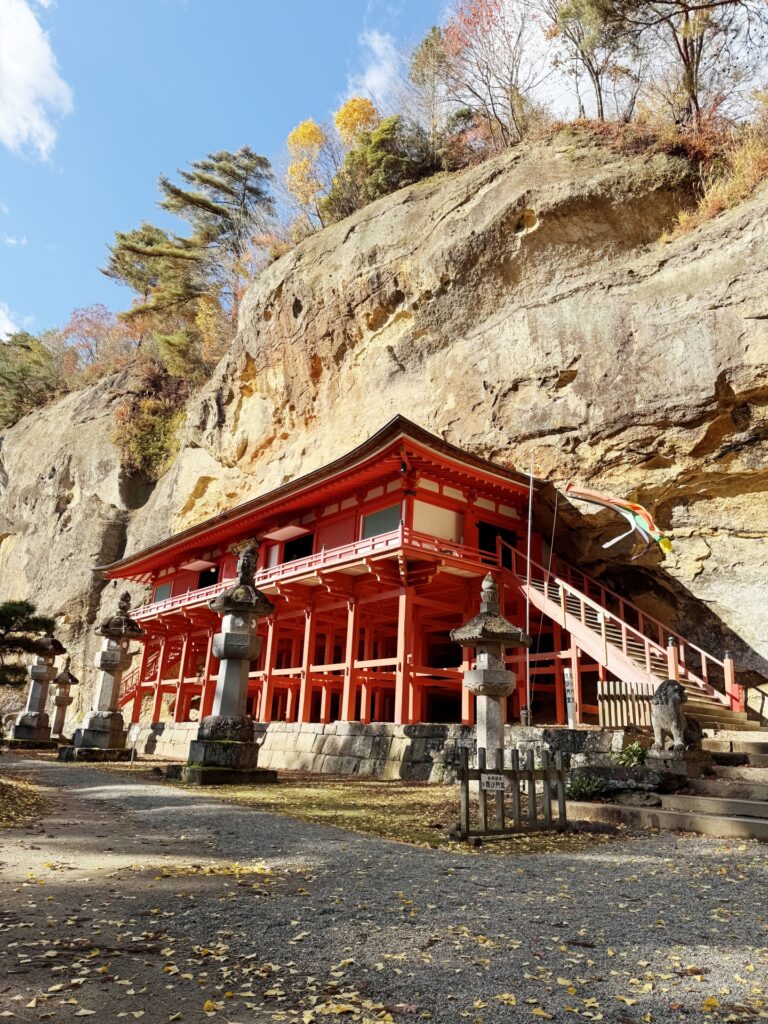
Clinging dramatically to the sheer rock face of a massive natural cave, this striking cliffside temple was originally founded in the early Heian period. Because it sits roughly 6 kilometers away from the station, visiting on foot may be a bit challenging. We treat this as a flexible bonus stop—if we can successfully arrange a taxi from the station area, we plan to include it in our day.
- Admission Fee: Adults 500 JPY / High School Students & Junior High Students 200 JPY / Elementary & Under Free
- Closed: Open year-round
How to Get to Hiraizumi from Tokyo
Travellers heading north from Tokyo can choose from several convenient transit options depending on their schedule and travel style:
- By Shinkansen (Fastest Option): Take the Tohoku Shinkansen from Tokyo Station to Ichinoseki Station (approx. 2 hours and 10 minutes). From Ichinoseki, transfer to the JR Tohoku Main Line local train (northbound toward Morioka) and ride for about 7 to 8 minutes to reach Hiraizumi Station.
- By Local Trains (Budget-Friendly): For travellers utilizing regional rail passes or looking for a slower, scenic journey, stringing together local services along the Tohoku Main Line is a great alternative.
- By Highway Bus: Overnight or daytime long-distance buses connect Tokyo to major hubs like Sendai or Morioka, from which regional train connections can bring you down to Hiraizumi.
Our Itinerary: From Ichinoseki through Hiraizumi to Morioka
For our Tohoku journey, my wife and I planned this visit as a seamless stopover. We stay overnight in Ichinoseki the night before, allowing us to catch an early morning JR Tohoku Main Line train to Hiraizumi Station—a quick 7-minute ride.
Upon arriving at Hiraizumi Station, we will drop our bags into station coin lockers so we can to stay mobile. We spend the morning and early afternoon exploring the temples on foot and utilizing local transport options. Once we finish taking in the historic sights, we head right back to Hiraizumi Station to board another northbound local train, continuing onward to Morioka to check into our next hotel. This makes for an efficient transit flow without ever needing to lug any bags around the historical trails.
[Related Stories]
➡ Discovering Hiraizumi: The Golden Heritage of the Fujiwara Clan and the Legend of Minamoto no Yoshitsune
➡ 2-Week Tohoku Itinerary in September: A Slow-Paced Couple’s Backpacking Guide
➡ Ichinoseki Itinerary on Foot and Public Transport: Best Spots and Access Guide
Why We Chose to Visit Hiraizumi
Making Hiraizumi a major focal point of our 13-day Tohoku itinerary was an easy choice for us, driven by several compelling historical and cultural reasons.
First and foremost, Hiraizumi represents a monumental turning point in Japanese history. Its significance can be broken down into two major themes:
- The Rise of an Independent Regional Power: Breaking away from the centralized, court-dominated rule of Kyoto, the Northern Fujiwara clan established a flourishing autonomous administration in the north. By pouring their economic wealth into building utopian Buddhist landscapes, they created a distinct, highly advanced cultural sphere in Tohoku.
- The Climax of the Genpei Era and the Dawn of Samurai Rule: Hiraizumi is famously tied to the tragic final days of Minamoto no Yoshitsune, who sought refuge here before his downfall. The eventual destruction of the Fujiwara clan marked the definitive shift of power from ancient aristocratic governance into the hands of the Kamakura shogunate, sealing the transition into medieval samurai society.
Beyond just the politics, we are drawn to the historical romance of the place. It is widely believed that Hiraizumi’s dazzling Chuson-ji Golden Hall inspired Marco Polo’s legendary accounts of “Zipangu” (The Land of Gold) in The Travels of Marco Polo.
Conclusion
Exploring Hiraizumi without a car is entirely achievable, offering an enriching travel experience centred around walking and efficient rail connections. While spots like Takkoku-no-Iwaya require a bit of logistical flexibility regarding local taxis, the central temple is easilyaccessible.
Whether you are fascinated by medieval history, stunning Pure Land garden architecture, or tracing the footsteps of literary masters, Hiraizumi makes for an unforgettable stop on any journey through northern Japan.
Note: This itinerary outlines our personal plans for our 13-day trip through Tohoku. Once we visit in person, we will return to update this guide with our own photography and firsthand travel stories!
➡ Back to Tohoku Travel Guide
Comment