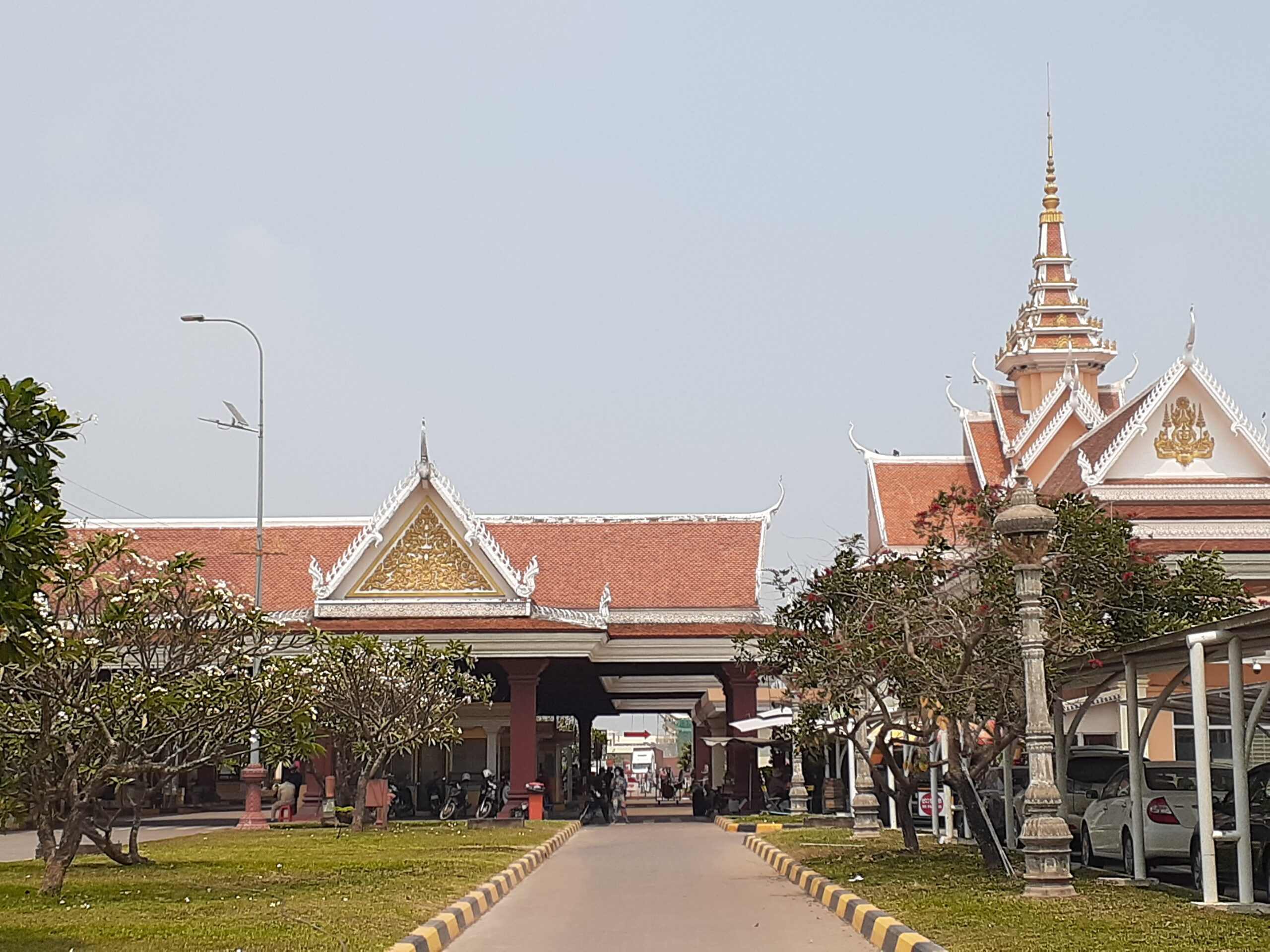
Traveling overland from Ho Chi Minh City, Vietnam to Phnom Penh, Cambodia is one of the most classic international backpacking routes in Southeast Asia. If you visit any tour operator in Saigon’s District 1, they will easily sell you a direct international bus ticket, but it will cost you upwards of USD 30 to USD 35 for the convenience. While those direct tourist buses are comfortable, they can be relatively expensive for budget travelers—and honestly, they take away the thrill of true independent travel.
Having successfully navigated three different border crossings between these two countries in recent years, we decided to skip the agencies entirely and attempt the Moc Bai (Vietnam) to Bavet (Cambodia) crossing 100% on our own. By piecing together local city buses, commuter minivans, and negotiating a shared taxi, we managed to slice our transportation costs exactly in half, spending only about USD 15 per person. In this comprehensive, step-by-step guide, we share our exact route, current transport prices, visa-on-arrival tips, and haggling strategies so you can successfully pull off this DIY international border crossing yourself.
🇯🇵 この記事を日本語で読む: モックバイ – バベット国境越え:観光バスの半額!ホーチミンからプノンペンへ最安で行く完全ローカルルート
Quick Routing Summary: Ho Chi Minh to Phnom Penh (DIY Route)
- Total Journey Time: Approx. 7.5 to 8 hours (including border clearings and a lunch break).
- Total Transport Cost: Approx. USD 14.00 – USD 16.50 per person (Instead of USD 30–35+ for a direct tour bus).
- The 3-Leg Budget Route:
- Leg 1: Local Bus No. 04 from District 1 to An Suong Bus Terminal (VND 6,000 / ~45 mins).
- Leg 2: Commuter Minivan from An Suong to the Moc Bai Border (VND 100,000 / ~1.5 hours).
- Leg 3: Shared Sedan Taxi from the Bavet Border to central Phnom Penh (USD 8.50 per seat / ~3.5 hours).
- Essential Check: You must bring your physical passport and a crisp, unblemished USD 35 cash bill for the Cambodian Visa on Arrival at Bavet.
- Overland Routes to Cambodia & Getting to An Suong Bus Terminal
- Step 1: Transfer from District 1 to An Suong Bus Terminal
- Step 2: Taking the Local Bus from An Suong to the Moc Bai Border
- Step 3: Lunch and the 1.5 km Walk to Vietnam Immigration
- Step 4: Vietnam Departure Formalities at Moc Bai Checkpoint
- Step 5: Cambodian Entry Formalities & Obtaining an Arrival Visa at Bavet
- Step 6: Onward Journey from Bavet to Phnom Penh by Shared Taxi
- Arrival in Phnom Penh: Final Tuk-Tuk to the Riverfront
- DIY Cost Breakdown vs. Tour Bus (Per Person)
Overland Routes to Cambodia & Getting to An Suong Bus Terminal
When looking at a map of the Vietnam-Cambodia border closest to Ho Chi Minh City, there are two primary overland routes available for travelers. The first option goes through Tay Ninh province on the Vietnamese side, crossing over to Trapang Phlong in Cambodia. The second—and by far the most popular and established route to reach the capital—is the Moc Bai (Vietnam) to Bavet (Cambodia) border crossing.
Regardless of whether you choose the Tay Ninh route or the Moc Bai route, your journey must begin at the An Suong Bus Terminal, located in the northwestern suburbs of Ho Chi Minh City. Although the terminal is technically only about 15 km away from the downtown core, Saigon’s notorious, round-the-clock traffic gridlock means you should expect this short drive to take anywhere from 45 to 60 minutes.
Step 1: Transfer from District 1 to An Suong Bus Terminal
Catching Local Bus No. 04 from Downtown Saigon
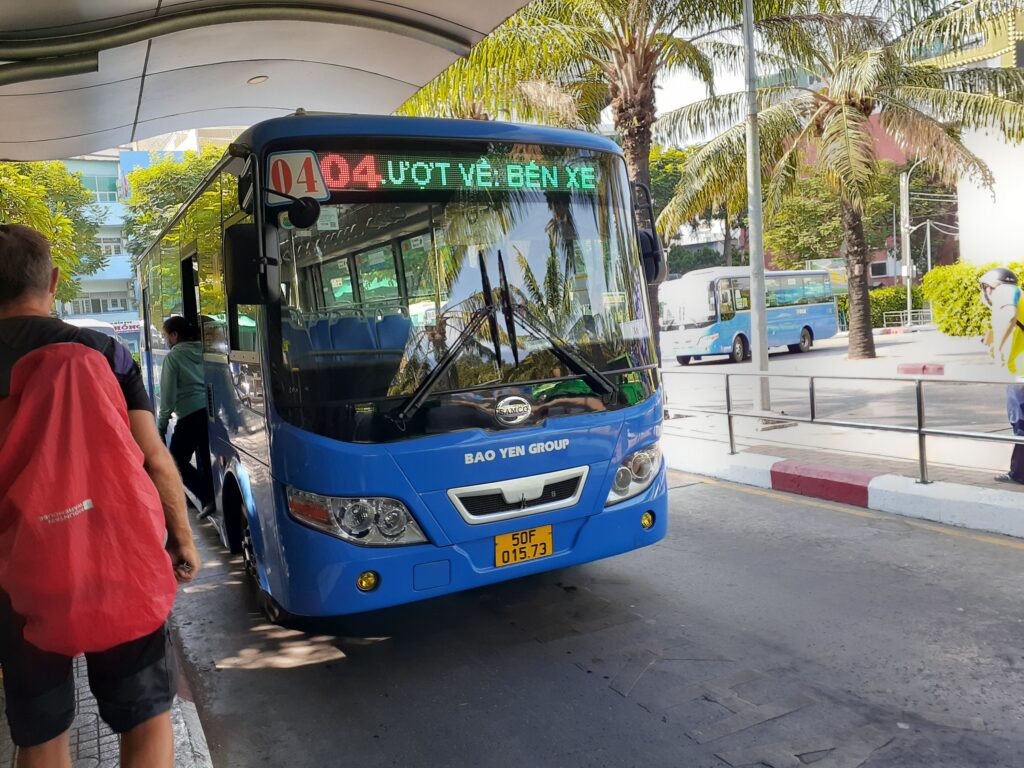
Buses bound for the Moc Bai border do not leave from the central backpacker district anymore; they depart from the An Suong Bus Terminal, located about 15 km northwest of the city center. Keep in mind that due to Ho Chi Minh City’s notoriously gridlocked traffic, this 15 km drive takes around 45 to 60 minutes.
Pre-COVID, there used to be a direct airport/city bus (the old Bus 109) that made this connection easier from the Pham Ngu Lao area. Today, the most economical way is to head to the bus stop located just west of September 23rd Park in downtown District 1 and hop on Local Bus No. 04.
Ticket Price to An Suong Bus Terminal
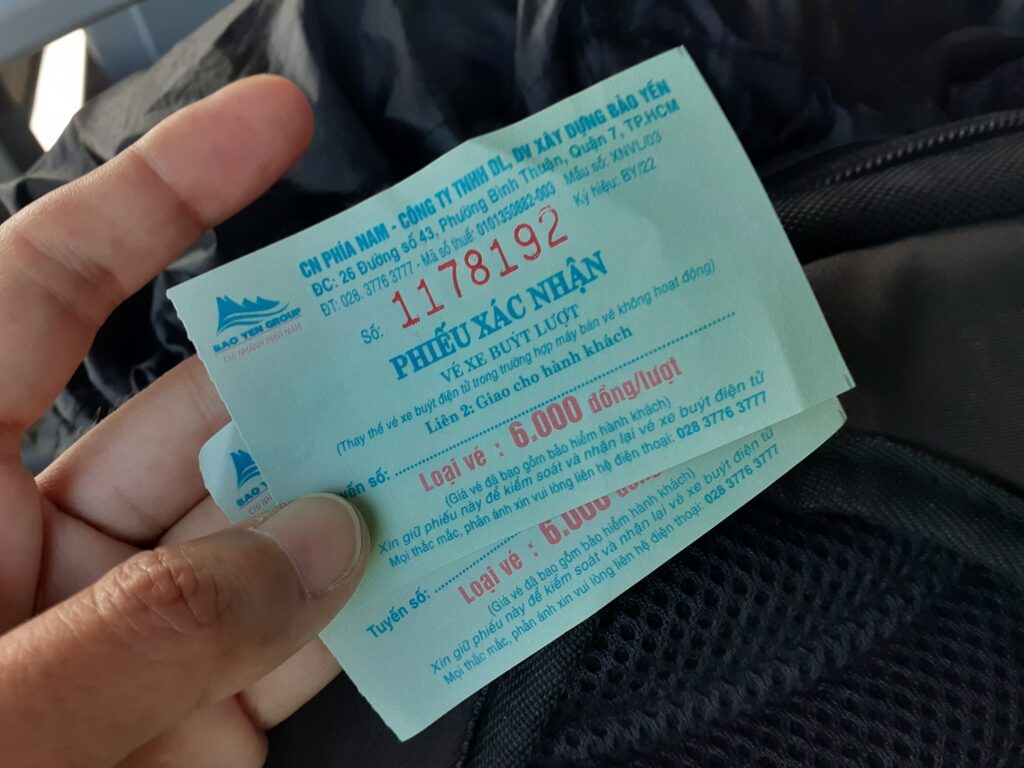
The fare for Bus No. 04 is an absolute steal—just VND 6,000 per person (less than USD 0.25). You simply pay the conductor on board, grab your tiny paper ticket, and settle in for a slow, immersive ride through Saigon’s bustling suburbs.
Step 2: Taking the Local Bus from An Suong to the Moc Bai Border
Buying Your Ticket at Counter No. 3
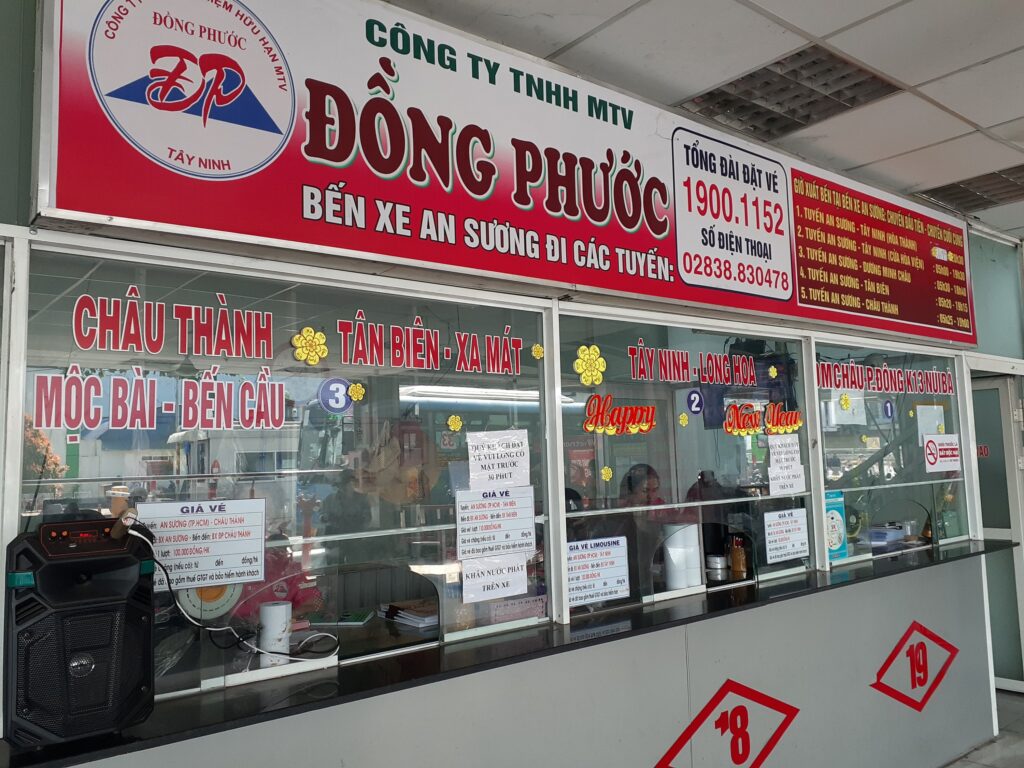
Our Bus No. 04 arrived at An Suong Bus Terminal at precisely 9:45 AM. The terminal is large but well-organized. We headed straight into the main terminal building and located Ticket Counter No. 3, which handles the routes out to the border. We purchased two tickets for the next departure at 10:10 AM.
The fare from An Suong to the Moc Bai border was VND 100,000 per person (approx. USD 4.00). Your seat numbers are printed directly on the tickets, so make sure to check them before boarding. Directly in front of the counter is a spacious waiting room where you can sit under the fans. About 10 minutes before departure, a driver holding a clipboard stepped into the waiting room and called out for Moc Bai passengers.
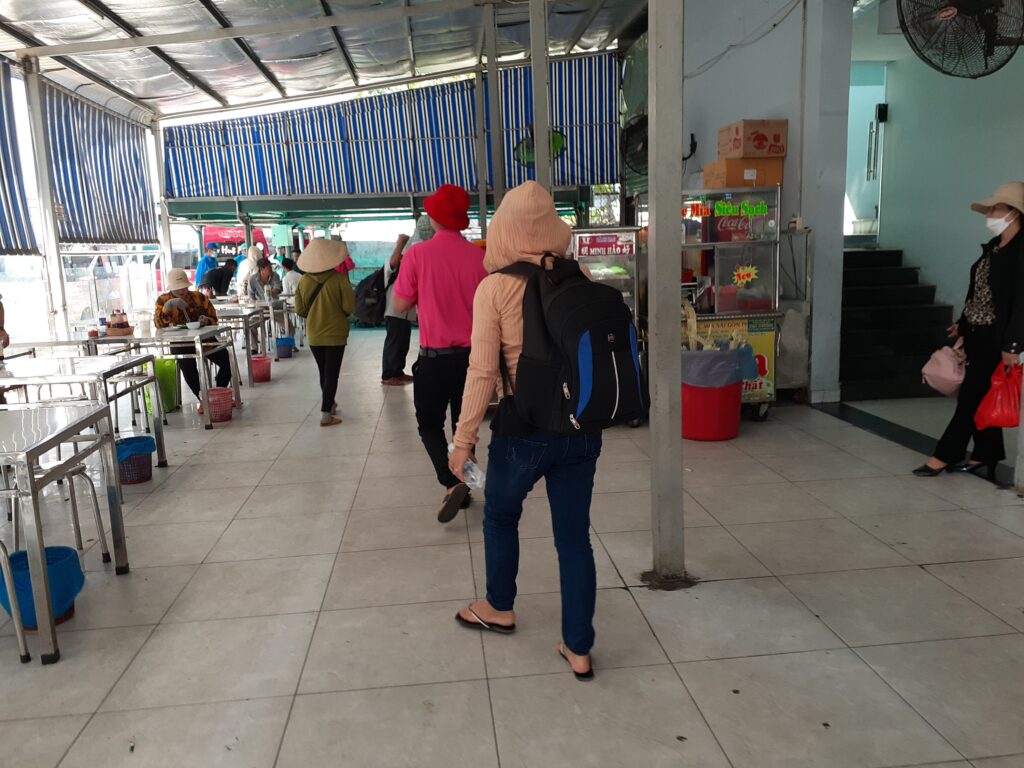
I confirmed that it was for Moc Bai and followed him.
The 16-Seat Minivan Experience
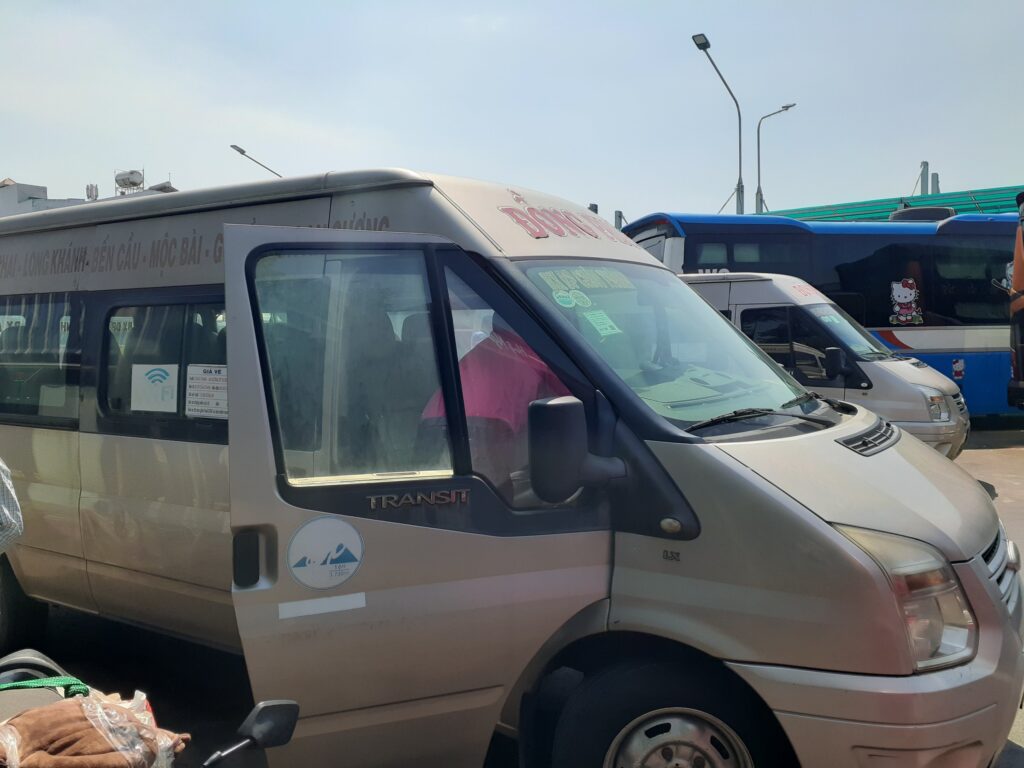
We followed our driver out to the platform. The vehicle used for this leg is a standard 16-seat commuter minivan. Space is incredibly tight inside, meaning there is very little dedicated room for large luggage—if you are traveling with massive suitcases, you might find it a bit cramped, but for our backpacks, it was perfectly fine. The minivan departed exactly on time at 10:10 AM.
Step 3: Lunch and the 1.5 km Walk to Vietnam Immigration
Getting Dropped Off at the Junction
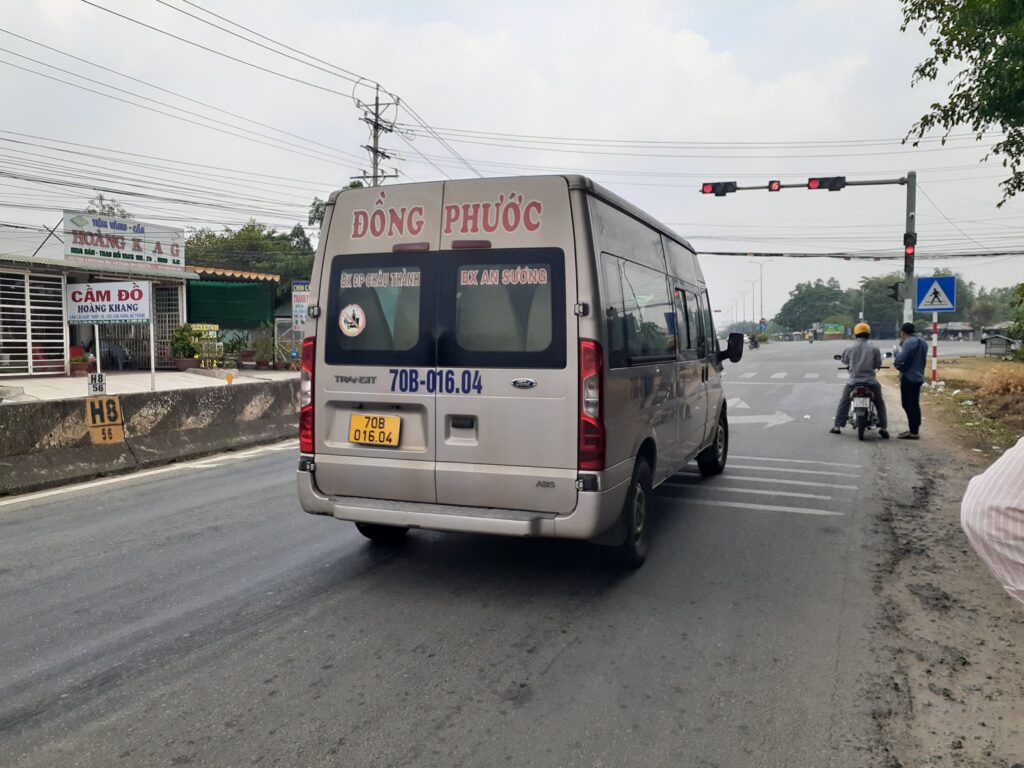
The 60 km journey from An Suong Bus Terminal to the border area took just about an hour and a half, thanks to smoother roads outside the city. However, be prepared: the local minivan does not drop you off directly at the doorstep of the immigration building. Instead, it unloads passengers at a major road junction roughly 1.5 km before the border checkpoint.
The moment you step off the minivan, you will be swarmed by eager motorbike taxi (xe ôm) drivers offering to zip you to the border for a fee.
Energy Refuel: A Quick Local Lunch
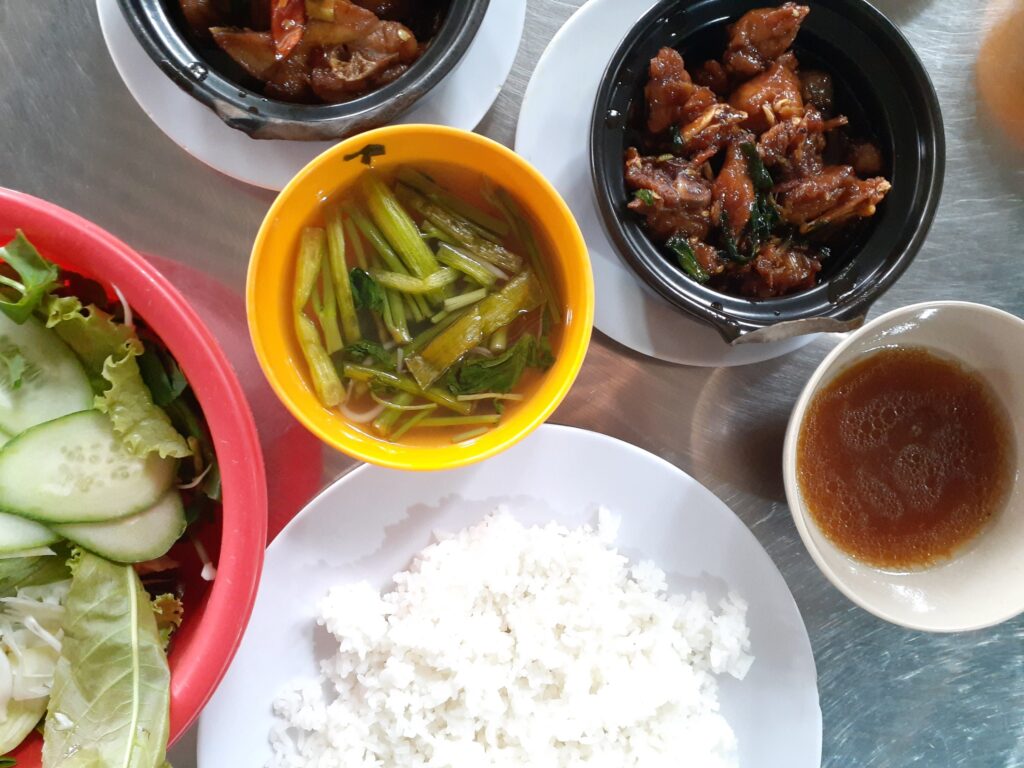
Since it was already midday, we decided to ignore the motorbike drivers, stretch our legs, and find some fuel. Right near the junction, we spotted a small local restaurant and sat down for a delicious, affordable Vietnamese lunch. After filling up, we skipped the taxis entirely and took a casual 20-minute walk along the highway toward the Vietnamese immigration building.
Step 4: Vietnam Departure Formalities at Moc Bai Checkpoint
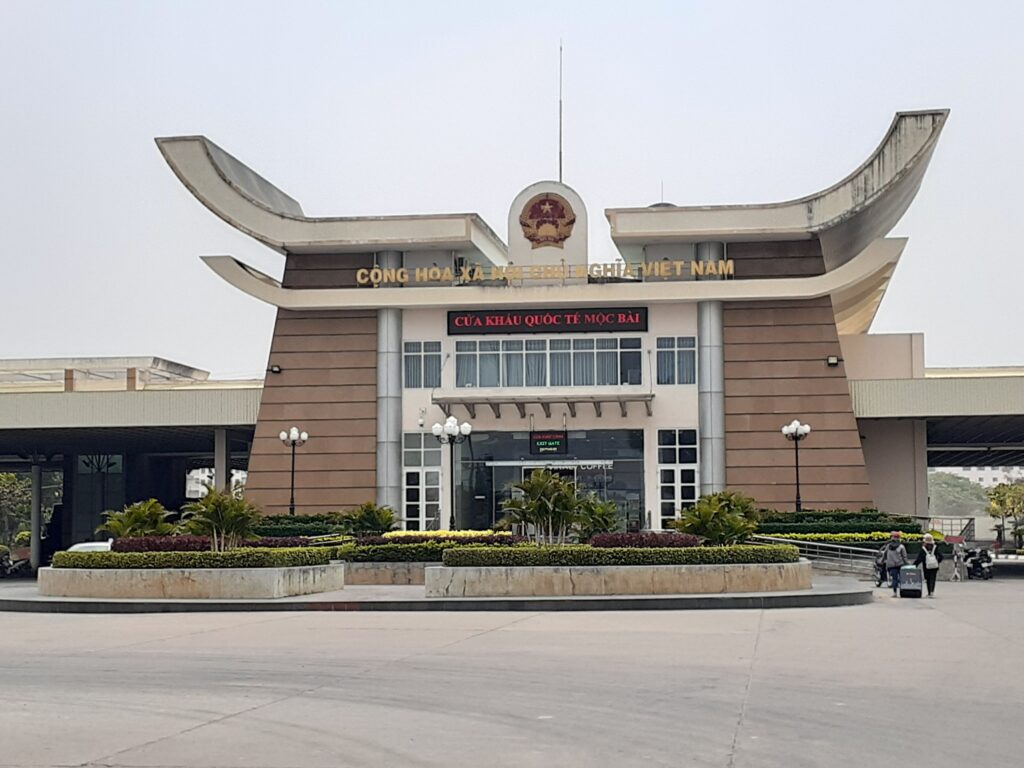
The departure formalities on the Vietnamese side at the Moc Bai immigration building were surprisingly chilled out and modern. The building is large, clean, and oddly enough, even features a fully functioning coffee shop inside if you need a caffeine fix before leaving the country.
Upon entering, you place your luggage through a standard security X-ray scanner. From there, you proceed directly to the passport control counters to get your Vietnamese exit stamp. There were no queues when we went, and within minutes, we were officially stamped out of Vietnam. We then walked across the dusty, sun-drenched no-man’s-land strip separating the two nations and headed toward the Cambodian gates of Bavet.
Step 5: Cambodian Entry Formalities & Obtaining an Arrival Visa at Bavet
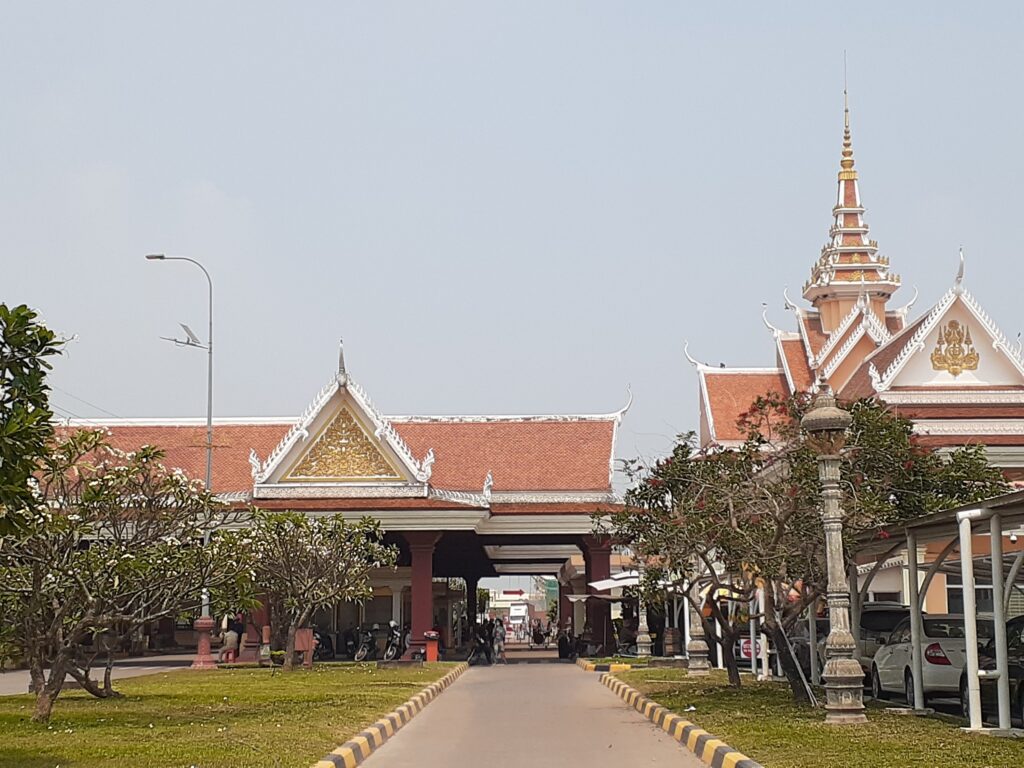
Once you reach the Cambodian side at the Bavet border checkpoint, your first task (unless you already hold a pre-arranged E-visa) is to secure a Visa on Arrival.
- Step 1: The Visa Service Window: On the right-hand side of the main immigration building, you will see a window clearly marked “Visa Service.” Walk up to the desk and inform the officer you need a tourist visa.
- Step 2: Filling the Arrival Card: The officer will hand you a Cambodian Arrival Card. Fill this out carefully and hand it back along with your passport.
- Step 3: The Visa Fee: The official fee for a Cambodian Tourist Visa on Arrival is USD 35 per person. Make sure you have crisp, clean, unblemished US dollar bills, as Cambodian officials are notorious for rejecting notes with tiny rips or folds. (Note: Passport photos were not strictly requested at the counter during our crossing).
- Step 4: Passport Control: After waiting a few minutes, your passport will be handed back with a shiny new visa page inside. Take your passport and head into the main immigration hall. You will fill out yet another arrival slip here, present it to the immigration officer at the passport control counter, and receive your official entry stamp.
- Step 5: Customs: Walk past the customs booth. Since we had nothing to declare, we passed right through without a luggage check.
Welcome to Cambodia! Because US dollars are widely accepted alongside the Cambodian Riel (KHR) everywhere in the country, you don’t need to stress about finding a currency exchange booth immediately at the border.
Step 6: Onward Journey from Bavet to Phnom Penh by Shared Taxi
Navigating the Taxi Stand Outside Immigration
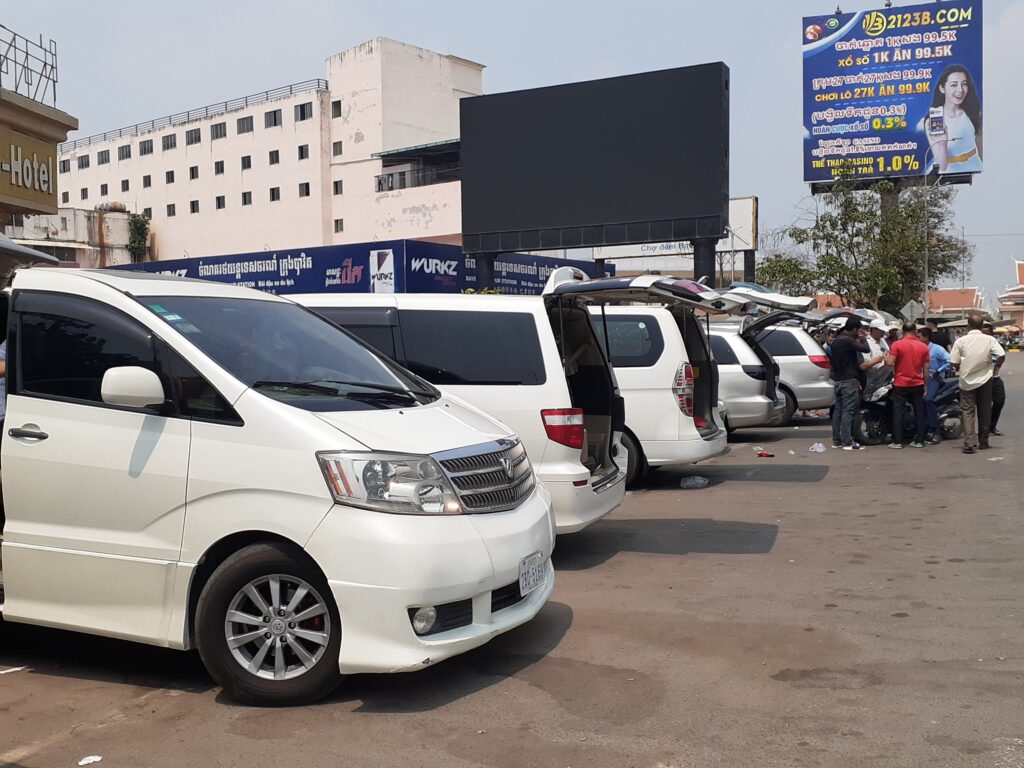
The final leg of the journey is the 170 km stretch from the Bavet border to the capital city of Phnom Penh. While local buses do run this route, they can be slow and sporadic. As soon as you step outside the Bavet exit doors, you will enter a parking lot filled with vehicles and shouting drivers.
These are shared taxis—local cars that have driven passengers down from Phnom Penh to the border and are now looking to fill up their seats for the return leg. Because they use standard sedans and take the highway directly, they are significantly faster and more comfortable than local buses.
The Art of Negotiating the Fare
Expect heavy haggling here. The first driver approached us and confidently quoted a staggering USD 60 for the two of us to get to Phnom Penh (essentially trying to get us to pay for the entire private car). Knowing the real rates, we immediately shook our heads and began negotiating hard.
Within a couple of minutes, we managed to bring the price down to a much more realistic USD 17 for two people (USD 8.50 per seat). There were already three local Cambodian passengers waiting inside the car, so the moment we hopped in and threw our bags in the trunk, the vehicle filled up and departed immediately. It was 1:30 PM.
Arrival in Phnom Penh: Final Tuk-Tuk to the Riverfront
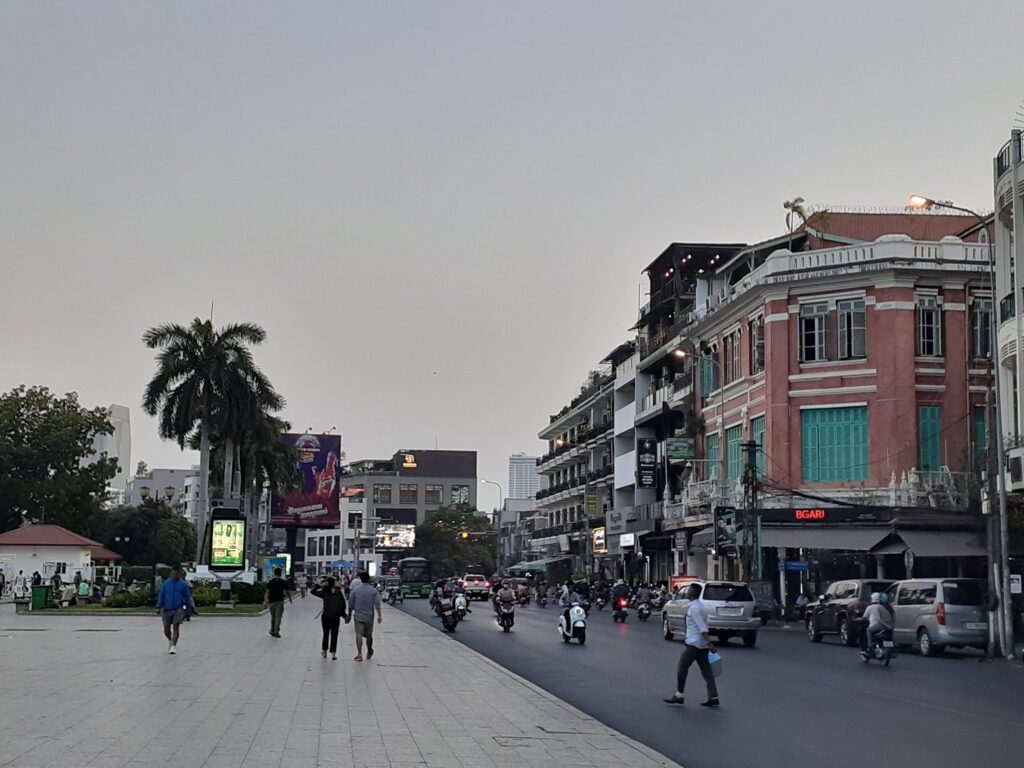
The drive to Phnom Penh took about three and a half hours. Because it is a shared taxi, the driver stopped and started quite frequently along the way to drop off the local passengers at various points or briefly pick up small roadside deliveries.
At around 5:00 PM, we finally pulled into Phnom Penh. The taxi dropped us off at a local hub about 5 km away from the Royal Palace area. To cover this final stretch to our accommodation, we flagged down a local passing tuk-tuk. After a quick negotiation, we agreed on a price of 10,000 Riel (approx. USD 2.50), and the driver dropped us off right along the Mekong River waterfront, where budget guesthouses lined the streets.
DIY Cost Breakdown vs. Tour Bus (Per Person)
| Expense Item | DIY Local Cost (Per Person) | Direct Tour Bus Cost |
| Bus #04 (District 1 to An Suong) | VND 6,000 (~$0.25) | Included |
| Minivan (An Suong to Moc Bai) | VND 100,000 (~$4.00) | Included |
| Lunch near Border | ~$2.50 (Optional) | Not Included |
| Bavet to Phnom Penh (Shared Taxi) | USD 8.50 | Included |
| Phnom Penh Tuk-Tuk to Hotel | 5,000 Riel (~$1.25) | Usually drops at central office |
| TOTAL TRANSPORT COST | ~$14.00 – $16.50 | USD 30.00 – $35.00+ |
The Verdict: By choosing the DIY route, we saved about USD 15 to USD 20 per person, turning what could have been a mundane bus ride into a fun, interactive local travel experience!
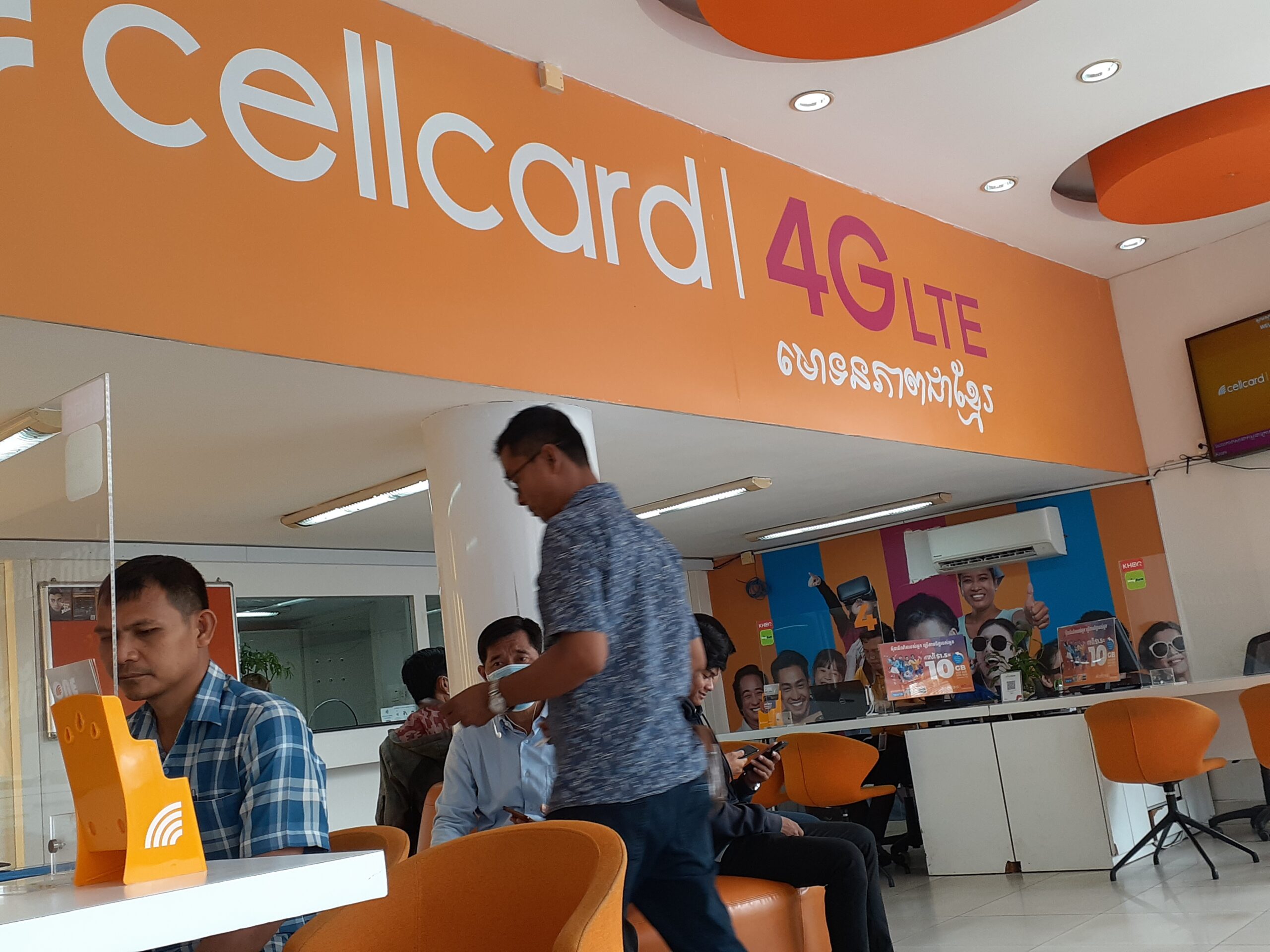
Next Story! We bought a SIM card in Cambodia:
➡ Buying a SIM Card in Phnom Penh: Cellcard Office Guide & Budget Tourist Plans
Comment