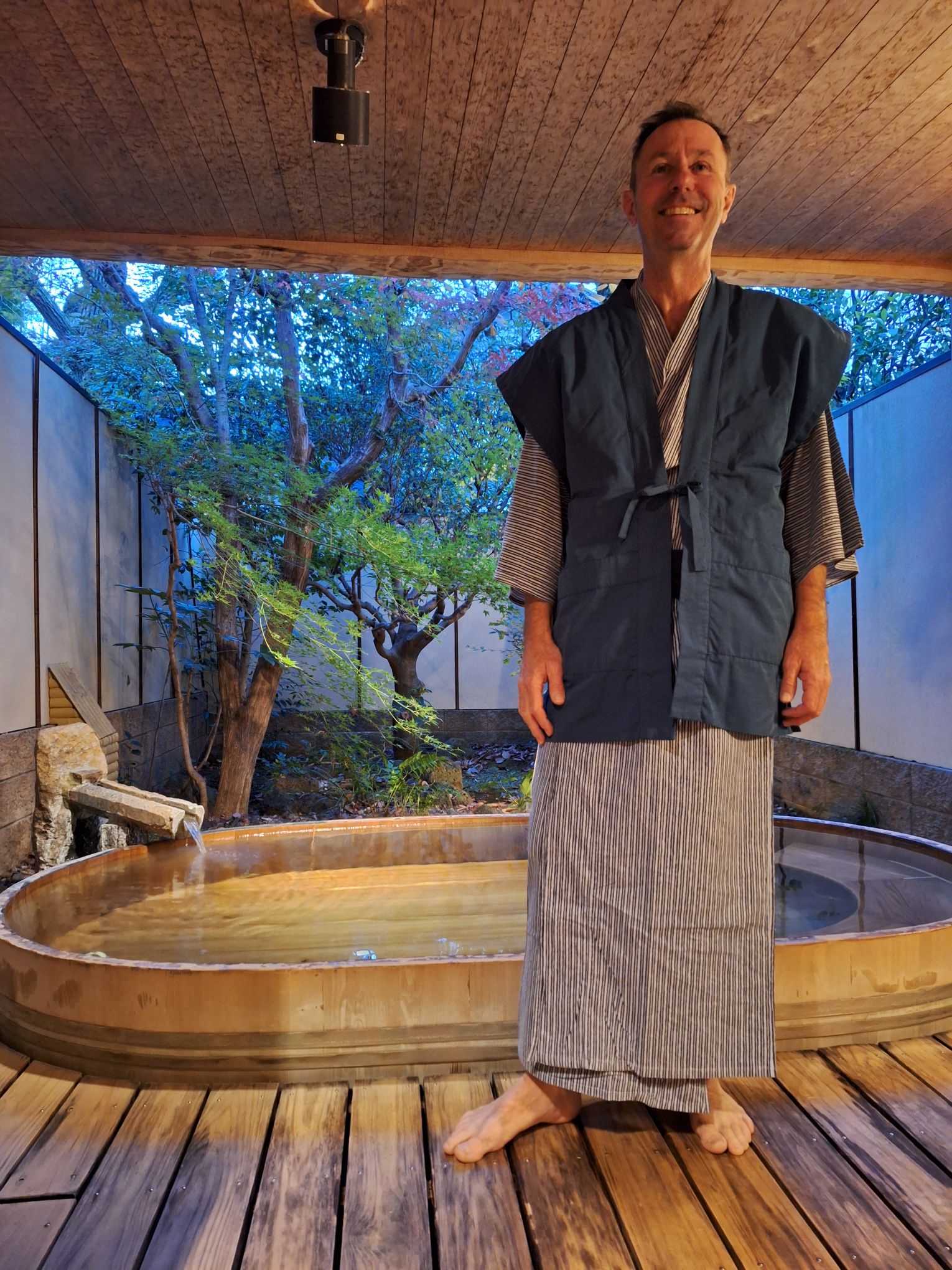
For many travellers, booking a traditional ryokan (Japanese inn) and soaking in a hot spring is a dream come true. However, planning your first time onsen experience in Japan can feel a bit daunting if you don’t know what to expect.
While this was my very first time experiencing this specific hidden gem in Izu-Nagaoka, my wife Mai was actually returning for her second visit, having fallen in love with the place a year prior during a trip with her friend.
I want to share my firsthand review of discovering the magic of ryokan hospitality, along with the essential facts you need to know for a seamless onsen experience for beginners.
🇯🇵 この記事を日本語で読む(妻のMai目線での執筆): 温泉初体験!イギリス人夫を伊豆長岡温泉旅館に連れて行ってみた:リピート滞在レビュー
- What is an Onsen? Essential Knowledge for Your First Time in Japan
- Why Private Baths are Perfect for an Onsen Experience for Beginners
- How Japanese Locals Enjoy a Ryokan Stay: Our Actual Timeline
- What to Expect Staying in a Traditional Japanese Inn (Ryokan)
- A Masterclass in Gastronomy: The Seasonal Kaiseki Feast
- My Top Tips for Your First Time Onsen Trip
- Location & How to Find Yoshiharu
What is an Onsen? Essential Knowledge for Your First Time in Japan
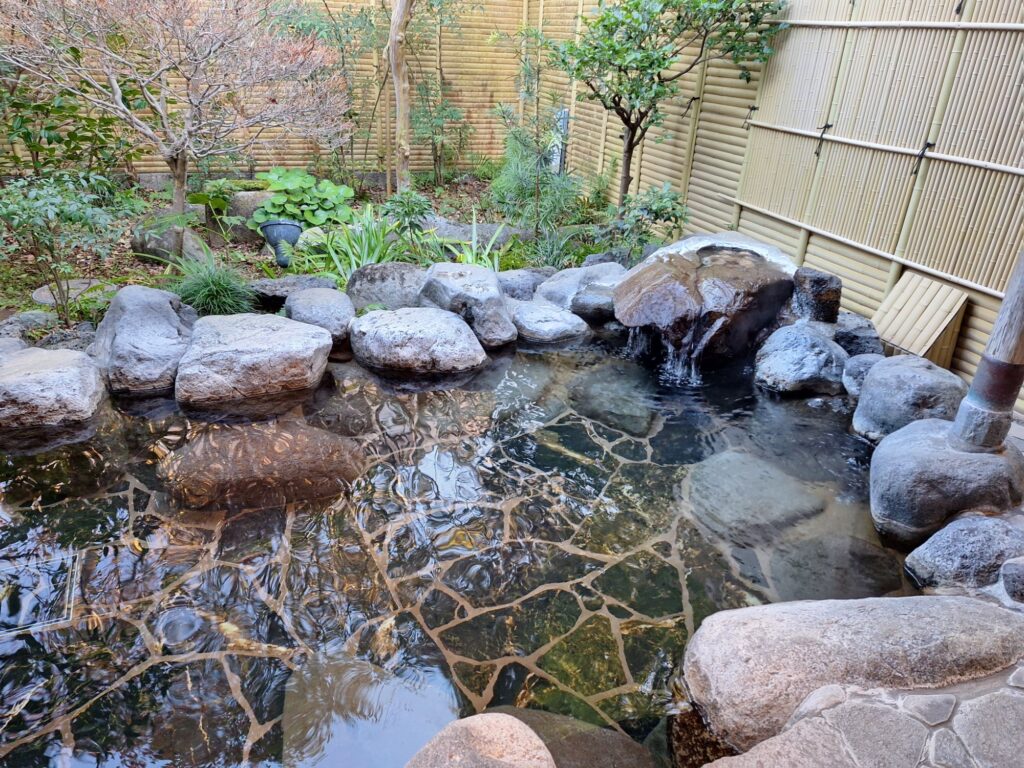
Before you pack your bags, it is important to understand what a Japanese hot spring actually is and how the traditional system works.
Unlike a regular public pool or a standard hotel bath, a true onsen is a natural hot spring filled with mineral-rich geothermal water heated by the earth. To be legally classified as an onsen, the water must come from a natural volcanic source and contain specific health-benefiting minerals.
When preparing for your first time onsen experience in Japan, here are the core rules you will encounter at a standard facility:
- Separated by Gender: Traditionally, onsen feature large, communal public baths (dai-yokujo) that are strictly separated into male and female sections.
- Strictly Naked: You enter the water completely naked. Swimsuits are strictly forbidden in traditional hot springs as they are seen as unhygienic to the pure mineral water.
- The Tattoo Policy: It is important to note that people with tattoos are frequently refused entry to communal onsen. This is a deeply rooted cultural policy in Japan, and even small, discreet tattoos can result in being asked to leave the public baths.
Why Private Baths are Perfect for an Onsen Experience for Beginners
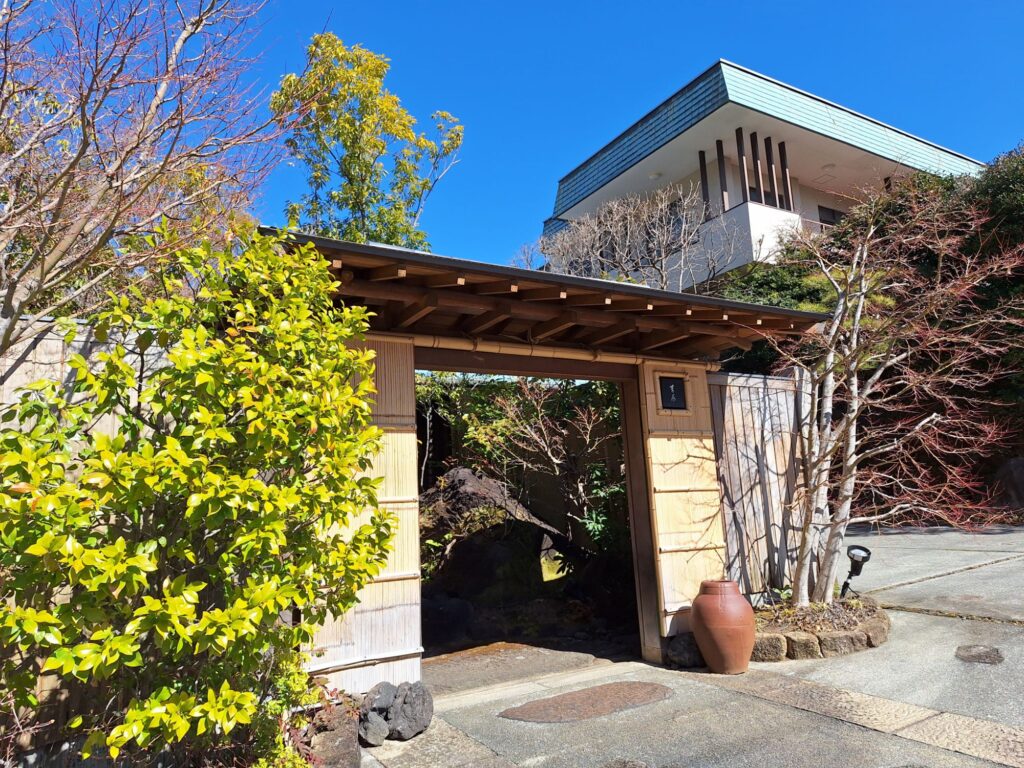
If the thought of communal naked bathing makes you nervous, or if you have tattoos that prevent you from entering public facilities, you do not have to miss out on this classic Japanese tradition! I highly recommend that onsen beginners look specifically for a ryokan or facility that offers private baths (kashikiri-furo).
Mai chose our ryokan for this exact reason. Apart from the communal areas, this property features five private hot spring baths that operate on a brilliant, stress-free system.
How the Private Baths Work:
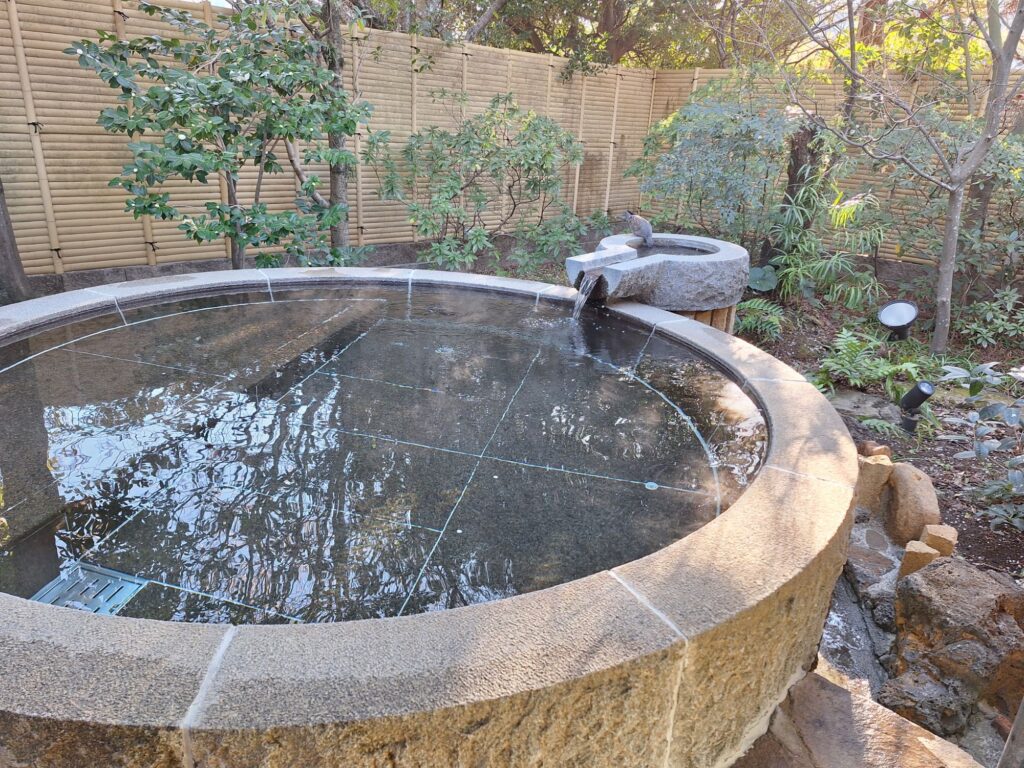
These baths are smaller, beautifully designed private rooms separate from the main public baths. Please note that every onsen facility has its own unique system, so you should always double-check and follow the specific rules of the venue you are visiting.
At our particular ryokan, the baths operate on a first-come, first-served basis:
- When you find a vacant bath, you simply walk inside, lock the private door from the inner side, and enjoy the hot spring completely to yourself or with your partner.
- To let other guests know the room is occupied, you simply leave your indoor slippers (zouri) outside the entrance door. This acts as a clear visual sign that the bath is currently in use.
- The ryokan kindly provides a complimentary set of yukata (cotton robes), a matching haori (jacket), and traditional zouri shoes for all guests to wear around the complex. Now, as a British bloke with rather large feet, I was a bit worried about whether my feet would actually fit into these traditional Japanese shoes! Thankfully, they managed to track down an XL pair for me, which just about did the trick—though it was definitely a tight squeeze. If you do find yourself struggling with the shoe sizes, don’t worry at all—you are perfectly welcome to walk around the ryokan corridors in your own regular outdoor shoes.
- This setup allowed us to lock the door, completely relax, and let Mai patiently teach me the rules of the water without any onlookers.
Waiting in Comfort: The Footbath
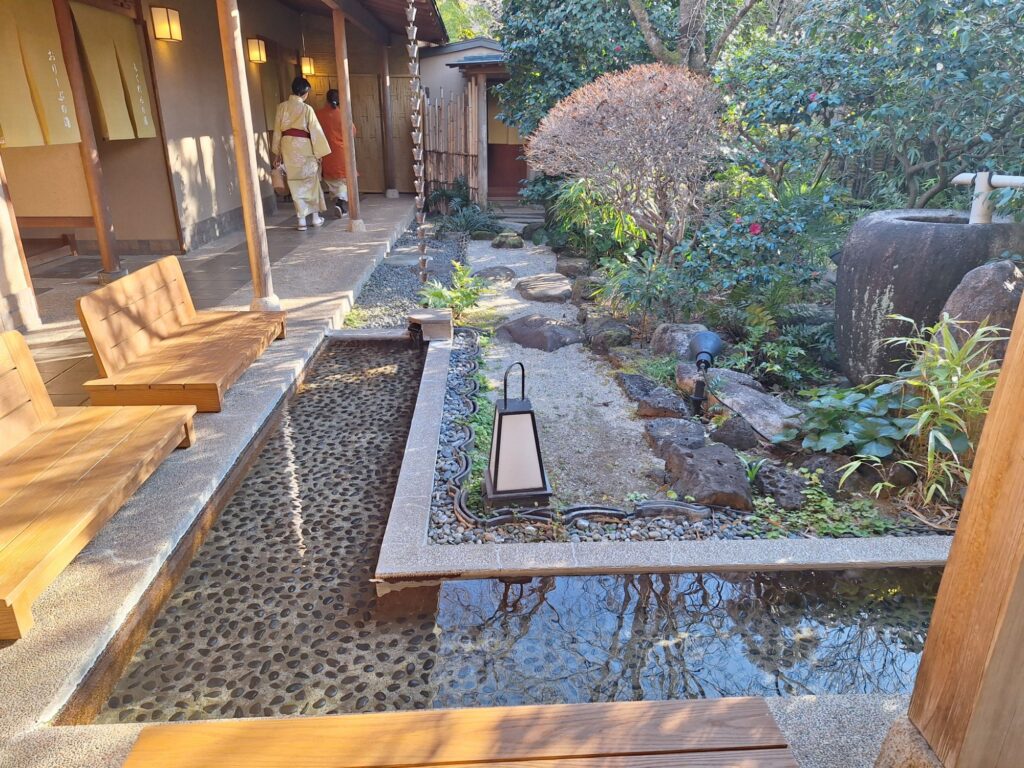
If all five of the private onsen happen to be full when you visit, you don’t have to awkwardly stand around in the corridor. Right outside the bath area, the ryokan has a lovely, warm footbath (ashiyu). You can comfortably sit there, soak your feet in the warm volcanic water, and have a chat while waiting for one of the private doors to open. It makes the entire experience incredibly relaxing from start to finish.
How Japanese Locals Enjoy a Ryokan Stay: Our Actual Timeline
To get the absolute most out of your stay, it is highly recommended to follow the traditional local rhythm. Here is exactly how we spent our time, showing you how Japanese locals fully immerse themselves in the ryokan lifestyle:
3:00 PM – Check-in, Welcome Drinks, and a Warm Welcome
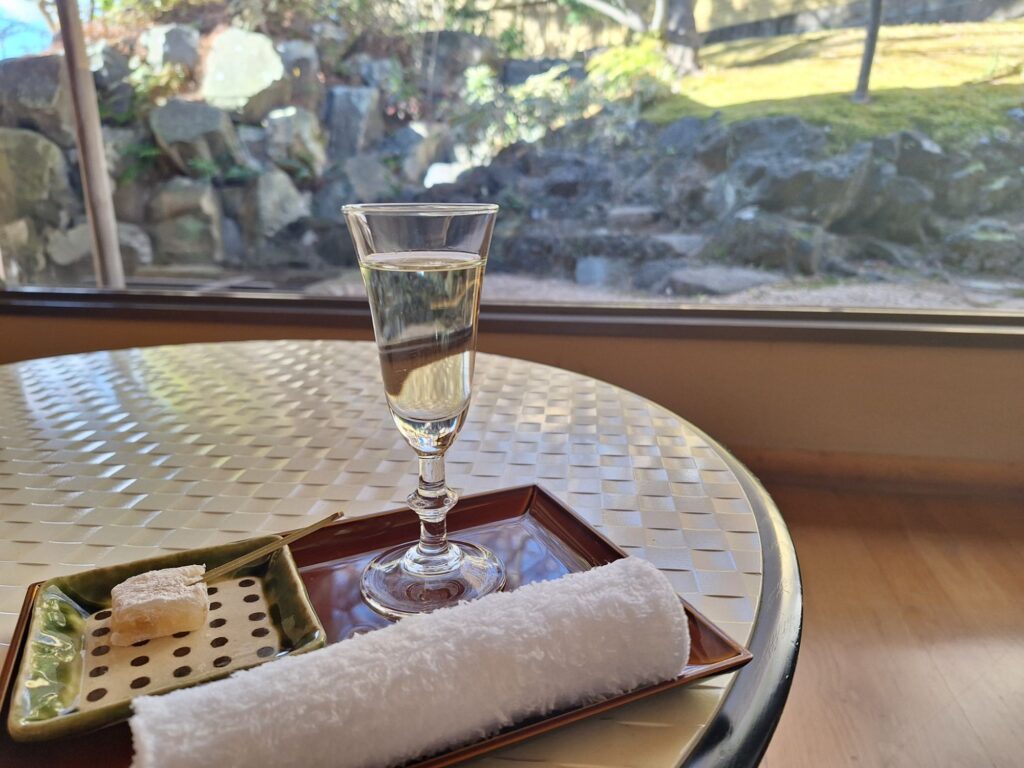
We arrived precisely at check-in time (which is usually 3:00 PM in Japan). Instead of standing at a busy reception desk, we were invited to sit on comfortable sofas overlooking the stunning Japanese garden. Here, we were served refreshing welcome drinks and traditional Japanese wagashi (sweets) while the check-in paperwork was quietly processed.
Afterwards, we were guided to our room. Our lovely nakai-san (room attendant) gave us a wonderfully detailed tour of the facilities. Incredibly, she spoke a bit of English and was absolutely brilliant—enthusiastically checking English vocabulary and explaining everything to us with a warm, friendly mix of English and Japanese!
4:00 PM – The Hunt for the 5 Themed Private Onsen
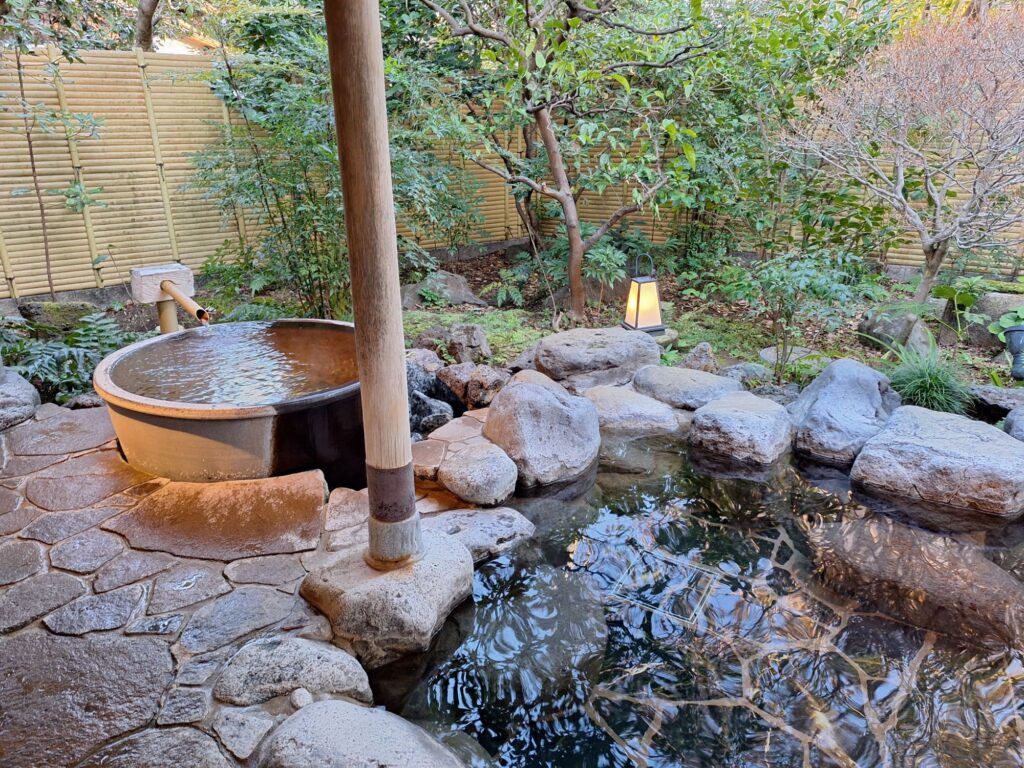
After changing into our comfortable yukata, we immediately headed out to tackle the hot springs. At this ryokan, each of the five private baths has its own distinct natural theme—such as “Sakura” (featuring a bath under a cherry blossom tree), “Kinmokusei” (fragrant osmanthus), and even one with a relaxing modern jacuzzi.
Naturally, we made it our mission to experience all five themed private baths! Even though it wasn’t cherry blossom season during our stay, the Sakura bath quickly became our absolute favourite. Each of these private areas is an open-air bath (rotenburo) with a fully sheltered, private changing room, so you can undress and dry off in complete comfort.
5:30 PM – Conquering the Large Public Bath (A Sense of Achievement!)
Having successfully learned and practiced all the onsen etiquette in the safety of the private baths, I felt brave enough to try the main communal public bath (dai-yokujo). Because it was still quite early in the evening, I lucked out—the entire bath was completely empty! I was able to relax, soak, and fully enjoy the spacious facility all to myself. It felt like a massive sense of achievement for my first onsen trip!
7:00 PM – A Luxurious 2-Hour Kaiseki Feast with Sake
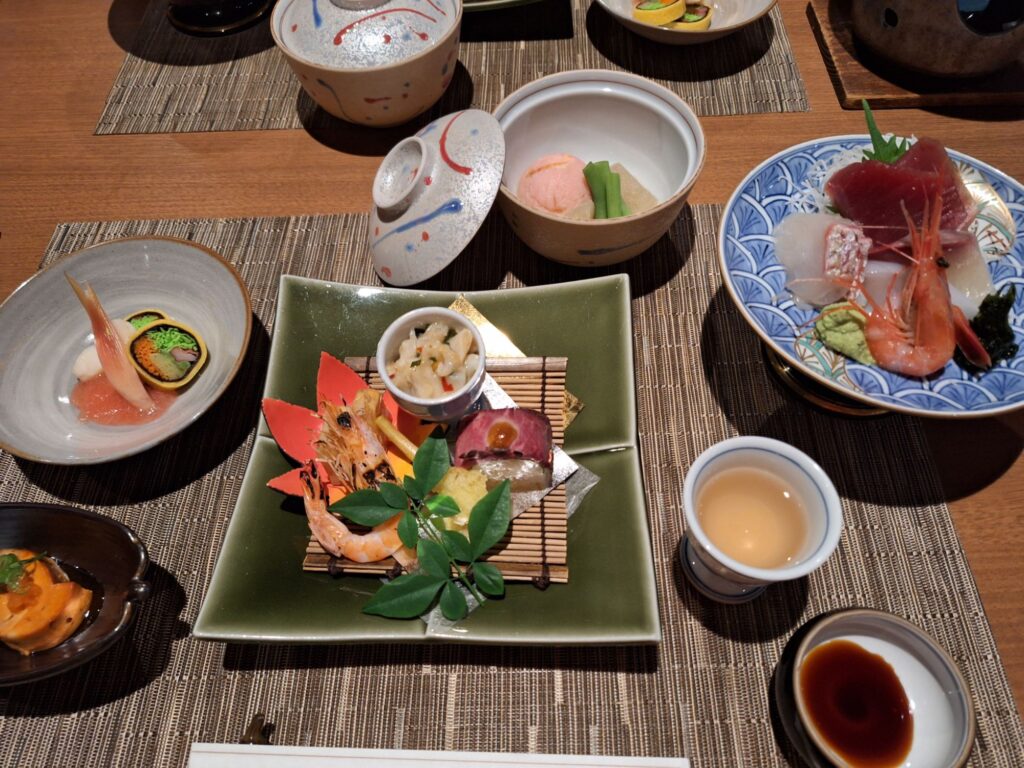
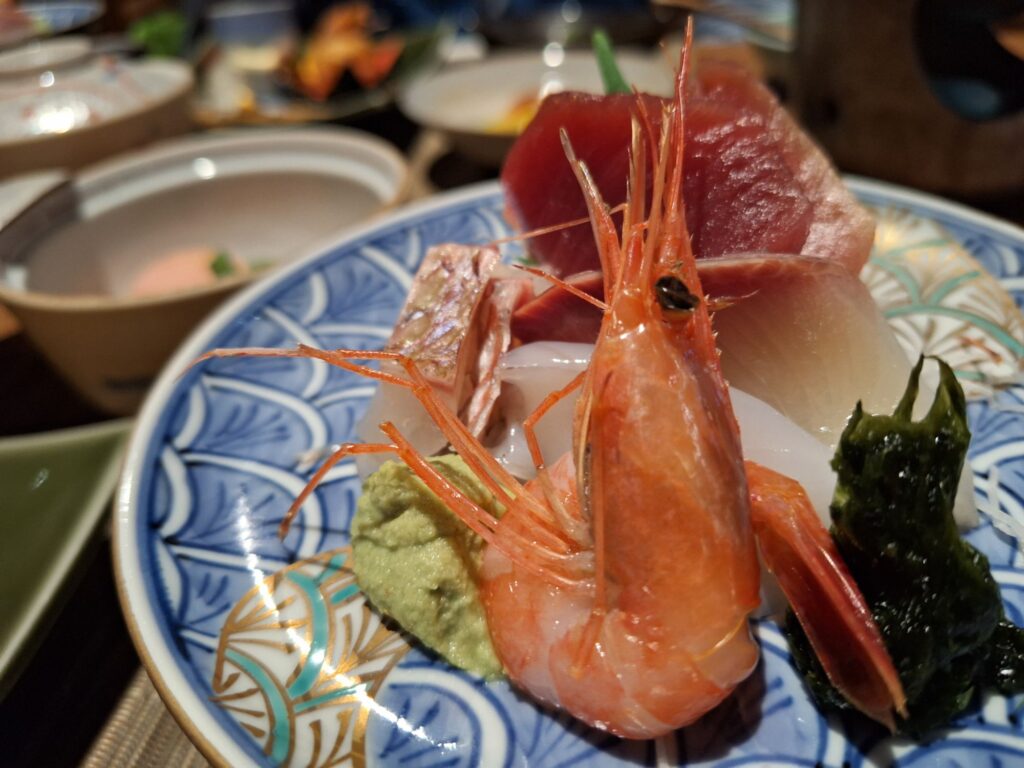
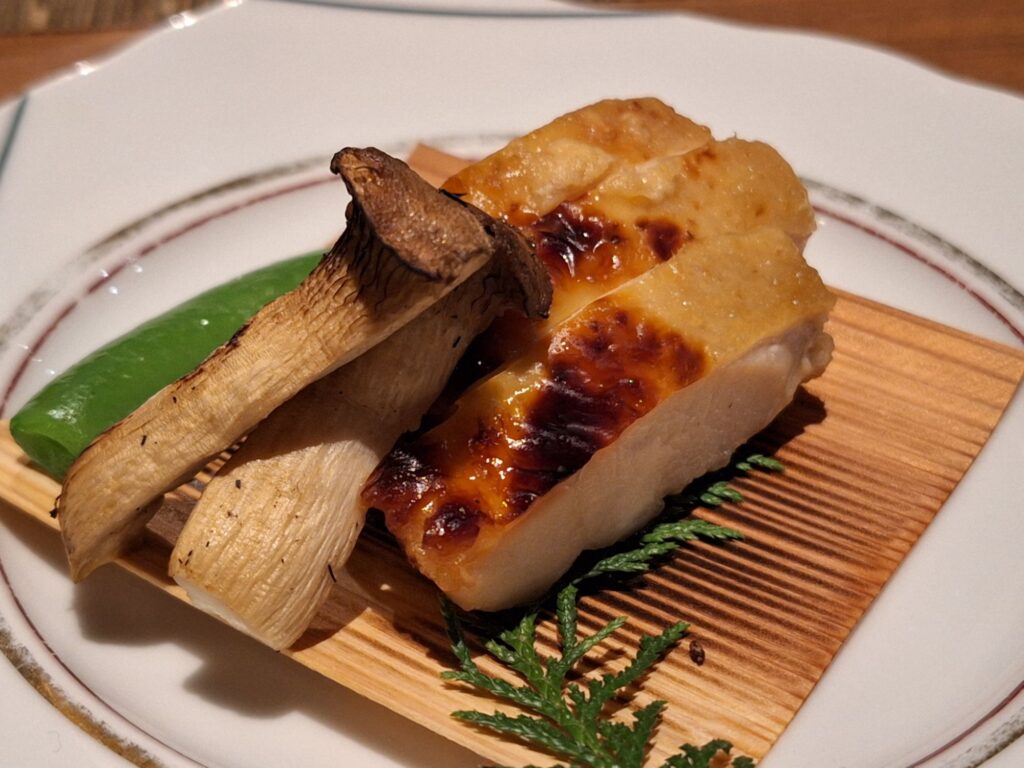
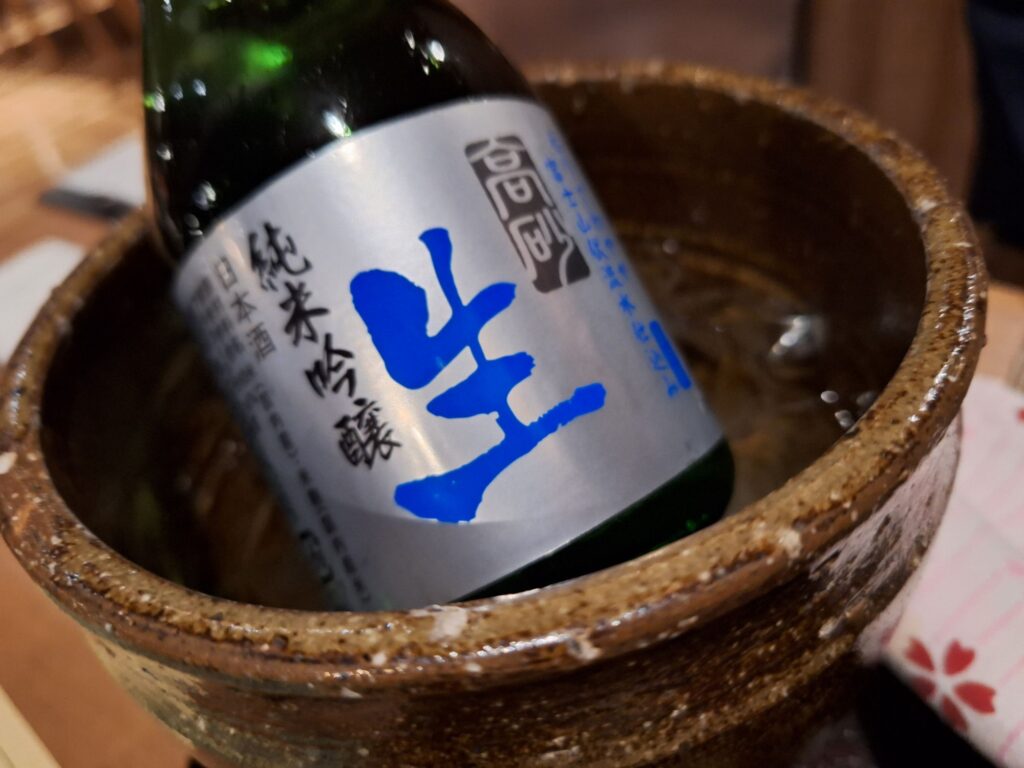
We headed down to the restaurant area for our pre-booked dinner. While both dinner and breakfast are fully included in the room rate, any alcoholic drinks are charged separately. We decided to treat ourselves and ordered some premium local Japanese sake to pair with our meal.
The kaiseki dinner is very much like a French multi-course fine dining experience. Exquisite dishes are brought out to your table one after another, encouraging you to sip, taste, and chat slowly. The entire experience was so relaxed and wonderfully paced that we happily sat and dined for over two hours. It was possibly thd best meal of my life!
9:30 PM – Deep Sleep in Cozy Beds
We had originally planned to slip back into the hot springs for one final soak before bed, but the combination of warm thermal water, incredible food, and sake had made us delightfully exhausted. We climbed into our low-slung, incredibly comfortable beds and fell into a deep, blissful sleep.
In Japan, it is highly common for locals to bathe multiple times during a stay—often returning for a late-night soak or enjoying an “Asa-buro” (morning bath) before breakfast. If you visit, I highly encourage you to embrace this slow, restorative rhythm to truly experience the magic of a Japanese ryokan.
By the way, we used Rakuten Travel to book this amazing ryokan. To see if it’s the right platform for your next trip, don’t miss our detailed review: Is Rakuten Travel Really the Cheapest Way to Book Hotels in Japan? (Our Full Review)
What to Expect Staying in a Traditional Japanese Inn (Ryokan)
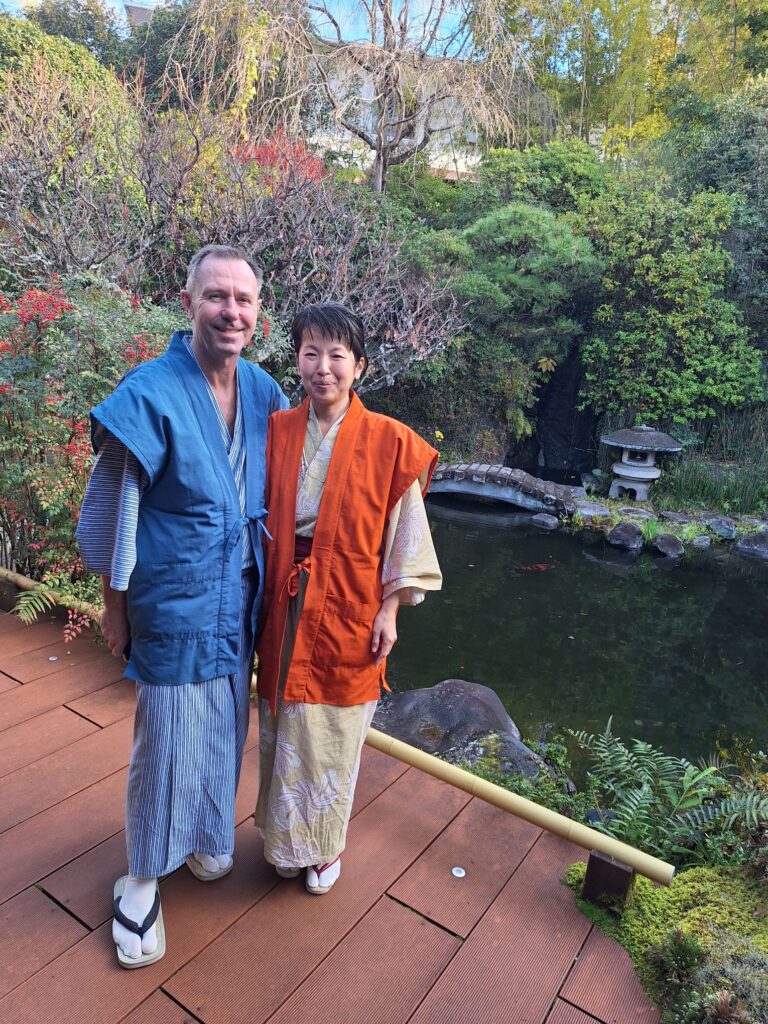
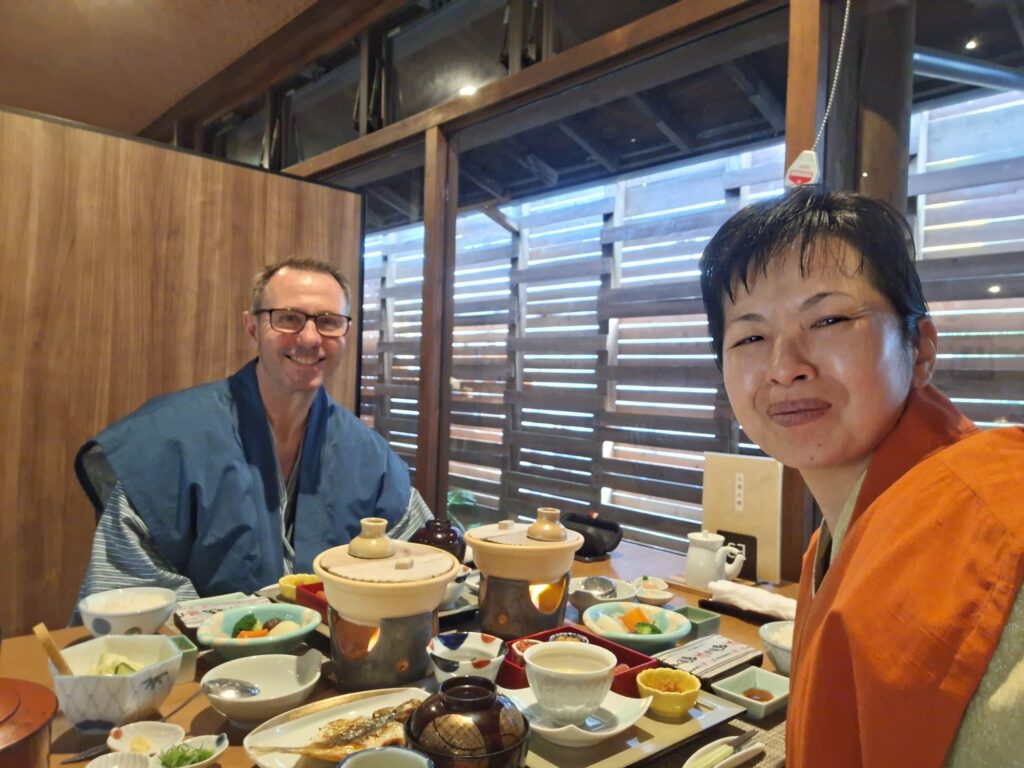
Upon checking in, one of the loveliest rituals was selecting our own yukata (casual cotton kimono) to wear around the complex. Slipping into the comfortable robes instantly sets a relaxed, holiday mood.
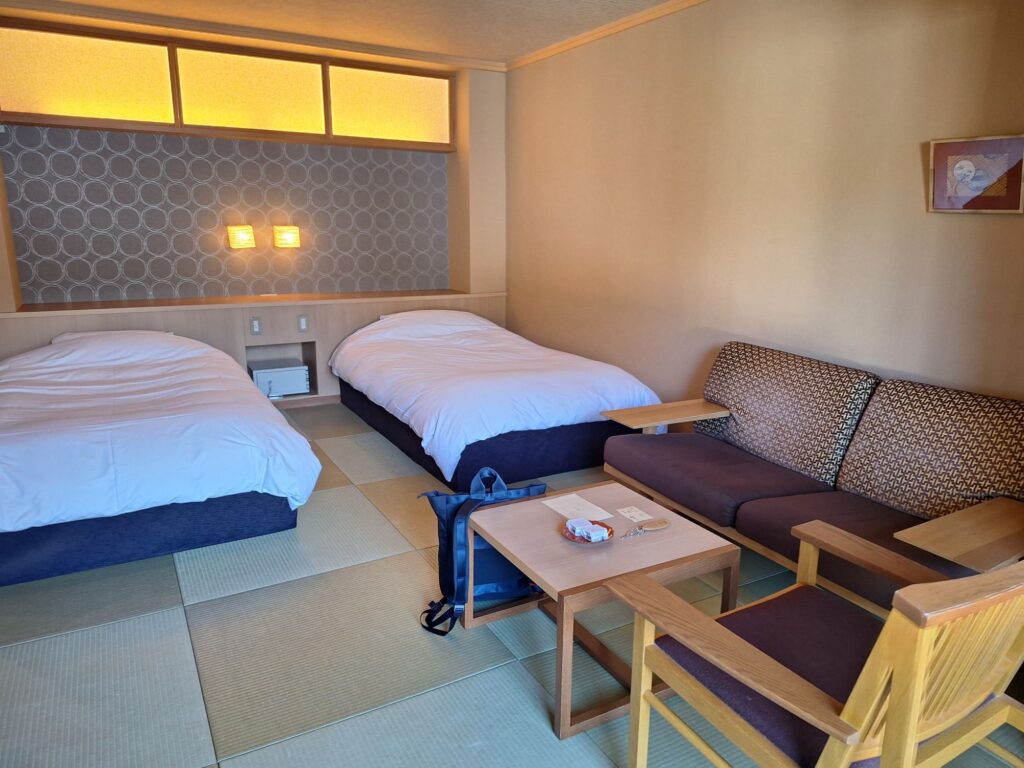
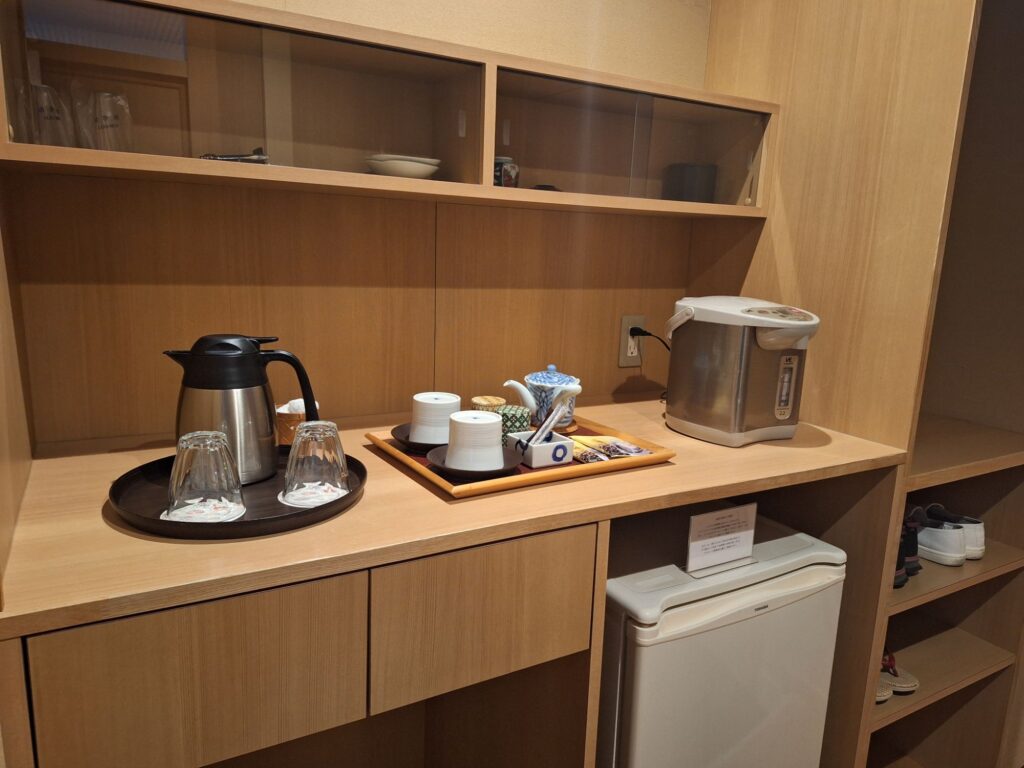
Our accommodation was a gorgeous blend of contemporary comfort and traditional Japanese aesthetics—featuring low-slung modern twin beds set against classic tatami flooring and warm wood panelling.
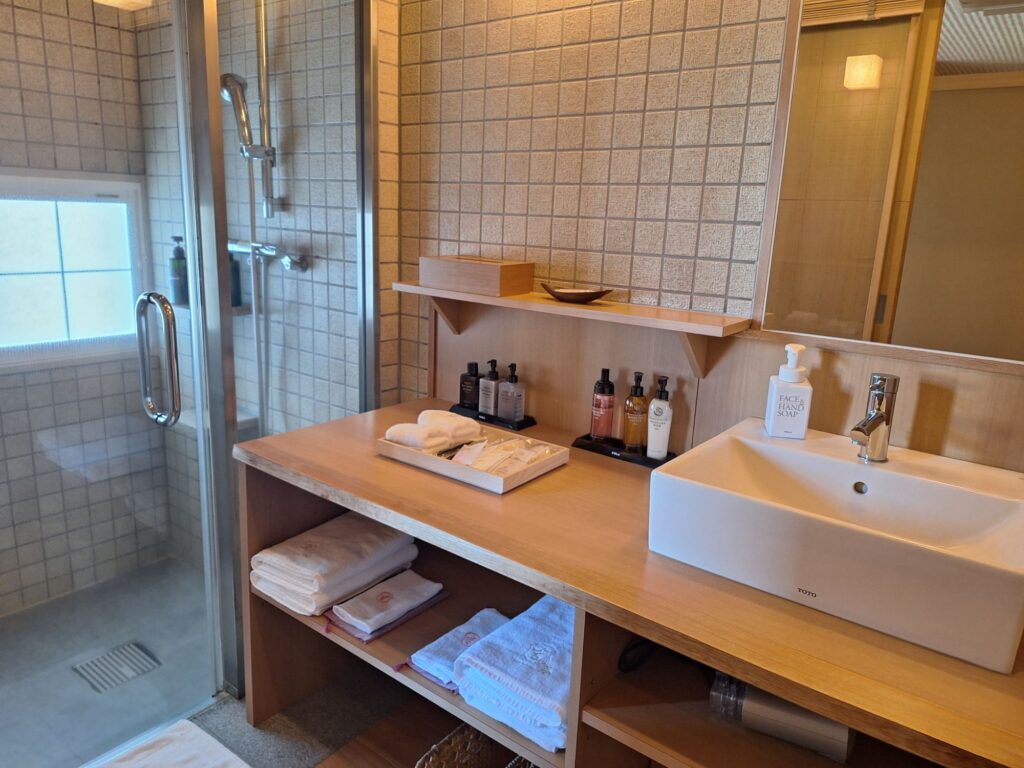
Importantly for international travellers, our room also featured a fully equipped en-suite bathroom (including a toilet, shower, and vanity washbasin), meaning you can easily enjoy a quick shower right inside your own room if you prefer.
While the ryokan provides a complimentary set of basic yukata, a matching haori (jacket), and traditional zouri shoes, they also offer a range of colourful, beautifully patterned premium yukata for rent (which only cost around 500 to 800 yen). It is a fantastic way to fully embrace the traditional styling, and the stunning wooden guestrooms and lush Japanese garden make the absolute perfect background for some memorable holiday photographs.
A Masterclass in Gastronomy: The Seasonal Kaiseki Feast
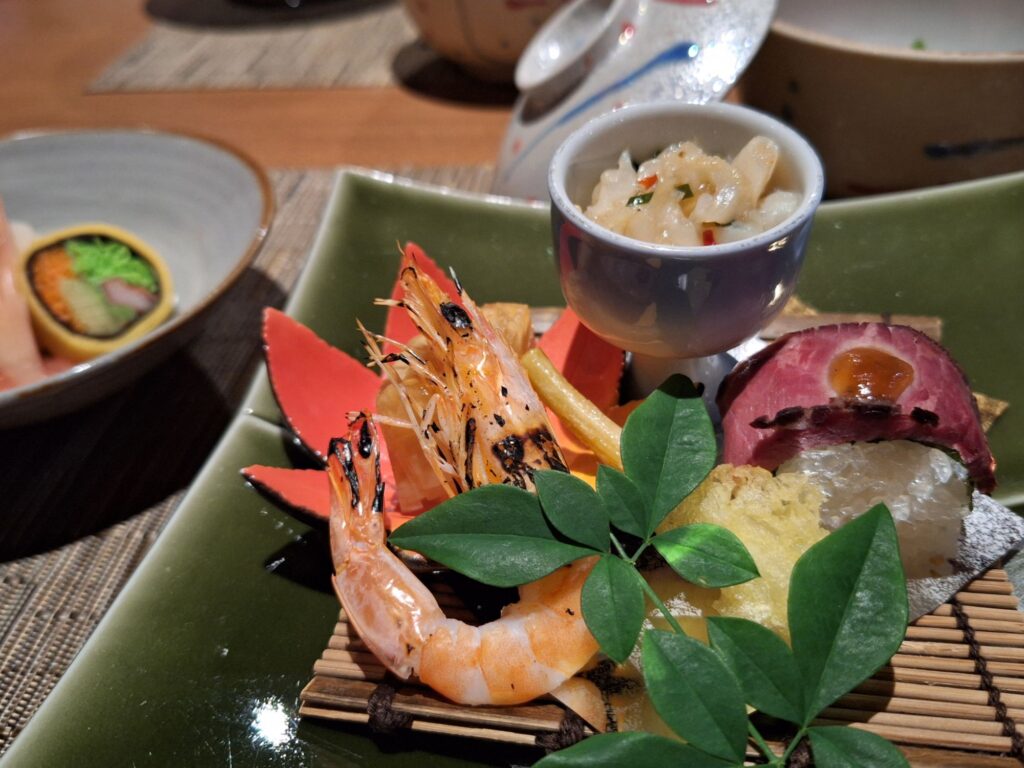
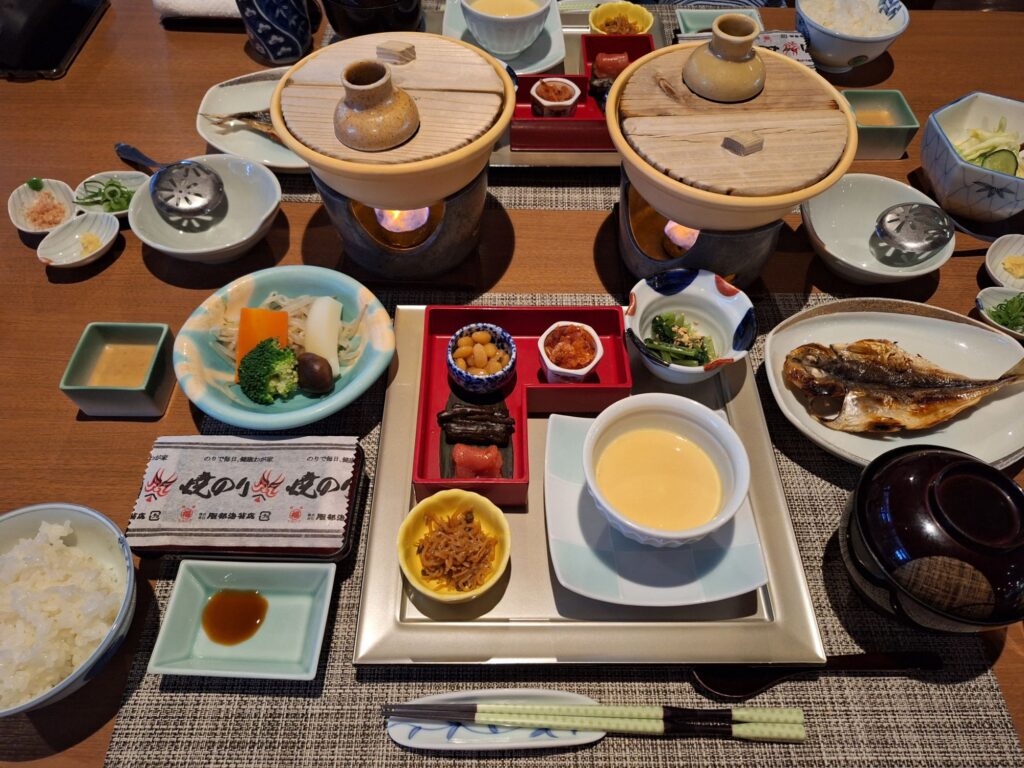
Aside from the baths, the absolute highlight of our stay was the incredible kaiseki dinner—a traditional multi-course meal that showcase local, seasonal ingredients.
We were treated to a breathtaking array of dishes, including succulent raw prawns and tuna sashimi, perfectly grilled fish, and a comforting hot pot cooked right at our table. Every single plate was presented with such artistic flair and vibrant colours that it felt almost a shame to eat it! It was a true masterclass in Japanese hospitality (omotenashi).
The indulgence continued the following morning with a beautifully curated traditional breakfast, ensuring we were well and truly fuelled for our journey home.
My Top Tips for Your First Time Onsen Trip
- Take the Scenic Route: You don’t need the Shinkansen to get there (izu-Nagaoka); taking the regular trains down towards Odawara or Mishima and transferring to the local lines is a fantastic, scenic, and budget-friendly way to travel that lets you enjoy the local countryside.
- Embrace the Ryokan Schedule: To fully enjoy the experience, arrive exactly at check-in time (usually 3:00 PM). This gives you plenty of time to sample multiple private baths before your set dinner time.
- Respect the Water: Even in a private bath, remember to wash yourself thoroughly at the sitting stations before entering the hot spring water, and never let your hand towel touch the pool.
- Book Wisely: We booked our stay at Yoshiharu through Rakuten Travel. If you want to know if it’s truly the best and cheapest option for booking accommodation in Japan, have a read of our comprehensive review: Is Rakuten Travel Really the Cheapest Way to Book Hotels in Japan? (Our Full Review)
Location & How to Find Yoshiharu
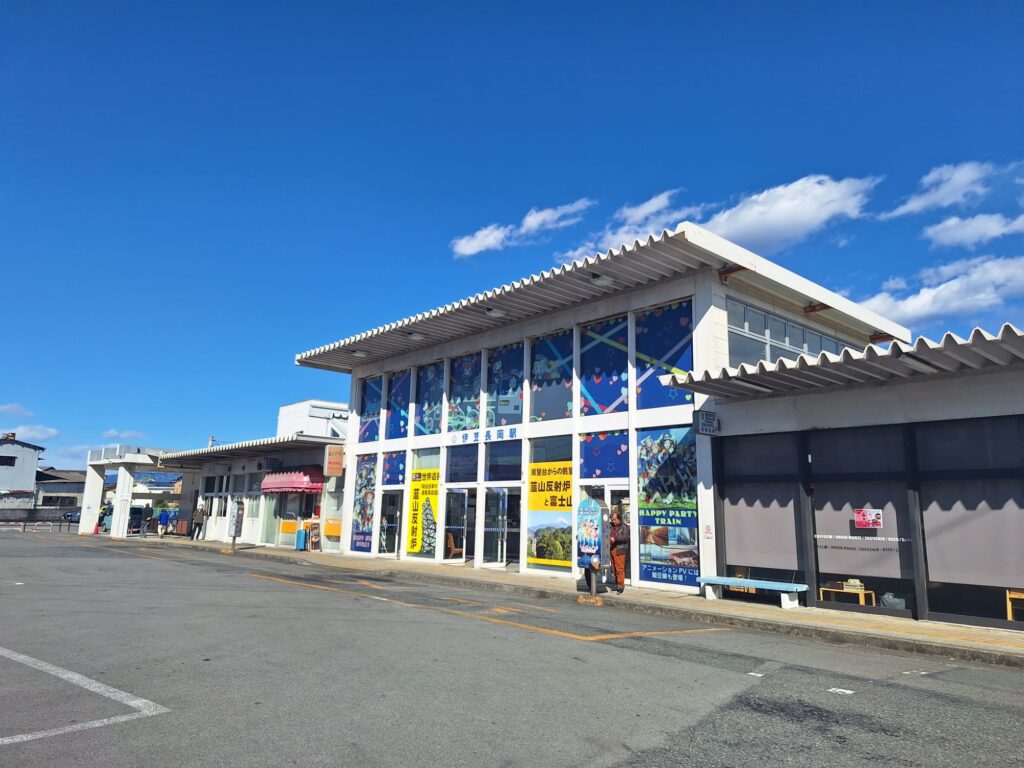
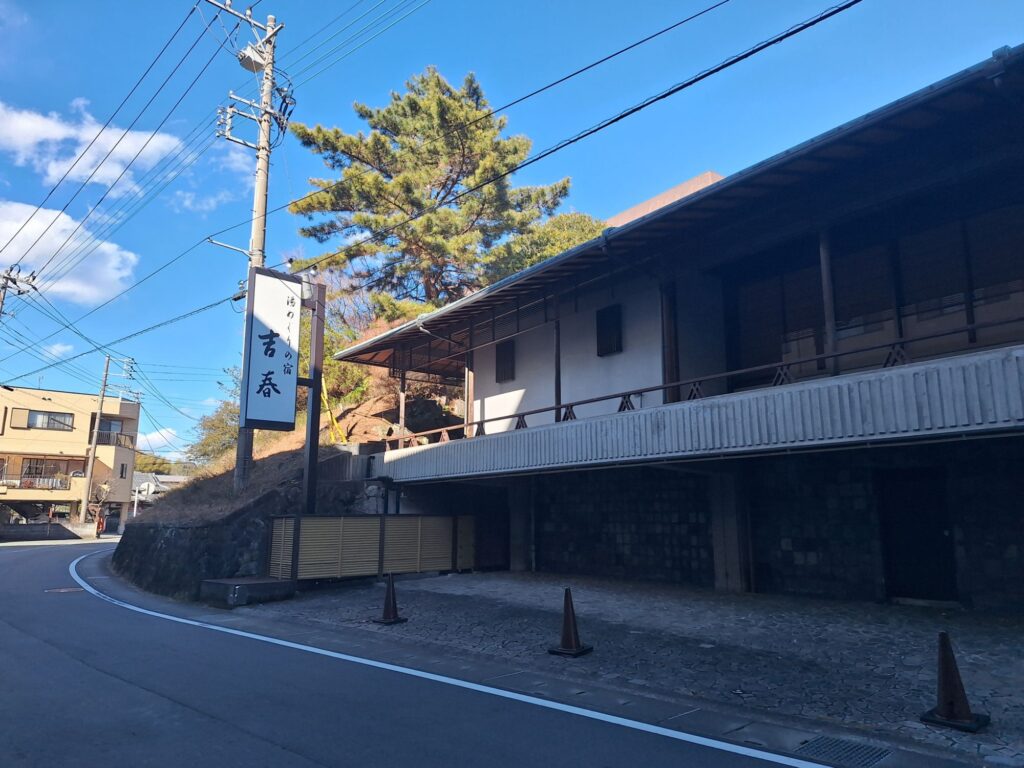
If you are ready to book your own escape, the ryokan we stayed at is Yumeguri no Yado Yoshiharu (湯めぐりの宿 吉春), located in the peaceful hot spring town of Izu-Nagaoka in Shizuoka Prefecture.
The nearest train station is Izu-Nagaoka Station (on the local Izu Hakone Railway Sunzu Line). From there, it is just a quick 10-minute taxi ride or a short local bus trip directly to the ryokan.
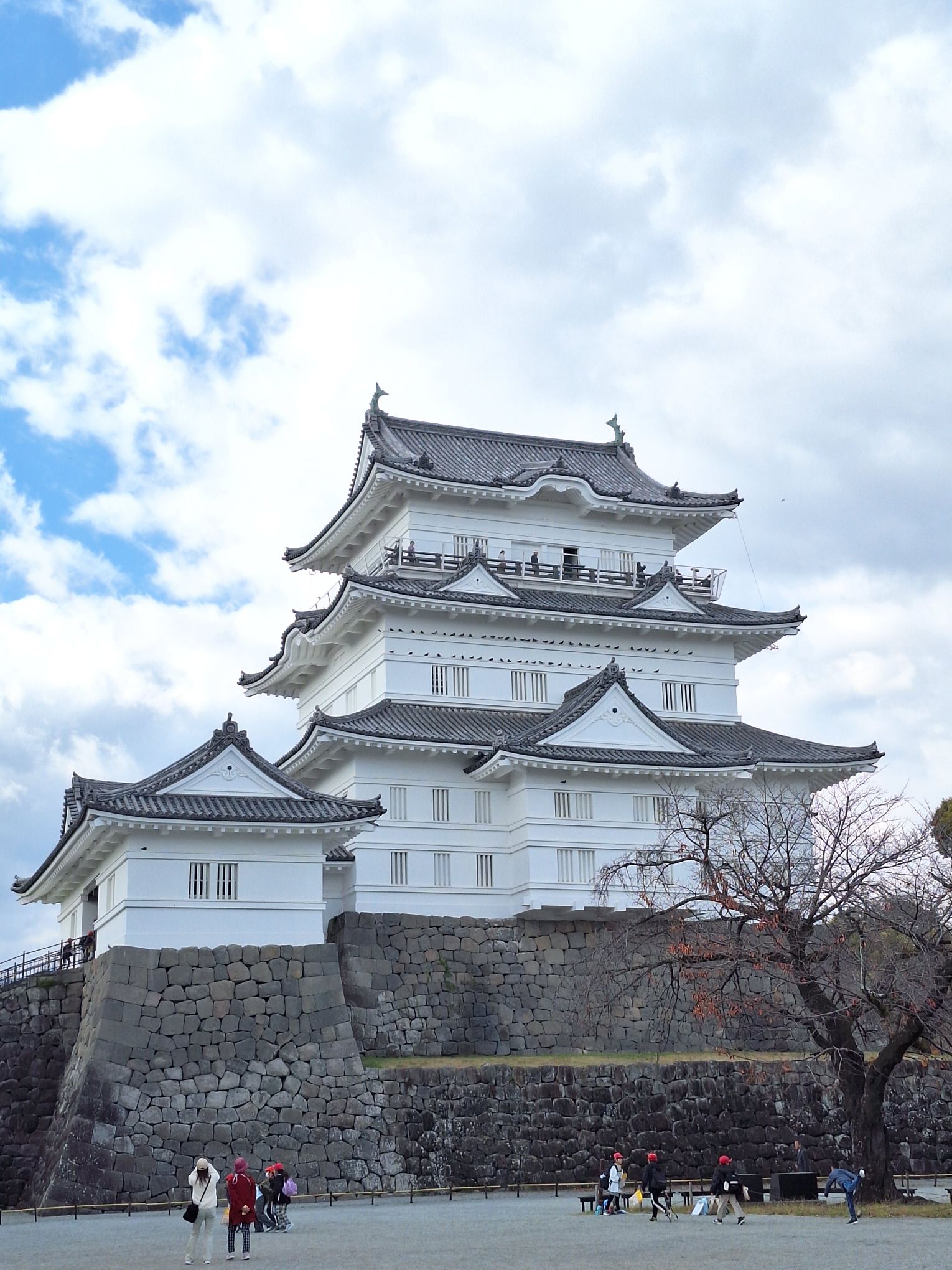
Make the Most of Your Journey: Instead of rushing straight to the ryokan, we turned our travel days into mini-adventures by taking the local Tokaido Line. You can read all about our perfect sightseeing stops here:
- On the way there: Odawara Castle Stopover: A Perfect Tokaido Line Day Trip on the Way to Izu
- On the way back: Mishima Stopover Guide: Pristine Fuji Spring Waters and Shrines on Your Way Back to Tokyo
➡ Back to Budget Travel in Japan: Smart Money-Saving Tips & Cost Guide
Comment