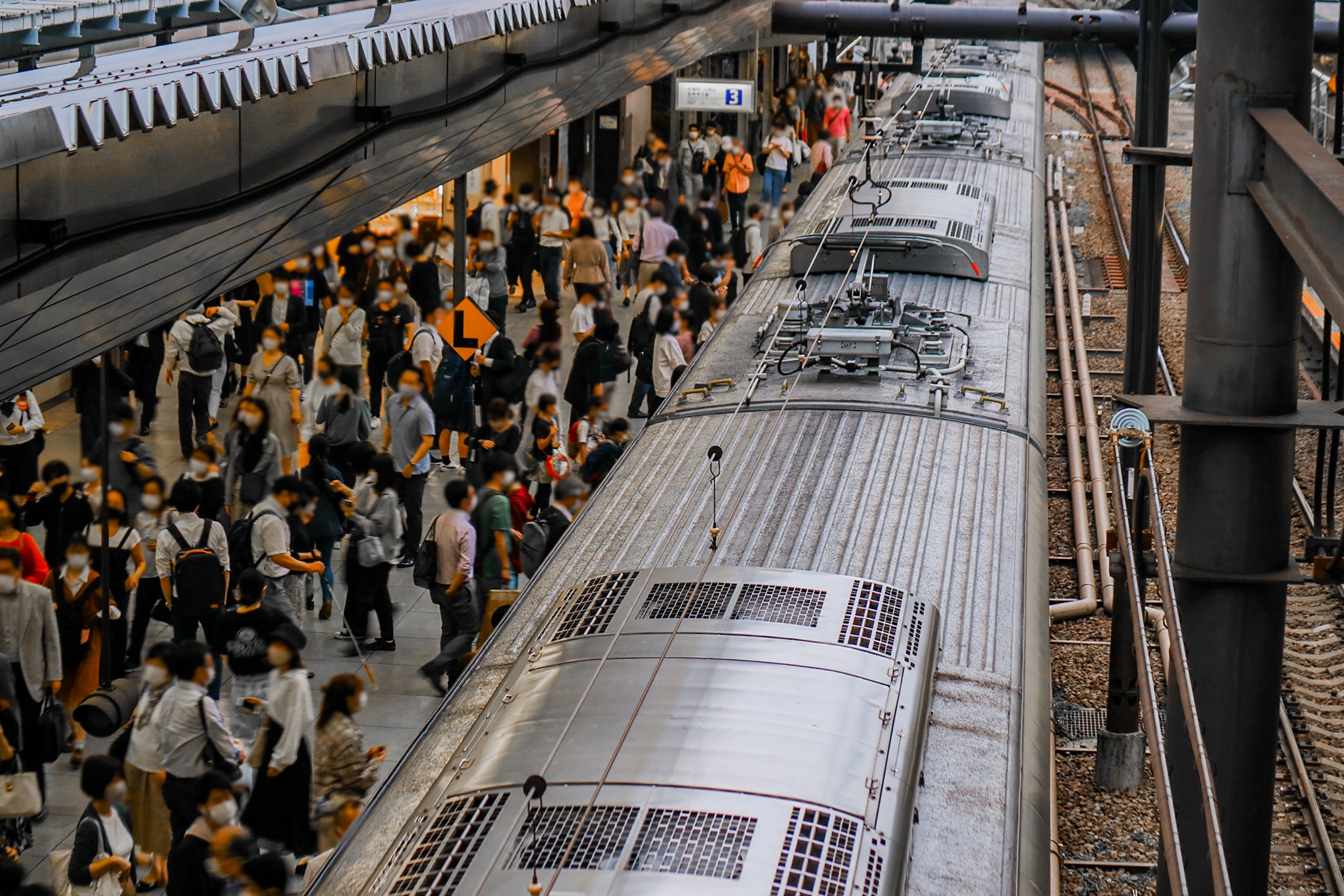
If you have ever watched videos of white-gloved station staff gently shoving passengers into impossibly packed train carriages, you already know that Japan’s rush hour is legendary. While it is a fascinating spectacle of urban efficiency, actually being trapped inside one of those carriages with a large holiday suitcase is a first-time visitor’s absolute nightmare.
To keep your holiday smooth, relaxed, and claustrophobia-free, you need to know how the locals navigate the rails. Here is my seasoned traveller’s guide to understanding the peak times, mastering train etiquette, and avoiding the dreaded commuter crush.
The Danger Zones: Exact Times to Avoid the Trains
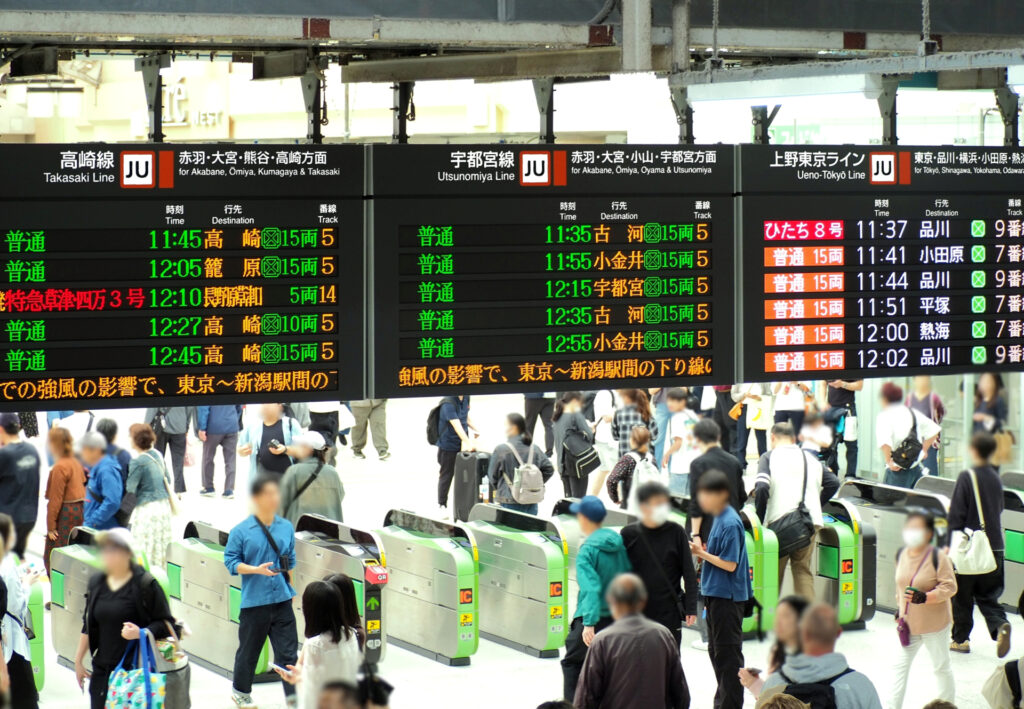
Japan’s rail networks run with military precision, which means the commuter waves are highly predictable. Crucially, this extreme crush only happens on standard weekdays (Monday to Friday).
If you want a comfortable seat (or just room to breathe), cross-reference your daily sightseeing plans to avoid these windows:
1. The Morning Crunch (Weekdays Only): 07:30 to 09:00
This is the heaviest rush of the day as millions of school children, salarymen (office workers) and all the other workers head into central business districts like Shinjuku, Shibuya, Tokyo Station, and Umeda in Osaka.
Do not look for local commuter trains during this time. Either head out exceptionally early (before 07:15) to beat the crowd to Kyoto’s temples, or enjoy a leisurely breakfast and wait until 09:30 when the stations magically clear out.
2. The Evening Flow (Weekdays Only): 17:30 to 19:30
The evening rush is slightly more staggered than the morning madness, but central hub stations become ocean-like currents of fast-moving people.
While you won’t get squished as badly as in the morning, trying to change platforms at a massive station like Shinjuku with three bags during this window is highly stressful.
Our Golden Rule: Check Japan’s Public Holidays and Book Weekend Flights, If Possible
Here is an insider secret that will save your sanity: if possible, try to book your international flights so that you land or depart on a weekend (Saturday or Sunday) or a Japanese public holiday.
Because schools and corporate offices are closed on these days, the train stations completely lose that intense, claustrophobic weekday pressure. While you will still see plenty of families and day-trippers out and about, the local commuter trains are significantly emptier. Navigating a massive station with a large suitcase is five times easier on a Sunday morning than on a Tuesday morning.
Before you finalise your travel dates, it is always worth doing a quick search for Japan’s Public Holidays (National Holidays). If your arrival day happens to coincide with a holiday or a weekend, you’ve just struck gold—you can enjoy a much more relaxed, stress-free journey straight to your hotel!
Check Google Maps Right Before You Step Out
One of the best things about travelling in Japan is that Google Maps works flawlessly across the entire rail and subway network. It is incredibly accurate, updating in real-time with precise platform numbers, train delays, and even telling you exactly which carriage door puts you closest to your next transfer stairs.
My top tip is to always do a quick route check on Google Maps just five minutes before you leave your hotel room.
Even if you looked at the route the night before, a quick morning check will show you if there is any unexpected delay or a sudden spike in commuter crowd density on that specific line. If a line looks heavily congested, Google Maps will often suggest an alternative, quieter subway route to your destination. Keep your data on, check the app right before you step out, and you will navigate the city like an absolute pro.
Travelling with Luggage: The Golden Rules
The biggest mistake first-time visitors make is attempting to transport large suitcases on local underground lines during peak hours. Not only is it physically exhausting, but it also takes up precious floor space, which can draw subtle, frosty sighs from tired commuters.
- Embrace Luggage Forwarding (Takuhaibin): I cannot stress this enough. Use services like Yamato Transport (the famous Black Cat company) to ship your heavy bags from your Tokyo hotel directly to Kyoto or Osaka. It costs around £15 per bag, and it frees you up to travel on the trains with just a light daypack.
- Avoid Commuter Trains for Airport Runs: If you land at Narita during the morning rush and take a standard local train into town, you will get stuck. Always opt for dedicated airport expresses like the Narita Express (N’EX) or Keisei Skyliner. These require a reserved seat reservation, meaning you are guaranteed your own personal space and plenty of large luggage racks away from the commuter crowd.
- The Shinkansen Oversized Baggage Rule: If you are taking the bullet train between Tokyo and Osaka and your suitcase’s total dimensions (length + width + height) exceed 160 cm, you must reserve a specific “Oversized Baggage Area” seat when booking your ticket. It doesn’t cost extra, but seats are limited!
Unwritten Train Etiquette: How to Blend In
Japanese train carriages are treated as quiet, shared sanctuaries. To ensure a smooth journey and show respect to the locals, keep these simple cultural rules in mind:
- The Golden Silence: You will notice that even a train holding a thousand people can be dead silent. Keep conversations in low, whispered tones. If you are travelling with a partner or friends, save the loud holiday debriefs for the platform.
- Phone Settings to “Manner Mode”: Switch your mobile phone to silent (called “Manner Mode” in Japan). Taking voice calls on a train is a massive social faux pas. If your phone rings, ignore it or decline the call immediately.
- Backpack Awareness: When stepping onto a busy train, take your backpack off and hold it in your hand, place it between your feet, or use the overhead luggage racks. Wearing a bulky bag on your back makes you twice as wide and unintentionally knocks into people behind you.
- Watch Out for Women-Only Cars: During the morning rush hours, certain carriages on major lines are strictly reserved for women, children, and passengers with disabilities to ensure safety. Look for the bright pink signs painted on the platform floor and windows before boarding.
Summary: Your Peak-Hour Cheat Sheet
Navigating Japan’s rail system doesn’t have to be intimidating. By scheduling your transfers between 09:30 and 16:30, utilising luggage forwarding, and mirroring the quiet, polite manners of the locals, you will find that Japan has the most civilised and incredible railway culture in the world.
➡ Back to Japan Travel & Transport Guide
Comment