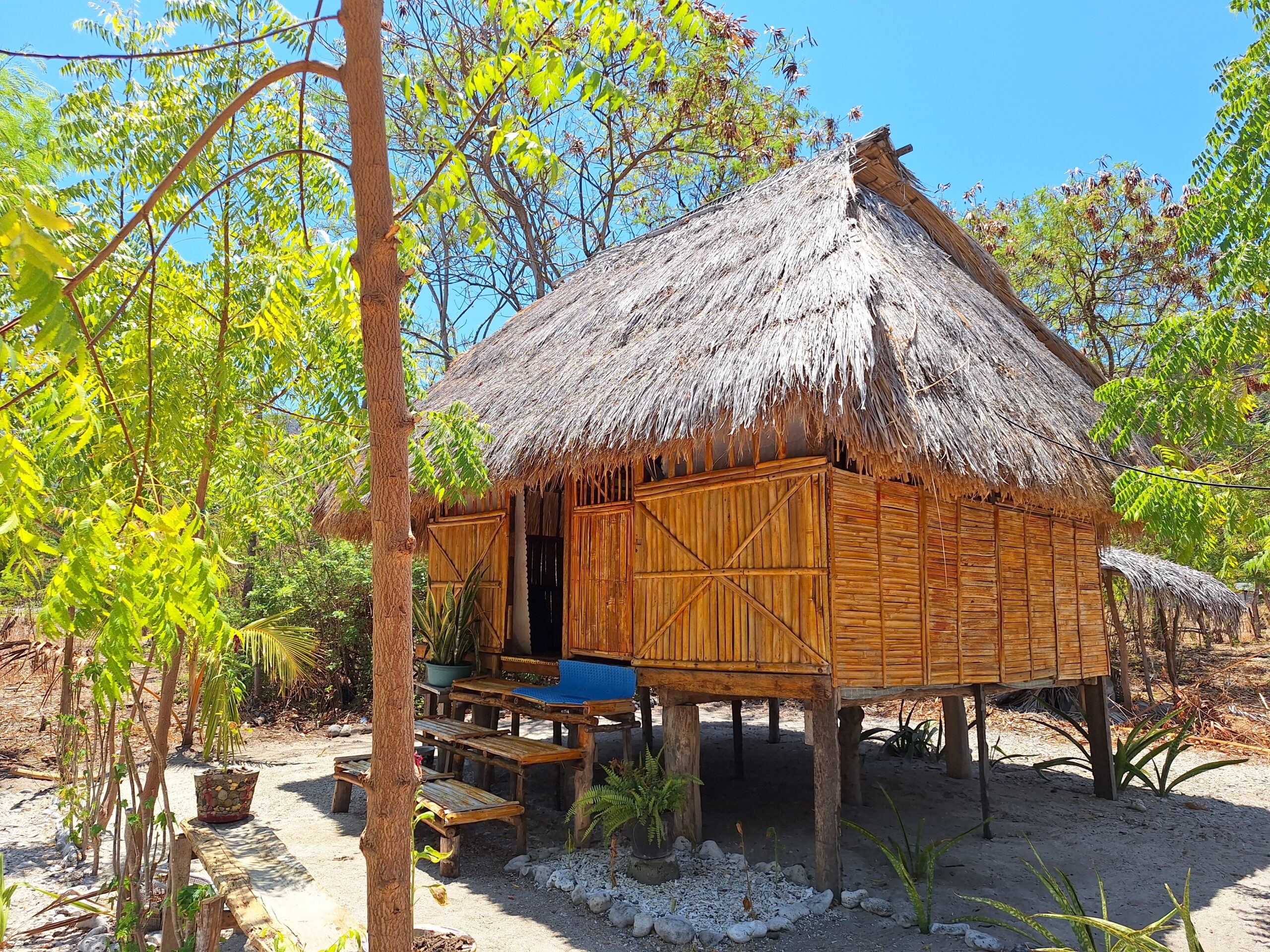
During our travels around Atauro Island in Timor-Leste, we stayed at Jhoky’s HOMESTAY in Atecru, on the island’s western side.
This is a simple homestay with basic bungalows, home-cooked meals and a beach right on the doorstep. It is not a resort with modern facilities, but it offers the chance to experience a quieter side of Atauro and spend time close to the sea.
In this review, I share our experience, including the journey from Beloi, the accommodation, food, shared bathroom facilities and the snorkelling conditions along the nearby reef. We stayed here 3 nights.
🇯🇵 この記事を日本語で読む:Jhoky’s HOMESTAY宿泊レビュー|アタウロ島Atecruの宿・食事・シュノーケリング
- Jhoky’s HOMESTAY: At a Glance
- Getting to Jhoky’s HOMESTAY from Beloi
- Simple Bungalow Rooms with Mosquito Nets
- Solar Electricity and Cool Nights
- Shared Bathroom and Bees Around the Light
- Three Meals a Day in an Open-Air Dining Area
- Free Drinking Water from a Natural Spring
- The Beach, Coral Reef and Dramatic Drop-Off
- Snorkelling Tips: Low Tide, Waves and Reef Access
- A Protected Area Along the Beach
- Who Would Enjoy Staying at Jhoky’s HOMESTAY?
- Final Thoughts: A Simple Stay Close to Nature in Atecru
Jhoky’s HOMESTAY: At a Glance
- Name: Jhoky’s HOMESTAY
- Location: Atecru, Atauro Island, Timor-Leste
- Price: US$35 per person per night
- Meals: Breakfast, lunch and dinner included
- Accommodation: Two simple bungalow rooms
- Bathroom: Shared
- Electricity: Solar power
- Drinking water: Free spring water
These details reflect our stay. Check directly with the homestay for current prices, availability and arrangements.
Getting to Jhoky’s HOMESTAY from Beloi
Atecru is a considerable distance from Beloi, on the eastern side of Atauro Island. We understood that walking between the two areas would take around three hours, so we arranged transport by pick-up truck instead.
Even by vehicle, the journey took about an hour. The rough, uneven road made for a bumpy ride as we travelled across the island.
Our pick-up truck cost US$60. It was not the most comfortable journey, but it gave us a sense of how remote this part of Atauro is.
If you are planning to stay in Atecru, it is worth arranging transport in advance with your accommodation. The journey time and transport cost are important factors to include in your plans.
Simple Bungalow Rooms with Mosquito Nets
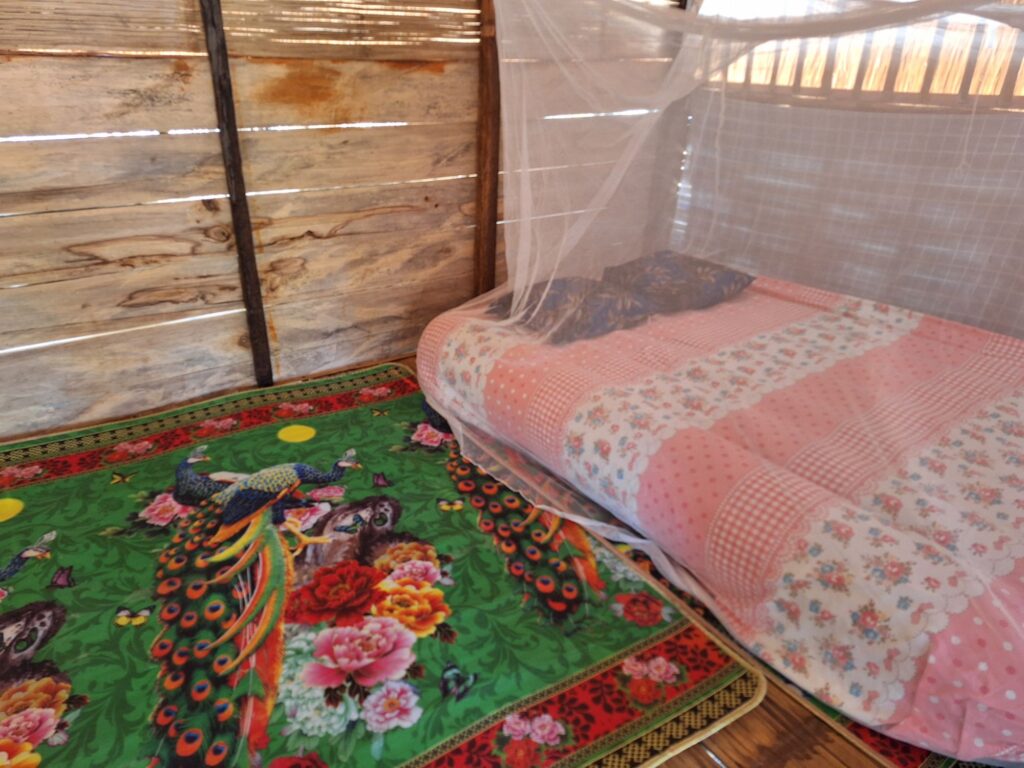
Jhoky’s HOMESTAY has two basic bungalow rooms. The accommodation is simple, with the essentials needed for a stay close to nature.
Our bed had a mosquito net, and there was a fan in the room. The mattress seemed to be an air-bed type, but I found it reasonably comfortable and slept well enough.
One detail worth knowing is the locking system. Rather than a conventional door lock, the door was secured using a padlock that guests fitted themselves.
Do not expect luxury or hotel-style facilities here. The appeal is the simple accommodation and the chance to stay in a more remote part of the island.
Solar Electricity and Cool Nights
Electricity comes from solar power. During our stay, it was generally available from the morning until around midnight.
The sea breeze made a real difference at night. Once the electricity switched off and the fan stopped, I expected the room to become uncomfortable. Instead, the air remained cool, and by early morning it was almost chilly.
There is no air conditioning, but we did not find the nights particularly hot. The breeze from the beach helped keep the room comfortable.
As electricity depends on solar power, availability may vary. It is sensible to charge phones, cameras and other equipment while power is available.
Shared Bathroom and Bees Around the Light
The bathroom and mandi, the traditional washing area, are shared.
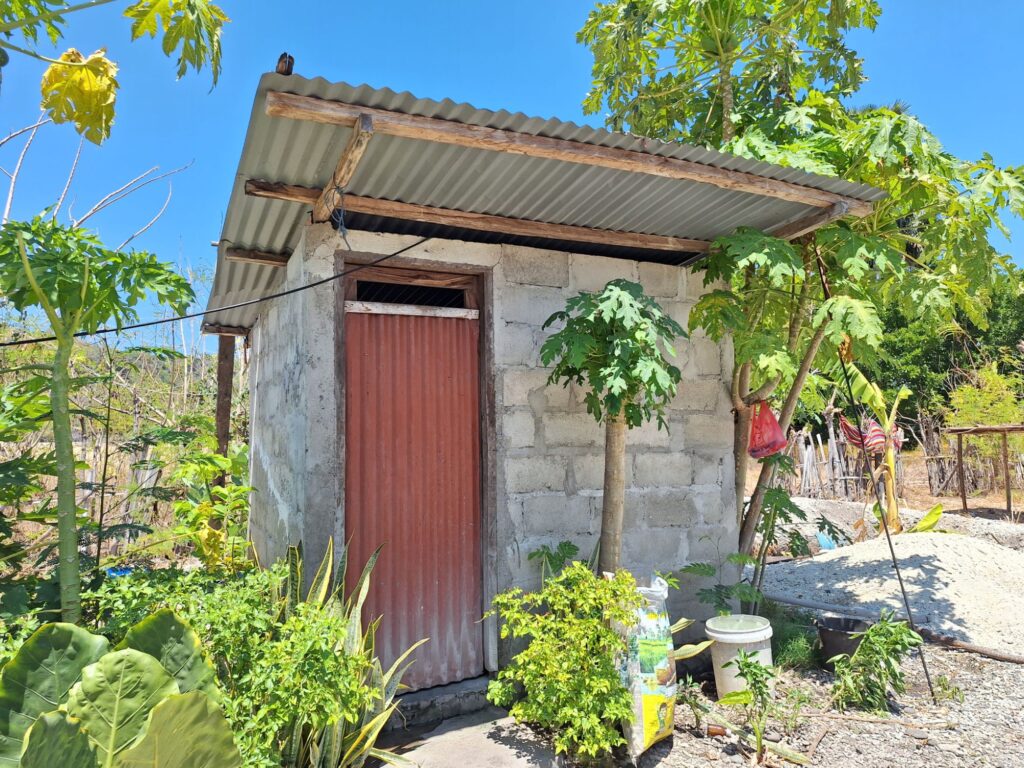
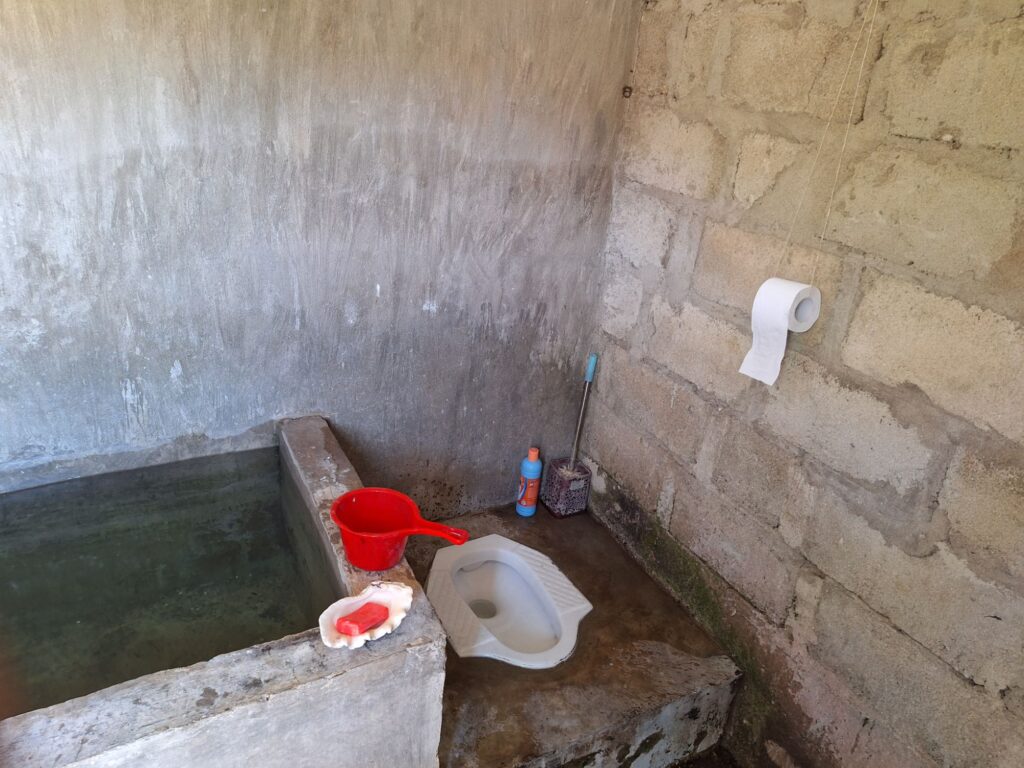
Water is supplied from a natural spring, so the washing water was not salty despite the homestay’s coastal location. That was a welcome detail.
One thing I found less comfortable was the number of bees gathering around the bare light bulb at night. We were told that during the dry season, they may come looking for water after dark.
We did not experience any harm from them, but having so many bees around the light was not particularly relaxing when using the bathroom.
Three Meals a Day in an Open-Air Dining Area
Our rate was US$35 per person per night, including three meals a day.
Meals were served buffet-style in an open dining area, where we could help ourselves.
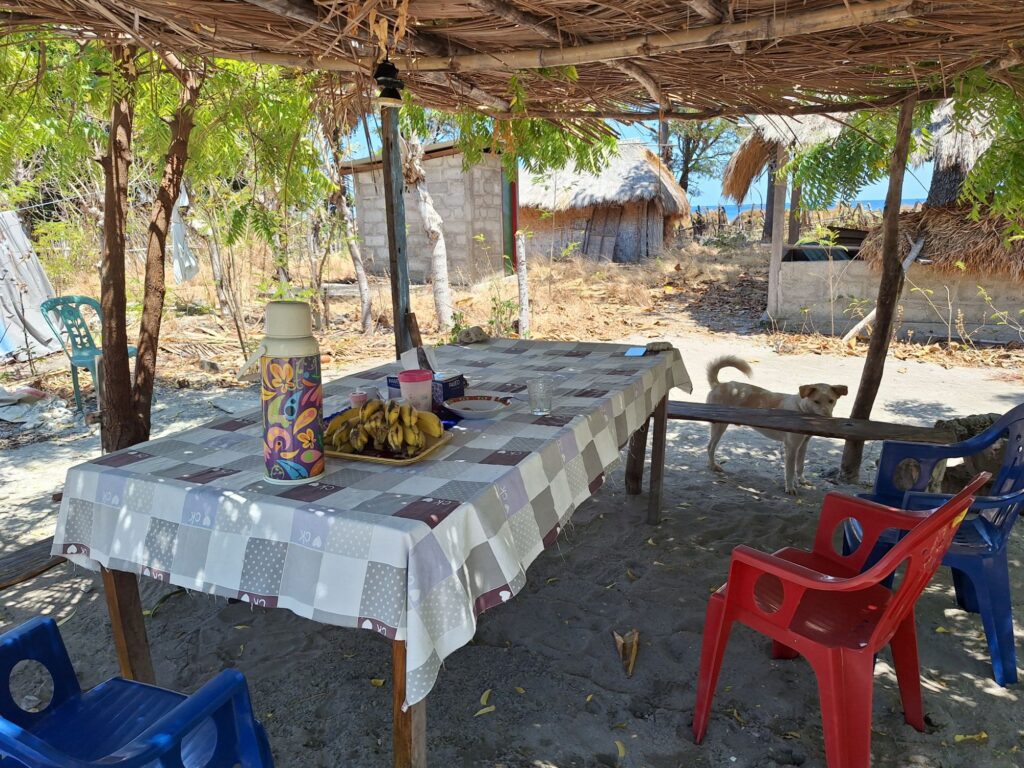
Breakfast included homemade bread. Lunch and dinner were based mainly on fish, vegetables, eggs and rice, with fruit also available.
The food was simple and suited to the setting. Rather than restaurant-style dining, it felt like everyday home cooking on the island.
As there are not many dining options immediately available in a remote area like this, having breakfast, lunch and dinner included was convenient. It also meant we did not need to arrange separate meals during our stay. The food was tasty and abundant.
Free Drinking Water from a Natural Spring
One particularly welcome feature was the drinking water. Jhoky’s HOMESTAY uses water drawn from a natural spring, and drinking water was available free of charge.
I found the water refreshing and enjoyed being able to refill without having to arrange bottled water for every drink.
However, we did not verify whether the water had been tested, so travellers who are concerned about water safety should ask the hosts about its treatment and suitability for drinking.
The Beach, Coral Reef and Dramatic Drop-Off
For me, one of the main attractions of staying at Jhoky’s HOMESTAY was the sea just in front of the accommodation.
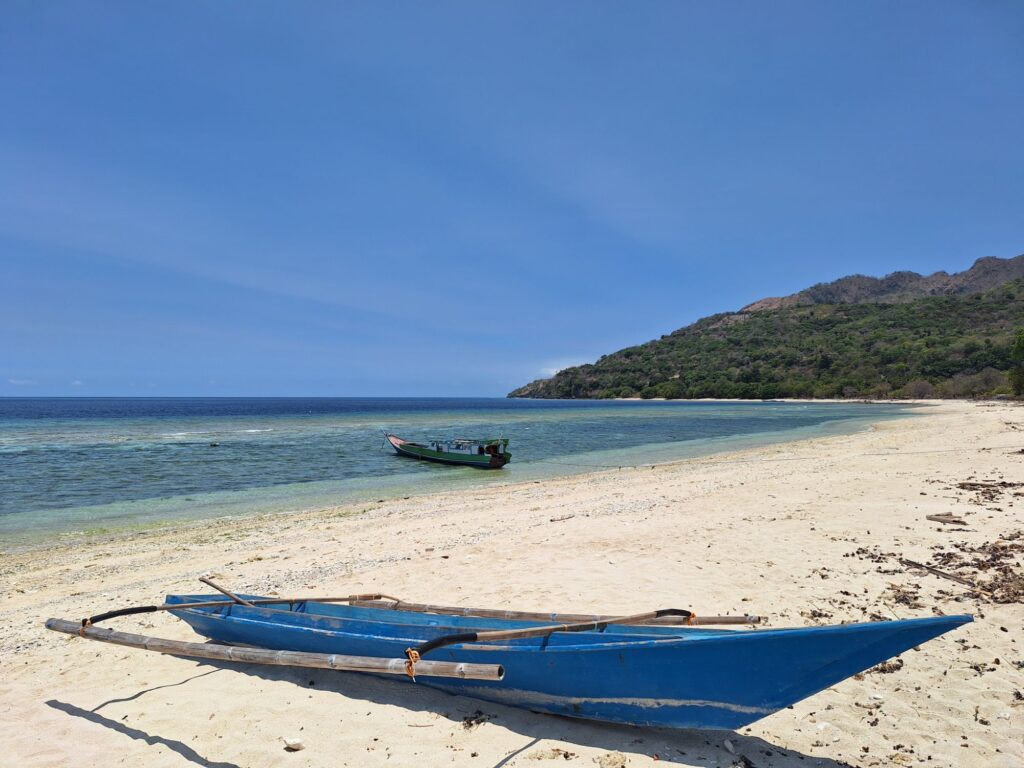
The beach has white sand, although there are also fragments of dead coral. Entering the water, we found a shallow area covered in seagrass, where small corals and starfish could be seen. Beyond this were rocky sections, followed by the reef farther offshore.
Past the reef, the seabed drops away dramatically, almost vertically. This steep drop-off creates an impressive underwater landscape, with a striking transition from the shallow coastal area to deeper water.
There were plenty of fish, including some impressively large specimens. One of the highlights was seeing bumphead parrotfish.
The reef was not uniformly pristine. We saw healthy sections of coral as well as areas showing signs of damage. Even so, the combination of the underwater terrain and the variety of fish made the area memorable.
Snorkelling Tips: Low Tide, Waves and Reef Access
The water inside the bay was often relatively calm, without particularly strong currents. However, conditions can change, and calm water should not be taken as a guarantee of safety.
At low tide, the reef becomes very shallow, making entry difficult. Although it is possible to walk towards the reef, some sections are rocky and may contain exposed or fragile coral. I recommend wearing reef shoes or suitable water shoes to protect your feet.
The wind also tended to pick up in the afternoon, sometimes creating larger waves. Conditions therefore depend on the time of day, the tide and the weather.
Check the sea before entering, and avoid forcing your way across shallow reef. Never stand on or handle living coral. If the waves or currents look unsafe, it is better to stay out of the water.
A Protected Area Along the Beach
Looking out to sea, there is a protected area to the right-hand side. We were told that a fee applies to use this area.
If you plan to visit, check the current fee, access arrangements and any local rules with the hosts or people responsible for the area.
Coral reefs are fragile environments, so take care not to touch or stand on coral, and leave marine life where you find it.
➡ Atauro Island Snorkelling Guide: Beloi, Atecru, Adara & Vila
➡ Atauro Island Travel Guide | Things to Do in Beloi, Vila, Atecru & Adara
Who Would Enjoy Staying at Jhoky’s HOMESTAY?
Jhoky’s HOMESTAY is best suited to travellers who value nature and a simple island experience more than modern comforts.
It may be a good choice if you:
- Are comfortable staying in a basic bungalow.
- Prefer accommodation with meals included.
- Enjoy exploring coral reefs and dramatic underwater landscapes.
- Want to snorkel in an area with plenty of fish.
- Would like to experience the quieter western side of Atauro Island.
On the other hand, travellers who require air conditioning, a private bathroom, continuous electricity or easy access may want to check the facilities and transport arrangements carefully before booking.
Final Thoughts: A Simple Stay Close to Nature in Atecru

Our stay at Jhoky’s HOMESTAY gave us a chance to experience a more remote part of Atauro Island. The accommodation was basic, the food was home-style, and the free spring water was a welcome convenience. Jhoky is a really great person and his wife Lydia cooks very tasty food!
Getting there involved a bumpy one-hour drive from the Beloi side of the island, and there were a few drawbacks, including the shared bathroom, bees around the light at night and early-morning music from the village.
However, the sea was the real highlight. The shallow seagrass area, reef and dramatic drop-off created an impressive coastal landscape, while the variety of fish, including bumphead parrotfish, made the experience memorable.
If you are visiting Atauro Island and want to spend time close to nature rather than in a fully equipped resort, Jhoky’s HOMESTAY is worth considering as a base in Atecru.
➡ Dili to Atauro Island by Ferry: Timetable, Ticket Prices and Our Travel Experience

Comment