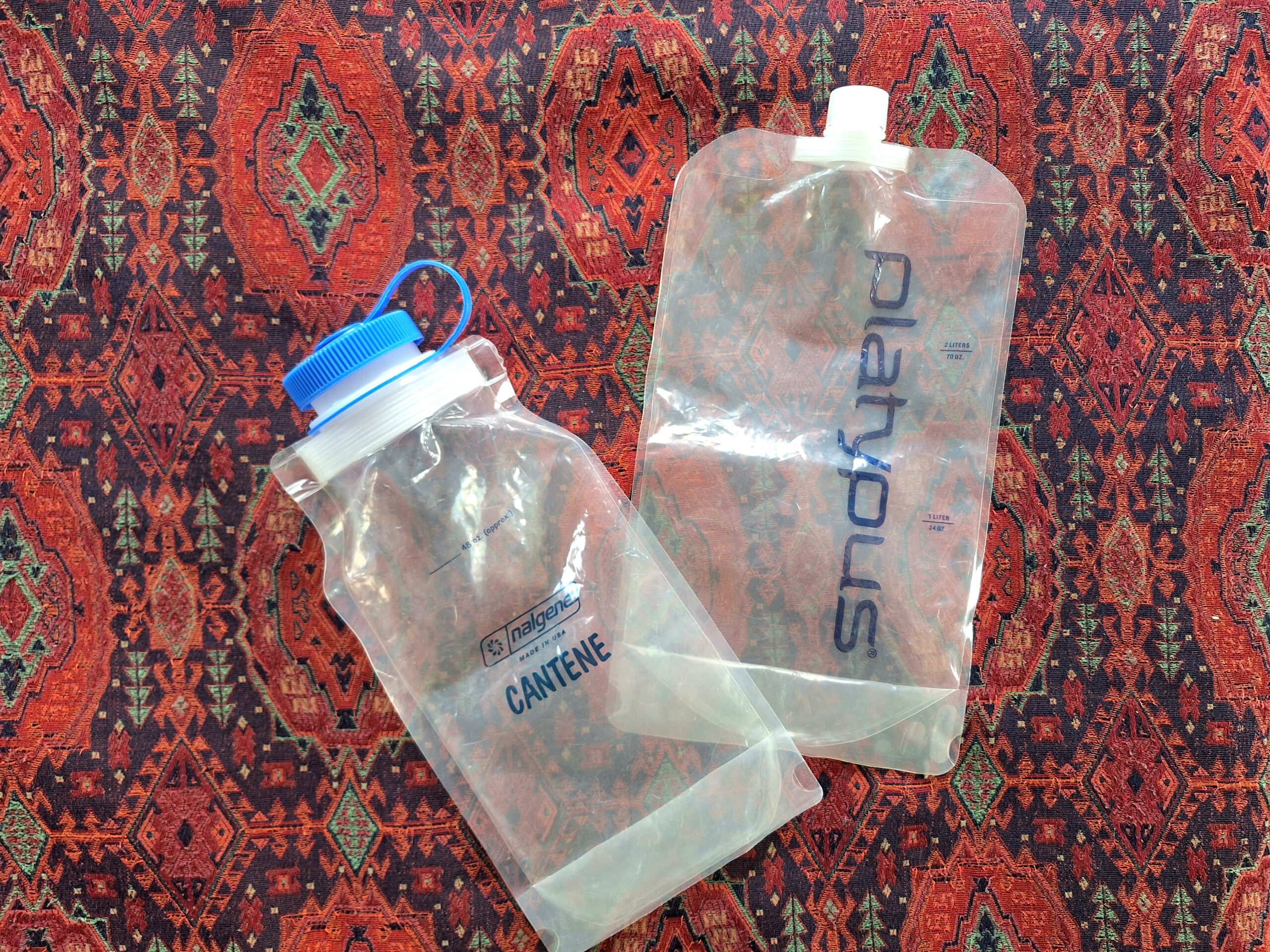
”Pack light,” they said. It sounds easy until you’re staring at a mountain of gear, wondering how to fit a water bottle into a backpack that’s already at bursting point.
For years, Mai and I have ditched rigid bottles in favour of foldable water bags. They’re brilliant for saving space, but they aren’t without their dramas. We’ve tested the two big names—the Nalgene Cantene and the Platypus SoftBottle—and we’ve learned our lessons the hard way.
From wearing my water instead of drinking it on a bumpy bus to a mysterious “disappearing cap” incident at a hotel, we’ve had enough mishaps to know which one actually works in the real world.
If you’re looking to lighten your load without drenching your luggage, here is our honest take on the ultimate travel water bag—and why we finally chose a winner.
🇯🇵 この記事を日本語で読む: 【実録】旅のトラブルから学んだ、ウォーターバッグの究極の選び方
- Why a Foldable Water Bag is a Game-Changer for Travellers
- Head-to-Head: Nalgene Cantene vs. Platypus SoftBottle
- Real-World Lessons: 3 Travel Mishaps That Changed My Perspective
- The Verdict: Why We Ultimately Recommend the Small-Mouth Version
- Which One Should You Choose? (Pros vs. Cons)
- Final Thoughts: Choosing Your Perfect Travel Companion
Why a Foldable Water Bag is a Game-Changer for Travellers
If you’re still lugging around a clunky, rigid plastic bottle that takes up half your backpack even when it’s empty, you might want to rethink your strategy. For us, switching to foldable bags wasn’t just about saving a bit of weight—it helped change how we pack.
Save Your Space: From Full-Size to Palm-Size in Seconds
The real magic of a water bag is its ability to perform a disappearing act. When it’s full, it stands upright and does its job perfectly. But the moment you take that last sip, it becomes practically two-dimensional.
You can roll it, fold it, or flatten it until it’s not much thicker than a postcard. There is a certain smug satisfaction in tucking your entire water supply into a tiny side pocket while everyone else is struggling to zip their overstuffed luggage shut.
Every Gram Counts: The Lightest Way to Stay Hydrated
In the world of long-term travelling, weight is the enemy. Every extra gram feels like a personal insult to your shoulders after a few hours of navigating airports or hiking to a remote beach.
These bags are so ridiculously light—often weighing less than 40 grams—that I’ve occasionally thought that I’d lost mine. While a fancy stainless steel bottle might look nice, carrying that extra half-kilogram across Southeast Asia is about as appealing as lukewarm tea. We’d much rather save that weight for things that actually matter.
Head-to-Head: Nalgene Cantene vs. Platypus SoftBottle
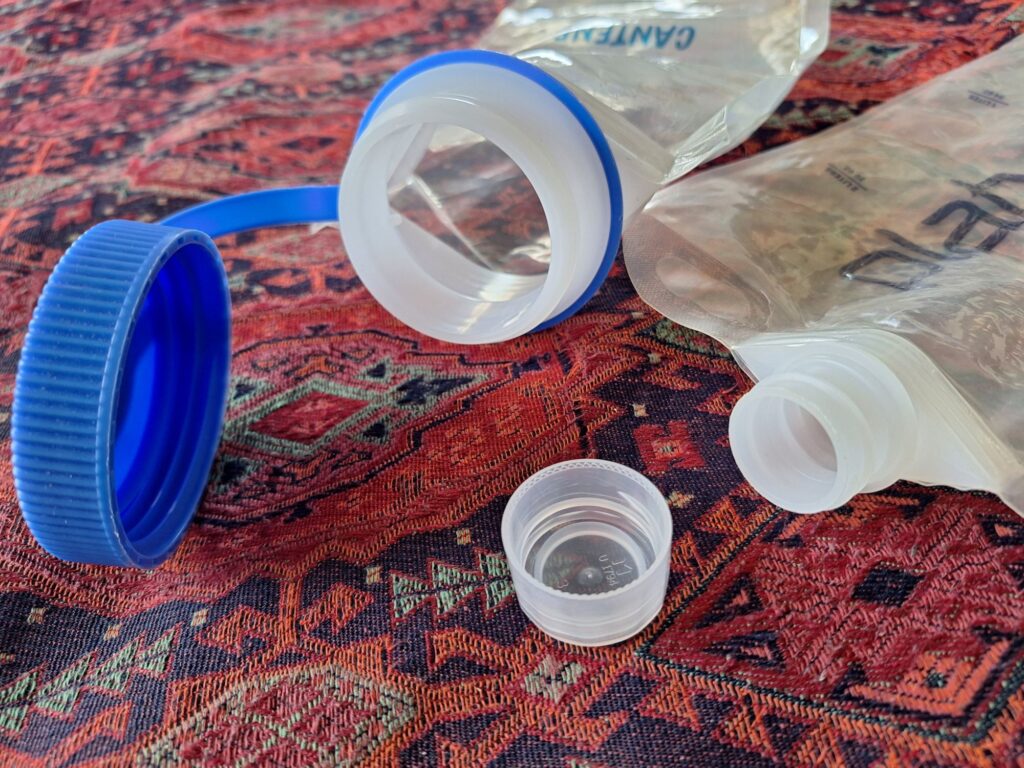
We’ve spent enough time with these two to know they have very distinct personalities. It’s a bit like choosing between a reliable tractor and a sleek racing bike—both have their place, but you wouldn’t want to enter a grand prix on a tractor.
Nalgene (Wide-Mouth): Easy to Clean, Easy to Fill
The Nalgene is the sturdy workhorse of the pair. Its main selling point is that massive opening you see in the photos.
- The Good: You can fit actual ice cubes in there without a fight. Because of the wide mouth, it’s much easier to clean and dries out far more quickly than its competitors. If you’re the type of person who likes to mix electrolyte powders or keep things ultra-hygienic, this is your bag.
- The Bad: Drinking from it while in motion is a high-stakes gamble. The opening is so wide that unless you have the steady hands of a surgeon, you’ll likely end up wearing half your water the moment you hit a bump on the road, train or plane.
Platypus (Small-Mouth): The King of Lightweight Portability
On the other hand, we have the Platypus. It’s slim, elegant, and weighs next to nothing.
- The Good: The narrow mouth means you can drink safely while walking, riding in a van, or navigating a busy street. It feels much more like drinking from a standard water bottle. It’s also incredibly flexible, allowing you to squeeze it into the tightest gaps in your backpack.
- The Bad: Cleaning is a bit more of a chore. You can’t exactly get a sponge in there, so you’ll need to rinse it thoroughly or use a dedicated bottle brush. It also takes a bit longer to air-dry completely.
Both bags are excellent bits of kit, but as we quickly found out, a small difference in the size of the cap can lead to some very different experiences on the road.
Real-World Lessons: 3 Travel Mishaps That Changed My Perspective
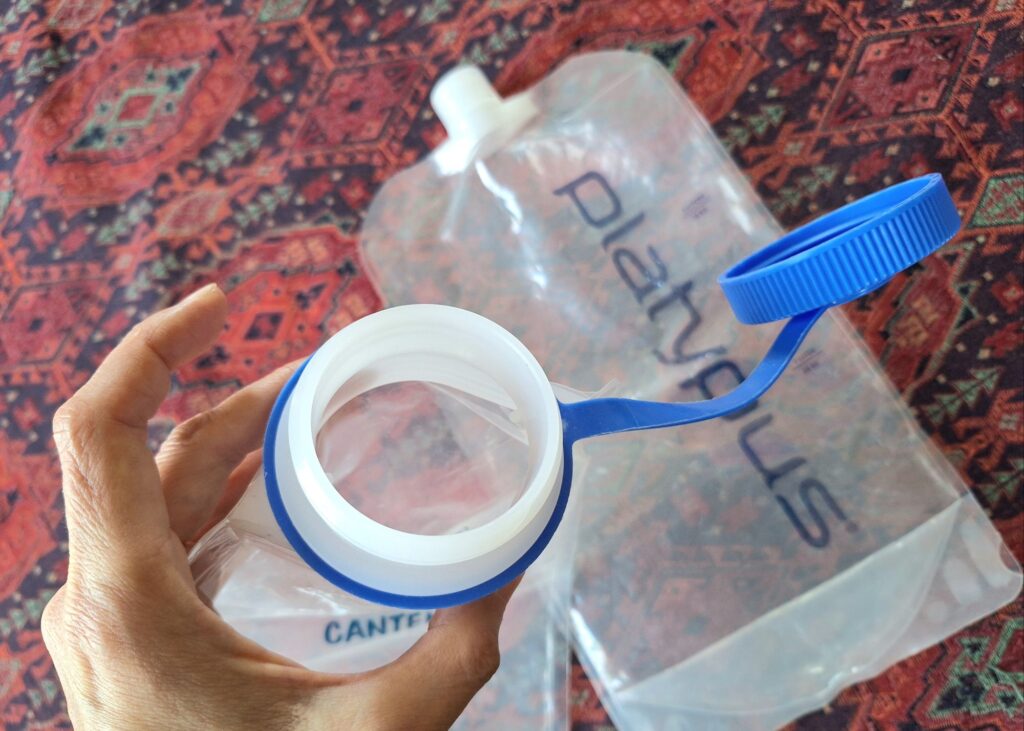
They say experience is the best teacher, but in our case, experience usually involved being covered in water or searching the floor of a hotel room on our hands and knees. Here are three times our water bags decided to teach us a lesson.
The Wide-Mouth Trap: Spills on Bumpy Roads
I once made the mistake of trying to take a refreshing gulp from the Nalgene while we were navigating a particularly potholed road in a local bus. Just as I tilted the bottle back, we hit a bump that felt like a minor earthquake.
Because the mouth is so wide, I didn’t just take a sip; I essentially performed a low-budget waterboarding on myself. I spent the next two hours of the journey looking like I’d just survived a monsoon, while the local passengers looked on with a mix of pity and confusion. The lesson? Wide mouths and moving vehicles are a recipe for a very damp shirt.
The Housekeeping Mystery: When My Cap Was Mistaken for Trash
While staying at a friend’s hotel, we left our Platypus cap on the desk to dry. When we returned, the cap had vanished.
It turns out the housekeeping staff, in their admirable efficiency, saw a tiny, clear piece of plastic and assumed it was rubbish from a disposable bottle. Since a water bag without a cap is about as useful as a chocolate teapot, we spent the rest of the trip frantically guarding our spare parts. If you choose the small-mouth life, treat that cap like a family heirloom—because once it’s gone, you’re carrying a very expensive plastic bag.
Punctured on the Boat: When Snorkelling Gear Met Plastic
We spend a lot of time on boats for snorkelling, which usually involves a chaotic pile of fins, masks, and heavy weight belts. During one particularly choppy ride, our water bag was sitting at the bottom of the pile, minding its own business.
Unfortunately, a sharp edge metal decided to get a bit too friendly with the plastic. We discovered a mysterious puddle at the bottom of our backpack later that afternoon—a classic “slow leak” situation. While these bags are tough, they aren’t exactly armoured. We’ve since learned that letting your water bag snuggle up to sharp objects is a one-way ticket to a soggy bag.
The Verdict: Why We Ultimately Recommend the Small-Mouth Version
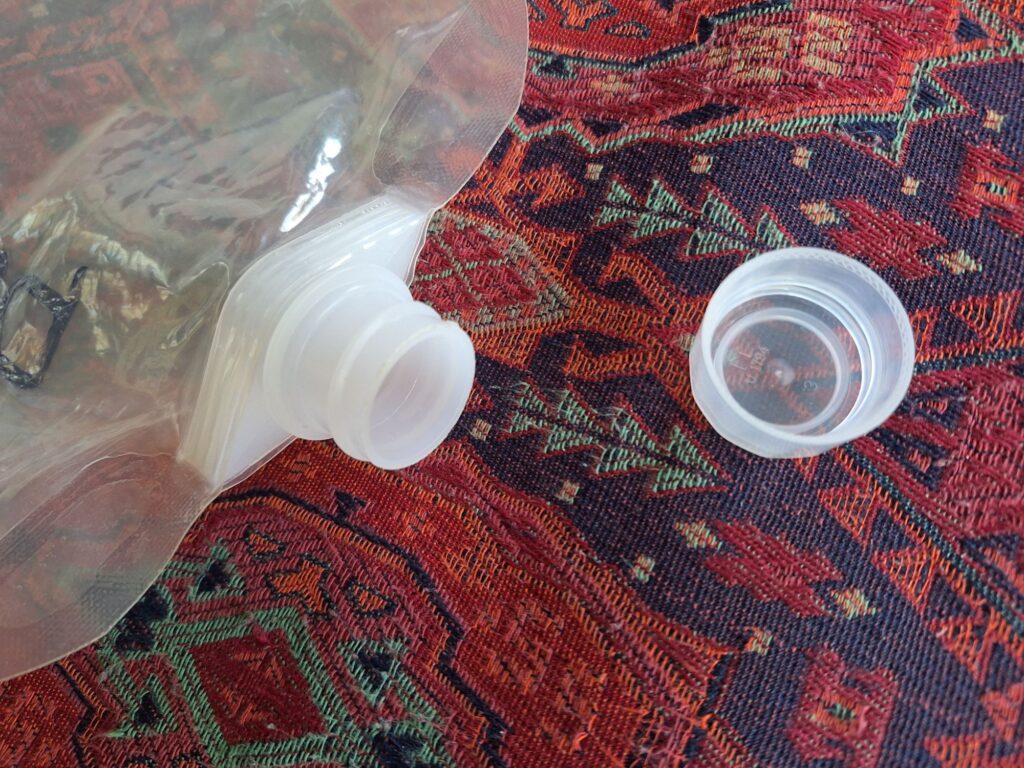
After all the self-inflicted waterboarding and the frantic searches for missing plastic caps, we’ve finally reached a consensus. For the way we travel, the small-mouth version (like the Platypus) takes the gold medal.
It wasn’t a decision we took lightly, but when you’re halfway across the world, convenience usually wins.
Stress-Free Hydration on the Move
In the end, a water bottle’s primary job is to get water into your mouth without making a scene. Because we are constantly on the move—whether that’s hiking through a forest in Quebec or navigating the chaotic streets of Southeast Asia—we need something we can use one-handed and without looking.
The small-mouth bag behaves like a “normal” bottle. You can take a sip on a plane, in a bumpy van, or while walking down a trail without having to stop, brace yourself, and pray for no sudden movements. That peace of mind is worth the extra minute it takes to clean it later.
How We Protect Our Bags from Accidental Damage
Of course, choosing the “winner” doesn’t mean it’s perfect. We’ve had to adapt to its quirks to avoid a repeat of the “Great Boat Leak of 2025.”
We’ve discovered that the best way to keep a water bag happy is to give it a little bit of personal space. Nowadays, we never just toss it into a backpack full of snorkeling gear or sharp tools. Instead, we wrap it in a small towel or slide it into a dedicated cloth pouch before packing it. This simple habit protects the plastic from punctures and, as a bonus, keeps any condensation from making the rest of our gear damp.
As for the “disappearing cap” problem? We now make it a rule to never leave the cap sitting alone on a hotel desk. It’s either on the bottle or in a very specific pocket. It’s a small price to pay for the lightest, most convenient hydration setup we’ve found so far.
Which One Should You Choose? (Pros vs. Cons)
Still on the fence? Choosing between these two is a bit like choosing between a sturdy pair of hiking boots and your favourite trainers. Both get the job done, but your destination matters. Here is a quick breakdown to help you decide which one deserves a spot in your pack.
Best for Minimalists and Active Explorers
The Small-Mouth Bag (e.g., Platypus)
If your travel style involves a lot of “doing”—hiking, hopping on local buses, or squeezing onto crowded ferries—this is likely your best bet.
- Pros: Incredible weight savings; fits into tiny gaps in your luggage; much easier to drink from while moving.
- Cons: Harder to dry out completely; requires a bit of care with the small cap; difficult to add ice or powder.
- The Chris & Mai Verdict: This is our primary choice for everyday hydration. It’s just too convenient to ignore when you’re constantly on the go.
Best for Long-Stays and Base Camp Kitchens
The Wide-Mouth Bag (e.g., Nalgene Cantene)
If you prefer to find a beautiful spot and stay there for a while, or if you’re meticulous about your gear’s hygiene, the wide-mouth version has clear advantages.
- Pros: Very easy to clean and dry; great for mixing drinks or adding ice; stands up more sturdily when full.
- Cons: Higher risk of spills while drinking; the cap assembly is slightly bulkier and heavier.
- The Chris & Mai Verdict: We often carry one of these as a “backup” or a secondary water store in our accommodation. It’s perfect for the kitchen, even if it’s a bit of a liability on a bumpy road.
Final Thoughts: Choosing Your Perfect Travel Companion
Whichever you choose, you’re already winning simply by ditching the rigid plastic bottles. You’ll save space, reduce your weight, and—most importantly—have more room in your bag for souvenirs (or more fabric, if you’re anything like Mai).
Just remember: if you go for the small cap, guard it with your life. And if you go for the wide mouth, maybe keep a spare towel handy for your shirt. Happy travels!
Comment