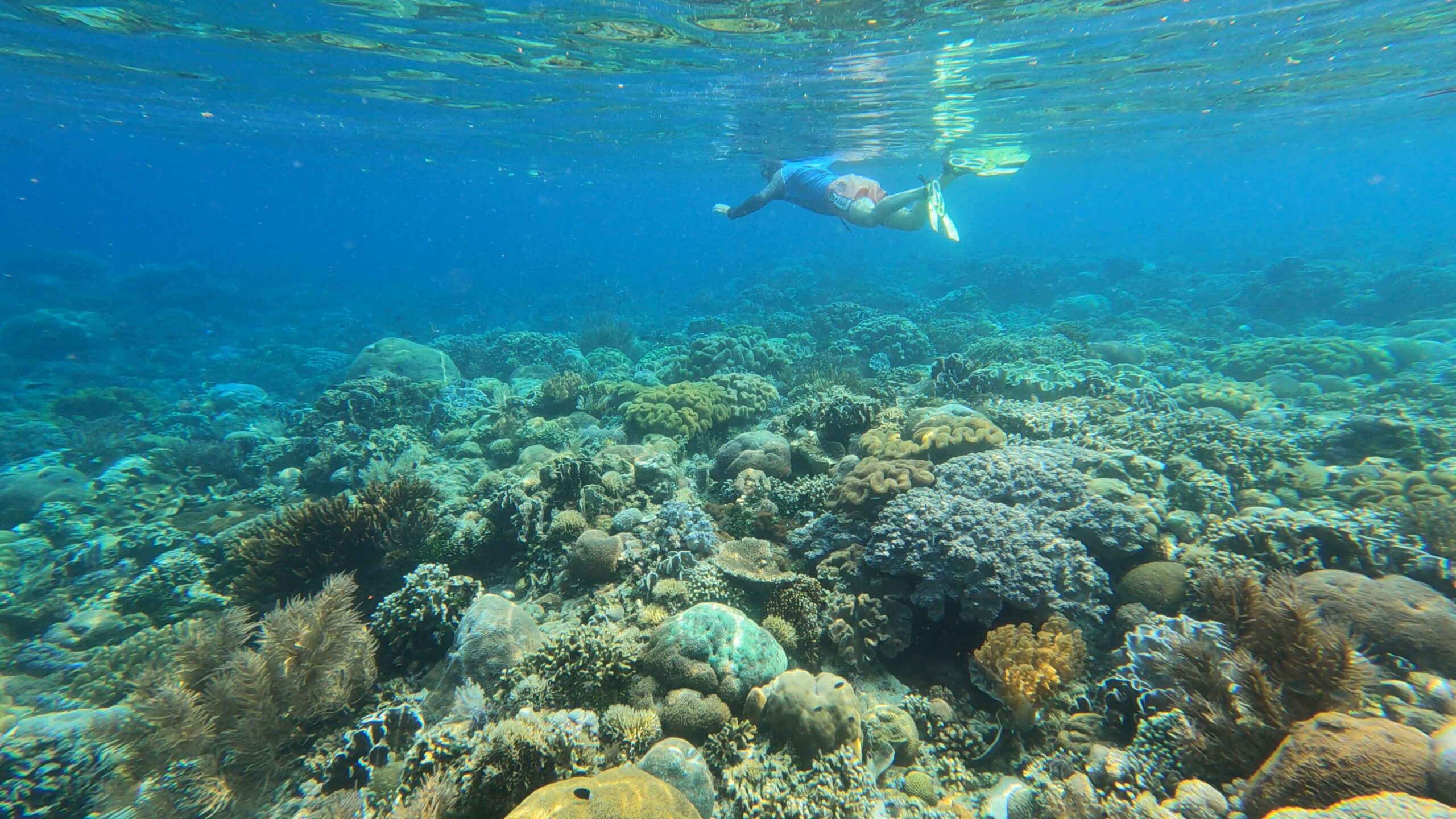
Alor, in eastern Indonesia, is a remarkable destination for snorkelling, particularly if you enjoy exploring healthy coral reefs and varied underwater landscapes. In early October 2026, Mai and I stayed at Bela Mori homestay on Kepa Island and spent several days exploring the surrounding waters, including areas around Kepa Island, Ternate Island, Pura Island, Alor Besar and Sebanjar Beach.
What impressed me most was the exceptional underwater visibility. In all the places I have snorkelled in Indonesia and elsewhere, the clarity here ranks among the best I have experienced. We found colourful corals, abundant small fish, dramatic drop-offs and a variety of underwater landscapes. We also encountered sharks, sea turtles, an octopus and lots of other marine life.
However, snorkelling in Alor is not always straightforward. Currents can be very strong and may change direction suddenly, while some beaches become difficult to enter or exit at low tide.
In this guide, I share our first hand experiences from early October, including the character of each area, coral conditions, marine life and practical advice for planning a snorkelling trip in Alor.
🇯🇵 この記事を日本語で読む:アロー島のシュノーケリング体験レビュー|サンゴ礁・魚・透明度を徹底紹介
- Is Alor Good for Snorkelling?
- Best Time of Day for Snorkelling in Alor
- Snorkelling Around Kepa Island
- Snorkelling at Ternate Island
- Snorkelling Around Pura Island
- Kampon Etam: A More Dramatic Reef Landscape
- An Inlet Between Pelabuhan Limarahing and Pelabuhan Harilolong
- Pantai Apuri: Colourful Coral and an Octopus
- Pelabuhan Muangolol: Blue and Purple Coral Formations
- Pelabuhan Abila: Scattered Coral and Gentle Currents
- Pelabuhan Limarahing: Choose the Area Carefully
- Pelabuhan Harilolong: Young Sharks Hunting
- Snorkelling at Alor Besar: Colourful Coral and a Shark Encounter
- Snorkelling at Sebanjar Beach: Coral Gardens and a Drop-Off
- Further North of Sebanjar Beach: An Extensive Coral Reef
- Practical Tips for Snorkelling in Alor
- Is Snorkelling in Alor Worth It?
Is Alor Good for Snorkelling?
Based on our experience, Alor is an excellent destination for anyone who enjoys coral reefs and underwater scenery. Amazing in fact!
The visibility was exceptionally good throughout much of our stay. With these conditions, we could see clearly into very deep water, while shallow reefs offered close up views of individual coral formations and small tropical fish.
Another highlight was the variety of underwater landscapes. Some areas featured gently sloping reefs, while others had wall like drop-offs, rocky formations or broad coral gardens extending towards deeper water. Even after several days of snorkelling, we continued to discover different reef shapes and colours.
We also encountered several larger marine animals, including sharks and sea turtles. Nevertheless, the main attraction for me was the coral itself rather than the prospect of seeing anything particular. There really are a lot of fish and the variety of these fish is enormous.
Water temperatures felt slightly cool in many places, although the water around Pura Island sometimes felt warmer than around Kepa. Conditions varied between locations and days.
Alor is particularly appealing to travellers who enjoy spending time observing coral formations, rather than simply swimming around in search of large marine animals.
Best Time of Day for Snorkelling in Alor
During our stay in early October, mornings were generally sunny, with calmer seas. As the day progressed towards midday, the wind and waves often became stronger.
For this reason, I would recommend starting early, especially when travelling by boat to more distant reefs. Our early departures gave us opportunities to enjoy the water before conditions became less comfortable.
This was our experience during our stay, rather than a guarantee of daily weather conditions. Local sea conditions can change, so it is important to check with your accommodation or boat operator before heading out.
Currents Can Change Quickly
One of the most important things to understand about snorkelling in Alor is that currents can be powerful and unpredictable.
We experienced currents that changed direction during a single session. On one occasion, a gentle drift suddenly became a much faster current flowing in the opposite direction. Swimming back to the original entry point became considerably more difficult.
Drift snorkelling can be an enjoyable way to explore a long stretch of reef, but it requires proper planning. A current that carries you comfortably in one direction may make returning to shore difficult or impossible.
Some reefs also extend close to the shoreline, leaving few safe places to exit the water. This becomes particularly challenging at low tide.
Check the current, tide and exit points before entering. If conditions are unsuitable, do not enter the water. Where necessary, arrange boat support and agree on a clear pick-up plan. Snorkelling alone or attempting to swim against a strong current is not advisable.
What to Wear and Bring
Many of the beaches we visited consisted of sand mixed with dead coral fragments and rocks. Reef shoes or suitable water shoes are essential for protecting your feet when walking along the shore.
Although visibility was excellent, the water sometimes felt cool, particularly during longer sessions. A rash vest or lightweight wetsuit may make extended snorkelling more comfortable.
At low tide, shallow reefs can offer wonderful close-up views of coral, but entering and exiting the water may become more difficult. Avoid standing on or touching living coral, and never force your way through a shallow reef to reach deeper water.
Snorkelling Around Kepa Island
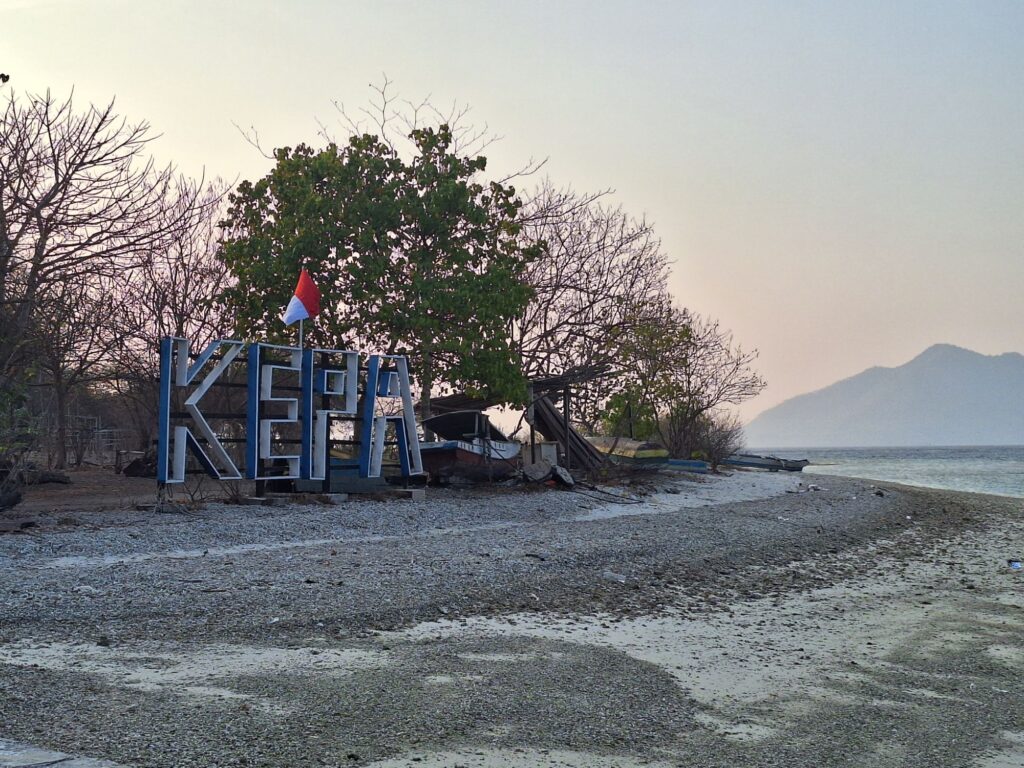
Kepa Island was our base for much of the trip. We stayed at Bela Mori homestay and explored several sections of the surrounding coastline.
Kepa Island’s North-East Coast
On 30 September, we snorkelled along the north-east coast at around 2.30 pm, near high tide.
The coral condition was reasonably good, although the current was strong. The underwater landscape was mainly a slope rather than a dramatic vertical wall.
It was an enjoyable introduction to the area, but the current was a reminder that even a relatively short snorkelling session requires attention to the sea conditions.
Kepa Island’s House Reef
On 2 October, we returned to Kepa after visiting the morning market at Alor Kecil. We entered the water near the jetty shortly after 10 am.
The current was flowing from south to north, allowing us to drift slowly towards the northern part of the reef. At first, the conditions were gentle, and the low tide brought us relatively close to the coral.
However, the current suddenly reversed and began flowing from north to south. As we headed back towards our entry point, the flow became much stronger.
This experience showed how quickly conditions can change around Kepa’s house reef.
During our stay, the current between Kepa and Alor Kecil seemed to flow from north to south much of the time, although we also experienced periods when it flowed in the opposite direction. These are our observations from a limited period, not a reliable tide forecast.
The dense coral around the northern section can make entering and exiting difficult at low tide. Depending on the current and water level, a simple beach entry may not be practical.
We also snorkelled briefly by boat near a beach on Kepa’s north-west side. Along the north-east coast, we explored part of the shoreline between the area around La P’tite Kepa and Bela Mori. We did not snorkel every section of the island, so these observations cover only the areas we personally visited.
Snorkelling at Ternate Island
Ternate Island offered several interesting snorkelling experiences, with good coral, plenty of fish and a mixture of underwater landscapes.
Pelabuhan Biatabang: Healthy Coral and a Dramatic Drop-Off
We first visited Pelabuhan Biatabang at around 8 am on 1 October, during a falling tide.
The inlet was relatively sheltered, and there was almost no current when we entered the water. The coral looked very healthy, and there were plenty of fish, although we did not see any particularly large ones.
The most distinctive feature was the underwater terrain. Rather than a gradual slope, the reef dropped away in a wall-like formation.
We snorkelled for about an hour, took a break and then returned to the same area for another session. Later in the morning, several dive boats arrived, and we began to feel the current. We decided to finish our snorkelling for the day.
We returned on 7 October and enjoyed the reef again. This time, we also spotted a fish that we recorded in our notes as a “long jaw mackele”.
Pelabuhan Biatabang was one of the areas where the combination of healthy coral, abundant fish and the dramatic drop-off made a strong impression on us.
Abangbul Jetty
On 7 October, we also snorkelled near the jetty at Abangbul on Ternate Island.
The coral condition was good, but the underwater landscape felt relatively uniform compared with some of the other areas we explored.
It is still worth considering if you are exploring the island, although we found the variation in reef structure at other locations more interesting.
Umapura: Excellent Coral in Calm Conditions
On 11 October, we snorkelled at Umapura at around 8 am, during a falling tide.
A broad area of coral extended from the beach into deeper water, with a drop-off farther offshore. The coral condition was excellent, and the falling tide allowed us to observe the reef at close range.
The current was gentle and there were almost no waves, making this one of the best conditions we experienced during our stay. Divers from a liveaboard were also exploring the area.
I found the underwater scenery so beautiful that I could hardly stop filming. There was always another coral formation or detail worth capturing.
For anyone who enjoys watching coral reefs rather than waiting for encounters with large marine animals, this kind of underwater landscape can be the highlight of a trip.
Snorkelling Around Pura Island
We visited Pura Island three times, on 3, 4 and 8 October. Our first boat journey took approximately 40 minutes, leaving Kepa at around 7.10 am.
The different inlets around Pura offered a variety of underwater scenery. Some had more dramatic slopes and rocky formations, while others featured flatter reefs and scattered coral.
The water also felt warmer than around Kepa during our visits.
Kampon Etam: A More Dramatic Reef Landscape
Our first snorkelling stop on 3 October was around Kampon Etam, in what we believe was an inlet west of Pelabuhan Limarahing.
The reef was generally in reasonable condition, although there were some sandy patches and areas of coral that appeared damaged.
The seabed formed a slope, but the underwater landscape was relatively dynamic, with more variation than at the second inlet we visited that morning.
Of the two locations, this was the one I found more visually interesting.
An Inlet Between Pelabuhan Limarahing and Pelabuhan Harilolong
Our second stop on 3 October was a smaller inlet between Pelabuhan Limarahing and Pelabuhan Harilolong.
The landscape was flatter, with rounded coral formations growing along the slope. Seaweed was also visible among the coral.
We encountered a sea snake during this session. As with any marine wildlife encounter, it is best to keep your distance and allow it to move freely!
Although this inlet was less dramatic than the first, it offered a different view of the underwater environment.
Pantai Apuri: Colourful Coral and an Octopus
We returned to Pura on 4 October, leaving at around 6.50 am.
At Pantai Apuri, coral grew among the rocks of a rugged inlet. There were plenty of fish, and the underwater scenery was colourful. The coral condition looked good, and we also spotted an octopus.
The combination of rocky terrain, coral and fish made this a particularly enjoyable place to explore.
Pelabuhan Muangolol: Blue and Purple Coral Formations
Pelabuhan Muangolol was another area where the coral appeared to be in good condition.
Rounded blue and purple coral formations extended across the seabed, with large rocks scattered among them. Small fish were plentiful, although we did not encounter any large marine animals during this session.
I found the colours and shapes of the coral particularly appealing.
Pelabuhan Abila: Scattered Coral and Gentle Currents
On 8 October, during our third trip to Pura, we snorkelled at Pelabuhan Abila.
Coral extended along the beach, and the current was gentle during our visit. Compared with some of the more dramatic drop-offs elsewhere, this area offered a simpler coastal reef landscape.
As always, conditions may differ from one visit to another.
Pelabuhan Limarahing: Choose the Area Carefully
Near the jetty at Pelabuhan Limarahing, we found mostly sand and relatively little coral.
We therefore moved to the western inlet where we had snorkelled on 3 October. The coral landscape there was much more interesting.
This was a useful reminder that the underwater scenery can change considerably within a short distance. A place name alone does not necessarily tell you what the reef will look like at the exact point where you enter the water.
Pelabuhan Harilolong: Young Sharks Hunting
Pelabuhan Harilolong is an inlet with a large church nearby. The beach is rocky, and coral grows along the shore.
On 8 October, we saw a group of young sharks hunting around the rocky area on the western side of the inlet. Always interesting to watch the young ones learn their life skills.
The seabed slopes gently through a sandy area, with large rocky formations covered in coral scattered before the drop-off.
The combination of reef structure and the shark encounter made this a particularly interesting place to explore.
Snorkelling at Alor Besar: Colourful Coral and a Shark Encounter
On 6 October, we left at around 8.22 am by boat from Kepa island and took approximately five minutes to get to Alor Besar.
During a rising tide, we snorkelled for an extended distance along the coast towards Alor Kecil, drifting with the current.
The coral was in excellent condition, with a wide variety of formations and colours. The underwater landscape changed as we moved along the coast, making this a particularly engaging drift snorkelling experience.
We also spotted a shark in relatively deep water.
At that point in the trip, I thought this was the best snorkelling area we had visited. The variety of coral and the changing seabed made the experience feel different from simply swimming over one continuous, uniform reef.
However, a long drift requires careful planning. Before entering the water, make sure the current, exit arrangements and boat pick-up plan are suitable for the conditions.
Snorkelling at Sebanjar Beach: Coral Gardens and a Drop-Off
We visited Sebanjar Beach on 7 October and returned to the area on 10 October.
The reef begins with a broad, relatively flat area of coral. Farther out, the seabed slopes towards a drop-off, with a variety of coral formations and small fish.
One unusual sight was what appeared to be number of discarded motorbikes on the seabed. Coral had grown over the metal components, creating a strange contrast between an artificial object and the surrounding marine environment.
Beyond the flatter reef, the landscape became more varied, with mound-like coral formations scattered across the slope. We saw plenty of small fish and a batfish.
On 10 October, we also encountered a shark and a sea turtle while snorkelling around Sebanjar Beach.
The combination of coral gardens, deeper water and changing underwater terrain made this an interesting area to explore.
Further North of Sebanjar Beach: An Extensive Coral Reef
On 10 October, we continued our snorkelling day beyond the area we had explored earlier.
The coral reef seemed to continue endlessly, with no obvious break in the formations. There was a remarkable variety of coral, and the underwater landscape changed constantly as we drifted along with the current.
It quickly became one of my favourite underwater experiences of the trip because I enjoyed the continuous changes in the type of coral – shape, colour and structure.
We returned to the same general area on 11 October, this time snorkelling from north to south. The current was gentle at first but gradually became stronger. We also saw a turtle and some batfish.
For me, this was a reminder that some of the most rewarding snorkelling experiences are about the reef itself. The richness of the coral and the changing underwater scenery can be fascinating, even when there is no dramatic wildlife encounter.
Practical Tips for Snorkelling in Alor
Based on our experience in early October, here are the main things I would consider when planning a snorkelling trip in Alor.
- Start early: Mornings were generally sunnier and calmer during our stay, while wind and waves often increased towards midday.
- Check the current: Currents can be strong and may reverse direction unexpectedly.
- Plan your exit before entering: Dense coral near the shore and low water levels can make getting out difficult.
- Consider boat-supported snorkelling: This can be useful for longer drift sessions, provided the operator has a clear safety and pick-up plan.
- Wear reef shoes: Many beaches contain sharp coral fragments and rocks.
- Prepare for cooler water: A rash vest or lightweight wetsuit may help during longer sessions.
- Protect the reef: Avoid touching, standing on or breaking living coral, and keep a respectful distance from marine life.
- No guarantees on what you will see : Sharks, turtles and other bigger things may appear, but the coral landscape is a major attraction in its own right.
These observations reflect our own experience over several days. Tides, currents, weather and marine life can vary, so always check local conditions before entering the water.
Is Snorkelling in Alor Worth It?
For me, snorkelling in Alor was one of the highlights of all of our travels over the years in Indonesia.
The exceptional visibility, colourful coral reefs and varied underwater landscapes made every outing feel different. Some places stood out for their dramatic drop-offs, others for their healthy coral formations, and others for unexpected encounters with sharks, turtles or an octopus.
Alor is not necessarily a destination where every snorkelling session will be easy. Currents can be strong, entry points may be limited, and conditions can change quickly. Careful planning and respect for the sea are essential.
However, if you enjoy exploring coral reefs and observing the underwater world at your own pace, Alor offers a great deal to discover. For me, the most memorable moments were often the simplest ones: drifting over a beautiful reef, noticing another pattern of coral and realising that the underwater landscape continued much farther than I had expected.
Comment