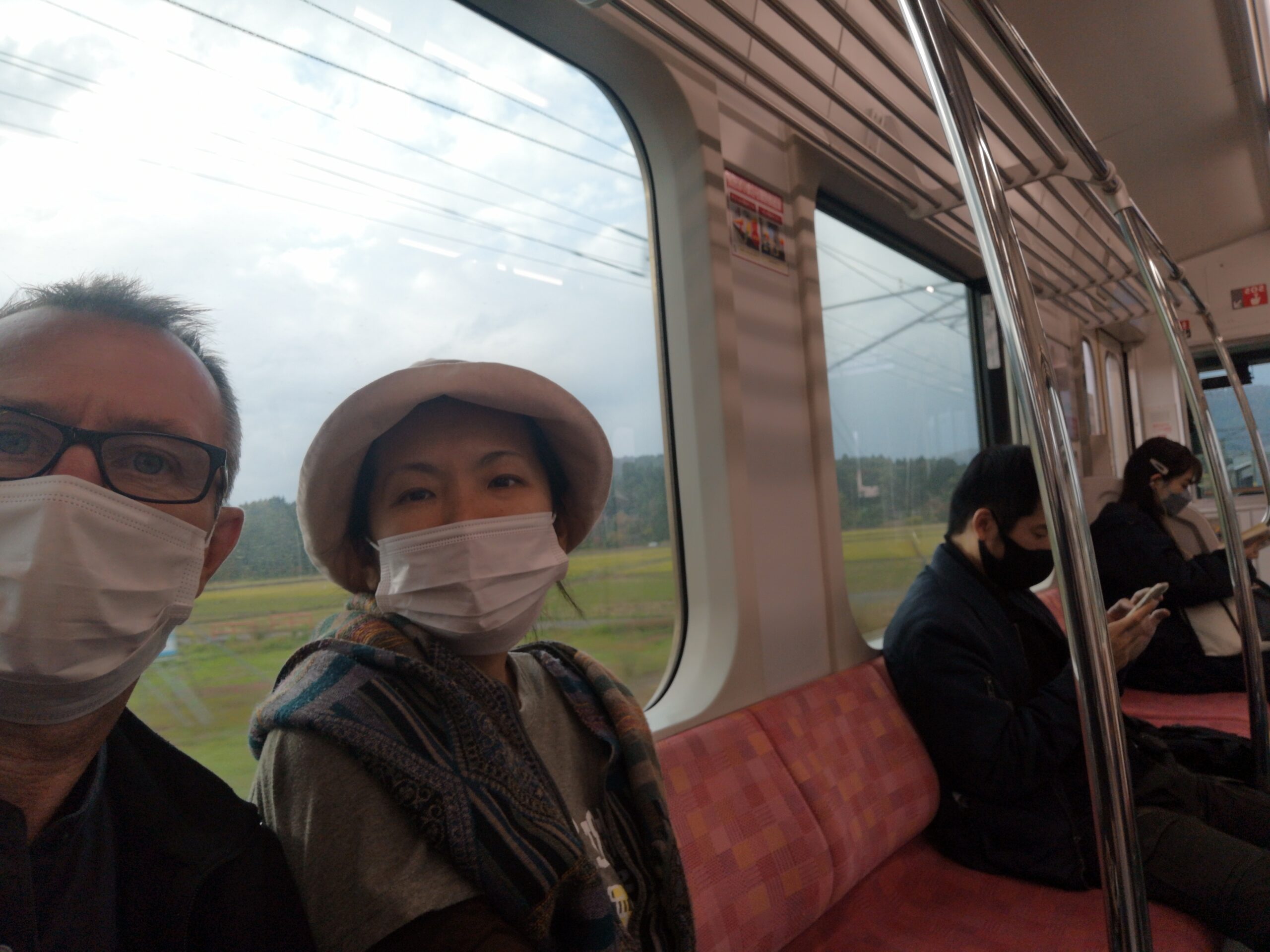
While it is incredibly easy to jump on the Shinkansen or a speedy limited express train when travelling between Toyama and Niigata, we opted for a different adventure: the local trains. By trading high-speed rail for the slow route, we managed to spend a lot less money and saw a side of regional Japan that most tourists completely miss.
Of course, slow travel by local trains requires patience—our journey involved four different trains and took about six hours in total! But watching the shifting landscapes and getting a glimpse into the daily lives of local commuters made it a remarkably authentic experience.
Here is our step-by-step breakdown of the route, along with a critical ticketing warning that every independent traveller needs to know.
Toyama to Niigata Local Rail: At a Glance
- Route: Toyama Station ➔ Tomari ➔ Naoetsu ➔ Nagaoka ➔ Niigata Station
- Total Duration: Approx. 6 hours (Including 4 train transfers)
- Vibe: Stunning Sea of Japan coastal views and a true “slow travel” experience.
CRITICAL TICKETING WARNING:
You CANNOT use standard IC cards (Suica, PASMO, etc.) for this entire journey. Because you will cross three different railway operators, your card will trigger an error. You must buy traditional paper tickets with cash.
Local Trains vs Shinkansen: Why We Chose the Slow Route
When planning a trip from Toyama to Niigata, the most obvious choice for most travellers is to jump on the Hokuriku Shinkansen and a limited express train. It’s fast, efficient, and gets you there in under two hours. So, why on earth did we decide to spend six hours rubbing shoulders with school children and local commuters on four different local trains?
For us, the answer lies in the heart of “slow travel.”
First and foremost, taking the local lines is a fantastic way to save money. High-speed rail tickets in Japan add up quickly, and opting for the regional lines significantly reduced our transit costs for this leg of the journey. But more than just the budget, the slow route offers a front-row seat to the authentic, daily rhythm of regional Japan. Instead of blurring past the countryside at 260 km/h inside a concrete tunnel, we got to see the changing landscape at a human pace, chat about our route during transfers, and enjoy an adventure that felt genuinely earned.
Crucial Travel Warning: The IC Card Trap
Before you set off, there is one major logistical hurdle to keep in mind. When you take the local route between Toyama and Niigata, you are actually switching between three entirely different railway companies:
- Ainokaze Toyama Railway
- Echigo Tokimeki Railway
- JR (Japan Railways)
Because you are crossing these distinct private and JR regional boundaries, you cannot use standard IC cards (like Suica or PASMO) for the entire journey.
If you accidentally enter the gates at Toyama with an IC card, the system will trigger an error at your final destination, and sorting out the fare adjustment at a manned window can be a massive headache. Do yourself a huge favour: leave your IC card in your pocket, have some cash ready, and buy a traditional paper ticket from the vending machines before boarding!
Step-by-Step Route Breakdown: Toyama to Niigata
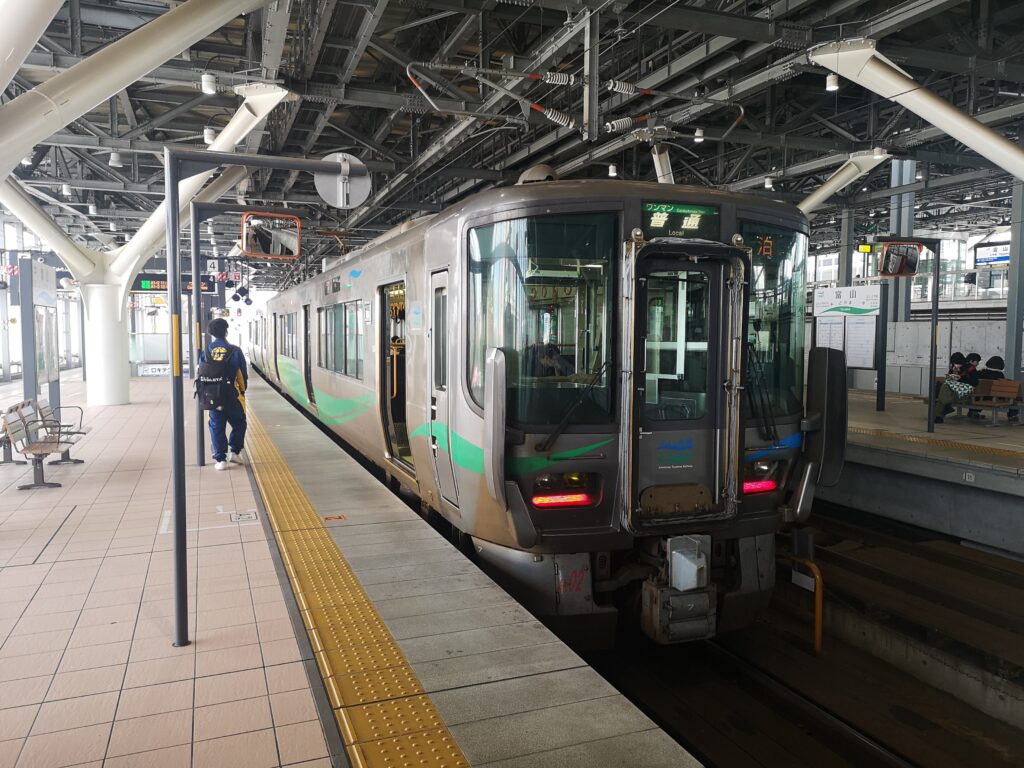
Leg 1: Toyama → Tomari (Ainokaze Toyama Railway)
Toyama → Tomari (泊): The first leg on the Ainokaze Toyama Railway.
Our journey began at Toyama Station, where we boarded our first train on the Ainokaze Toyama Railway heading towards Tomari. This initial leg is a smooth, comfortable ride that gently takes you out of Toyama city and into the quieter, coastal countryside.
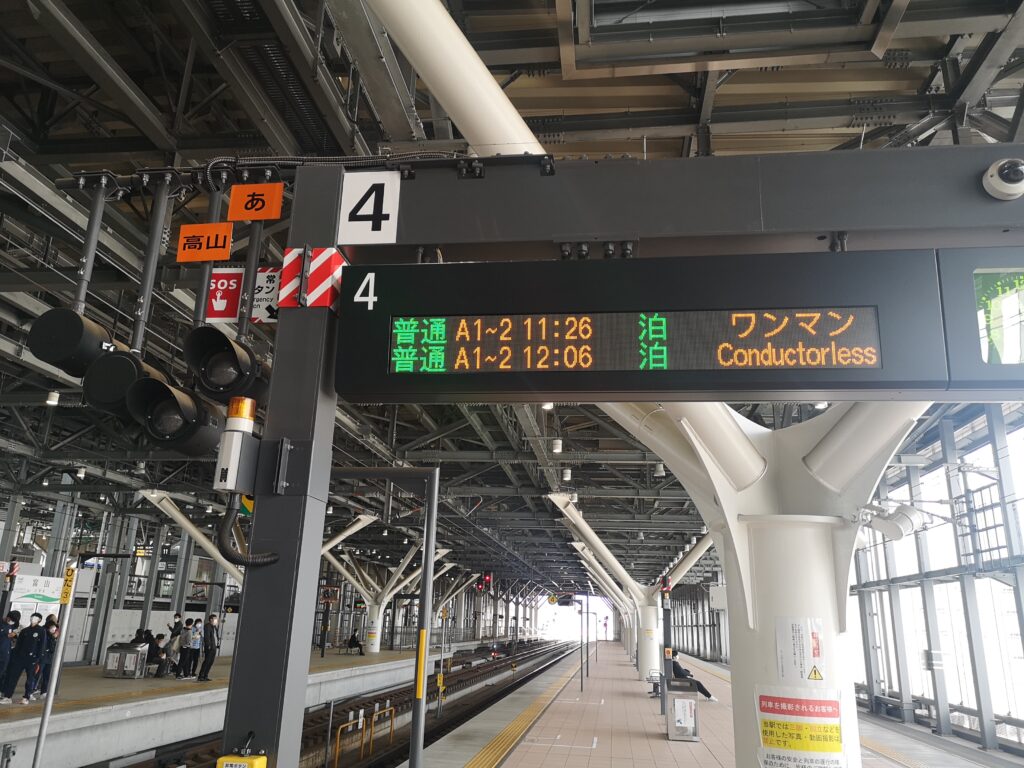
Leg 2: Tomari → Naoetsu (Echigo Tokimeki Railway)
Tomari → Naoetsu (直江津): Switching to the Echigo Tokimeki Railway. Tomari is a unique station where two different railway companies often share the same platform!
Arriving at Tomari Station, we encountered one of the most unique railway layouts in Japan. Normally, switching between two different train companies means dragging your luggage across platforms or navigating stairs. However, at Tomari, the two different operators share the exact same track.
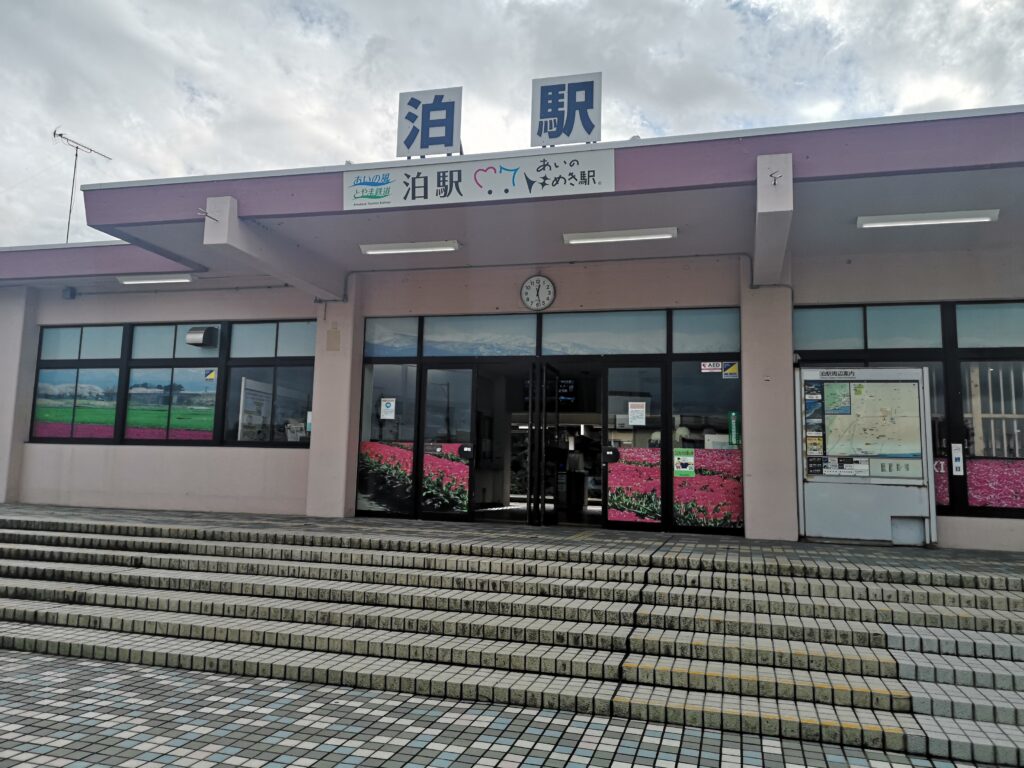
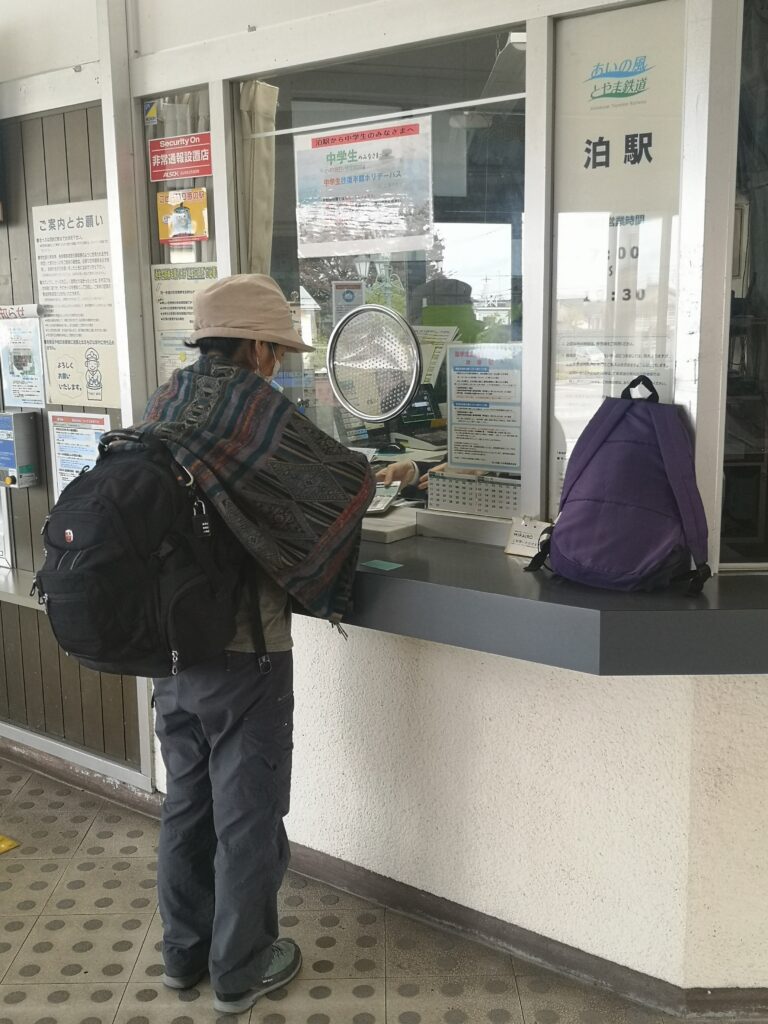
The trains pull up “nose-to-nose” on the same platform, making the physical transfer incredibly easy—you literally just walk down the platform from one train to the next! It is a rare sight that rail enthusiasts absolutely love.
Note: If you haven’t bought your paper ticket for the next leg yet, make sure to settle up with cash here at Tomari Station.
One thing to watch out for: when you take these local trains like us, you are switching between three different railway companies (Ainokaze, Echigo Tokimeki, and JR). You cannot use IC cards (like Suica or Pasmo) for the entire journey. You must buy paper tickets at the station. If you accidentally enter with an IC card, the adjustment process at the final destination can be a real headache!
Make sure to have some cash ready to buy paper tickets at the vending machines!
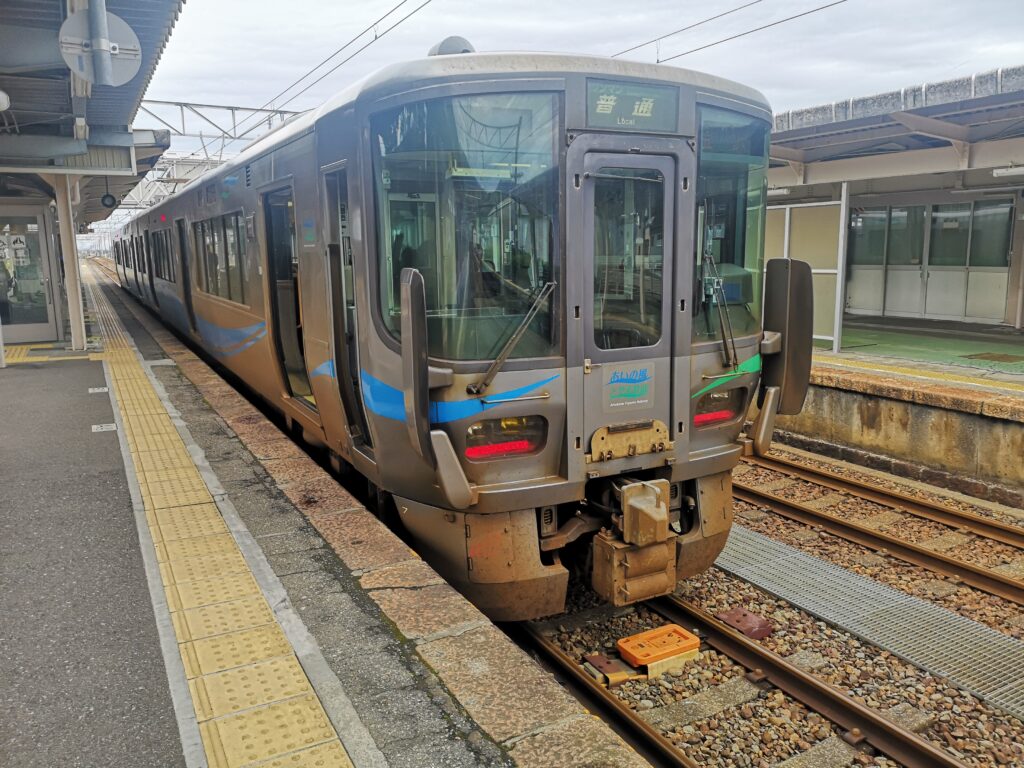
Leg 3: Naoetsu → Nagaoka (JR Shin-etsu Line)
Naoetsu → Nagaoka (長岡): Entering the JR Shin-etsu Line. This section offers beautiful coastline views of the Sea of Japan.
At Naoetsu, we officially entered the JR Shin-etsu Line. This third leg of the journey offers some of the most spectacular window views of the entire trip.
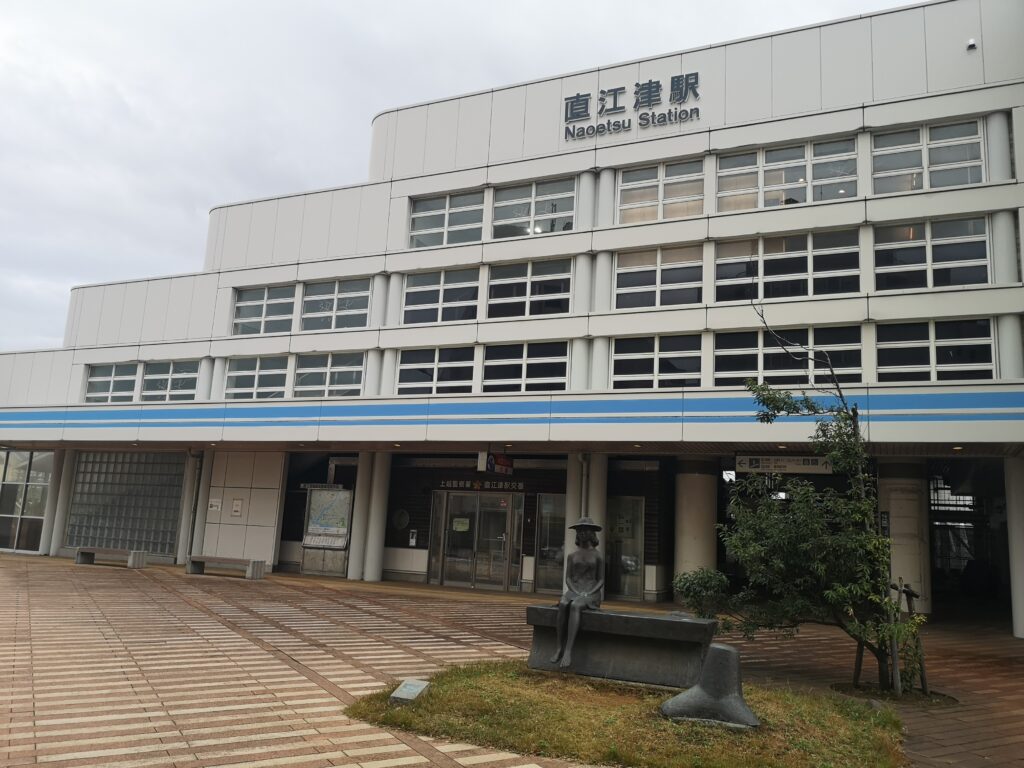
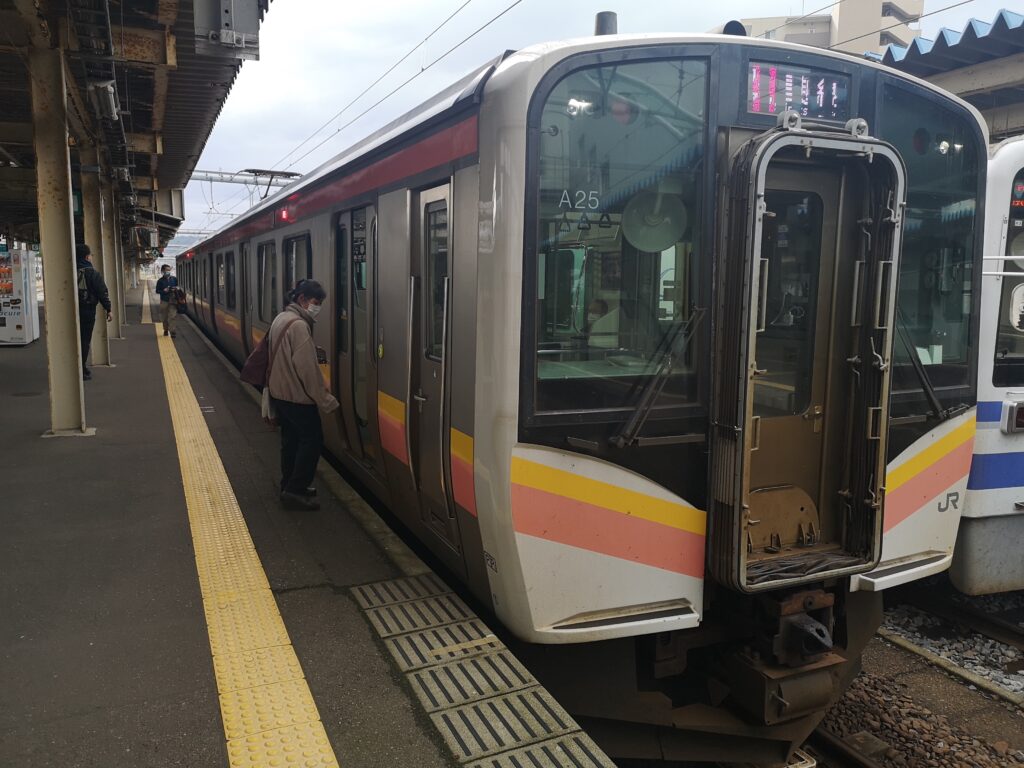
Between Naoetsu and Kashiwazaki, the tracks run so incredibly close to the Sea of Japan that if you look out the window, the shoreline disappears underneath the carriage. It truly feels as though the train is floating right on top of the water.
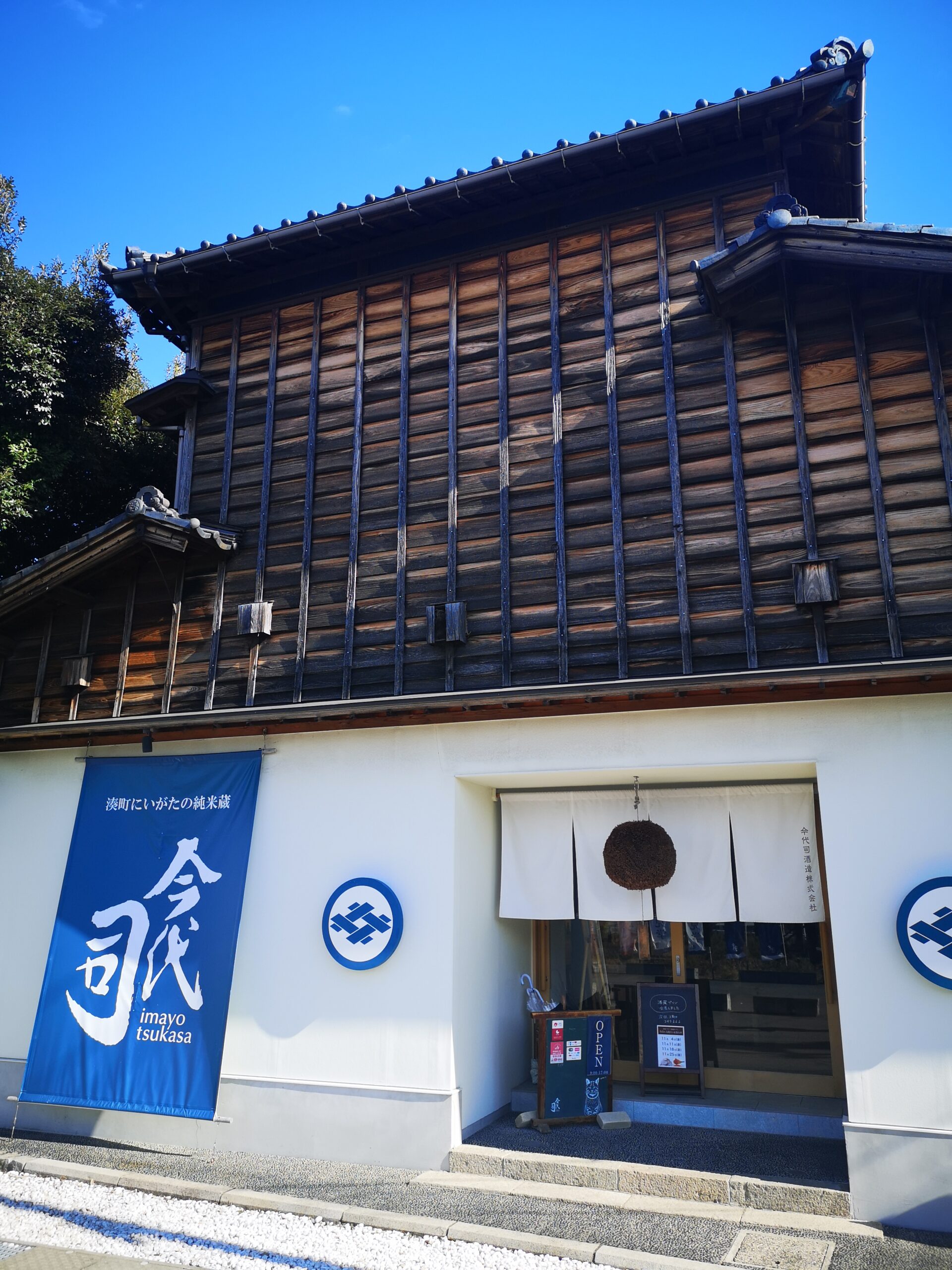
The Reward at the End of the Line: Ready to celebrate arriving in sake country? Don’t miss our review of the incredible Imayotsukasa Sake Brewery Tour in Niigata City: Only 15 Minute Walk from the Railway Station
Leg 4: Nagaoka → Niigata (JR Shin-etsu Line)
Nagaoka → Niigata (新潟): The final stretch through the vast Niigata rice fields (Echigo Plain).
(Apologies, no photo for this final leg!)
The final stretch of our six-hour odyssey took us from Nagaoka straight into Niigata City. The rugged coastline transitioned into views of the vast Echigo Plain, rolling past Niigata’s famous, expansive rice fields.
Sitting alongside local students and residents on their daily commute felt like the perfect conclusion to an authentic slow-travel day. And the best part? We had finally arrived in Japan’s premier sake country—which was exactly what we came to Niigata for!
➡ Missed the Start of Our Journey? See how we arrived in Toyama on a budget with our Kanazawa to Toyama Bus Guide: 2-Hour Itinerary & Local Seafood Specialities.
➡ Back to the Hub: For more regional train routes and money-saving transit tips, head back to our comprehensive Japan Transport & Rail Guide
Comment
Wise choice (local trains)… we travelled from Niigata prefecture to Nagano prefecture, mainly by Shinkansen and hardly saw anything .. mostly in tunnels
The Shinkansen is fun and practical if you are in a hurry. Local trains are quite a different experience and much cheaper, but you do need more time. I like travelling in Japan because you have reliable, quality, transport options.