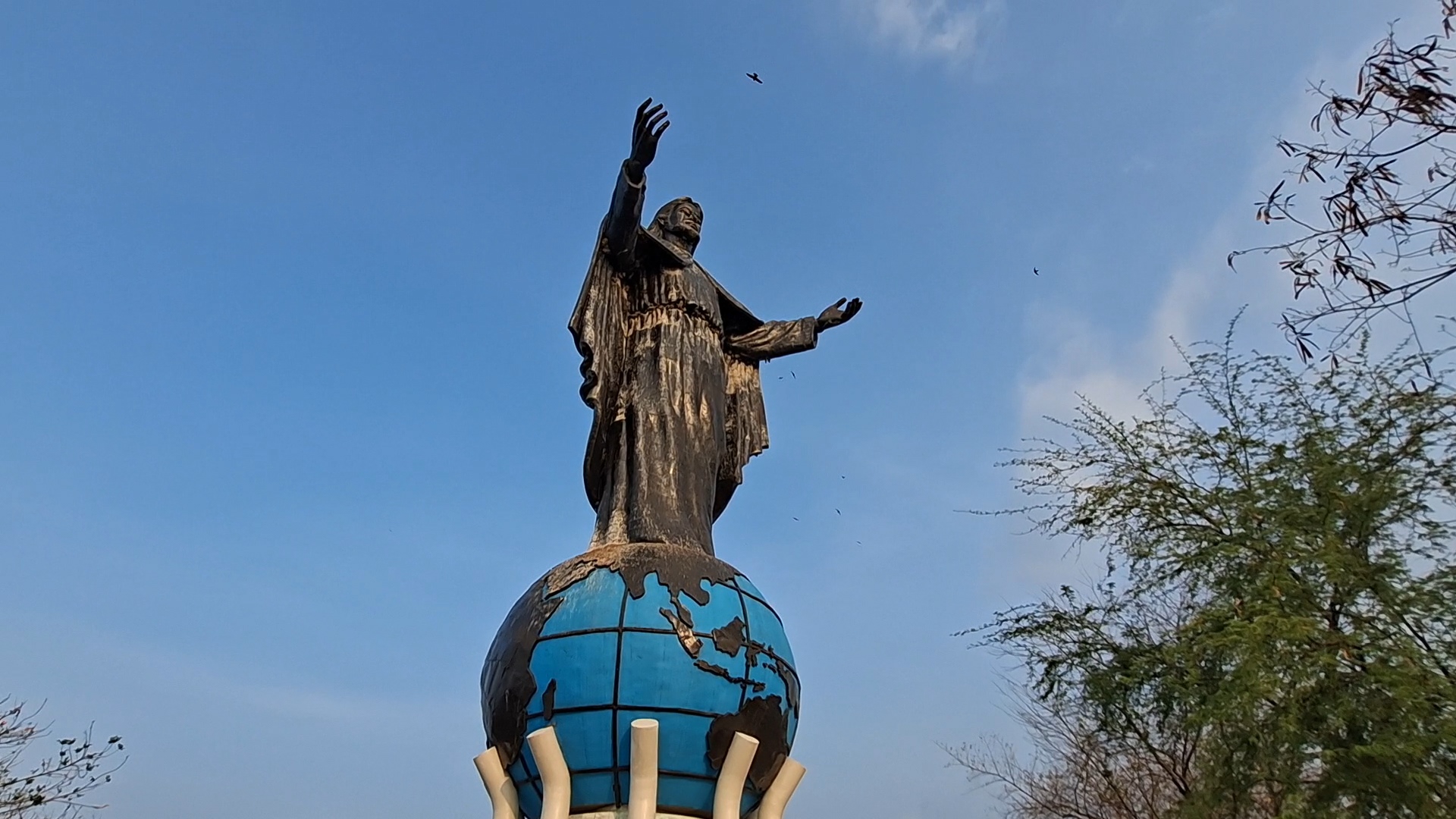
Dili, the capital of Timor-Leste (East Timor), is a relaxed coastal city with a fascinating history and a mix of cultural landmarks, traditional markets and seaside scenery. Although it is not a particularly large city, there is plenty to discover, especially if you are interested in the country’s journey towards independence.
We spent a day exploring Dili, visiting several historical and cultural attractions, stopping at a traditional textile market and enjoying lunch at local restaurants. Some places were not quite what we expected, and a couple of attractions were closed when we arrived, but that was all part of our experience.
Here is our guide to spending a day exploring Dili, including the places we visited and our impressions along the way.
🇯🇵 この記事を日本語で読む:ディリ観光1日モデルコース|歴史博物館・教会・サンタクルス墓地・クリスト・レイを街歩き
Historical and Cultural Attractions in Dili
Xanana Gusmão Reading Room
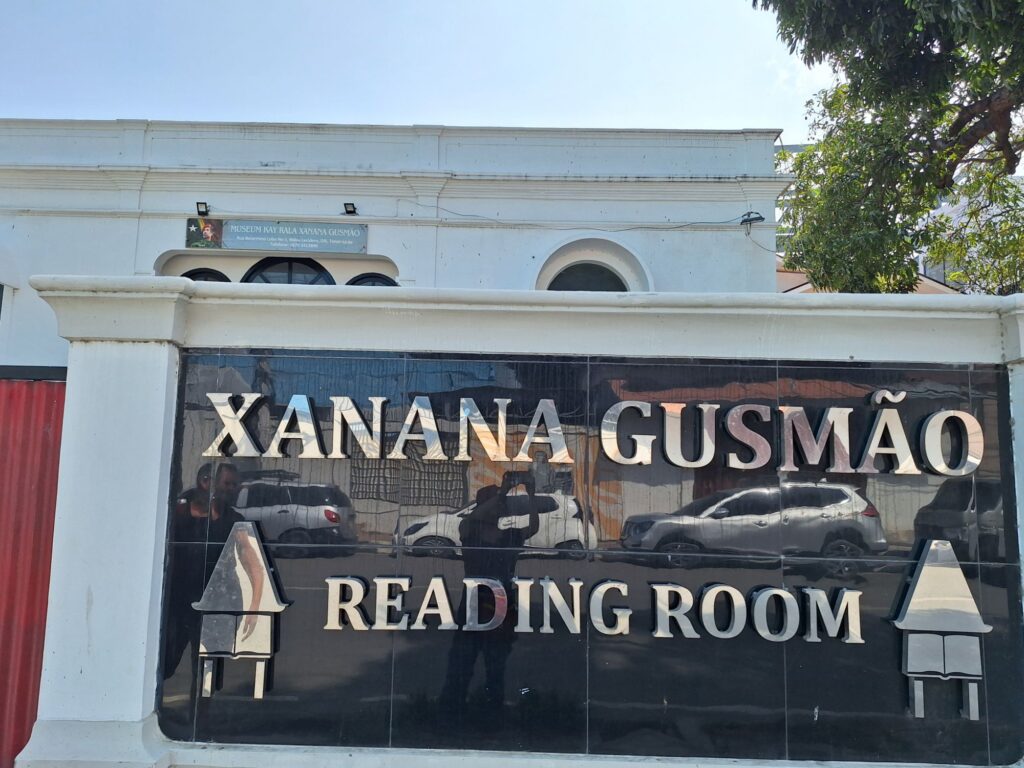
Our first stop was the Xanana Gusmão Reading Room, a cultural and educational centre named after Xanana Gusmão, one of the leading figures in Timor-Leste’s independence movement.
Housed in an attractive Portuguese colonial-style building, the centre includes a library, exhibition spaces and a museum featuring historical memorabilia, items connected with Xanana Gusmão, and works by local artists.
Unfortunately, the building was undergoing renovation when we visited, so we could not go inside. We only managed to take a few photographs of the exterior.
It was a shame to miss the exhibitions, as this looked like an interesting place to learn more about the country’s history and culture. Hopefully, it will be fully accessible on our next visit.
Timorese Resistance Archive & Museum
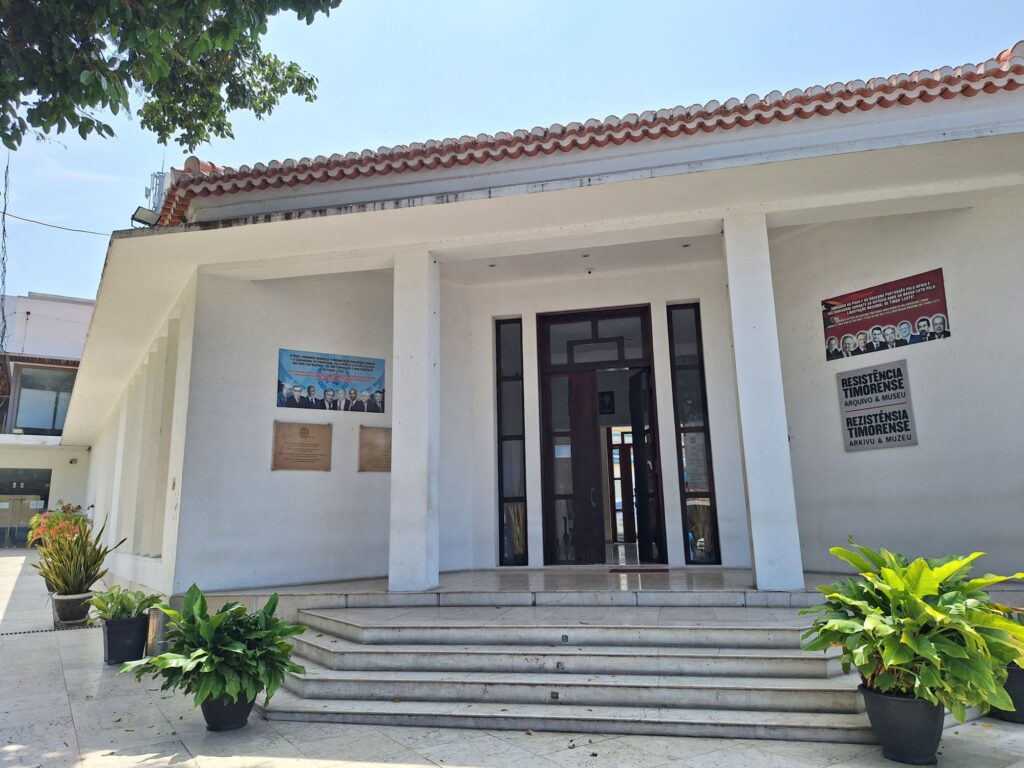
Next, we visited the Timorese Resistance Archive & Museum, one of the most important historical attractions in Dili.
The museum documents Timor-Leste’s struggle for independence, covering the Indonesian invasion in 1975 through to the 1999 independence referendum. Its collections include photographs, documents and other historical materials that tell the story of the resistance movement and the experiences of ordinary Timorese people.
This is a particularly worthwhile stop for anyone wanting to understand the country’s past. Timor-Leste has a relatively recent and complex history, and visiting the museum provides valuable context for everything else you see during your stay.
I would recommend allowing plenty of time here rather than simply rushing through.
Church of Saint Anthony of Motael
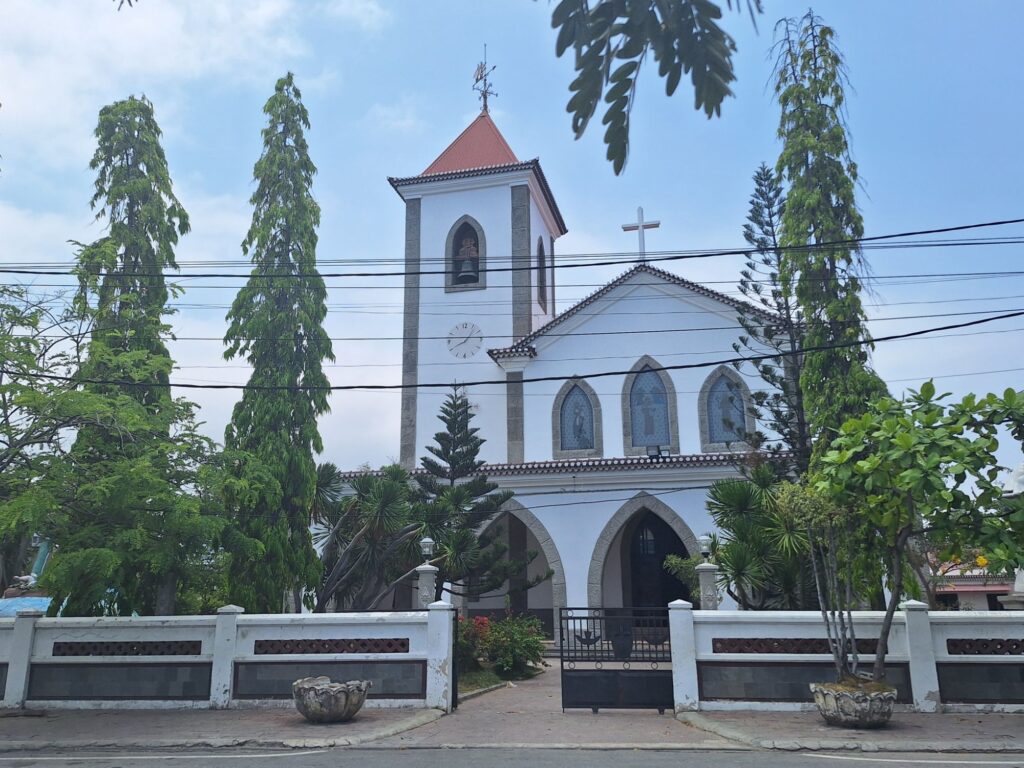
The Church of Saint Anthony of Motael is one of Dili’s best-known historic churches, located close to the waterfront.
Its simple architecture and prominent position make it an attractive landmark in the city. Catholicism plays an important role in everyday life in Timor-Leste, and churches are an integral part of the local landscape.
The church also has a significant place in the country’s modern history. During the Indonesian occupation, it became associated with the pro-independence movement. In October 1991, security forces raided the church, where young activists had sought refuge. These events preceded the tragic Santa Cruz massacre later that year.
Today, it remains an active place of worship as well as an important historical landmark.
Tais Market
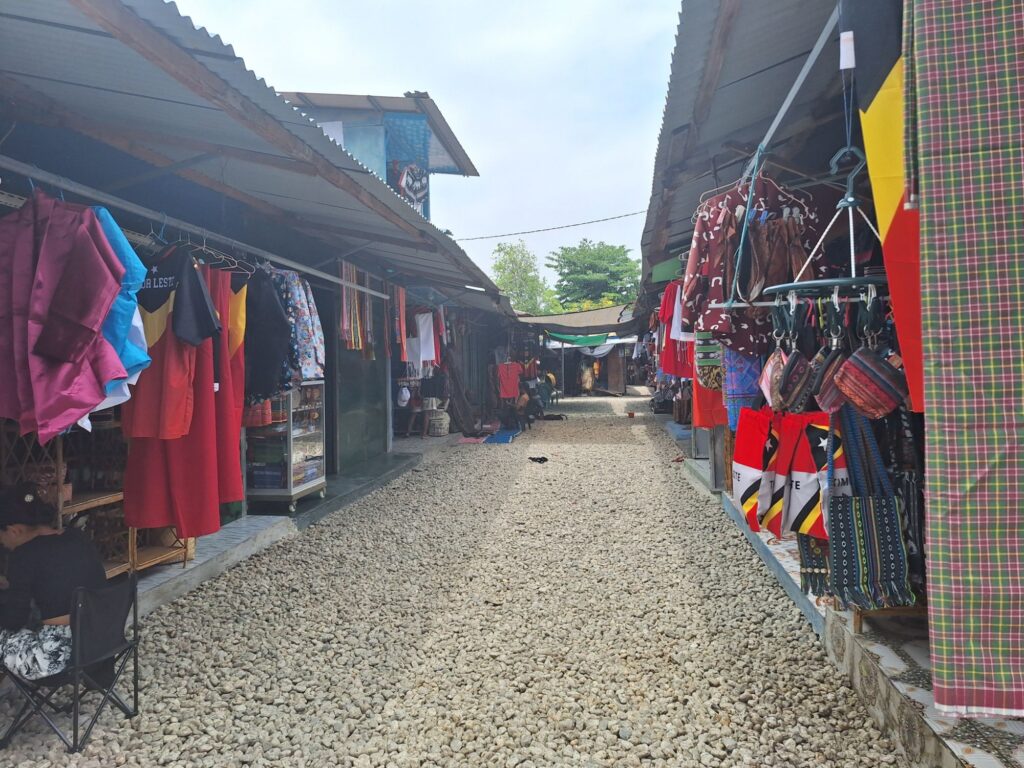
We also stopped at Tais Market, where visitors can find traditional Timorese woven textiles known as tais.
These colourful fabrics are an important part of Timorese cultural heritage, with different patterns and designs reflecting local traditions. Tais can be used for clothing, ceremonial occasions and decorative items, and they are also popular souvenirs.
However, I had expected something larger, so it did not take long to look around. It’s also a no pressure sales market! Very chilled!
It is still worth a short visit if you are interested in traditional textiles or want to pick up a locally made souvenir, but I would not plan to spend a large part of the day here.
Immaculate Conception Cathedral
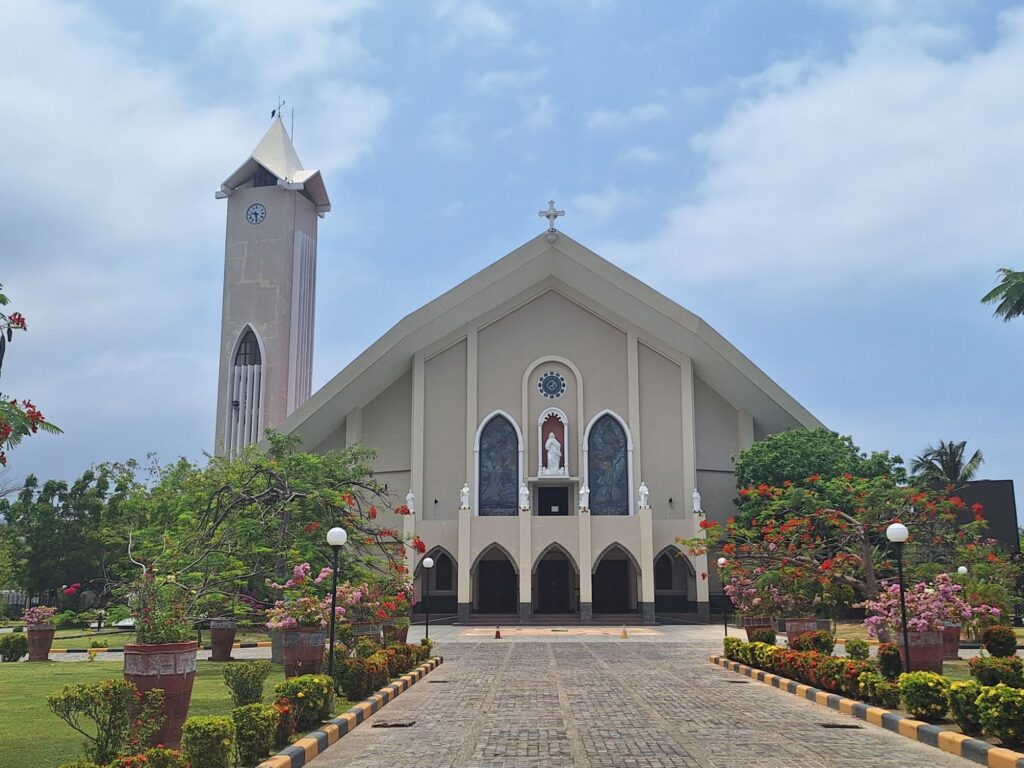
The Immaculate Conception Cathedral is another significant religious landmark in Dili.
It is a large and imposing Catholic cathedral, reflecting the importance of the Catholic faith in Timorese society. The building stands out from its surroundings and is worth seeing even if you are simply exploring the city.
Unfortunately, we were unable to visit the interior during our stop because it was closed, so we only saw the cathedral from outside.
It was a little disappointing not to be able to look inside, but the exterior was still worth a photograph.
Santa Cruz Cemetery
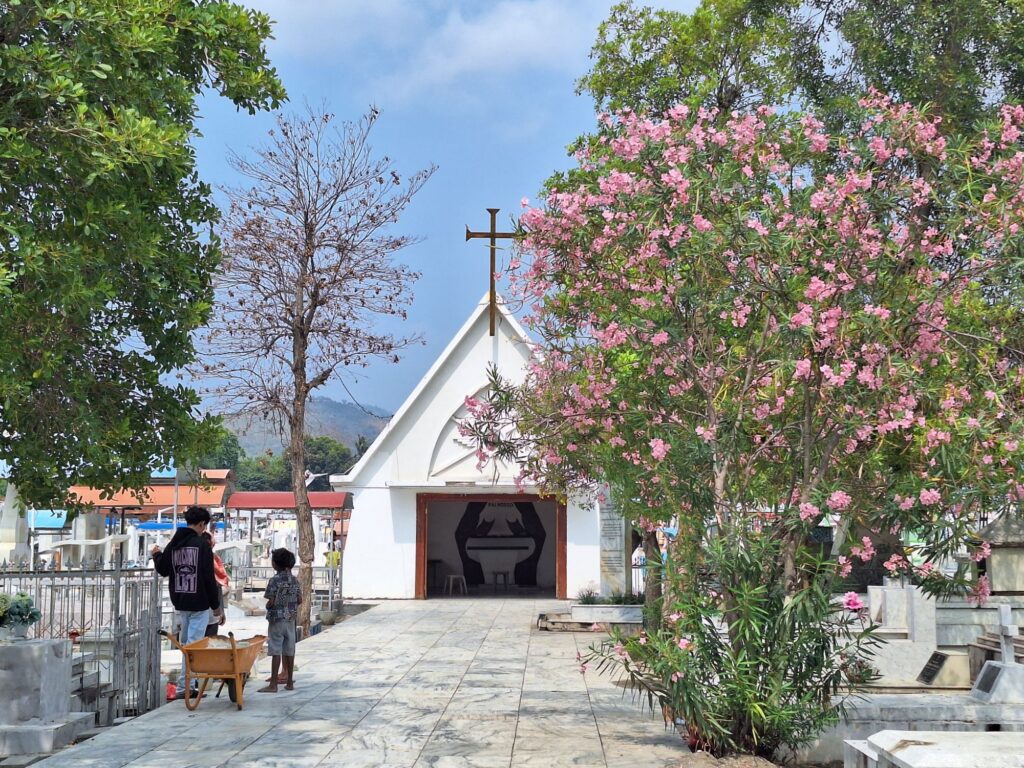
Santa Cruz Cemetery is one of the most historically significant places in Dili.
It is best known as the site of the Santa Cruz massacre on 12 November 1991, when Indonesian troops opened fire on mourners and demonstrators attending a funeral procession. The incident became a turning point in international awareness of the situation in Timor-Leste and its struggle for independence.
We visited shortly before the 1 November public holiday, All Saints’ Day. Many local people were busy cleaning family graves and preparing them for the occasion.
It was interesting to see the cemetery being actively cared for by the local community. Rather than feeling like an ordinary tourist attraction, it was clearly an important place for families to remember their loved ones.
Cristo Rei of Dili
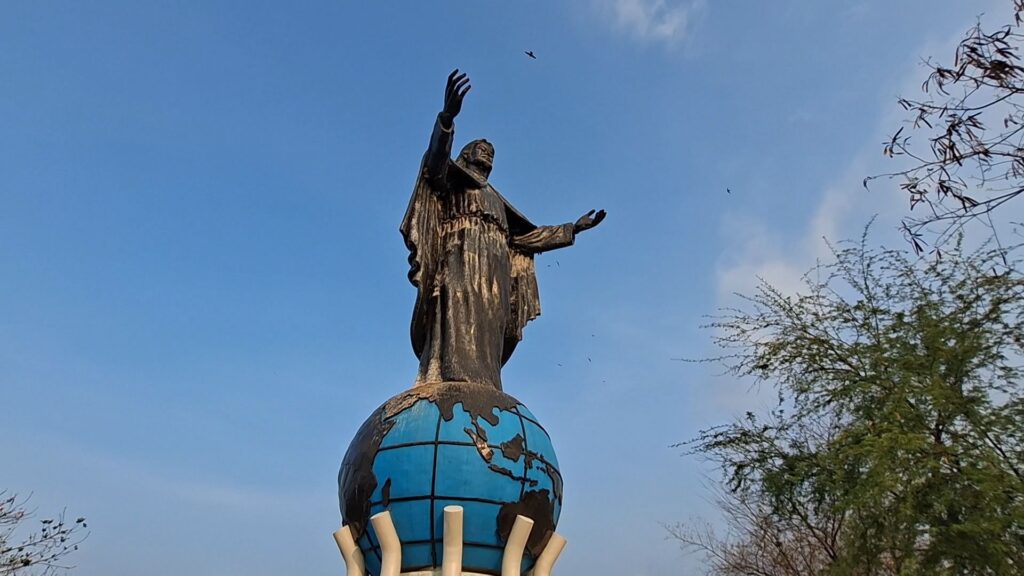
One of Dili’s most recognisable landmarks is Cristo Rei, a large statue of Christ standing on a hill at the end of a coastal headland.
The statue itself is 27 metres tall and can be reached by climbing a long flight of steps. There are several viewpoints along the way, so it is worth taking your time rather than rushing to the top.
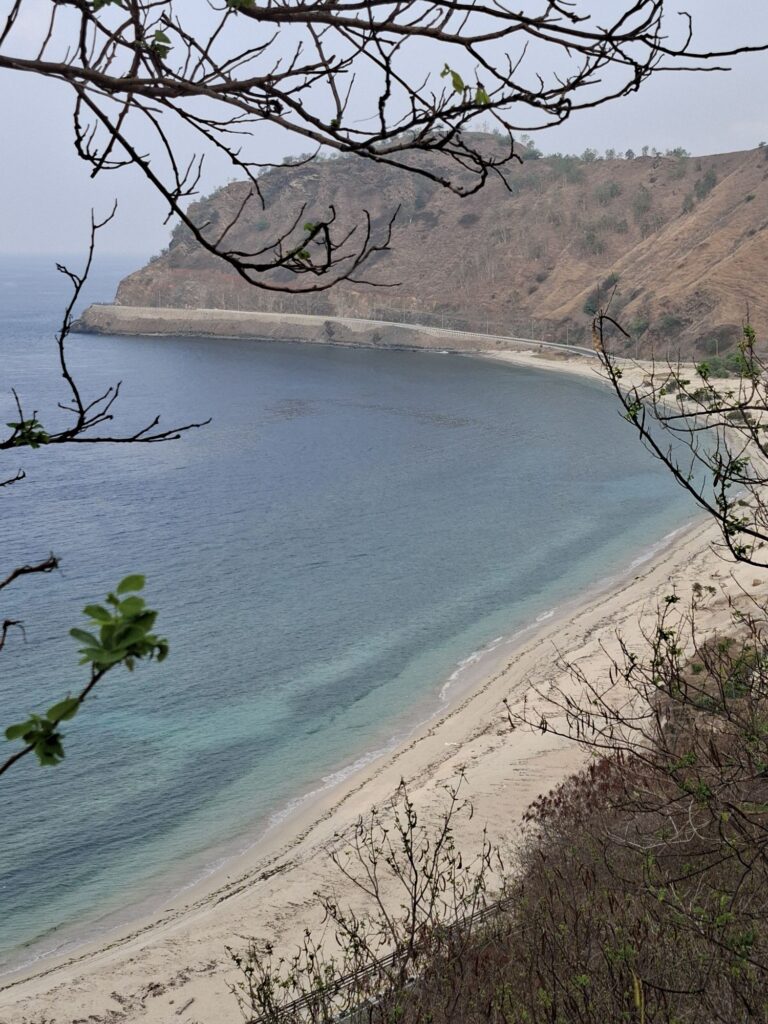
The views from the headland are particularly impressive. You can look down at beaches on both sides of the headland, with beautiful blue water and stretches of coastline in either direction.
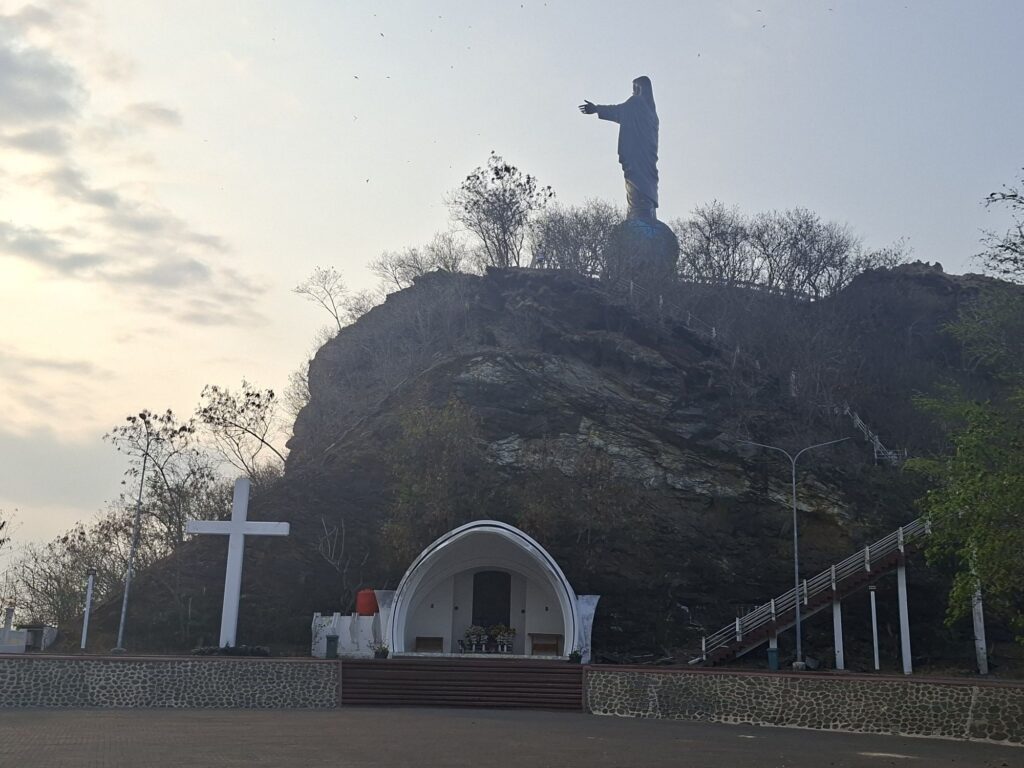
After exploring the city’s museums, churches and historical sites, this was a lovely place to finish our sightseeing day. The scenery is quite different from the urban waterfront, and the open coastal views make the climb worthwhile.
If you have enough time, you can also explore the beaches below the headland.
Where to Eat in Dili
Dilicious Timor
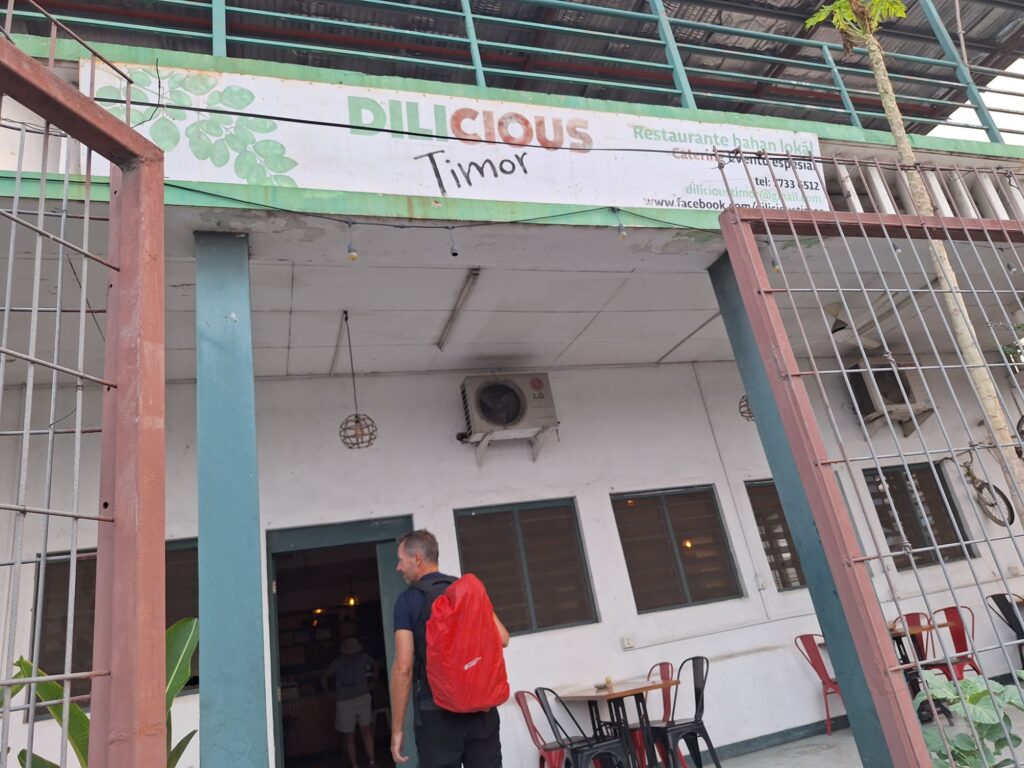
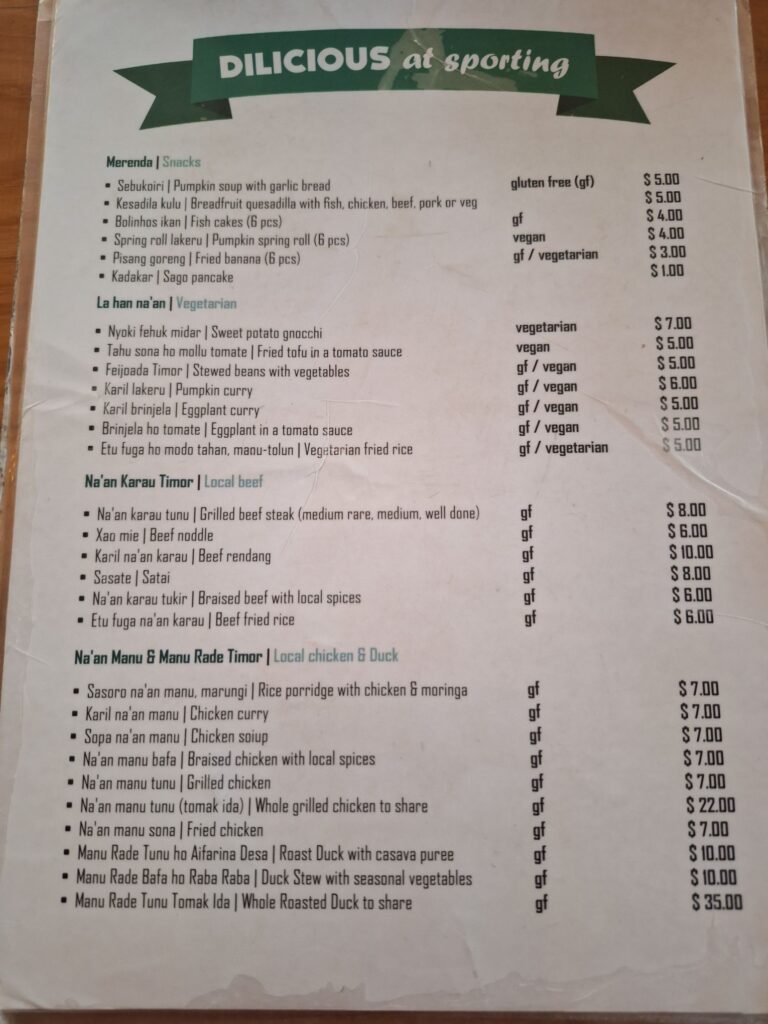
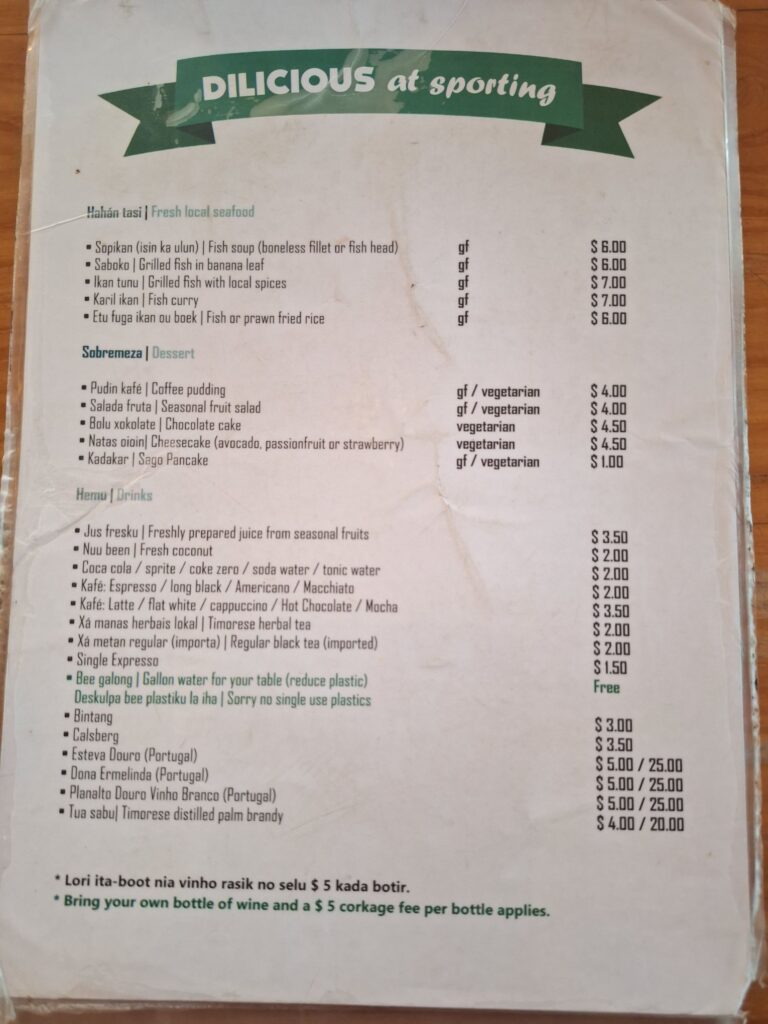
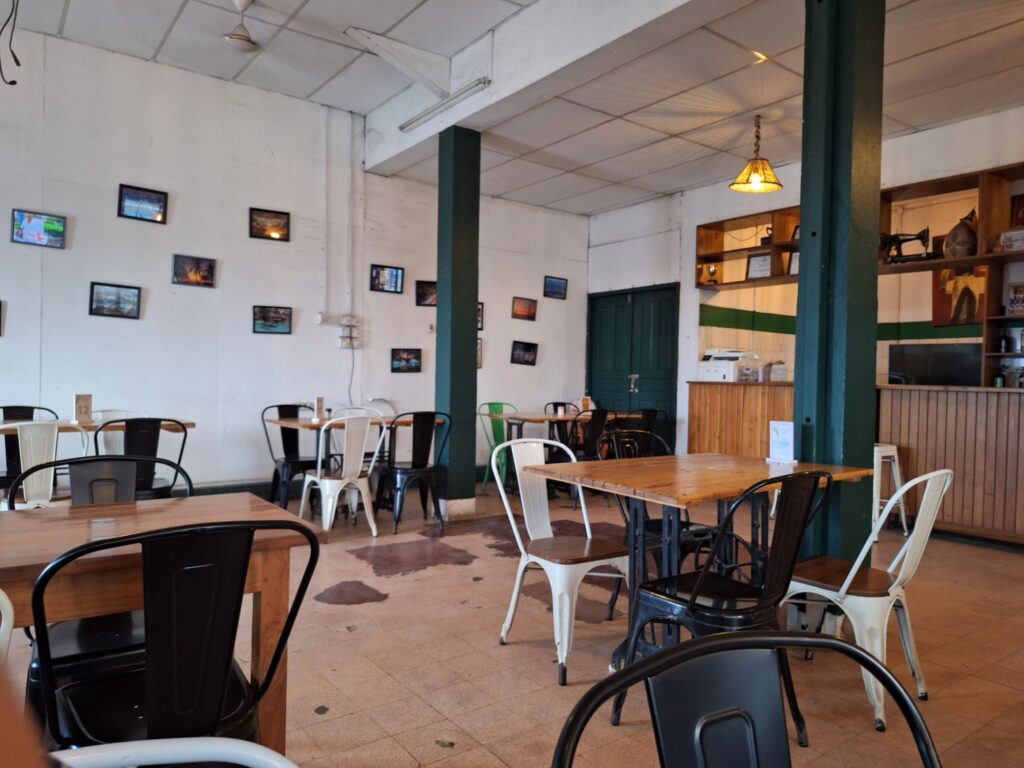
We had a meal at Dilicious Timor, and this turned out to be one of the more memorable dining experiences during our stay in Dili.
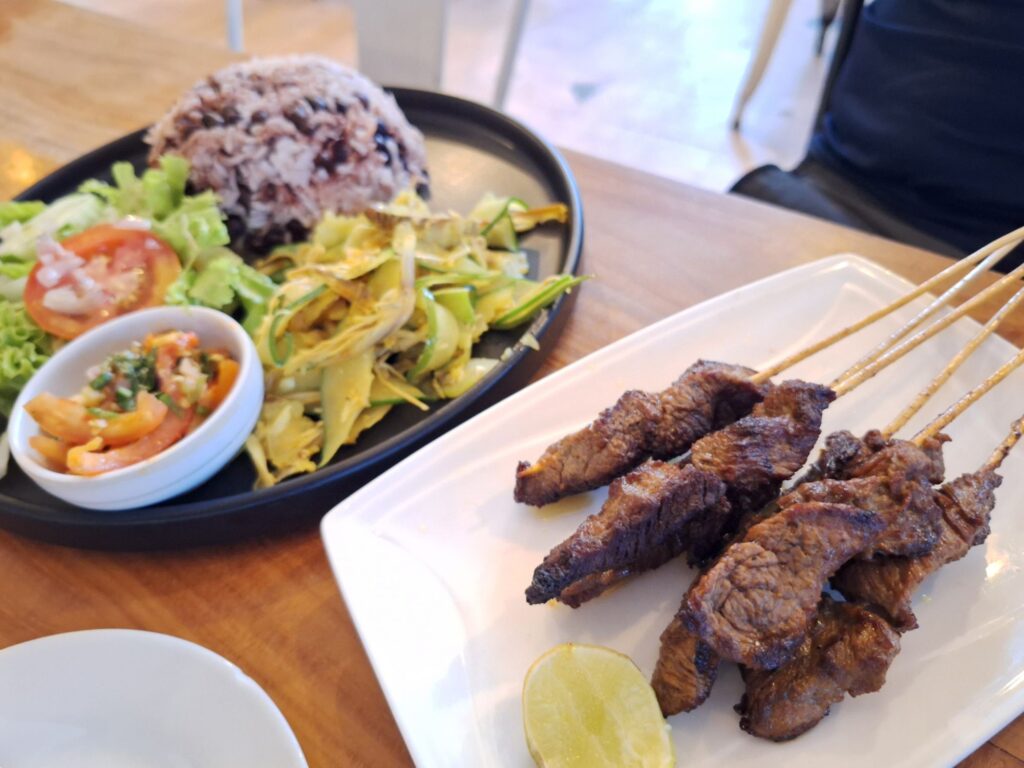
We ordered beef satay and chicken stew. Both dishes were presented beautifully, and the meals came with rice, salad and additional vegetable side dishes.
The presentation was particularly impressive, making the food look as good as it tasted. Another small detail that I appreciated was the complimentary drinking water, served in a glass bottle rather than the usual plastic bottle.
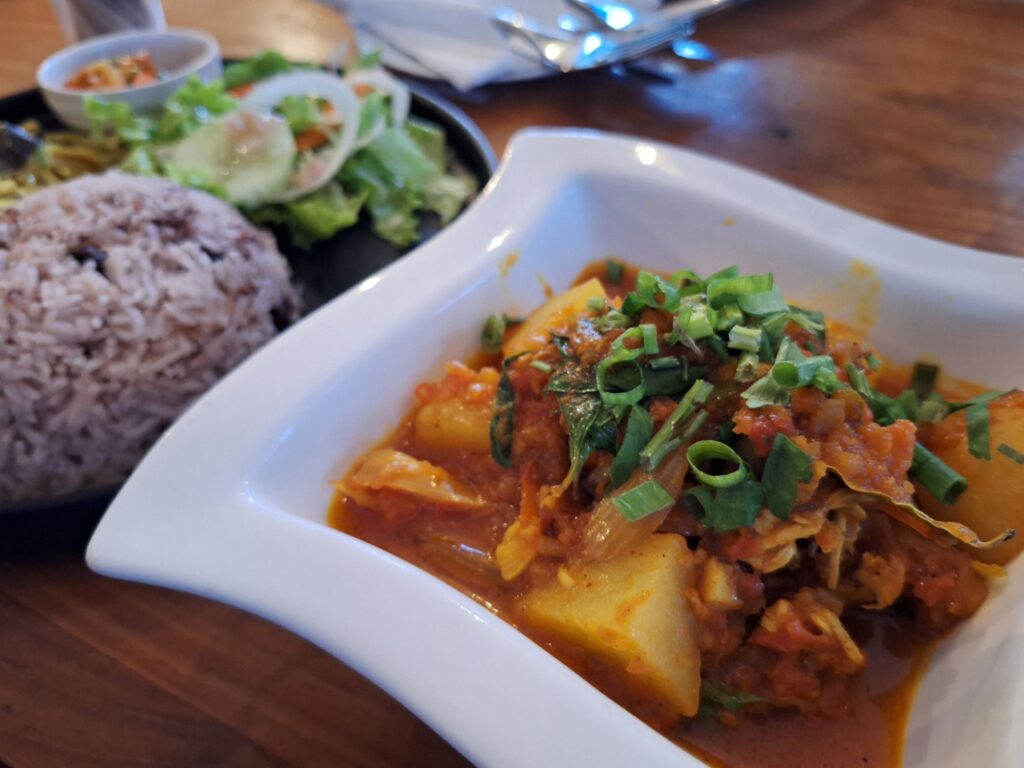
The food was very enjoyable, although the portion of chicken in the stew was a little disappointing. There was not quite as much chicken as I had hoped for.
Overall, though, it was a pleasant restaurant with good food and thoughtful presentation. I would happily eat here again.
Uma Sabor
We also stopped at Uma Sabor for lunch, where we had pizza.
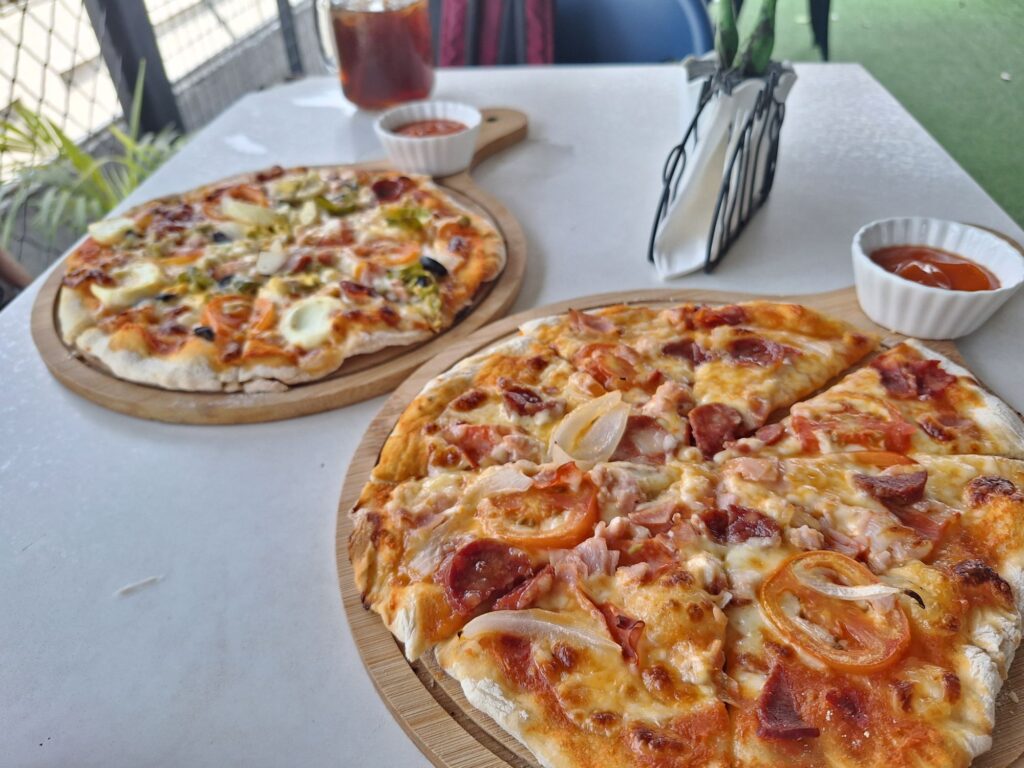
Dili has a surprisingly varied restaurant scene, with options ranging from traditional Timorese food to international dishes. Uma Sabor gave us another opportunity to enjoy something different during our city exploration.
It was a convenient stop for a casual lunch while spending the day around Dili.
Where We Stayed in Dili: Hotel California
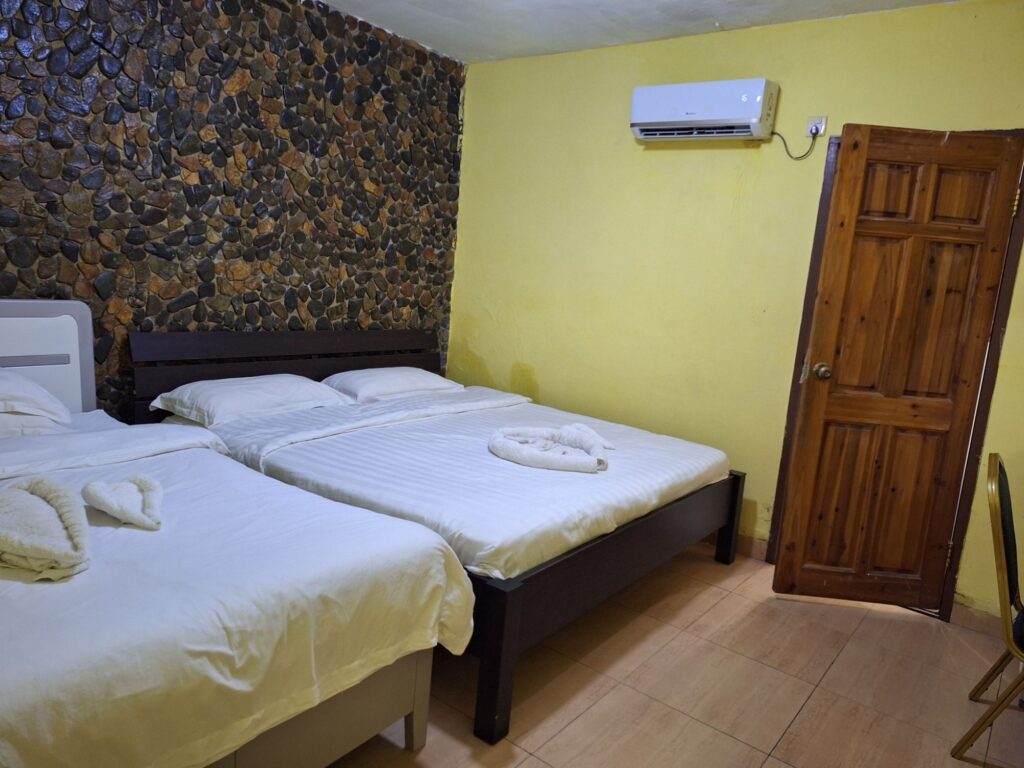
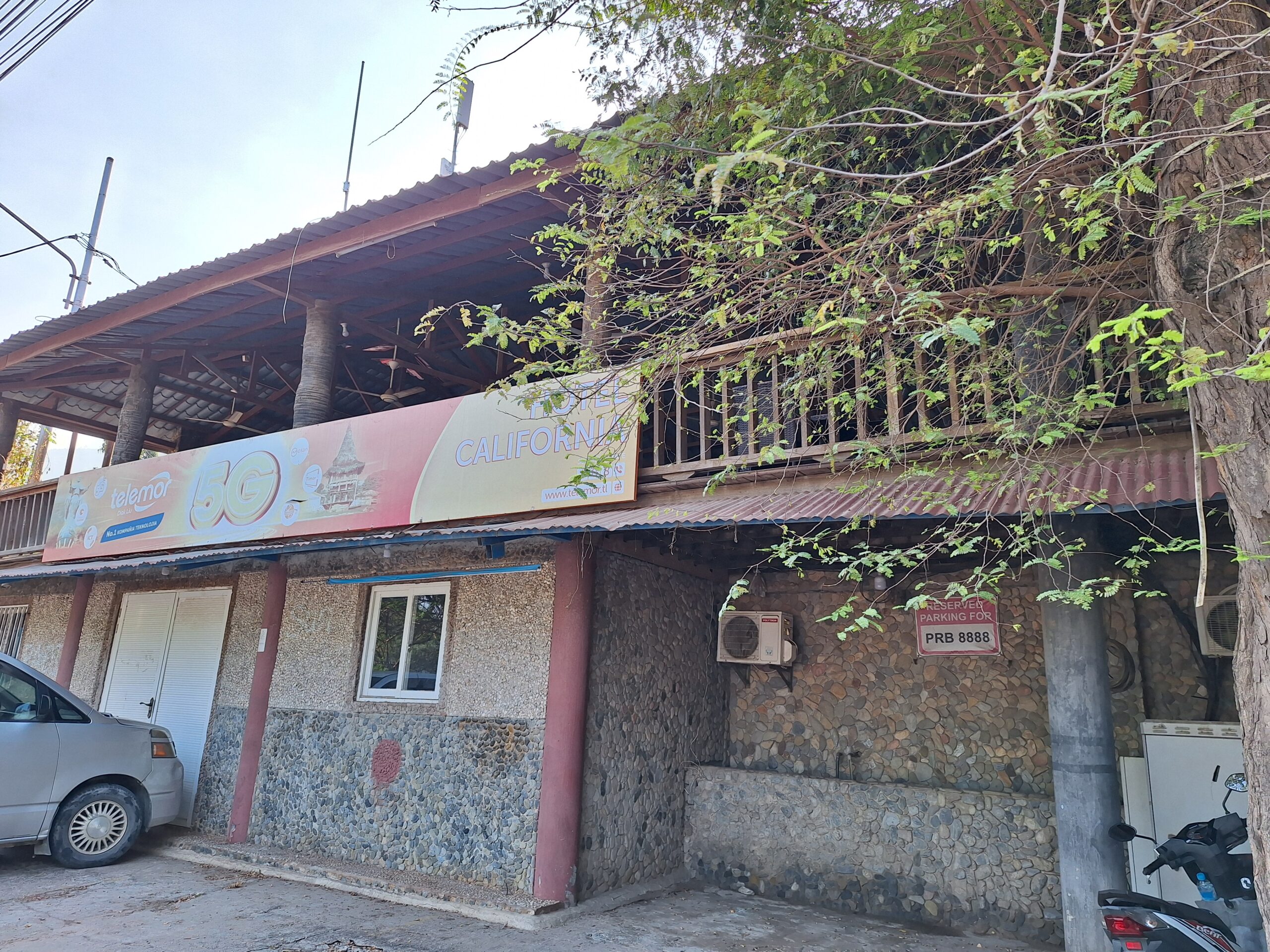
During our stay in Dili, we chose Hotel California.
Rather than covering the accommodation in detail here, I have written a separate review with more information about the room, facilities, location and our overall experience.
If you are planning to stay in Dili, you can read our full Hotel California review for more details.
➡ Chong Ti Hotel Dili Review: A Budget Double Room for US$30 a Night
Final Thoughts: Is One Day Enough to Explore Dili?
One day is enough to visit several of Dili’s main attractions, although you will need to plan your time carefully, particularly if you want to spend time at the Timorese Resistance Archive & Museum.
What makes Dili interesting is the combination of history, religion and everyday local life. The museums provide an insight into the country’s difficult journey towards independence, while the churches and cemetery reveal how deeply history and faith are connected to the local community.
Cristo Rei offers a completely different experience, with beautiful coastal views that provide a relaxing contrast to the historical attractions.
Not every attraction was open when we visited, and some places were smaller than expected, but we still enjoyed discovering the city at our own pace.
If you are travelling through Timor-Leste, I think Dili deserves at least a full day of exploration rather than just being treated as a transit stop.
➡ Telemor SIM Card in Timor-Leste: Prices, Data Plans and Internet Speed
➡ Dili to Atauro Island by Ferry: Timetable, Ticket Prices and Our Travel Experience
Comment