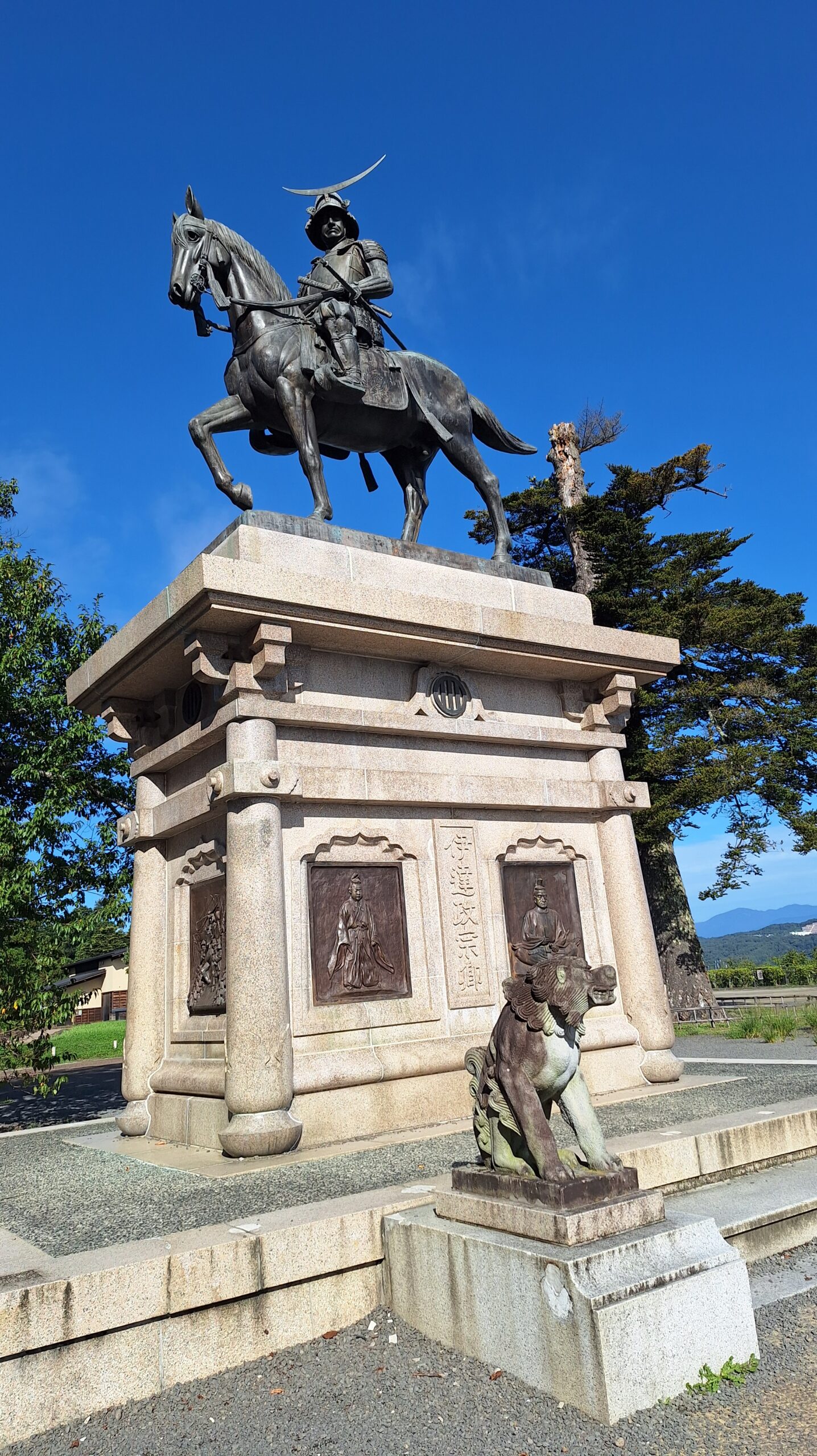
With our trip to the Tōhoku region coming up in September, we are planning to spend a good day exploring Sendai. As we map out our first proper adventure through northern Japan, it is impossible to talk about Sendai without talking about its historical symbol, Date Masamune. Before walking the streets of this vibrant city, understanding who Masamune was and how he laid the foundations for this urban centre completely transforms how you experience the place. In this article, we dive into Masamune’s turbulent childhood, his dramatic life, and the roots of the legendary term “Date-otoko,” exploring the deep connection between this iconic warlord and the city of Sendai.
🇯🇵 この記事を日本語で読む: 【仙台旅行の前に知りたい】独眼竜・伊達政宗の波乱の生涯と「伊達男」のルーツ
Who Was Date Masamune? The Warlord Who Built Sendai
Sendai is the largest city in the Tōhoku region and the prefectural capital of Miyagi Prefecture, known for its beautiful, tree-lined streets. The foundation of this stunning city was laid approximately 400 years ago by the powerful samurai and regional lord Date Masamune (1567–1636).
Traces of Masamune are still woven into the fabric of modern Sendai. From the ruins of Sendai Castle (Aoba Castle), which Masamune personally designed and positioned, to Zuihōden, his ornate mausoleum, the city offers a tangible connection to his legacy. For locals, Masamune is far more than a dusty figure in a textbook—he remains a fiercely proud symbol of the region. For anyone visiting Sendai, knowing the history and vision he poured into this land adds a wonderful layer of depth to your travels.
➡ 2-Week Tohoku Itinerary in September: A Slow-Paced Couple’s Backpacking Guide
➡ Sendai 1 Day Itinerary: Best Things to Do Without a Car
A Turbulent Childhood and Overcoming Hardship
Date Masamune’s life was far from easy. Born into a powerful samurai family, he contracted smallpox during his childhood. While he survived, the illness cost him the sight in his right eye, earning him the fearsome moniker “The One-Eyed Dragon” (Dokuganryū). To make matters worse, his relationship with his mother was strained, leading to a lonely and emotionally challenging youth.
When Masamune inherited leadership of the Date clan at just 18 years old, he found himself surrounded by hostile rival clans. He was forced to make ruthless, calculated decisions simply to survive in the brutal political landscape of the Sengoku (Warring States) period. Yet, rather than letting adversity defeat him, he channelled those early struggles and complex emotions into an unshakeable drive. His sharp intellect and formidable political acumen allowed him to carve out a massive domain in northern Japan, showcasing a fierce resilience that defined his entire life.
The Origin of ‘Date-Otoko’: A Legacy of Dashing Style
Even today in Japan, the term “Date-otoko” is used to describe a stylish, dashing, and unapologetically cool man. This phrase originates directly from the unique aesthetic and bold lifestyle championed by Date Masamune and his retainers.
Masamune possessed a radically cutting-edge sense of design. His iconic battle armour featured a solid black lacquer cuirass (the Kuro-urushi Gomaidō Gusoku) topped by a striking, oversized golden crescent moon. This flair for the dramatic was not limited to the battlefield; he applied the same meticulous aesthetic to tea ceremonies, food culture, and everyday courtly behaviour. Being a “Date-otoko” meant more than just looking fashionable—it meant possessing an unwavering personal code, high standards, and absolute confidence.
Ambition for Unification and a Global Outlook
During an era when legendary figures like Oda Nobunaga, Toyotomi Hideyoshi, and Tokugawa Ieyasu were fiercely fighting for supreme control of Japan, Masamune aimed for national unification. While he ultimately missed out on becoming the supreme ruler by a narrow margin, his brilliance and distinctive presence commanded the respect of the era’s most powerful leaders.
Crucially, Masamune’s vision extended far beyond Japan’s borders. In an era of national isolation, he orchestrated the ambitious Keichō Embassy expedition, dispatching his retainer Hasekura Tsunenaga all the way to Mexico and Rome to establish diplomatic and trade relations. This forward-thinking, global perspective makes Masamune stand out as a remarkably progressive leader for his time.
➡ 2-Week Tohoku Itinerary in September: A Slow-Paced Couple’s Backpacking Guide
➡ Sendai 1 Day Itinerary: Best Things to Do Without a Car
Conclusion: Walking Through Sendai with Masamune’s Romance in Mind
The urban planning laid down by Date Masamune and the echoes of his trailblazing life can still be felt in the layout and culture of modern Sendai.
During our September trip, we won’t just be enjoying the local cuisine and scenery; we’ll be walking in the footsteps of a man who conquered immense hardship and defined his own unique brand of cool. Exploring Sendai with a sense of Masamune’s history and romantic spirit will undoubtedly turn our Tōhoku adventure into an unforgettable journey.
➡ Back to Tohoku Travel Guide
Comment