In our companion guide, [Is English Spoken in Japan? How to Survive Without Japanese], we talked about how a warm smile and a smartphone loaded with data can completely shatter the language barrier.
But if you want to take your travel experience to the next level, learning just a tiny handful of local words is the ultimate secret weapon. You don’t need to spend months studying complex textbook grammar or trying to master different writing systems.
In Japanese culture, showing that you are making an effort to respect the local customs means the world to people. If you drop just one correct word at the right moment, you will instantly notice the locals’ eyes light up with appreciation.
Here are the only 5 magic Japanese phrases you actually need to memorise before your flight lands in Tokyo.
1. Sumimasen (Excuse me / Sorry)
- How to pronounce it: soo-mee-mah-sen
If you only have the mental bandwidth to memorize one single word for your entire holiday, make it this one. Sumimasen is the Swiss Army knife of Japanese communication. It serves three brilliant purposes:
- To get someone’s attention: Use it to call a waiter over at a restaurant, to catch a station staff member’s eye, or to softly approach someone on the street for help.
- To say a polite “sorry”: If you accidentally bump into someone on a crowded subway train or block an escalator line, a quick Sumimasen is the perfect, polite apology.
- To say a humble “thank you”: In Japan, people often say “sorry for making you go to this trouble” as a deep form of gratitude. If someone holds the elevator doors open for you, a soft Sumimasen works perfectly.
2. Arigato Gozaimasu (Thank you very much)
- How to pronounce it: ah-ree-gah-toe go-zai-mass
You might already know the short version, Arigato. However, Arigato on its own is quite casual—something you would say to a close friend or a family member.
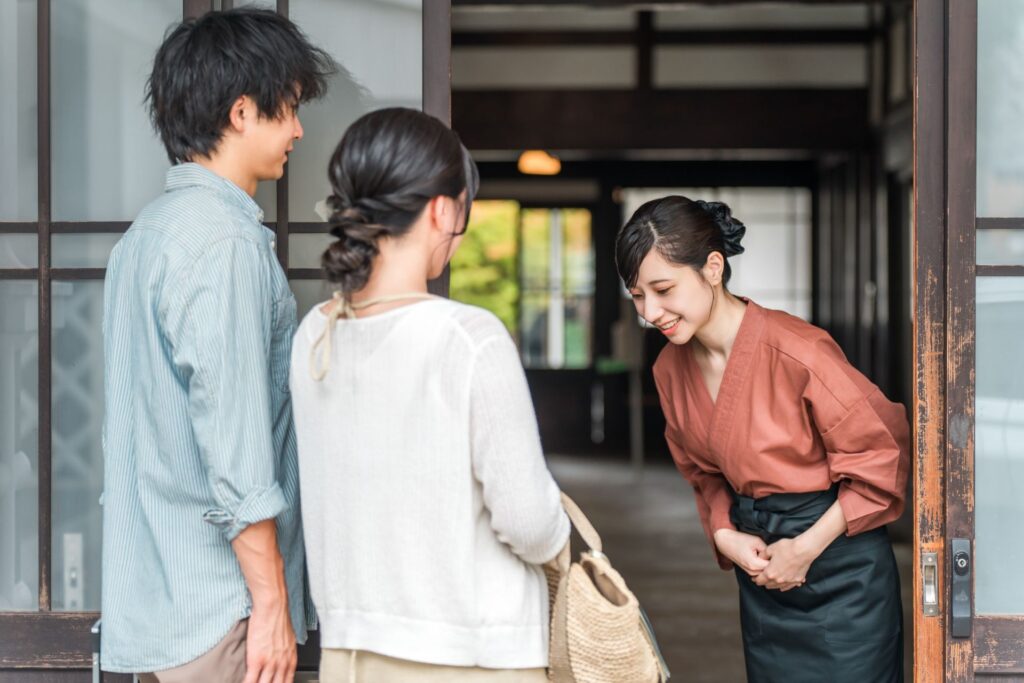
When you are a guest in Japan, adding Gozaimasu (go-zai-mass) to the end instantly upgrades it to a highly respectful, formal thank you. Say it with a small bow when you receive your change at a convenience store register, when stepping out of a taxi, or when a hotel clerk hands you your room keys.
3. Kore o kudasai (This one, please)
- How to pronounce it: ko-reh oh koo-dah-sigh
This is your ultimate shopping and dining survival phrase. Kore means “this,” and kudasai means “please give me.”
When you are standing in front of a gorgeous textile display in a craft boutique, or looking at a photo-filled restaurant menu, you don’t need to know the Japanese names of the items. Simply tap your finger on what you want, look at the clerk with a smile, and say: “Kore o kudasai.” It works flawlessly every single time.
4. Eigo wa daijobu desu ka? (Is English okay?)
- How to pronounce it: ay-go wah die-joe-boo dess kah?
As we noted in our language barrier guide, many Japanese people feel incredibly anxious about making pronunciation mistakes when speaking English. If you walk straight up to someone and launch into fast, fluent English, they might instinctively freeze or back away out of shyness.
This phrase completely changes the dynamic. By asking “Is English okay?” softly and politely before you ask your actual question, you give them a gentle moment to prepare mentally. Even if they only speak a tiny bit of English, they will deeply appreciate that you took the politeness to ask first.
5. O-kaikei o kudasai (The bill, please)
- How to pronounce it: oh-kai-kay oh koo-dah-sigh
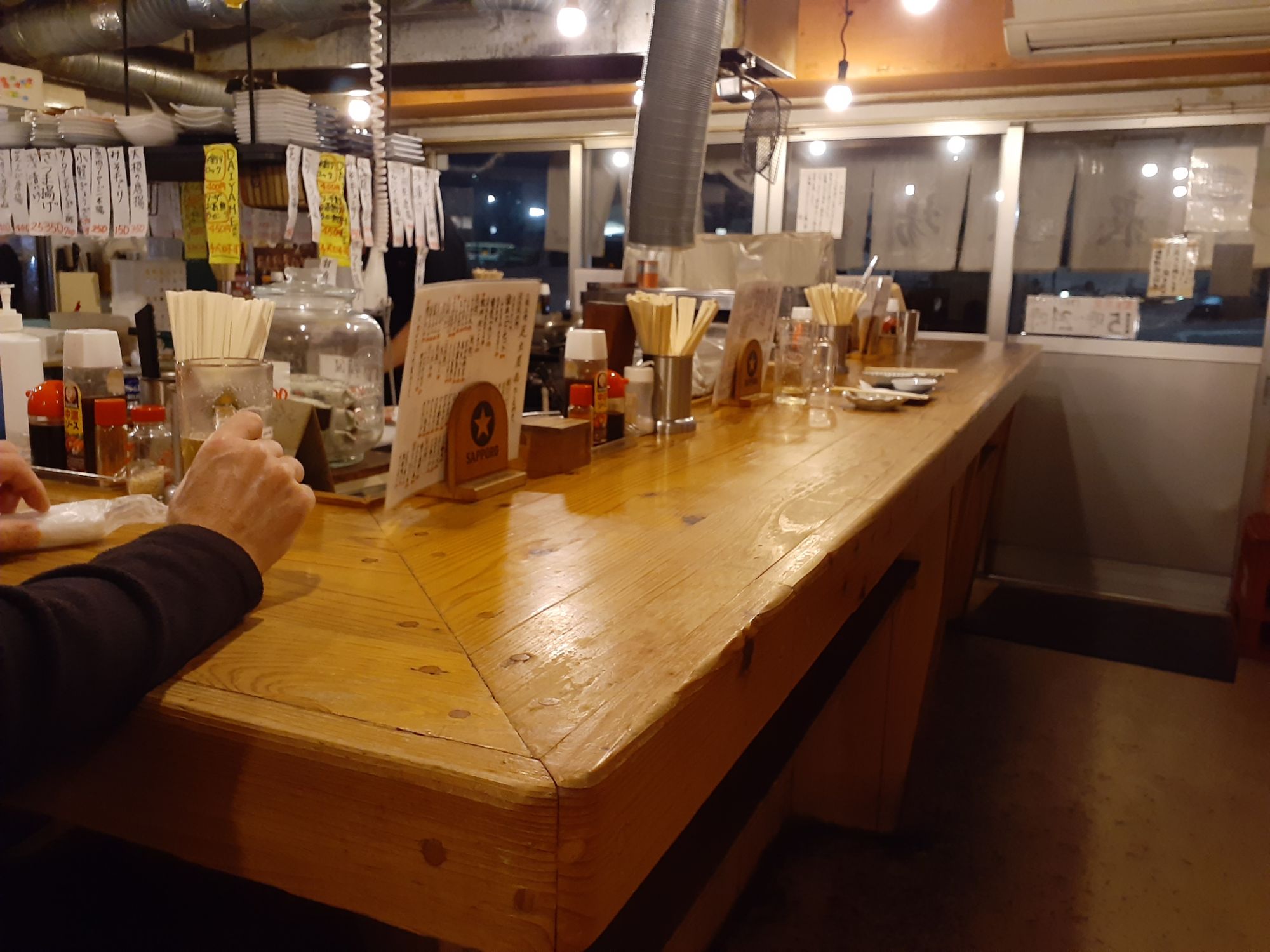
When you have finished a spectacular bowl of ramen or a relaxing evening at a local Izakaya pub, you don’t wait around for the server to automatically drop the bill at your table. In Japan, you usually need to ask for it.
When you are ready to settle up, catch your waiter’s attention with a quick Sumimasen, and then say: “O-kaikei o kudasai.” They will smoothly bring the bill to your table, or politely gesture for you to walk over to the cash register at the front door to settle up.
Conclusion: Practice Makes Perfect
Don’t worry about having a flawless accent. The magic of these phrases doesn’t come from linguistic perfection—it comes from the fact that you are trying to connect with the local culture on their terms.
Write these five phrases down on a small note on your phone’s lock screen, practice saying them aloud a few times on the plane ride over, and get ready to experience the incredible, warm hospitality that Japan is famous for!
Reality of Japan: Do they really speak English? Check it our here:
➡ Is English Spoken in Japan? How to Survive Without Japanese
Comment