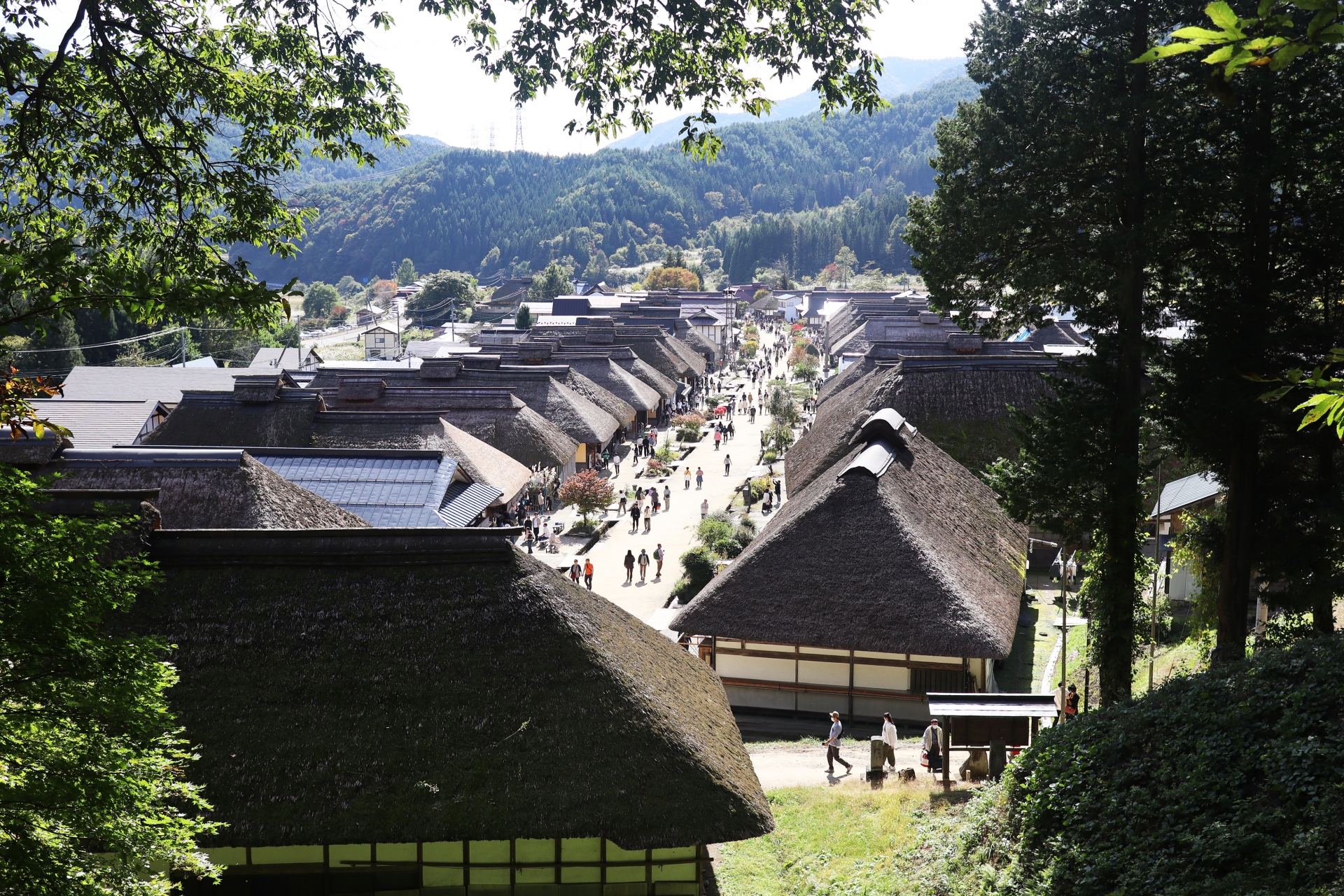
Ouchijuku, one of the most important historical destinations in the Aizu region of Fukushima, is easily reached from Aizu-Wakamatsu. It is an ideal destination for a half-day excursion, allowing us to experience its unique atmosphere within three to four hours.
Stepping into this preserved Edo-period post town feels like stepping back in time, with its iconic thatched-roof buildings, scenic surrounding hills, and historic main street. As someone from the UK, I am particularly fascinated by these traditional Japanese post towns, and am looking forward to seeing it.
This guide outlines our planned walking route using public transport, along with straightforward access details from Aizu-Wakamatsu Station.
🇯🇵 この記事を日本語で読む: 【会津若松発】大内宿の半日観光モデルコース!見どころとアクセス完全ガイド
This article serves as a preliminary travel plan for our upcoming 13-day journey around the Tohoku region in September 2026. Once my wife and I complete the trip, I will update this post with our photos and real-time reflections from our journey!
Ouchijuku Half-Day Itinerary Map
Below is the map of the sightseeing spots included in this itinerary.
A Walking Route Through Ouchijuku’s Main Highlights
Upon arriving at the main bus stop (Ouchijuku Entrance), the most practical way for us to explore the town is to walk straight to the furthest point for the panorama, then gradually work our way back through the historic landmarks, shrine, and bustling street.
Ouchijuku Overlook (The Highest Viewpoint)
When we reach the town, we plan to head straight down the main street to the flight of stairs at the far end. Climbing these steps leads to the overlook, where we should be rewarded with a magnificent panoramic view of the thatched roofs aligned along the valley—a classic image of old Japan.
- Walking time from the bus stop: Approx. 10–12 minutes (8 minutes along the street + 2 minutes up the stairs)
- Admission: Free
- Suggested time: 15–20 minutes
Ouchijuku Townscape Exhibition Hall (On the Return Path)
On our way back down from the viewpoint, we plan to visit this restored honjin (an official inn for feudal lords and government officials). Inside the traditional thatched structure, visitors can observe an authentic sunken hearth (irori) and historic tools that illustrate daily life during the Edo period.
- Walking time from the bus stop: Approx. 5 minutes (located near the middle of the street)
- Admission: Adults 250 yen / Children (Primary & Secondary school) 150 yen
- Suggested time: 20–30 minutes
Takakura Shrine (A Quiet Detour)
Situated a short walk away from the main avenue amidst serene farmland, this local shrine offers a tranquil contrast to the busier street. Within its peaceful grounds stands a majestic Japanese cedar tree estimated to be over 800 years old.
- Walking time from the Exhibition Hall: Approx. 5 minutes
- Admission: Free
- Suggested time: 15–20 minutes
Exploring the Main Street, Souvenirs & Local Cuisine
We will conclude our visit by strolling along the main avenue lined with thatched-roof houses. We look forward to trying local snacks such as tochi-mochi (horse chestnut rice cakes), grilled salted river fish, and dango skewers, or pausing for lunch at one of the rustic eateries. The town is particularly famous for its buckwheat noodles served with a whole spring onion used as an eating utensil.
- Area: Across the entire main street of Ouchijuku
- Suggested time: Approx. 1 to 1.5 hours (including lunch/snacks)
Why We Are Visiting Ouchijuku on This Trip
My wife and I are currently planning a 13-day travel itinerary across the Tohoku region in September. We chose Ouchijuku as a key stop because it offers a nice opportunity to immerse ourselves in a traditional landscape that has largely vanished from modern Japan.
As someone who loves history and traditional architecture, this preserved townscape with its rows of historical thatched roofs immediately caught my attention. Very few post towns across the country have managed to preserve their heritage so impeccably. It promises to be a wonderful retreat where my wife and I can relax and walk through history together surrounded by mountain scenery.
Since we both love walking, we initially considered walking the 5 to 6 kilometres between Yunogami-Onsen Station and Ouchijuku, thinking it might make a pleasant downhill walk on the way back.
However, after looking into the route details, we learned that the road is narrow, lacks proper footpaths, and sees steady traffic from tour buses and cars. Because it is not particularly recommended or designed as a walking trail we have decided to stick with the “Saruyu-go” shuttle bus for both directions, for now!
➡ 2-Week Tohoku Itinerary in September: A Slow-Paced Couple’s Backpacking Guide
➡ Aizuwakamatsu 1 Day Itinerary: Top 8 Attractions from JR Station & Access from Tokyo
How to Get to Ouchijuku from Aizu-Wakamatsu (Train & Bus)
Travelling from Aizu-Wakamatsu Station to Ouchijuku involves a combination of the local railway and the dedicated “Saruyu-go” shuttle bus.
Step-by-Step Route
- Aizu Railway: Aizu-Wakamatsu Station ➔ Yunogami-Onsen Station (approx. 35–40 minutes)
- Saruyu-go Bus: Yunogami-Onsen Station ➔ Ouchijuku (approx. 20 minutes)
The bus timetable is timed to connect smoothly with incoming trains at Yunogami-Onsen Station, making the transfer straightforward and convenient for us.
Discount Pass Tip
We recommend purchasing the Ouchijuku Common Discount Ticket (2,200 yen for adults), which covers the round-trip bus fare alongside the designated train section on the Aizu Railway. (Note: If starting from Aizu-Wakamatsu Station, a small additional fare of 200 yen for the section to Nishi-Wakamatsu Station applies).
Summary & Trip Preparation Notes
Here is a quick recap of our planned half-day route for visiting Ouchijuku from Aizu-Wakamatsu in September:
- Travel time: Approx. 1 hour from Aizu-Wakamatsu via train and bus
- Cost savings: Utilize the Ouchijuku Common Discount Ticket (2,200 yen)
- Transportation note: Use the shuttle bus for the station connection rather than walking along the road
- Sightseeing sequence: Overlook ➔ Exhibition Hall ➔ Takakura Shrine ➔ Main Street stroll
After our trip in September, I will update this post with original photos, dining experiences, and hands-on travel tips from our time in Ouchijuku. Stay tuned for the complete update!
➡ Back to Tohoku Travel Guide
Comment