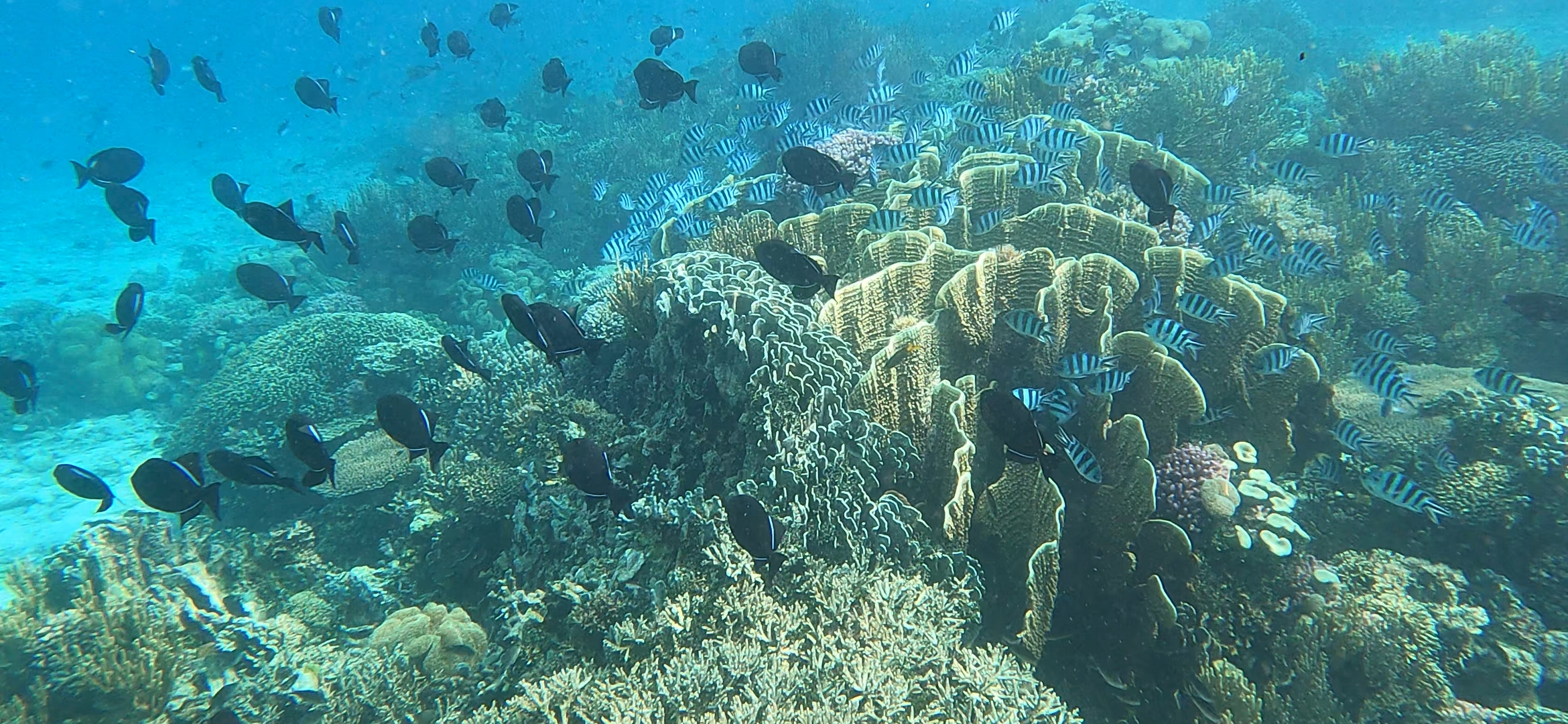
Atauro Island, just north of Dili in Timor-Leste, offers a rewarding range of snorkelling experiences, from easy beach entries to expansive coral reefs and dramatic underwater drop-offs.
During our stay on the island, we snorkelled in four areas: Beloi, Atecru, Adara and Vila. Each had a different character. Beloi stood out for its marine life and protected outer reef, Atecru for its impressive underwater landscape, Adara for its broad reef and coral-covered rocks, and Vila for its quiet beach and plentiful fish.
In this guide, I share our first-hand experiences to help you decide where to snorkel on Atauro Island, including entry conditions, coral health, visibility, tides and the practical considerations worth knowing before getting into the water.
🇯🇵 この記事を日本語で読む:アタウロ島シュノーケリング完全ガイド|Beloi・Atecru・Adara・Vilaを実体験で比較
- Beloi: A fish-rich protected reef and an impressive outer reef
- Atecru: A dramatic drop-off and impressive large fish
- Adara: A broad reef leading to a beautiful drop-off
- Vila: Plenty of fish, but a longer swim to the reef
- When is the best time to snorkel on Atauro Island?
- Important snorkelling safety tips
- Which Atauro Island snorkelling area should you choose?
- Final thoughts: Four different snorkelling experiences on Atauro Island
Beloi: A fish-rich protected reef and an impressive outer reef
Beloi offers two main snorkelling environments: an inner reef accessible directly from the village beach and a larger outer reef further offshore.
The inner reef is extensive enough to provide plenty of snorkelling without needing a boat. The coral condition was reasonably good, making it an easy option for a casual session from the beach.
The outer reef, however, felt much more expansive, with a larger underwater landscape. As currents can be present, a boat trip is the recommended way to reach it.
We joined a boat trip offered by Barry’s Place. The charge was US$12.50 per boat per hour, shared between the participants. There was also a US$2 per-person fee for the marine protected area each time we entered it.
The protected outer reef was impressive not only for its coral condition but also for the quantity and behaviour of the fish. Some tropical fish that would normally dart away when I pointed my camera towards them seemed much more relaxed here, allowing us to get surprisingly close.
We were fortunate enough to encounter a dugong, as well as a blacktip reef shark, a lobster and a variety of tropical fish.
Visibility seemed better in the morning than in the afternoon during our visit, although conditions can vary with the weather, currents and sea state.
The inner reef is also large, so you can enjoy a worthwhile snorkelling session without arranging a boat trip. However, I would avoid snorkelling close to the jetty when ferries are arriving or departing.
Best for: Fish-rich reefs, marine life encounters and easy beach-entry snorkelling, with a boat trip for the more extensive outer reef.
➡ Alda’s Homestay Review: 4 Nights in Beloi, Atauro Island, Timor-Leste
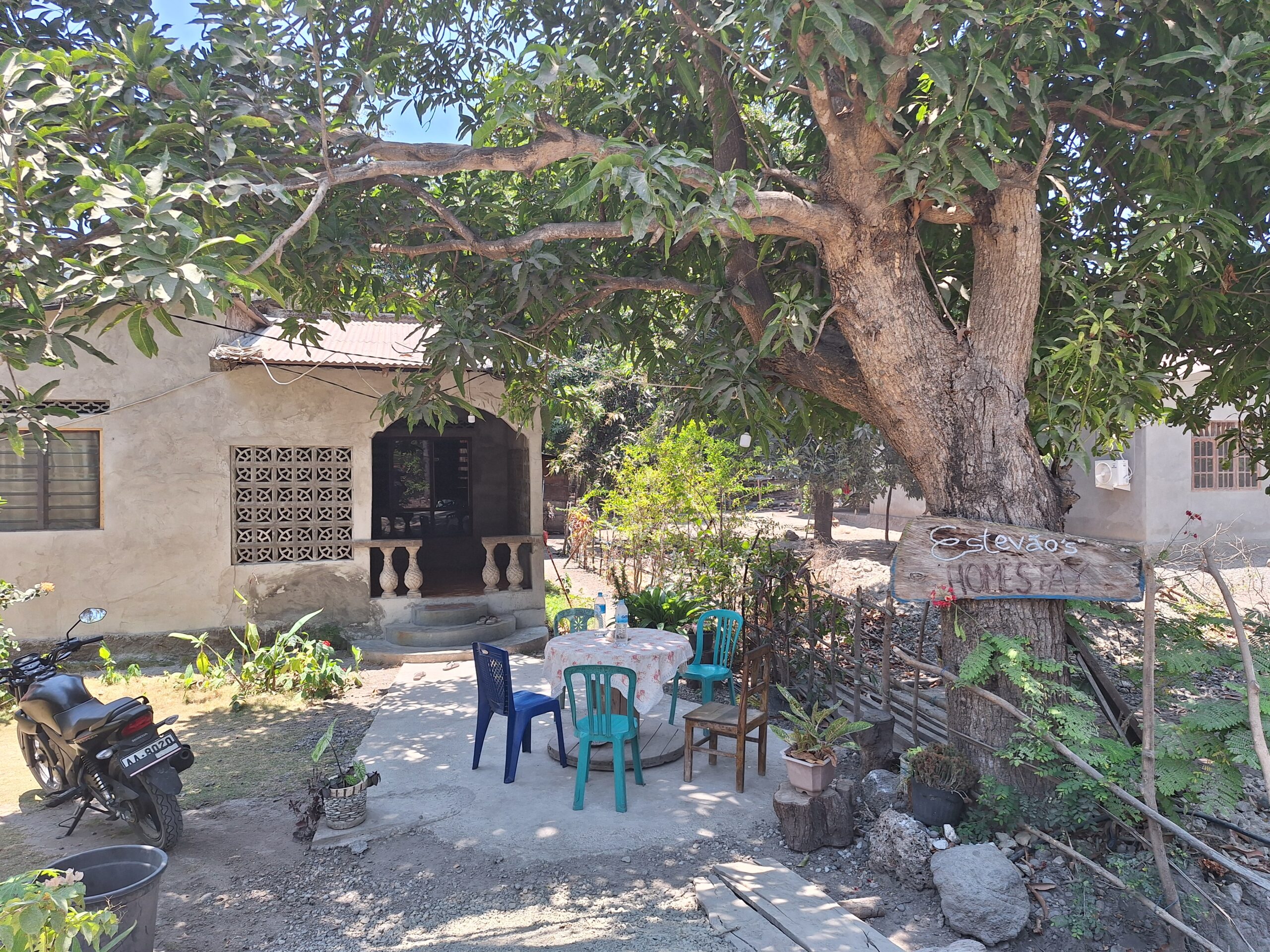
➡ Estevao’s Homestay Review, Atauro Island, Timor-Leste
Atecru: A dramatic drop-off and impressive large fish
We stayed at Jhoky’s HOMESTAY in Atecru, where we could enter the water directly from the beach in front of our accommodation.
The beach has white sand, although dead coral fragments are also present. Underwater, the shallow seagrass area gives way to rocks, followed by a reef and then a dramatic, almost vertical drop-off.
The underwater landscape was one of the highlights of our time on Atauro Island. The drop-off creates a striking sense of depth, and the reef was home to plenty of fish, including some impressively large specimens and bumphead parrotfish.
The inlet did not usually have a particularly strong current during our stay. However, the wind could pick up in the afternoon, bringing larger waves. At low tide, the reef becomes shallow and entering the water can be more difficult.
The reef condition was reasonable overall, but there were visible signs of damage in places. Although it was possible to walk close to the drop-off, I would recommend wearing reef shoes or suitable water shoes to protect your feet on rocky sections.
There is a marine protected area to the right when facing out to sea, where a separate fee applies. Check the current access rules and charges locally before entering.
Atecru faces west, and I found that the coral-covered drop-off looked particularly beautiful around midday, when the sun was high enough to illuminate the deeper reef.
We stayed from 19 to 22 October 2026, and our best snorkelling session was just after 10 am on 21 October. Under a clear sky, sunlight reached well down the drop-off, revealing the colours and shapes of the coral in impressive detail.
Unfortunately, I had not brought my camera into the water that morning, so I have no footage of that particular session. Even so, it was one of the most memorable underwater views of our trip.
Best for: Dramatic underwater scenery, a steep drop-off and encounters with large fish.
Adara: A broad reef leading to a beautiful drop-off
In Adara, we stayed at Adara Eco-Resort (Mario’s Place), with snorkelling available directly from the beach.
Entry conditions require a little more attention at low tide. To the right when facing out to sea, a short walk leads to a rocky beach with a boat channel. Depending on the tide, this can provide a safer entry point.
However, we needed to return to the original entry area to get out of the water, so it is important to consider the current and the distance involved before setting off.
An orange-red buoy marks the protected area to the left when facing offshore. Fishing was not taking place in this area, but a separate marine protected area fee applied. To the right of the buoy, we saw several women spearfishing.
Compared with Atecru, the stretch of flatter reef between the beach and the drop-off is wider, so reaching the deeper section requires a little more swimming. On the other hand, the shallow reef itself offers plenty to explore.
One particularly interesting section was to the left after entering through the boat channel. Large rocks covered in different types of coral created an attractive underwater landscape.
The drop-off was not quite as dramatic as Atecru’s, but it was still beautiful. We also saw dive boats offshore.
Coral condition varied across the reef. There were healthy-looking sections, but damage was visible in places, giving us an overall impression similar to Atecru.
The water was generally warm, although we occasionally encountered small jellyfish. Visibility also varied, and at certain times the water looked cloudy, making the reef less distinct.
Best for: Exploring a broad, relatively shallow reef before swimming out to a scenic drop-off.
➡ Atauro Island Travel Guide | Things to Do in Beloi, Vila, Atecru & Adara
Vila: Plenty of fish, but a longer swim to the reef
In Vila, we stayed at the Eco Resort at the northern end of the village and entered the water directly from the beach.
The beach is shallow, with plenty of seagrass, and we had to swim approximately 100 metres to reach the coral reef. Of the four areas we visited, Vila required the longest swim before reaching the reef.
The coral condition was not as impressive as at Beloi or Atecru, but there were plenty of fish to observe. It can still be an enjoyable place to snorkel if you are happy to spend more time swimming across the shallows before reaching the reef.
To the right when facing offshore, we could see an area with dense mangroves. The water beyond this area is protected, and an additional fee applies. A buoy offshore marks the boundary of the protected area.
The beach faces east, making it a lovely place to watch the sunrise.
The Eco Resort offers activities such as banana boat rides, but we did not see frequent boat traffic apart from vessels associated with activities. However, I would avoid snorkelling when the ferry travelling between Dili and Beloi passes through the area.
The waves created by a passing ferry can push snorkellers towards the reef, increasing the risk of contact with the coral.
Vila is worth considering if you want a quiet beach and easy access to the sea from your accommodation. If your main priority is spectacular coral scenery, however, I would compare it with the other areas before deciding where to spend most of your snorkelling time.
Best for: A quiet beach, sunrise views and fish watching, provided you are comfortable with the longer swim to the reef.
➡ Things to Do in Vila, Atauro Island: Local Crafts, Viewpoints and Places to Eat
➡ Eco Resort Atauro Island Review: Beachfront Bungalows in Vila
When is the best time to snorkel on Atauro Island?
The best time depends on the location, sunlight, tides and daily sea conditions.
At Beloi, visibility seemed better in the morning during our stay. The outer reef was also a highlight for its marine life, although currents mean that conditions should be assessed carefully.
At Atecru, the west-facing reef looked particularly impressive when the sun was high. Our best session was just after 10 am on 21 October 2026, when sunlight reached deep into the drop-off and brought out the colours and contours of the coral.
At Adara, visibility varied throughout the day, while Vila’s east-facing beach is particularly attractive in the early morning for its sunrise views.
These observations are based on our own visit rather than a guarantee of daily conditions. Wind, waves, cloud cover, tides and currents can all affect the experience.
Before entering the water, check the local conditions and ask your accommodation about the safest entry point and suitable times to snorkel.
Important snorkelling safety tips
Check the tide before entering
At Atecru and Adara, low tide can leave sections of the reef very shallow, making entry more difficult. Check the tide and avoid walking over living coral.
Take currents and waves seriously
Currents can affect the outer reef at Beloi, making a boat trip a more suitable option. At Adara, remember that you may need to return to your original entry point, so consider the current and your swimming ability before setting off.
Avoid ferry and boat traffic
Stay away from Beloi’s jetty during ferry arrivals and departures, and avoid entering the water at Vila when the Dili–Beloi ferry passes. Ferry wakes can push you towards the reef and increase the risk of injury or coral damage.
Protect the coral
Coral is fragile and can be damaged by a single careless kick or step. Avoid standing on coral, keep your fins clear of the reef and maintain enough depth to swim comfortably. Reef shoes or water shoes can be useful on rocky entry sections, but they are not a reason to walk across living coral.
Follow marine protected area rules
Check the boundaries, access conditions and current fees for each protected area locally. Charges and rules may change, so confirm them before entering.
Which Atauro Island snorkelling area should you choose?
Each area has a different strength, so the best choice depends on what you want to see.
- Beloi: My choice for a fish-rich protected reef and the chance of encountering larger marine life. The outer reef is particularly rewarding, but a boat trip is advisable because of the currents.
- Atecru: Best for a dramatic drop-off and large fish. The reef is especially attractive when sunlight reaches the deeper sections.
- Adara: A good option for exploring a broad, relatively flat reef before reaching the drop-off. Pay attention to tides and your return route.
- Vila: Suitable for a quieter beach experience and fish watching, although the reef is further offshore and the coral condition was less impressive.
These are impressions from our own snorkelling sessions, not a scientific assessment of reef health. Conditions can differ between individual sections of reef and change over time.
Final thoughts: Four different snorkelling experiences on Atauro Island
Snorkelling on Atauro Island is not a single, uniform experience. Beloi offers a rewarding protected outer reef and abundant marine life; Atecru stands out for its dramatic drop-off; Adara combines a broad reef with attractive coral-covered rocks; and Vila offers a quieter beach setting with plenty of fish.
If I were choosing based primarily on underwater scenery, I would put Beloi’s outer reef and Atecru high on the list. Adara is also worth exploring if you enjoy spending time over a broad reef before reaching deeper water.
Wherever you choose to snorkel, take the tide, currents, ferry movements and marine protected area rules into account. With suitable conditions and a little planning, exploring several parts of Atauro Island reveals just how varied its underwater landscapes can be.
➡ Dili to Atauro Island by Ferry: Timetable, Ticket Prices and Our Travel Experience
Comment